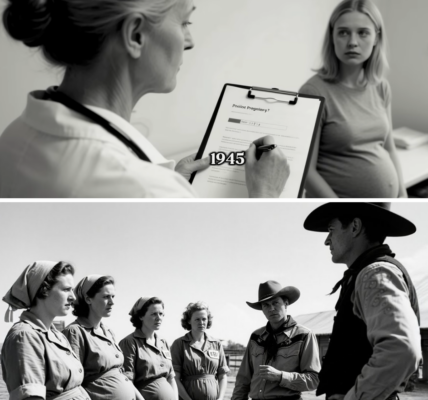
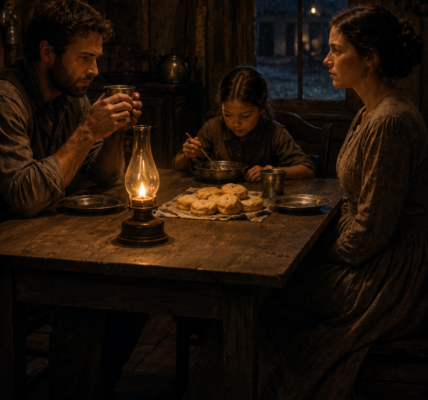
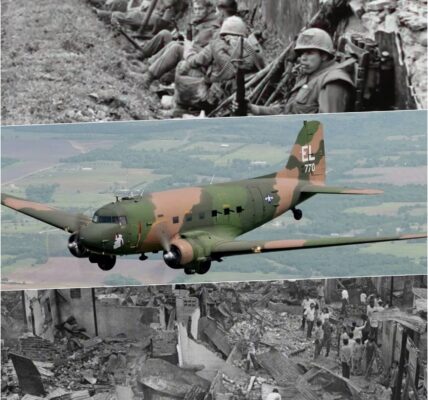
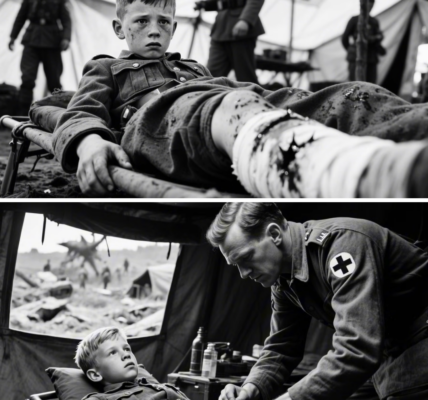
There is something strangely unsettling about seeing a completely ordinary moment from a world that no longer exists. A street filled with horse-drawn carriages. Children standing outside a factory. A family gathered around a wooden table. Soldiers posing before leaving for war. Nothing about the scene may appear extraordinary at first—but then comes the realization: everyone in that photograph is looking into a future they could never see, while we are looking back at a past they could never imagine. That is the quiet power behind collections such as “100+ Unsettling Old Images That Capture a Lost World – Historical Photos.” But what makes an ordinary photograph from another century feel almost like a glimpse into another world?
The answer may have less to do with fear than with distance.
Modern life surrounds us with images. Every day, cameras record streets, families, celebrations, disasters, political events, and countless insignificant moments. Photographs have become so common that we rarely stop to consider how extraordinary the medium once was.
For people living in the nineteenth century, photography was very different.
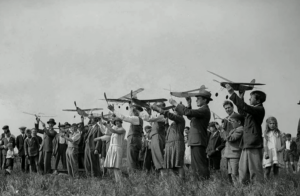
A portrait could require preparation, expense, and patience. A photograph was not something casually taken and instantly shared. It was a physical object that had to be created, developed, stored, and preserved.
That physical distance from the past is part of what makes surviving photographs so powerful today.
When we see a photograph from 1900, we are not simply seeing an old picture.
We are seeing a moment that survived.
The people in it are gone. The buildings may have disappeared. The roads may have been rebuilt. The clothes, customs, technologies, and social expectations may have changed beyond recognition.
Yet the photograph remains.
And sometimes that contrast is enough to create an extraordinary sense of unease.
Consider a street photographed more than a century ago.
There may be no traffic lights, no modern automobiles, no towering buildings, and no familiar advertisements. Instead, there are horse-drawn vehicles, shopfronts with hand-painted signs, pedestrians in unfamiliar clothing, and perhaps children standing near the edge of the road.
At the time, none of this was unusual.
It was simply life.
That is what makes the image so fascinating.
The people inside the frame were not performing “the past.” They were living in the present.
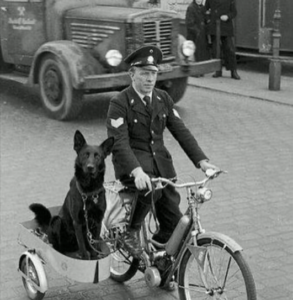
They woke up that morning without knowing that their world would eventually become something future generations described as historical.
A child standing beside a doorway did not know that, a century later, someone might study the photograph and wonder who they were.
A shopkeeper did not know that the building behind them might eventually vanish.
A family posing for a portrait could not know that their photograph might outlive their home, their neighborhood, and even their descendants’ memory of them.
This is where the phrase “lost world” becomes especially meaningful.
The world itself is gone.
Not simply changed.
Gone.
Buildings can be demolished.
Factories can close.
Neighborhoods can be redesigned.
Railway lines can disappear.
Fashion changes.
Languages evolve.
Customs fade.
Even the way people stand for a photograph changes.
The camera preserves a version of reality that time cannot preserve physically.
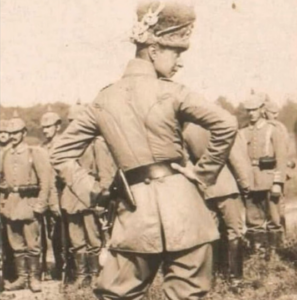
That is why an apparently mundane image can sometimes feel more haunting than a dramatic one.
A battlefield photograph immediately tells us that something terrible has happened.
An ordinary family portrait does something different.
It makes us imagine everything that happened afterward.
Who lived?
Who died?
Who moved away?
What happened to the children?
Did the family remain together?
Did the house survive?
What became of the street?
The photograph does not answer.
It simply waits.
That silence is part of its power.

Historical photographs are often missing the information we most want.
We may know the approximate date but not the names.
We may know the city but not the circumstances.
We may know the photographer but not the identities of the people.
A caption might tell us that a group of workers was photographed outside a factory in 1910.
But who was standing on the left?
Who was the youngest person in the group?
What happened to them afterward?
Those unanswered questions can make a photograph feel strangely intimate.
We are looking directly at someone who cannot tell us their story.
And that is where historical photography becomes more than visual nostalgia.
It becomes an encounter with absence.
The late nineteenth and early twentieth centuries were periods of enormous transformation. Industrialization reshaped cities and workplaces. New transportation systems changed how people traveled. Photography itself became increasingly accessible. At the same time, poverty, dangerous working conditions, overcrowded housing, warfare, and social inequality remained realities for millions.
Old photographs preserve evidence of both sides of this transformation.
There are images of technological progress: factories, railways, bridges, automobiles, new buildings, machines, and expanding cities.

But there are also photographs of workers, crowded housing, children laboring, damaged neighborhoods, and people living at the margins of society.
Looking at them together complicates the familiar image of the past as either a romantic golden age or a primitive period waiting for modernization.
The past was neither so simple.
It was a mixture of progress and hardship, optimism and uncertainty, wealth and poverty, innovation and suffering.
That complexity is one reason old photographs remain valuable.
They can challenge nostalgia.
A photograph of a beautiful old street may inspire admiration.
But another image from the same period may show the cramped living conditions only a few blocks away.
A photograph of a magnificent industrial building may symbolize technological achievement.
Another may show the workers whose labor made that achievement possible.
A formal family portrait may look peaceful.
A photograph of a wartime departure may suddenly remind us that the future of those smiling faces was unknown.
The images become more meaningful when placed beside one another.
And this is why the word “unsettling” can describe them so well.
The photograph does not have to be frightening.
It only has to disrupt our assumptions.
Perhaps the most unsettling discovery is that many of the things we associate with modern life are not as permanent as they feel.
Cities seem permanent.
They are not.
Industries seem permanent.
They are not.
Political systems, technologies, fashions, neighborhoods, and social customs all change.
The people of 1900 could not imagine our world in detail.
Future generations may find our own world equally strange.
A photograph of someone using a smartphone today may eventually look as unfamiliar to a person in 2126 as a horse-drawn street scene looks to us.
That thought changes the way we view historical photographs.
We are no longer simply looking backward.
We are imagining how the present might eventually look from the future.
Some images, of course, carry much darker histories.
Photographs of wars, disasters, industrial accidents, abandoned institutions, and marginalized communities can be difficult to view precisely because they document realities that people experienced directly.
A destroyed building is not merely an interesting architectural image.
It may represent homes lost.
A photograph of soldiers before a conflict is not merely a vintage portrait.
The people smiling at the camera may soon enter circumstances that will permanently change their lives.
A photograph of an overcrowded tenement is not simply an old urban scene.
It can provide evidence of living conditions that written descriptions may struggle to communicate.
Photography gives these historical realities a physical presence.

We can see the narrow street.
We can see the clothing.
We can see the expressions.
We can see how close the buildings stood to one another.
We can sometimes see details that the photographer never thought would matter.
This is one of the great strengths of visual history.
Written records often preserve the decisions of governments, institutions, journalists, and prominent individuals.
Photographs can preserve ordinary people.
The person standing at the edge of the frame may never have appeared in an official document.
Yet their face survives.
Their posture survives.
Their clothing survives.
For a brief instant, their existence becomes visible to people living generations later.

That can be profoundly moving.
But photographs also require caution.
The camera does not automatically provide the complete truth.
It captures one angle.
One moment.
One selection.
The photographer decides where to point the lens and when to press the shutter.
Everything outside the frame disappears.
This means even an authentic photograph can provide only a partial view of an event.
A photograph of a crowded street may show hundreds of people but tell us nothing about what happened five minutes earlier.
A photograph of a smiling family may conceal difficulties that the subjects did not want to display.
A photograph of a factory may emphasize impressive machinery while leaving working conditions outside the frame.
The absence of something in a photograph does not necessarily mean it did not exist.
It may simply mean the camera was pointed elsewhere.
That is why historians combine photographs with other evidence.
Newspapers, census records, maps, letters, diaries, government documents, company records, museum collections, and oral histories can help reconstruct the circumstances surrounding an image.
Sometimes these sources confirm the obvious.
Sometimes they completely change the interpretation.

And sometimes they reveal that a photograph circulating online has been given the wrong date or location.
This is especially important in the era of viral historical photography.
An image can be shared thousands of times within hours.
The original caption may disappear.
A speculative story may be added.
Another account copies it.
A third account presents the claim as established fact.
Eventually, the photograph may be widely recognized while its true history becomes harder to find.
The more mysterious the image, the faster this process can happen.
A photograph with an unknown identity becomes “a forgotten family.”
A damaged building becomes “an abandoned asylum.”
A strange object becomes “lost technology.”
An unidentified person becomes a famous historical figure.
Sometimes these identifications are correct.
Sometimes they are not.
The only reliable way to know is to investigate the evidence.

That may sound less dramatic than the title of a compilation video, but it can make the viewing experience much more rewarding.
Instead of asking only, “What am I looking at?” we can ask:
Who created this photograph?
When was it taken?
Where was it taken?
Why was it created?
Who are the people in it?
What happened before and after the moment was captured?
And perhaps the most important question:
What does the photograph not show?
The final question is often overlooked.
Every photograph contains an invisible border.
Beyond that border is another part of the story.
Sometimes it is only a few meters away.
Sometimes it is an entire world.

The photographs in collections like “100+ Unsettling Old Images That Capture a Lost World” are compelling because they invite viewers to imagine that unseen world.
A child stands beside a muddy road.
What lies beyond the camera?
A woman looks toward the photographer.
What happened immediately before the shutter opened?
A group of workers poses outside a building.
What did their working day look like?
A soldier smiles with his friends.
What would happen after the photograph was taken?
The image cannot answer.
But history sometimes can.
And when the evidence is missing, the uncertainty itself should remain visible.
Not every photograph needs a dramatic secret.
Sometimes its greatest significance is simply that it survived.
The physical survival of old photographs is itself remarkable.
Paper deteriorates.
Negatives can crack.
Albums are discarded.
Families move.
Archives are damaged.
Collections are lost.
Images can be separated from their captions.

A photograph that survives a century has passed through countless opportunities for disappearance.
That makes every surviving image a kind of historical survivor.
The same is true of ordinary photographs.
A picture of a street may have been considered meaningless by its original owner.
Today, it could be the only surviving visual record of that street before redevelopment.
A photograph of workers may appear anonymous.
Today, it can provide evidence about clothing, machinery, workplace organization, or demographics.
A family portrait may contain no famous person whatsoever.
Yet it preserves faces that would otherwise have vanished completely.
This is perhaps why old photographs can feel so personal.
History is usually presented through famous names.
Photography often brings us back to everyone else.
The anonymous.
The overlooked.
The people who never expected to appear in a history book.
Their presence reminds us that history was created not only by leaders and famous figures, but by ordinary people going about their lives.
And there is another unsettling realization.
Every photograph of the past was once a photograph of the present.
The people in it did not think of themselves as historical.
They were simply living.
That is exactly how we experience our own lives.
The clothes we wear today may one day look strange.
The buildings around us may disappear.
The devices we consider essential may become museum objects.
Our streets may be rebuilt.
Our habits may seem unfamiliar.
And photographs that seem completely ordinary today may eventually become windows into a lost world.
Perhaps that is the deepest meaning behind these collections.

They are not really about old photographs.
They are about time.
Photography can stop a moment, but it cannot stop the world around that moment from changing.
A photograph says, “This existed.”
History eventually tells us, “It no longer does.”
Between those two statements lies the strange emotional power of the old image.
It is evidence of presence and evidence of absence at the same time.
The people were there.
The street was there.
The building was there.
The world was real.
And then time continued.

That is why a century-old photograph can sometimes feel like a message from another civilization.
Not because the people were fundamentally different from us.
In many ways, they were remarkably similar.
They loved.
They worked.
They worried.
They celebrated.
They raised children.
They made plans.
They hoped for the future.
The difference is that their future has already become our past.
And our future has not yet been written.
Perhaps one day someone will look at a photograph taken today and experience the same strange feeling we have when looking at a street from 1900.
They will notice unfamiliar technology.
They will wonder about our clothes.
They will study our buildings.
They may ask why we arranged ourselves in certain ways.

And they may wonder what happened to everyone after the camera captured that particular moment.
They will be looking at a lost world.
Our world.
That is the quiet mystery preserved in old photography.
The photograph may show only a few people standing together, a street, a house, a factory, or a landscape.
But behind that frame is an entire universe of lives that once felt permanent.
Now only fragments remain.
A face.
A doorway.
A road.
A machine.
A family.
A moment.
And perhaps that is why these images continue to unsettle us.
They do not merely show us how different the past was.
They show us how quickly the present becomes the past.
The world captured in these photographs is gone, but the questions remain.
Who were these people?
What did they hope for?
What did they fear?
What did they see that we will never know?
And when our own photographs eventually become historical artifacts, what will future generations see when they look into our lost world?
Note: Some content was generated using AI tools (including ChatGPT) and edited by the author for creativity, storytelling, and historical illustration purposes. Historical facts and key details should be verified against reliable historical sources. Any AI-generated or reconstructed visuals are intended for illustrative purposes and should not be interpreted as original historical photographs or archival evidence.