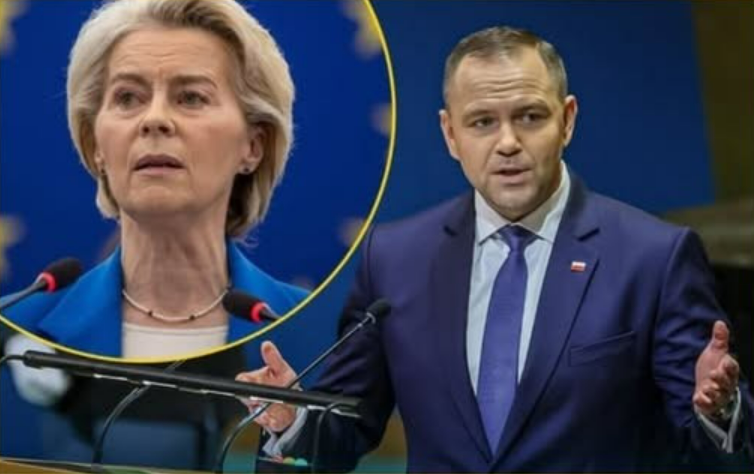

The Fortress of the East: Inside Poland’s High-Stakes Defiance of the European Migration Paradigm
For over a decade, migration policy has served as the central ideological fault line of the European project. What began in 2015 as an acute humanitarian emergency—prompted by conflicts across Syria, North Africa, and the Middle East—quickly transformed into a structural stress test for European Union institutions.
While Western European capitals initially championed collective responsibility, asylum dispersal frameworks, and humanitarian quotas, the Visegrád nations—led uncompromisingly by Poland—pioneered a divergent path. Rather than integrating into the proposed European relocation mechanisms, Warsaw constructed a policy framework anchored in strict border externalization, unyielding national sovereignty, and a sharp demarcation between regulated economic migration and irregular humanitarian claims.
================================================================================
                    KEY PILLARS OF THE POLISH MIGRATION MODEL
================================================================================
 1. Sovereign Veto: Rejection of compulsory EU migrant redistribution quotas.
 2. Hard Perimeter: Physical and electronic fortification of eastern borders.
 3. Selective Entry: Prioritization of cultural compatibility and labor needs.
 4. Civic Cohesion: Preservation of social order as a national security asset.
================================================================================
Main Events: The Transformation from Policy Dispute to Geopolitical Confrontation

The trajectory of Poland’s migration posture has evolved through distinct phases:
-
The Rejection of Mandatory Relocation (2015–2020): Warsaw consistently mounted legal and political resistance against Brussels’ attempts to enforce compulsory refugee distribution quotas across member states, asserting that national demographics and border integrity are non-negotiable sovereign competencies.
-
The Eastern Border Crisis (2021–Present): The nature of the debate shifted from political philosophy to kinetic defense when the border with Belarus transformed into an active theater of hybrid pressure. In response to state-sponsored migrant transit orchestrated by Minsk and Moscow, Poland deployed the military, declared border exclusion zones, and erected a 5.5-meter-high steel barrier equipped with thermal cameras and motion sensors along its 186-kilometer eastern frontier.
-
The Shift in Brussels (2023–2026): Over successive European summits, the Polish model moved from the institutional fringe to the center of European debate. Several mainstream European leaders began adopting language and border enforcement strategies once dismissed as extreme when first implemented by Warsaw.
+-----------------------------------------------------------------------------+
|                      THE DIVERGENT EUROPEAN APPROACHES                      |
+-----------------------------------------------------------------------------+
| WESTERN EUROPEAN "OPEN SYSTEM"     | POLISH "SOVEREIGN PERIMETER"           |
| • Multilateral quota solidarity   | • Absolute national policy veto        |
| • Focus on asylum processing       | • Physical border externalization      |
| • Post-entry integration efforts   | • Pre-entry exclusion & deterrence     |
| • Humanitarian compliance focus    | • National security prioritization     |
+-----------------------------------------------------------------------------+
Key Actors & Core Arguments
+-------------------+---------------------------------------------------------+
| ACTOR             | POSITION & CORE ARGUMENT                                |
+-------------------+---------------------------------------------------------+
| Polish Government | Migration is a sovereign prerogative, not an EU mandate;|
| & Coalitions      | physical borders prevent human trafficking & instability.|
+-------------------+---------------------------------------------------------+
| European          | Coordinated solidarity and binding redistribution are   |
| Commission        | required to prevent frontline states from being overwhelmed.|
+-------------------+---------------------------------------------------------+
| Human Rights      | Pushbacks and rapid border expulsions compromise legal  |
| NGOs & Legalists  | rights to international protection under Geneva norms.  |
+-------------------+---------------------------------------------------------+
| Economic & Labor  | Poland's rapid economic growth requires foreign labor,   |
| Analysts          | creating tension between rhetoric and work visa realities.|
+-------------------+---------------------------------------------------------+
The Debate Over Crime, Economy, and Cohesion
-
Public Safety & Crime Metrics: Proponents consistently point to Poland’s comparatively low rates of violent crime and public disorder relative to major Western European urban centers as empirical validation of its controlled border strategy. Conversely, criminological scholars emphasize that crime rates reflect complex multivariate dynamics, including native demographic age curves, domestic policing density, socio-economic baseline equity, and reporting methodologies.
-
The Economic Balancing Act: While maintaining a rigid public posture against irregular migration, Poland has sustained high GDP growth, expanding industrial output, and robust export markets. To meet domestic manufacturing and construction labor shortages, state authorities issued record numbers of bilateral temporary work visas—largely from neighboring Eastern European countries and selected Asian economies—illustrating a pragmatic separation between legal economic migration and irregular asylum channels.
2. My Professional Perspective
================================================================================
                         MY PROFESSIONAL PERSPECTIVE
                  An Investigative Lens on the Sovereign Pivot
================================================================================
Having spent three decades analyzing geopolitical transitions from post-Cold War Central Europe to the modern corridors of Brussels, one fundamental truth becomes clear: the Polish migration debate is not merely an argument about border fencing; it is a fundamental struggle over where sovereign state authority ends and supranational governance begins.
Beneath the talking points and political rhetoric lies a structural realignment that is quietly reshaping the future of the European Union.
I. The Hybrid Warfare Reality: Redefining Asylum as a Defense Issue
The fundamental blind spot in standard Western commentary on Poland has been the persistent inclination to view its eastern border through a purely peacetime humanitarian lens.
What unfolded along the Polish-Belarusian frontier was not an organic movement of displaced populations; it was an early iteration of weaponized migration orchestrated by foreign intelligence services. By funneling third-country nationals toward Polish border posts, adversarial states attempted to test NATO’s eastern frontier, induce institutional paralysis in Warsaw, and provoke political instability across the EU.
                  THE HYBRID MIGRATION VECTOR

    [ Foreign State Actors / Logistics Networks ]
                         |
                         v (Facilitated transit)
             [ Belarusian Border Corridor ]
                         |
                         v (Coordinated pressure)
        +----------------------------------+
        |   POLISH PERIMETER DEFENSE LINE  |
        +----------------------------------+
          /                              \
         v                                v
  [ National Security Priority ]   [ Humanitarian Crisis Point ]
  - Military Deployment            - Stranded Migrants
  - Steel Perimeter Walls          - NGO Legal Challenges
  - State Deterrence               - Pushback Controversies
By framing border enforcement as national defense rather than administrative asylum processing, Polish authorities altered the terms of the debate. Warsaw established a precedent: when migration is leveraged as an asymmetric tool, traditional international asylum conventions collide directly with national security doctrines.
II. The Great Hypocrisy: The Quiet Adoption of the “Polish Model”
For years, Western European capitals criticized Poland’s hardline border stance as an abandonment of European values. Yet, behind closed doors, a major political shift has occurred:
+-----------------------------------------------------------------------------+
|                  THE EVOLUTION OF EUROPEAN MIGRATION POLICY                 |
+-----------------------------------------------------------------------------+
| 2015: "Refugees Welcome"  --> Condemnation of border fences as illiberal    |
| 2018: Crisis Fatigue      --> Tacit funding of third-country transit deals  |
| 2021: Eastern Border Push --> Bilateral border fortifications recognized    |
| Today: Strategic Adoption --> Mainstream European push for external centers |
+-----------------------------------------------------------------------------+
Across Germany, France, the Netherlands, and the Nordic states, the political center of gravity has steadily moved toward Warsaw’s baseline:
-
Physical border infrastructure is now routinely funded and constructed across the bloc.
-
The demand for external processing centers and third-country transit agreements has become a mainstream EU agenda item.
-
The European Commission has increasingly tolerated extraordinary border measures during national security emergencies.
While Poland absorbed years of political criticism for refusing to accept the consensus, its core approach—deterrence, physical control, and sovereign veto power—has become the de facto operational blueprint for the continent.
III. The Internal Paradox: Border Rhetoric vs. Economic Realities
The most critical aspect largely missing from everyday public coverage is the sharp divide between Poland’s hardline political rhetoric and its domestic economic trends.
              THE DUAL-TRACK IMMIGRATION PARADOX

   PUBLIC / POLITICAL STANCE            ECONOMIC REALITY
+-----------------------------+     +-----------------------------+
| • Zero irregular tolerance  |     | • Expanding industrial base |
| • Rejection of EU quotas    | vs. | • Aging demographic pyramid |
| • Focus on cultural defense |     | • High work-visa issuance   |
+-----------------------------+     +-----------------------------+
Poland is grappling with serious demographic challenges, characterized by a rapidly aging workforce and declining fertility rates. To sustain its industrial growth, Polish enterprises have required hundreds of thousands of foreign workers.
While the political discussion emphasizes total closure and cultural preservation, administrative agencies have quietly overseen one of Europe’s largest expansions of legal, temporary work permits. The policy challenge for Warsaw is not whether it will integrate foreign labor, but whether it can maintain its public posture while relying on imported labor to keep its factories, supply chains, and construction sectors competitive.
IV. The Unanswered Questions Ahead
As this policy framework matures, critical structural questions remain:
-
The International Legal Framework: How long can post-WWII international treaties on asylum remain functionally intact when sovereign states systematically subordinate individual claims to collective border security?
-
The Precedent of Exceptionalism: If individual member states can unilaterally suspend or circumvent standard EU asylum rules in the name of national defense, what remains of a coherent, unified European legal order?
-
The Demographic Reckoning: Can a nation maintain high economic growth and sovereign border controls without eventually having to liberalize long-term immigration channels?
The debate surrounding Poland’s migration policy goes far deeper than daily political headlines. It represents a fundamental collision between two opposing visions of 21st-century governance: the post-national, rules-based humanitarian multilateralism of Brussels versus the bordered, sovereign, security-focused nation-state modeled by Warsaw.
Poland has demonstrated that physical borders can be defended when political will is applied. In doing so, it has forced the rest of Europe to confront uncomfortable trade-offs between open humanitarian values and the practical demands of territorial integrity and social cohesion.
Yet, as demographic realities catch up with economic growth and global instability continues to drive migration, the Polish strategy faces an evolving test:
Can a modern European society successfully insulate its borders from global migration pressures without compromising either its long-term economic dynamism or the legal foundations that define Europe itself?