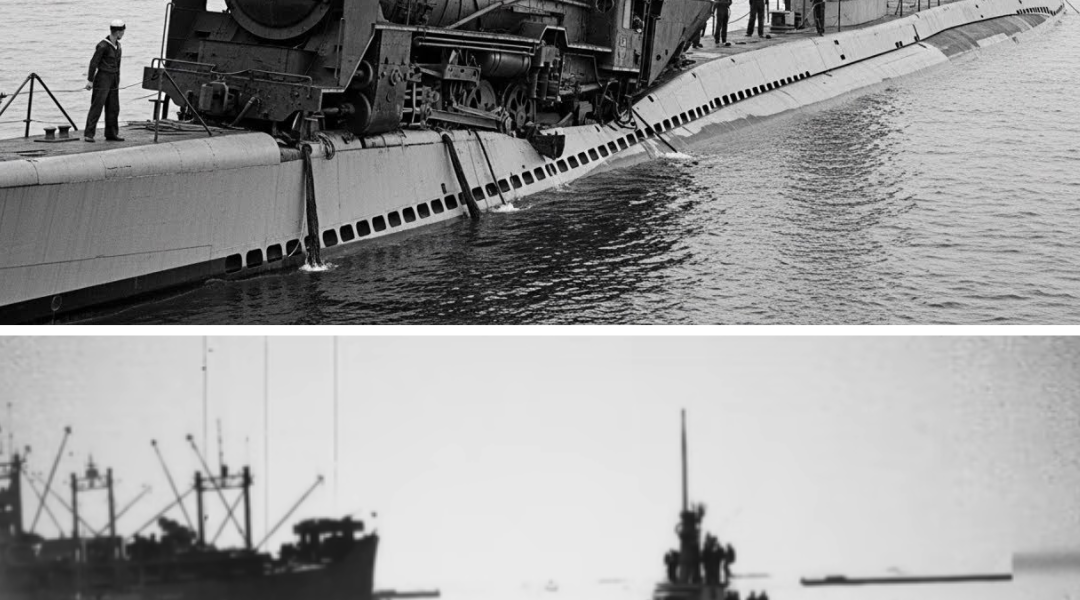
The Submarine That Sank a Train: The USS Barb’s Legendary Mission
The Unlikely Hero: Commander Eugene Flucky
In the summer of 1945, the Pacific War was nearing its final stages, but for American submariners like Commander Eugene Flucky, every patrol was still filled with danger, daring, and innovation. At 31 years old, Flucky had already proven himself to be a seasoned, fearless commander, having sunk 17 enemy ships and earned the Medal of Honor for his audacious attack on Nam Kuan Harbor in January. But it was during his 12th war patrol that Flucky would lead his crew of the USS Barb into one of the most remarkable feats in naval history: a mission so daring that it would go down in history as the only time a submarine ever sank a moving train.
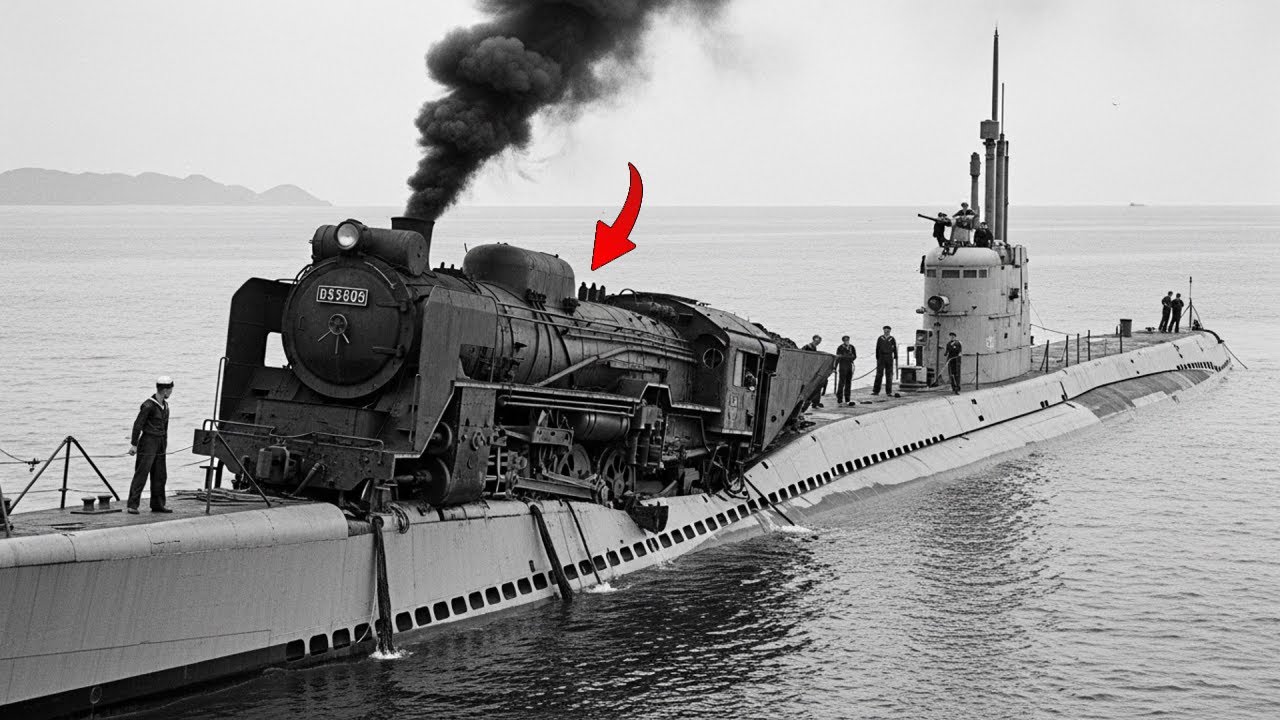
The USS Barb, a Gato-class submarine, had been one of the most decorated ships in the Pacific Fleet, but it wasn’t just her armament that made her dangerous—it was the genius of her captain. Flucky, having already earned numerous awards, wasn’t satisfied with the conventional methods of submarine warfare. By June 1945, the Pacific was nearly devoid of Japanese merchant ships, and Flucky wanted to take his submarine’s capabilities beyond the typical torpedo attacks.
After securing approval, Flucky bolted a rocket launcher onto Barb’s forward deck, making it the only rocket-launching submarine in the entire U.S. Navy. Armed with 72 rockets, the submarine set out for the Japanese coast with orders to raise hell, and that’s exactly what Barb did. Flucky’s strategy was to strike Japanese factories, industrial hubs, and military infrastructure with precision rocket attacks, proving that submarines could play a far larger role in warfare than anyone had anticipated.
The Train: A Deadly Supply Line
As Barb continued its patrols along the northern coast of Japan, Flucky and his crew became a ghost story for the Japanese military. But there was one glaring problem: the Japanese were still using trains to transport soldiers, ammunition, and supplies along the coast to support their forces. Each train was a potential threat to the Americans, carrying men and materials destined to reinforce the Japanese defense against the anticipated Allied invasion. Flucky knew that if these trains weren’t stopped, they would continue to fuel the Japanese war effort, making an invasion more difficult and deadly.
Flucky had already ordered attacks on Japanese coastal installations with remarkable success, but he knew he needed to do more. The Japanese trains were running day and night, with little to no protection against a submarine attack. He had a vision: Barb could hit these trains—but not just with torpedoes or rockets. No, Flucky wanted to do something that no one had ever done before. He wanted to blow up a moving train using the very thing that made submarines so effective—their stealth and creativity.
Planning the Impossible: A Submarine Sabotage
The idea that Flucky and his crew would launch an attack on a moving train while remaining submerged in the ocean was, in itself, ludicrous. No one had ever attempted such a mission, and the risks were immense. Barb would need to surface near the shore and send a small shore party to plant an explosive device on the railroad tracks, directly beneath the trains. If they were caught by Japanese patrols, there would be no escape. The submarine would be exposed on the surface, and the men on the beach would be trapped behind enemy lines with no backup.
But Flucky was never one to shy away from risk. He devised a plan that would rely on his crew’s ingenuity and the element of surprise. Chief Gunner’s Mate Paul Saunders and Electrician’s Mate Billy Hatfield were tasked with creating the device—a modified scuttling charge, designed to explode when the weight of a locomotive pressed down on a pressure switch. It was a simple but highly dangerous idea: the locomotive’s weight would close the circuit, detonating the charge beneath the train’s boiler. The explosion would be powerful enough to derail the train and kill or incapacitate the troops and supplies aboard.
Flucky selected his shore party carefully. The men had to be in excellent physical shape, capable of surviving a swim if needed, and—ideally—former boy scouts, familiar with navigation and survival in the wild. Eight men volunteered for the mission, each one fully aware of the dangers. They prepared for the most dangerous ground combat operation in the entire Pacific War.
Into the Darkness: The Shore Party
On the night of July 22nd, 1945, Flucky made the decision to strike. With cloud cover hiding the moon, Barb crept up to within 950 yards of the shore. The submarine sat low in the water, vulnerable to Japanese patrol boats, but the darkness gave Flucky the cover he needed. The shore party, equipped with rafts, explosives, and shovels, was ready. The eight men paddled silently toward the beach, their hearts pounding in anticipation.
The mission was clear: plant the explosive beneath the tracks, get back to the rafts, and escape without being detected. The men worked with speed and precision, but every minute on enemy soil increased the risk of discovery. The Japanese could launch a counterattack at any moment, and if they were caught, it would mean certain death.
But luck was on their side. No Japanese patrols appeared as the men made their way to the railroad embankment. The tracks were dark and quiet, and the team quickly got to work. Hatfield carefully placed the scuttling charge beneath the rail, ensuring the micro switch was perfectly aligned. Every move was made with caution. They had no room for mistakes. The tension was palpable as they dug and wired the device, the sound of their work masked by the distant rumble of the ocean.
The Train Approaches: The Moment of Truth
At 1:15 AM, as the explosive was carefully buried and the last connections were made, a distant sound broke the silence. A train was coming. The crew immediately dropped to the ground, hiding in the grass as the locomotive passed just 15 feet from their position. The train was moving fast, and Flucky’s timing had to be perfect. They had one shot at this. If the charge didn’t go off, the mission would fail, and the crew would be trapped.
The train passed, and the men held their breath. Two full minutes went by before Saunders gave the signal to move. The team made their way back to the rafts, leaving behind only the planted charge. But as they made their escape, Flucky’s keen eye spotted another train approaching, coming from the opposite direction. It was going to be close—too close for comfort.
The Explosion: A Moment of Glory
With just minutes to spare, the shore party made it back to the rafts. As they paddled away from the shore, Barb began to move away from the coastline. The submarine’s engines hummed as the crew nervously watched through the periscope, hoping against hope that the timing would work out.
And then it happened. At 1:47 AM, the train reached the section of track where the explosive had been planted. The sound of the explosion was deafening. The first blast sent a fireball into the sky, disintegrating the locomotive and sending debris flying. The train derailed in a spectacular chain reaction, the fire igniting ammunition and supplies aboard the freight cars. The explosion echoed across the waters, a thunderous reminder that Barb had struck the heart of the Japanese war effort.
The Aftermath: A New Legacy for Submarine Warfare
As Barb made its way into deeper waters, Flucky’s crew allowed themselves a brief moment of celebration. They had accomplished something no one had thought possible: a submarine had successfully destroyed a moving train, crippling a critical supply line. The psychological impact of the attack was immeasurable. It forced the Japanese to divert resources to coastal defense and disrupted their supply chain at a critical time.
This operation was not just a success—it was a revolution in submarine warfare. The rockets fired from Barb marked the first time a submarine launched rockets against a shore target. The mission proved that submarines could do far more than just sink ships—they could project power ashore, sabotage enemy infrastructure, and wreak havoc on land targets.
Flucky’s achievement was celebrated across the Navy, and Barb became a symbol of the ingenuity and bravery of the American submarine force. However, Flucky, ever the humble commander, deflected credit to his crew, praising their bravery and skill. His leadership had kept every man on board alive, with zero casualties during his five war patrols—a remarkable feat in the brutal and dangerous world of submarine warfare.
The USS Barb’s Final Patrol
After Barb’s legendary 12th patrol, the submarine returned to Midway Island. The crew was greeted as heroes, and the submarine’s battle flag, adorned with symbols of their accomplishments, was proudly displayed. It was a testament to their extraordinary achievement—the only submarine in history to sink a train.
But the war was nearing its end. The atomic bombings of Hiroshima and Nagasaki would force Japan to surrender just days after Barb returned to port. The submarine’s career was over, but her legacy was secured. Eugene Flucky’s innovative tactics and the bravery of his crew would influence submarine warfare for decades to come, proving that submarines could achieve far more than previously imagined.
The USS Barb was eventually decommissioned, but her story, and the stories of the men who served aboard her, would live on in the annals of naval history. The crew’s courage, ingenuity, and willingness to risk everything to achieve the impossible marked the end of one era and the beginning of a new chapter in submarine warfare.