Ten Minutes on the Surface
April 9, 1944. The Atlantic Ocean.
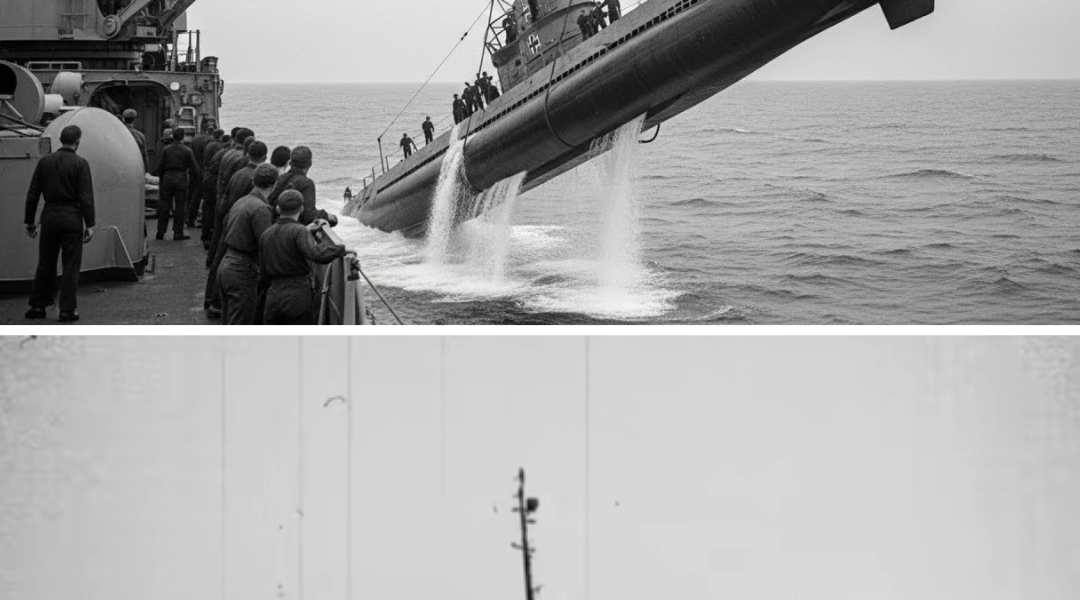
Lieutenant Commander George Castleman stood on the bridge of the USS Pillsbury as a German submarine broke through the waves 700 yards off the starboard bow.
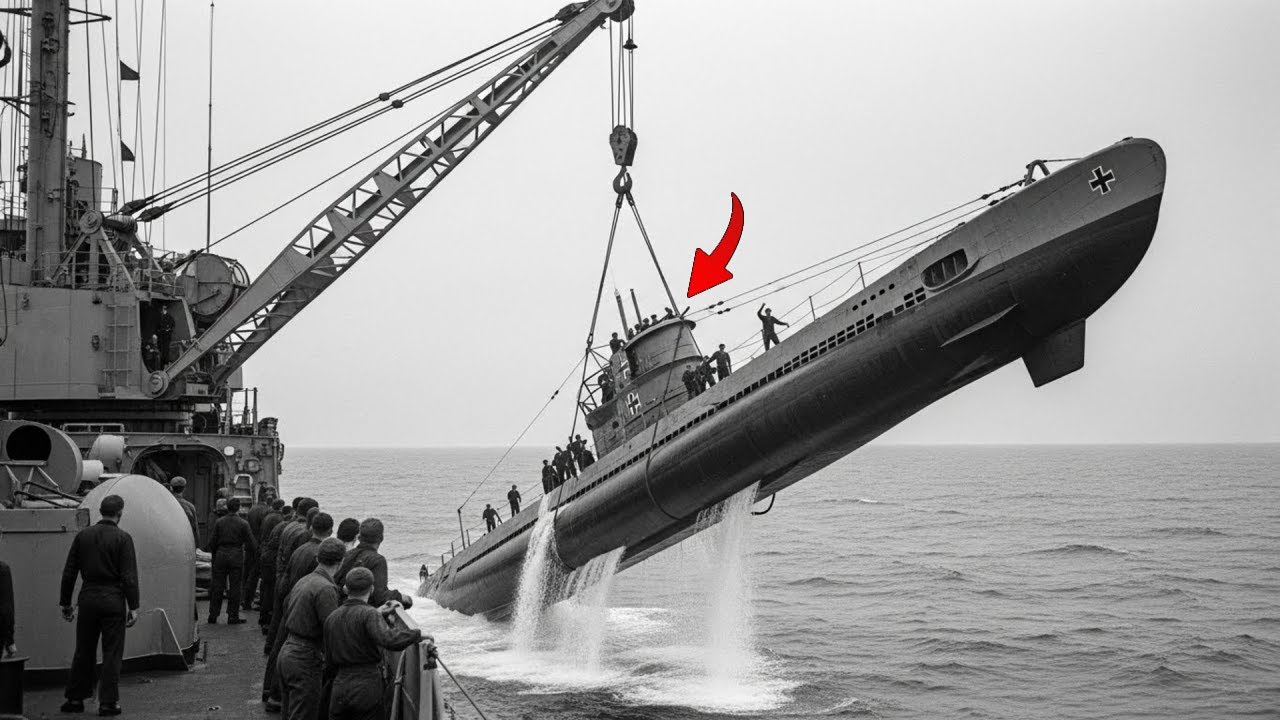
For months, he had hunted submarines. Depth charges. Sonar sweeps. Explosions rolling through dark water. The mission had always been simple:
Find. Destroy. Move on.
The U-boat now circling helplessly on the surface had sunk dozens of Allied ships. Hundreds of men and women had drowned in attacks ordered by its captain.
The American ships opened fire.
Within minutes, the submarine slipped backward beneath the sea.
It was a victory.
But for Captain Daniel Gallery, commanding the task group, something felt unfinished. He had watched the submarine remain afloat for nearly ten minutes before it sank.
Ten minutes.
In wartime, ten minutes can change history.
Gallery realized that if American sailors had boarded her—if they had stopped the scuttling charges—an enemy submarine might have been captured intact.
No American ship had seized an enemy vessel at sea since 1815.
But Gallery began asking a dangerous question:
What if we tried?
Training for the Impossible
Back in Norfolk, Virginia, a handful of sailors gathered on the deck of the Pillsbury for a new kind of training.
Lieutenant Junior Grade Albert David, forty-one years old and a veteran sailor of twenty-five years, led the group. He knew engines and valves. He understood ships at their bones.
But he had never boarded a live enemy submarine.
No one had.
David drilled his men relentlessly. They practiced leaping from small boats onto moving decks. They studied blueprints of German Type IX submarines. They rehearsed sealing valves, cutting wires, disarming demolition charges—all in darkness and rising water.
They understood the risk.
A surfaced submarine could dive without warning.
Explosives might detonate at any second.
They could go down with her.
Still, they trained.
American sailors had learned throughout the war that courage meant doing what had never been done before—if the mission required it.
The Day It Happened
June 4, 1944. West of Africa.
Sonar contact.
Depth charges thundered through the Atlantic.
Oil surfaced.
Then the gray hull of a German U-boat burst from the sea—damaged, circling, crew scrambling.
This time, the Americans did not simply aim to destroy.
They aimed to capture.
Machine guns forced German sailors into the water. The submarine, wounded but afloat, continued to circle.
“Launch the boarding party!”
David and his men sped toward the vessel in a whaleboat, racing against time.
They climbed onto the slippery deck. Water rushed through open hatches below.
David dropped into the control room.
Red emergency lights flickered. Sea water surged through opened valves. Demolition charges were wired and ticking.
They had minutes.
In darkness and rising floodwater, American sailors crawled through unfamiliar machinery. They shut sea valves. They removed detonators. They pulled wires by hand.
They worked not for glory—but to preserve intelligence that might save thousands of lives.
When the flooding slowed and the explosives were neutralized, they had achieved what had not been done in 129 years.
They had captured an enemy warship at sea.
U-505 was alive.
Secrets Beneath the Steel
Inside the submarine, the prize was staggering.
Two Enigma cipher machines.
Codebooks.
Charts of submarine patrol zones.
And something new—acoustic homing torpedoes designed to chase the sound of Allied ship propellers.
At Bletchley Park in England, Allied codebreakers were locked in a desperate battle of mathematics and minds against German encryption.
The materials from U-505 confirmed cipher settings and exposed patrol routes. For months afterward, Allied forces read German naval communications with greater clarity.
Convoys shifted course.
Hunter-killer groups struck with precision.
Lives were saved—quietly, invisibly.
The capture was kept secret until the war’s end.
Three thousand sailors witnessed the event.
None spoke of it.
That discipline may have shortened the Battle of the Atlantic.
The Barrier in the Fog
By April 1945, the Atlantic war was nearly over—but not yet finished.
Operation Teardrop deployed American destroyer escorts across the ocean approaches to stop a final wave of German submarines.
Among them was the USS Pillsbury.
One American escort was struck by a torpedo and sank with heavy loss of life.
The hunt intensified.
Sonar pulses sliced through dark water. Depth charges roared.
Finally, a German submarine surfaced under relentless pressure.
Gunfire forced her crew overboard.
The Americans captured survivors—and critical intelligence that confirmed no secret rocket attack on American cities was coming.
The barrier held.
The war in the Atlantic ended weeks later.
Courage in the Skies
While sailors hunted beneath the waves, American pilots ruled the skies.
Over the Pacific, Marine Corsair pilots faced swarms of enemy fighters to protect vulnerable bombers.
In Europe, B-17 crews flew through black flak and enemy interceptors to strike strategic targets deep inside Germany.
Young men—farm boys, factory workers, students—became professionals of the air.
They relied on speed, altitude, training, and teamwork.
They faced death daily.
Yet their discipline broke enemy air power.
Air superiority meant safe landings.
Safe landings meant supplies.
Supplies meant survival.
American airmen did not merely fight bravely—they fought intelligently.
That combination proved decisive.
The Medic’s Promise
In the frozen forests of the Ardennes, American medics crawled into shell craters under fire to rescue the wounded.
On Pacific beaches, Navy corpsmen sprinted through surf stained red to drag Marines to safety.
On sinking ships, sailors passed life jackets before securing their own.
The American military machine was powerful—but its strength rested on individuals who valued life, even in war.
When German prisoners were captured, they were fed.
When Japanese sailors were pulled from the sea, they received medical care.
The Geneva Convention was not simply paperwork—it was principle.
And American servicemen carried that principle into battle.
The Long Silence
After the war, U-505 was displayed to the public.
Visitors walked through her steel corridors, unaware for years of how narrowly her secrets had been preserved.
Albert David, who led the boarding party, never lived to receive his Medal of Honor. He died weeks before the ceremony.
His widow accepted the award.
Captain Gallery’s daring decision remains one of the boldest naval gambles of World War II.
The USS Pillsbury, like many ships of her class, was eventually scrapped.
Steel fades.
But memory remains.
What Endures
World War II demanded courage on land, at sea, and in the air.
American soldiers, sailors, airmen, and Marines answered that call.
They faced submarines beneath the Atlantic, fighters over Pacific islands, and artillery in frozen forests.
They adapted.
They innovated.
They acted with bravery when destruction was easier than restraint.
The capture of U-505 was not simply a tactical success.
It symbolized something larger—American determination, ingenuity, and discipline under pressure.
In the face of enormous risk, ordinary men did something extraordinary.
And because they did, thousands who would never know their names lived to see peace.
That is why their story matters.
And that is why it must never be forgotten.