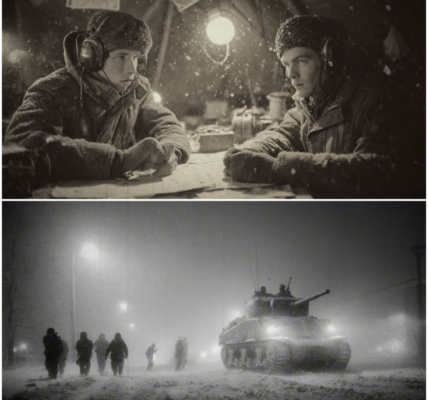
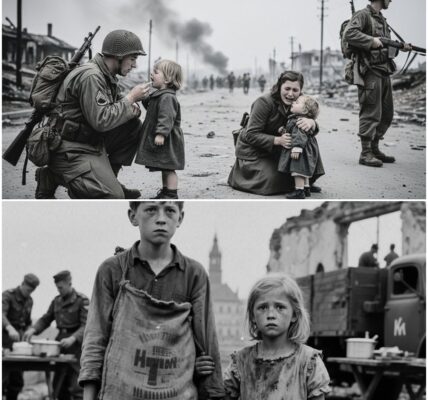
These Old Photos Will Change Your Perspective on the Past! Historical Photos – Archaeological Ruins .P2

In May 1980, Richard Lasher was riding his motorcycle near Mount St. Helens when the mountain erupted. What had begun as an ordinary journey suddenly became a moment of history. From a distance, Lasher stopped and watched as an enormous ash cloud rose above the landscape. He could not have known that the scene before him would become part of the visual record of one of the most significant volcanic eruptions in modern American history. The photograph captures something strangely quiet: one person, one motorcycle, and a landscape changing before his eyes. But this was only one of countless moments when ordinary people suddenly found themselves standing at the edge of history.
Some photographs record catastrophe.
Others record survival.
And some reveal how quickly an ordinary world can become something entirely different.
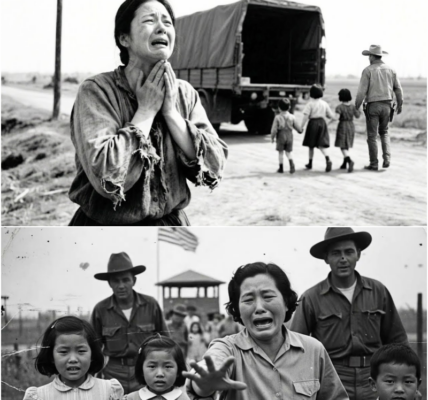
In the early 1940s, Japanese Americans gathered at an internment center in the American Northwest. Wooden buildings and mountains formed the backdrop of a life that had been radically altered by wartime policy. After the attack on Pearl Harbor, the United States government forcibly removed and incarcerated more than 100,000 people of Japanese ancestry, most of them American citizens, under an order issued during World War II. The camps became one of the most controversial episodes in American wartime history.
The photographs can look deceptively ordinary.
People stand together.
Buildings appear in the background.
There may be mountains beyond them.
But the surrounding landscape cannot explain the circumstances that brought those people there.
That is what makes historical photography so powerful.
The image shows what the camera could see.
History forces us to ask what existed outside the frame.
A similar question arises when looking at photographs from the Great Depression.

In New York in 1933, an improvised settlement known as a Hooverville appeared in Central Park. Makeshift shelters were constructed from whatever materials people could find. Wood, cardboard, discarded materials, and scraps became walls and roofs for people who had lost homes and jobs during the economic crisis.
The name itself reflected the anger of the period. “Hooverville” became a commonly used term for Depression-era shantytowns, referring critically to President Herbert Hoover, whom many Americans blamed for the economic catastrophe.
But behind the political meaning was something more basic.
People needed somewhere to sleep.
The Depression had transformed unemployment from an individual problem into a mass social crisis.
Across America, families that had once believed they possessed a reasonably secure future suddenly faced uncertainty about food, housing, and work.
Photographs of these settlements therefore do more than document poverty.
They preserve the moment when confidence in the stability of modern life began to collapse.
And the world outside America was facing its own upheavals.
In Gävle, Sweden, a major flood in August 1945 transformed ordinary streets into waterways. A photograph shows a woman working with a saw amid the floodwaters, attempting to protect or recover property.
The war in Europe had just ended.
But for many people, history did not immediately become peaceful.
Floods, shortages, displacement, destroyed infrastructure, and economic uncertainty continued to shape daily life.
The end of a war does not instantly restore the world that existed before it.
Sometimes the rebuilding begins with something as simple as clearing water, repairing a house, finding food, or returning to work.
That contrast appears again in photographs from the entertainment world.
In 1945, aerial performer Betty Fox was photographed performing on the roof of the Fort Shelby Hotel in Detroit. The spectacle belonged to a period when live entertainment frequently pushed physical performance toward increasingly daring displays.
There was danger in such performances, but there was also something else.
People wanted to be entertained.
They wanted to watch something extraordinary.

Even in difficult decades, audiences still sought moments of escape.
The same fascination with spectacle can be seen in an unusual photograph from Los Angeles in the 1930s, showing a woman riding an alligator during a public attraction.
Today the scene looks almost impossible.
But that is part of the historical value of such photographs.
They reveal what earlier generations considered acceptable entertainment, what they found unusual, and how public spectacles could turn almost anything into a source of curiosity.
Not every photograph from the past needs to depict a major political event.
Sometimes history survives in the strange details.
In Italy in 1959, children in a rural community near Modena reportedly had to cross a river using a pulley system to reach school.
For modern viewers, the image can seem extraordinary.
For the children who depended on the crossing, it was simply part of getting to class.
This is one of the great differences between seeing history from the present and living it in the past.
What looks astonishing to us may have been routine to them.
Infrastructure was not equally developed everywhere.
A river could separate a child from school.
A shortage of materials could force people to improvise.
A long journey could become part of everyday life.
The same principle can be seen in photographs of London during the First World War.
Barrage balloons were suspended above the city as part of Britain’s air-defense system. Their purpose was to obstruct or discourage low-level aircraft attacks.
The balloons became an unmistakable feature of wartime skies.
They were not weapons in the conventional sense.
They were obstacles.
Their presence changed the appearance of the city and reminded civilians that the air above them had become part of the battlefield.
The twentieth century repeatedly transformed familiar environments into military spaces.
Streets became checkpoints.
Factories became weapons plants.
Fields became defensive positions.
Skies became battlefields.
And cities became targets.
That transformation would become even more dramatic during the Second World War.
Yet history was never composed entirely of soldiers.
In 1936, Buddhist monks at a temple in Tokyo participated in a civil-defense exercise involving gas masks.
The photograph is striking because traditional religious clothing appears beside modern protective equipment.
The contrast captures something essential about the era.
Ancient institutions were being forced to adapt to modern warfare.
Chemical weapons had been used on a massive scale during World War I, and the fear of future gas attacks remained widespread between the wars.
By the 1930s, governments and communities around the world were preparing civilians for the possibility that another major conflict could reach far beyond military fronts.
Then came 1939.
Then 1940.

Then 1941.
And the preparations became reality.
The Second World War would eventually involve almost every major power and transform the lives of hundreds of millions of people.
One photograph from the Pacific offers a different perspective on that conflict.
On Christmas Day in 1942, a Papuan local helped an Australian soldier during fighting in the region.
The Pacific War is often remembered through photographs of aircraft carriers, Marines, jungle combat, and naval battles.
But alliances were also built through local populations.
People who lived in the region became guides, carriers, rescuers, scouts, workers, and helpers.
Their contribution could be decisive, yet their stories have often received less attention than those of the armies fighting there.
Then there were the people who experienced the war from within their own homes.
The Romanov children were photographed with shaved heads after suffering measles in early 1917.
The image predates the Second World War by more than two decades, but it reminds us that photographs often preserve moments whose historical significance was not yet apparent.
When the photograph was taken, the Russian Empire still existed.
Only months later, revolution would overturn the political order.
The Romanov family would become prisoners.
By 1918, the imperial family would be dead.
The children in the photograph could not have known that the world surrounding them was approaching its final days.
That is another recurring feature of old photographs.
People rarely know when they are living through the beginning of a historical transformation.
They simply live.
They pose.
They work.
They smile.
They wait.
Years later, historians look back and recognize the turning point.
The people themselves often did not.
In 1937, New York Mayor Fiorello La Guardia was photographed destroying confiscated gambling machines as part of his campaign against illegal gambling.
The image reflects a very different kind of conflict.
Not war between nations, but a political struggle over how society should be governed.
The twentieth century was filled with such campaigns.
Governments tried to regulate behavior.
Cities attempted to control vice.
Authorities enforced laws that later generations sometimes viewed very differently.
The photograph is therefore not simply about a machine being destroyed.
It is about the values and political priorities of the period.
A few decades later, many of those priorities would look different.
The world was changing quickly.
Technology was accelerating that change.
The Hindenburg airship represented one vision of the future: elegant interiors, long-distance travel, luxury, and the possibility that giant lighter-than-air vessels could become a major form of transportation.
The dream would end catastrophically in 1937 when the Hindenburg caught fire while attempting to land at Lakehurst, New Jersey.
The photograph of its dining room belongs to the period before that disaster.
It therefore carries an unusual kind of historical weight.
The people who designed and entered that elegant space saw modern transportation.
We see the end of an era.
The same pattern appears throughout the history of technology.
A new invention can appear inevitable when it is young.
Then circumstances change.
Another technology replaces it.
The future turns in a direction nobody expected.
During the Second World War, women in Britain found themselves adapting to shortages in unexpected ways.
In London in 1941, a woman had stockings painted directly onto her legs to imitate the appearance of nylon stockings.
Nylon was valuable for military purposes, particularly for parachutes and other equipment, while wartime shortages made ordinary consumer goods difficult to obtain.
The painted stocking became a small symbol of civilian adaptation.
It was not a battlefield.
But it was part of the war.
Wars are fought through economies as much as armies.
When resources are redirected toward military production, ordinary objects disappear from shops.
People improvise.
Fashion changes.
Consumption changes.
Daily life becomes an extension of national mobilization.
And sometimes, people protect culture with the same determination used to protect cities.

During the Second World War, the Mona Lisa was moved and hidden from potential danger.
The painting had been evacuated from the Louvre before the German occupation of Paris and spent the war years in various protected locations.
In 1945, after the liberation of France and the end of the European war, it could finally return to Paris.
The image of the painting being unpacked is more than a museum scene.
It represents the return of cultural memory.
Wars destroy buildings.
They destroy infrastructure.
They displace populations.
But they can also threaten the physical objects through which civilizations remember themselves.
Protecting a painting may seem insignificant beside protecting human life.
Yet cultural objects matter because they connect generations.
They tell people where they came from.
They remind societies that history existed before the war and must continue afterward.
The same desire to control public life appeared in another unusual series of photographs: pinball machines being collected for destruction.
In many American cities, pinball was restricted or banned for decades because authorities associated the machines with gambling and youth delinquency.
The machines became symbols of a larger cultural debate.
What was harmless entertainment?
What was gambling?
What should government regulate?
And how much control should authorities have over popular culture?
Such questions may seem distant from war.
But they reveal the same twentieth-century struggle over modernity.
Technology was changing faster than laws.
Entertainment was changing faster than social attitudes.
And governments repeatedly tried to decide where the boundaries should be.
By the 1950s and 1960s, another technological transformation was underway.
The space race had begun.
In 1960, Republic Aviation presented concepts for advanced spacesuits intended for future missions.
Scientists and engineers were studying how human beings might survive outside Earth.
In laboratories, researchers analyzed models and systems for crewed lunar missions.
Only fifteen years earlier, humanity had been fighting the largest war in history.
Now it was preparing to leave the planet.
The contrast is difficult to ignore.
The same industrial civilization that had developed aircraft capable of destroying cities was now developing machines capable of carrying humans to the Moon.
Technology itself was neither peaceful nor violent.
Its consequences depended on what people chose to do with it.
In 1969, Neil Armstrong was photographed in a much more ordinary setting, preparing food in Houston.
The image is almost humorous when placed beside the iconic photographs of Apollo 11.
The man who would soon become one of the most famous people on Earth could still be seen doing something completely ordinary.
That contrast is worth remembering.
Historical figures do not spend every moment performing history.
They eat.
They rest.
They joke.
They prepare.
They wait.
And sometimes, between those ordinary moments, they step into events that later generations will remember forever.
In July 1969, Armstrong would become the first human to walk on the Moon.

But the photograph of him preparing food reminds us that the historical figure and the ordinary person were the same human being.
The same era produced another remarkable experiment.
In 1961, engineers at Hughes Aircraft demonstrated the Mobot, an early remotely controlled mobile robot designed to perform tasks for humans.
It was an early glimpse of an idea that would become increasingly important decades later: machines assisting people with physical tasks.
Again, the photograph captures a future that had not yet arrived.
The people looking at the machine could see a prototype.
We can see the beginning of robotics.
Historical photographs are full of these moments.
The future is visible in them.
But only in retrospect can we recognize it.
In 1955, 62,500 punched cards represented approximately 4.5 megabytes of stored information.
Today that amount of data seems almost trivial.
At the time, it represented an enormous amount of information handled through a technology that was transforming computing.
The photograph is almost comical to modern eyes because physical cards represent something that now exists invisibly inside tiny electronic devices.
But the transition from punched cards to digital storage changed nearly every aspect of modern life.
The same century that began with horse-drawn transportation would end with computers connected across the world.
The physical world was becoming digital.
And cities were changing just as dramatically.
Between the late nineteenth century and the early twentieth century, Seattle underwent enormous earth-moving projects that reshaped its terrain.
Hills were cut down.
Streets were altered.
Land was moved to make room for a growing city.
The modern urban landscape often looks permanent.
It is not.
Cities are constructed environments.
Every road, tower, bridge, and neighborhood represents decisions made by people.
The same ambition could be seen in New York.
In 1931, the Empire State Building opened as the world’s tallest building.
The Chrysler Building had already become another symbol of the skyscraper age.
Photographs of construction workers high above the streets capture a period when American cities were competing to build higher than ever before.
These workers were not simply constructing buildings.
They were constructing symbols.
Height became associated with confidence.
Steel became associated with modernity.
Skylines became evidence of economic power.
And yet, only a few years later, much of the world’s confidence would be shaken by economic collapse and global war.
History can move faster than architecture.
A building can take years to construct.
A crisis can transform society in months.
That contradiction appears again in the life of Henry Ford.
Photographs comparing Ford beside one of his earliest automobiles and a later milestone in mass automobile production demonstrate the extraordinary transformation of American manufacturing.
The automobile went from an experimental machine to a mass-produced product.
Assembly-line production helped change the relationship between factories, workers, consumers, and transportation.
The modern world became increasingly mobile.
Cars changed cities.
Cities changed roads.
Roads changed commerce.
Commerce changed lifestyles.
And technology continued accelerating.
By the middle of the twentieth century, aviation was doing something similar.
Passengers aboard Pan American World Airways could expect carefully prepared meals served in aircraft that represented a new era of commercial travel.
Flying was becoming not simply a technical achievement but a consumer experience.
Airports became gateways between continents.
Airlines connected cities.
Travel became faster.
The world seemed smaller.
And after the destruction of World War II, international connections increasingly became a central part of modern life.
Paris after liberation offers one of the clearest visual expressions of that return to normality.
Photographs show cafés reopening and waitresses serving customers.
There is something deeply human about the scene.
After years of occupation, restrictions, fear, and uncertainty, people were once again sitting outside, eating, drinking, talking, and watching the streets.
The war was not forgotten.
But daily life had begun again.
This is one of the most important things photographs of history can teach us.
Recovery does not always look dramatic.
Sometimes recovery looks like a restaurant reopening.
Sometimes it looks like a worker returning to a factory.
Sometimes it looks like a family buying a car.

Sometimes it looks like children going back to school.
And sometimes it is simply a city filling its streets again.
The postwar decades brought enormous social change.
In Rome in 1955, Vespa scooters became part of the visual identity of a rapidly modernizing Italy.
Young people could move through the city independently.
Transportation became associated with freedom and style.
In Sweden, automobiles became symbols of a different kind of modernity.
In Paris, American consumer products such as Coca-Cola represented the growing influence of international culture.
In the United States, television entered living rooms and gradually transformed how families consumed news and entertainment.
The world was becoming connected not only by roads and aircraft but by images.
People increasingly saw the same celebrities, products, films, music, and political events.
The twentieth century was becoming an age of mass culture.
Hollywood became one of its most powerful engines.
Photographs of actors such as Sophia Loren, Marilyn Monroe, Helen Mirren, Carrie Fisher, and many others preserve different stages of that transformation.
Marilyn Monroe’s performances for American servicemen in Korea in 1954 show how entertainment could be connected to military culture.
Carrie Fisher standing beside stormtroopers in 1980 captures the lighter side of a film franchise that would become part of global popular culture.
Behind-the-scenes photographs from Star Wars reveal something equally important.
The actors and filmmakers who appear larger than life on screen were ordinary people between takes.
They laughed.
They talked.
They posed.
The illusion of cinema depended on the work of people standing behind the camera as much as those standing in front of it.
The same is true of many famous figures.
Arnold Schwarzenegger’s photographs from the 1970s show him at the height of his bodybuilding career.
Other images reveal him practicing ballet and posing techniques.
The details matter because they show that even extraordinary physical achievements involved discipline, preparation, and adaptation.
Fame tends to compress a person’s life into a single image.
Historical photographs occasionally give us the opportunity to see the person before the legend became complete.
That is also true of Ernest Hemingway as a young man.
A photograph from 1918 shows someone who had not yet become the literary figure recognized around the world.
The future exists only in retrospect.
The same can be said of many political figures.
A young Boris Johnson photographed in 1986 was not yet the British prime minister he would later become.
A school photograph of Fidel Castro from his youth shows a boy rather than the revolutionary leader history would eventually remember.
The camera records the person before the historical identity becomes inevitable.
But history is never inevitable to the people living through it.
That may be the most important lesson hidden within this enormous collection of images.
A young person does not know whether he will become famous.
A worker does not know whether the building he is helping construct will become iconic.
A family does not know whether the political system surrounding them will collapse.
A traveler does not know whether the road ahead will lead into a catastrophe.
A soldier does not know which battle will become a chapter in a history book.
And Richard Lasher, riding his motorcycle near Mount St. Helens, could not have known that stopping to watch a volcanic eruption would preserve one brief moment in the story of a changing planet.
The same uncertainty appears in photographs of World War II.
A soldier inspecting ammunition.
Workers producing weapons.
A family watching news.
A city preparing for danger.
A laboratory developing technology.
A cultural institution protecting priceless objects.
Each person was living inside a much larger historical process.
But none could see the entire picture.
The world only becomes coherent afterward.
That is why the photograph of Chinese leaders Mao Zedong and Chiang Kai-shek toasting Japan’s surrender in 1945 is particularly striking.
Their political rivalry was profound, and their relationship was shaped by years of conflict.
Yet the defeat of Japan created a moment in which national unity could be publicly emphasized.
The photograph records a moment.
History records what came before and what followed.
Within only a few years, the Chinese Civil War would resume, eventually leading to the establishment of the People’s Republic of China in 1949.
A photograph can freeze cooperation without freezing the political conflict surrounding it.
The frame is never the whole story.
The same principle applies to photographs of ordinary people.
A farmer listening to the radio while milking a cow in the 1920s represents a small technological revolution.
For someone accustomed to newspapers or word of mouth, radio introduced a new possibility: information could enter the home almost instantly.
The same process would later happen with television.
Then telephones.
Then computers.
Then mobile phones.
Then the internet.
Each technology changed not only how people communicated but how they experienced time.
The world became increasingly immediate.
Events happening hundreds or thousands of miles away could suddenly enter a living room.
That transformation would eventually change politics, entertainment, commerce, and historical memory itself.
But the older world did not vanish overnight.
In Brittany in 1920, lace makers still worked by hand.
In Japan during the Meiji era, street vendors sold traditional goods.
In New York, workers still built skyscrapers with techniques that now look extraordinarily exposed and dangerous.
In 1912, passengers exercised aboard the Franconia, a luxury ocean liner where leisure was part of long-distance travel.
The old and the new existed simultaneously.
That is another reason historical photographs can be misleading.
They make the past appear frozen.
It was not.
Every photograph was taken during a period of transition.
People were always moving from one world into another.
The nineteenth century became the twentieth.
Horse-drawn transportation gave way to automobiles.
Steamships gave way to aircraft.
Telegraphs gave way to telephones.
Radio gave way to television.
Film gave way to digital media.
And warfare changed alongside everything else.
The First World War introduced industrialized mass warfare on an unprecedented scale.
The Second World War expanded it further.
The nuclear age then introduced a weapon whose destructive potential altered international politics permanently.
The Cold War transformed military strategy again.
And conflicts in later decades demonstrated that advanced technology could be used in smaller, more dispersed wars.
But alongside military technology, humanity continued producing art, music, architecture, food, fashion, entertainment, and scientific discovery.
That contradiction is everywhere.
A photograph of a munitions worker exists alongside a photograph of a lace maker.
A photograph of a war leader exists beside a photograph of children.
A photograph of an atomic bomb’s aftermath exists beside a photograph of people returning to a restaurant.
History does not separate these things as neatly as textbooks sometimes do.
They existed simultaneously.

People could be frightened by war in the morning and laugh with friends in the evening.
They could build weapons and write poetry.
They could mourn the dead and plan for the future.
They could live under political repression while creating art.
They could experience technological progress while confronting profound injustice.
That complexity is what makes the past worth studying.
The photographs do not provide simple answers.
They provide evidence.
They show us people before they became historical figures.
They show cities before they were transformed.
They show technologies before they became obsolete.
They show societies before political changes altered them.
And sometimes they show the precise moment when an ordinary day became history.
Perhaps that is why the image of Richard Lasher beside his motorcycle is such an appropriate place to begin.
He was not a president.
Not a general.
Not an astronaut.
Not a celebrity.
He was simply a person who happened to be in the right place—or perhaps the wrong place—when a mountain erupted.
For a moment, he stopped.
He watched.
And a camera preserved it.
The twentieth century contains thousands of moments like that.
A person standing beneath an eruption.
A family inside an internment camp.
A worker above a skyscraper.
A child crossing a river.
A soldier returning home.
A scientist preparing a machine.
An astronaut making breakfast.
An actress between scenes.
A family watching television.
A restaurant reopening after liberation.
A city rebuilding after war.
The photographs may appear unrelated.
They are not.
Together, they show a world in permanent transition.
A world repeatedly shaken by economic collapse, war, political conflict, technological revolution, cultural change, and natural disaster.
But they also show something that statistics cannot capture.
People continued living.
They adapted.
They improvised.
They rebuilt.
They created.
They remembered.
And sometimes, without knowing it, they stood directly in front of history.
That is the strange power of an old photograph.
The people inside it usually saw only the present.
We see the past.
And because we already know what happened afterward, even an ordinary image can acquire an almost unsettling meaning.
The question is not simply what we are looking at.
The deeper question is this:
What did the people in these photographs believe their world would become—and how different was the future that eventually arrived?
Some content was generated using AI tools (including ChatGPT) and edited by the author for creativity, storytelling, and historical illustration purposes. Historical facts and key details should be verified against reliable historical sources. Any AI-generated or reconstructed visuals are intended for illustrative purposes and should not be interpreted as original historical photographs or archival evidence.