Taxpayers Fund Labor’s Defence of Section 18C as Pauline Hanson Fights for Free Speech. u1

The Price of Offense: Pauline Hanson, Mehreen Faruqi, and the Battle Over Speech in Australia
Unlike the United States, where the First Amendment of 1791 establishes an explicit constitutional shield for free expression, Australia remains the only major Western democracy without a national statutory or constitutional bill of rights. For more than a century, free expression in Australia has operated not as a personal sovereign entitlement, but as an implied structural doctrine—the “implied freedom of political communication”—derived by the High Court in 1992 merely to preserve the mechanics of representative government.
Within this unique constitutional vacuum sits Section 18C of the Racial Discrimination Act 1975 (Cth). Enacted by the Keating Labor government via the Racial Hatred Act 1995, Section 18C makes it unlawful for a person to do an act in public that is reasonably likely to “offend, insult, humiliate or intimidate” another person or a group of people because of their race, color, or national or ethnic origin.
+-------------------------------------------------------------------------+
|                AUSTRALIA'S FREE SPEECH STRUCTURAL CONFLICT              |
+-------------------------------------------------------------------------+
|  • Statutory Base: Section 18C, Racial Discrimination Act 1975 (Cth)   |
|  • Core Legal Standard: "Offend, insult, humiliate or intimidate"       |
|  • Constitutional Basis: External Affairs Power (s 51(xxix)) / UN CERD  |
|  • Judicial Doctrine: Implied Freedom of Political Communication (1992) |
|  • Statutory Shield: Section 18D (Public Interest & Good Faith Defence) |
|  • Current Milestone: Pauline Hanson High Court Special Leave Appeal   |
+-------------------------------------------------------------------------+
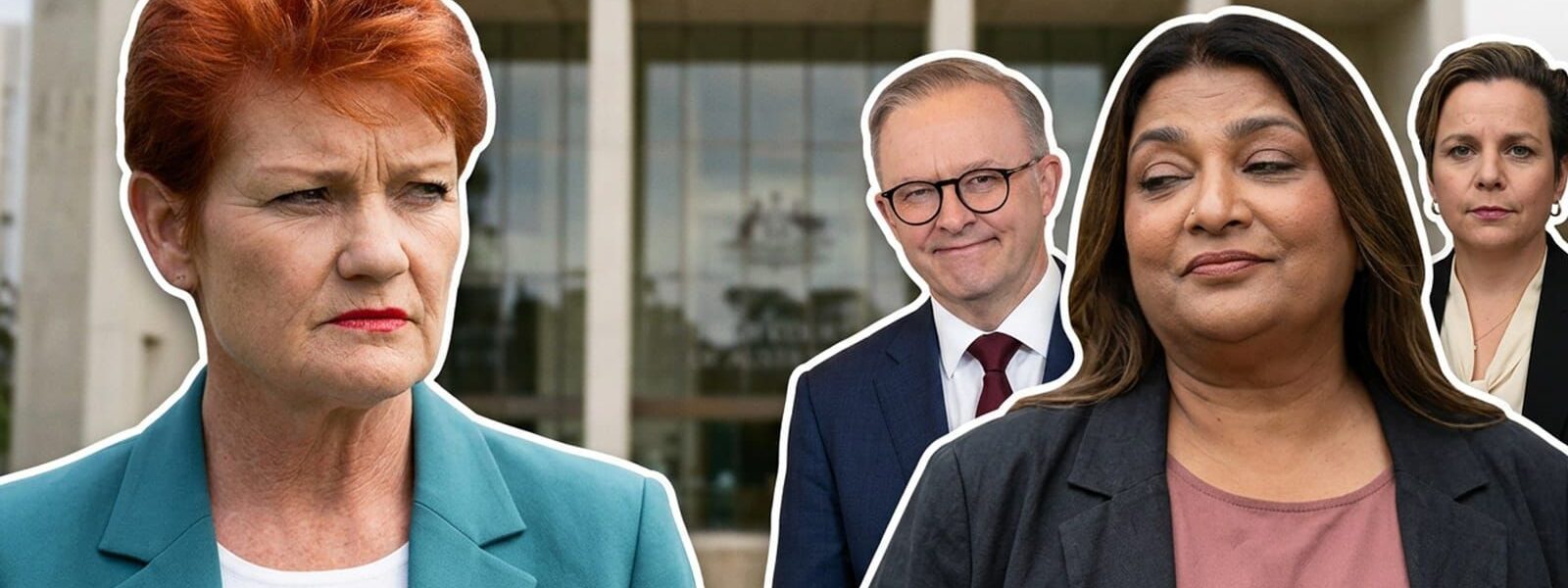
The Main Event: The Legal War Between Two Senators
The legal conflict traces its origin to September 9, 2022, following the death of Queen Elizabeth II. Greens Senator Mehreen Faruqi, an immigrant from Pakistan, posted a public message to social media stating:
“Condolences to those who knew the Queen. I cannot mourn the leader of a racist empire built on stolen lives, land and wealth of colonised peoples.”
One Nation Leader Pauline Hanson responded directly on the platform:
“Your attitude appalls and disgusts me. When you immigrated to Australia you took every advantage of this country. You took citizenship, bought multiple homes, and a job in a parliament. It’s clear you’re not happy, so pack your bags and piss off back to Pakistan.”
Senator Faruqi lodged a formal complaint under Section 18C with the Australian Human Rights Commission (AHRC). When conciliation predictably failed, Faruqi filed suit in the Federal Court of Australia.
┌─────────────────────────────────────────────────────────────────────────┐
│                    THE STATEMENT AND THE STATUTE                        │
│                                                                         │
│   ORIGINAL PROVOCATION                  RETALIATORY POST                │
│   ┌───────────────────────────┐         ┌─────────────────────────────┐ │
│   │ Faruqi: Condemns Queen    │         │ Hanson: "Pack your bags     │ │
│   │ as leader of a "racist    │  ────►  │ and piss off back to        │ │
│   │ empire" on day of passing │         │ Pakistan"                   │ │
│   └───────────────────────────┘         └─────────────────────────────┘ │
│                                                        │                │
│                                                        ▼                │
│   THE LEGAL PROCESS:                     FEDERAL COURT LITIGATION       │
│   AHRC Complaint ──► Conciliation Fails ──► Breached Section 18C (RDA)  │
│   Order: Tweet deleted, massive adverse costs, constitutional challenge │
└─────────────────────────────────────────────────────────────────────────┘
In 2024, Federal Court Justice Angus Stewart ruled that Hanson had breached Section 18C, finding the tweet was an act done because of Faruqi’s race, color, or ethnic origin, and that it failed to meet the public interest and good faith protections of Section 18D.
Hanson appealed to the Full Federal Court, challenging both the statutory interpretation and the constitutional validity of Section 18C. The Commonwealth Attorney-General intervened to defend the legislation.
In its decision (Hanson v Faruqi), the Full Federal Court dismissed Hanson’s appeal and upheld Section 18C. While the three appeal judges conceded that Section 18C imposes a “significant” burden on political discourse, that it “is not viewpoint neutral,” and that it “may call for self-censorship,” they ruled the law was justified to prevent the harms of racial vilification.
On August 21, 2026—three days before the 28-day statutory window lapsed—Hanson officially filed a special leave application to the High Court of Australia, demanding that the nation’s apex constitutional bench strike down Section 18C.
┌─────────────────────────────────────────────────────────────────────────┐
│                      LITIGATION CHRONOLOGY                              │
│                                                                         │
│  • Sep 2022:  Queen passes; Faruqi posts; Hanson issues reply tweet.   │
│  • Dec 2022:  Faruqi lodges formal Section 18C complaint with AHRC.     │
│  • 2023–2024: Trial in Federal Court; Stewart J finds against Hanson.  │
│  • 2025–2026: Full Federal Court upholds 18C; acknowledges speech chill │
│  • Aug 2026:  Hanson files High Court Special Leave Application.        │
└─────────────────────────────────────────────────────────────────────────┘
The Key Actors and Financial Ledger
The constitutional dispute features a polarized roster of political, institutional, and judicial figures:
-
Pauline Hanson (Appellant): Leader of Pauline Hanson’s One Nation. Hanson is personally funding her legal defense through private resources and grassroots public donations, having incurred an estimated $900,000 in adverse costs and legal fees. Her High Court team is spearheaded by Perry Herzfeld SC following advice from Bret Walker SC.
-
Mehreen Faruqi (First Respondent): Deputy Leader of the Australian Greens. Faruqi is represented by commercial firm Marque Lawyers, backed by federal cost orders issued against Hanson and an online crowdfunding campaign that raised $8,604 toward a $250,000 goal.
-
The Commonwealth Attorney-General (Second Respondent): Represented across successive administrations (Mark Dreyfus KC and Michelle Rowland), the federal government intervened as an active respondent party, instructing senior counsel (led by Craig Lenehan SC) to defend the constitutional validity of Section 18C.
-
The Australian Human Rights Commission (AHRC): Intervened via Race Discrimination Commissioner Giridharan Sivaraman as amicus curiae (friend of the court) to argue that anti-immigrant and Islamophobic rhetoric falls squarely within the statutory framework of racial discrimination.
+------------------------------------------------------------------------------------------------+
|                             THE LITIGATION STAKEHOLDER MATRIX                                  |
+--------------------------------+---------------------------+-----------------------------------+
| PARTY                          | FUNDING SOURCE            | CORE LEGAL ARGUMENT               |
+--------------------------------+---------------------------+-----------------------------------+
| Pauline Hanson                 | Personal funds & donor    | 18C violates implied freedom;     |
| (Appellant)                    | appeals (~$900,000 costs) | treaty lacks domestic head power. |
+--------------------------------+---------------------------+-----------------------------------+
| Mehreen Faruqi                 | Adverse cost orders &     | 18C validly protects minorities   |
| (First Respondent)             | public crowdfunding       | from racial degradation.          |
+--------------------------------+---------------------------+-----------------------------------+
| Commonwealth Attorney-General  | Commonwealth public       | 18C is valid under s 51(xxix);    |
| (Second Respondent)            | expenditure (Taxpayers)   | burden on speech is justified.    |
+--------------------------------+---------------------------+-----------------------------------+
| Race Discrimination Comm.      | AHRC statutory budget     | Islamophobic abuse constitutes    |
| (Amicus Curiae)                | (Taxpayers)               | racial discrimination under law.  |
+--------------------------------+---------------------------+-----------------------------------+
The Substantive Constitutional Challenge
Hanson’s High Court challenge rests upon two structural arguments:
-
The External Affairs Power Vulnerability (Section 51(xxix)): The Commonwealth enacted Section 18C relying on its constitutional power to give domestic effect to international treaties—specifically the 1965 UN International Convention on the Elimination of All Forms of Racial Discrimination (CERD). Article 4 of CERD requires states to criminalize the dissemination of ideas based on racial superiority or incitement to racial hatred. Hanson’s counsel contends that because Australia entered a formal reservation against Article 4(a) in 1975 and created a purely civil threshold covering mere “offense” and “insult,” Section 18C does not conform to the international instrument that supposedly authorizes it.
-
The Implied Freedom of Political Communication: Hanson argues that Section 18C impermissibly burdens political speech. The challenge highlights recent High Court precedent, including Farmer v Minister for Home Affairs, where Chief Justice Stephen Gageler affirmed that the mere infliction of hurt feelings or sensitivities is insufficient to justify suppressing political expression in a representative democracy.
2. Professional Analysis & Personal Perspective
My Professional Perspective
Over thirty years of reporting on constitutional law, state power, and civil liberties across London, Washington, and Canberra, I have observed that societies reveal their true character not when they defend popular speech, but when they decide how to handle speech that is visceral, crude, and offensive.
The legal battle between Pauline Hanson and Mehreen Faruqi is not merely a clash between two polarizing senators. It is the culmination of a century-long Australian tradition of treating free speech not as a fundamental human right, but as a precarious government concession.
┌─────────────────────────────────────────────────────────────────────────┐
│                    THE COMPARATIVE FREE SPEECH DIVIDE                   │
│                                                                         │
│   UNITED STATES                UNITED KINGDOM           AUSTRALIA       │
│   ┌───────────────────────┐    ┌───────────────────┐    ┌─────────────┐ │
│   │ First Amendment (1791)│    │ Human Rights Act  │    │ NO WRITTEN  │ │
│   │ Sovereign Personal    │    │ Article 10 (1998) │    │ RIGHT       │ │
│   │ Right; Protects       │    │ Statutory codified│    │ Structural  │ │
│   │ Offensive Speech      │    │ protection        │    │ Implication │ │
│   └───────────────────────┘    └───────────────────┘    └─────────────┘ │
└─────────────────────────────────────────────────────────────────────────┘
What Important Details Have People Overlooked?
While public commentary has descended into partisan culture wars, several structural elements have gone unexamined:
-
The Failure of the Section 18D Defense Shield: When Section 18C was enacted in 1995, parliamentarians assured the public that Section 18D would serve as an impenetrable firewall, protecting artistic expression, scientific inquiry, and genuine political debate conducted “reasonably and in good faith.” In practical litigation, that shield has collapsed. As conceded during the Hanson appeal, Section 18D has offered virtually no successful protection to high-profile political commentary for decades. If the threshold for “good faith” requires a court to parse tone, politeness, and perceived malice, then raw political polemic is stripped of statutory protection.
-
The Tactical Asymmetry of Civil Process: Section 18C is often defended on the grounds that it is non-criminal—nobody goes to jail, and the state levies no direct penal fines. This ignores the economic reality of Australian civil litigation. When an individual is subjected to a four-year legal campaign culminating in adverse cost orders approaching $1 million, the process itself becomes the punishment. The threat of bankruptcy exerts a far more chilling effect on public discourse than a nominal magistrate’s fine.
-
The “Viewpoint Discrimination” Concession: Paragraph 171 of the Full Federal Court judgment contains a remarkable judicial admission: Section 18C is inherently asymmetrical. It regulates speech that touches on race, color, and national origin, but leaves entirely unpoliced speech of equal or greater vitriol targeting political affiliation, social ideology, or institutional allegiance.
+-------------------------------------------------------------------------+
|                  THE SPEECH ASYMMETRY UNDER AUSTRALIAN LAW              |
+-------------------------------------------------------------------------+
|  REGULATED UNDER SECTION 18C            UNREGULATED UNDER SECTION 18C   |
|  • Racial origin                        • Political ideology            |
|  • Ethnic background                    • Institutional allegiance      |
|  • Nationality and heritage             • Personal political philosophy |
|  [Triggers civil suit & cost orders]    [Legally immune from 18C]       |
+-------------------------------------------------------------------------+
What Deeper Meaning is Behind This Event?
To understand why Australia finds itself in this legal entanglement, one must understand the constitutional architecture designed in the 1890s.
When the framers met at the Constitutional Conventions, Tasmanian delegate Andrew Inglis Clark argued passionately for a Fourteenth Amendment-style clause guaranteeing equal protection and fundamental rights. His proposal was decisively rejected. As constitutional historians have noted, colonial leaders deliberately refused a written Bill of Rights so that the newly federated states could maintain discriminatory legislative power over immigration and labor without judicial interference.
The consequence is an enduring democratic paradox: Australians inherited the British doctrine of Parliamentary Sovereignty, but detached it from the British culture of common-law civil liberties.
When the High Court derived the “implied freedom of political communication” in 1992 (Nationwide News and Australian Capital Television), it did not create an individual right. It created an administrative boundary: the Commonwealth cannot enact legislation that destroys the minimum flow of communication required for voters to cast an informed ballot.
In Hanson v Faruqi, the Full Court laid this bare at paragraph 185:
“The freedom is not a personal right… The promotion of unrestricted individual freedom is not the ultimate end in view.”
                     THE AUSTRALIAN SPEECH CONUNDRUM

          CONSTITUTIONAL GENESIS (1890s)       HIGH COURT INVENTION (1992)
          ------------------------------       ---------------------------
          • Deliberate omission of rights      • "Implied Freedom" derived
          • Retention of state power           • Structural, not personal
          • Parliamentary supremacy            • Minimum systemic threshold
                        │                                  │
                        └────────► THE PRESENT DAY ◄───────┘
                                           │
                                           ▼
          SECTION 18C: Civil penalties for subjective "offense" and "insult"
Why This Story Matters for Everyday Australians
This case extends far beyond the political fortunes of two federal senators. It cuts to the heart of civic life for 27 million people:
-
The Chilling of Legitimate Public Discourse: When the legal threshold for civil liability turns on terms as subjective as “offend” and “insult,” the boundaries of lawful public speech become unpredictable. The Full Court explicitly noted that this creates a “penumbra” where ordinary citizens, journalists, and community advocates resort to self-censorship to avoid ruinous litigation.
-
The Weaponization of Lawfare in Politics: When political rivals can bypass the ballot box and use taxpayer-backed tribunals to silence or bankrupt their opponents, the legal system becomes an extension of the political battlefield.
-
The Double Standard of Public Incivility: In an environment where political rallies feature banners declaring “Death to One Nation” or crowds chanting vitriolic abuse without consequence, everyday Australians notice when 14 words on social media trigger three separate rounds of federal court litigation. This selective enforcement deepens cynicism in public institutions.
┌─────────────────────────────────────────────────────────────────────────┐
│                    THE THREE PATHS FOR SECTION 18C                      │
│                                                                         │
│   PATH 1: JUDICIAL STRIKE-DOWN         PATH 2: PARLIAMENTARY REPEAL     │
│   ┌──────────────────────────────┐     ┌──────────────────────────────┐ │
│   │ High Court grants leave and  │     │ Parliament amends or removes │ │
│   │ rules 18C unsupported by CERD│     │ "offend" and "insult"        │ │
│   │ (Historical grant: ~10–27%)  │     │ (Blocked in Senate)          │ │
│   └──────────────────────────────┘     └──────────────────────────────┘ │
│                                  │                                      │
│                                  ▼                                      │
│                   PATH 3: CONSTITUTIONAL REFERENDUM                     │
│   ┌─────────────────────────────────────────────────────────────────┐   │
│   │ Voters write free speech into the Constitution via double       │   │
│   │ majority (Historic success rate: 8 out of 45 referendums)       │   │
│   └─────────────────────────────────────────────────────────────────┘   │
└─────────────────────────────────────────────────────────────────────────┘
The Unanswered Questions That Demand Investigation
As this case moves toward the nation’s highest court, several fundamental legal questions remain unanswered:
-
The Treaty Proportionality Gap: How can a civil statutory provision that penalizes subjective “offense” and “insult” be deemed “reasonably appropriate and adapted” to implement an international treaty (CERD) that explicitly demands the criminalization of incitement to racial violence while protecting freedom of expression under Article 5?
-
The Impact of the 2025 Hate Crimes Legislation: With the passage of the Criminal Code Amendment (Hate Crimes) Act 2025, the Commonwealth has fully enacted criminal sanctions against threats of force and racial violence. Does the existence of this criminal statute render Section 18C redundant under the external affairs head of power?
-
The Harmonization of Precedent: How can the Full Federal Court’s endorsement of state-mandated “self-censorship” be reconciled with Chief Justice Gageler’s clear determination in Farmer that hurt feelings alone do not justify curbing political communication?
Summary and Reflection
The constitutional confrontation heading to the High Court of Australia represents a watershed moment in the nation’s legal history. It brings to a head a century of constitutional ambivalence toward free speech, thirty years of unresolved tension surrounding Section 18C, and the reality of a political culture that increasingly uses litigation to resolve ideological debates.
===========================================================================
                     THE CORE CONSTITUTIONAL TENSION
===========================================================================
        THE COLLECTIVE GOOD                    THE INDIVIDUAL FREEDOM
    "The state must police public           "A healthy democracy requires
     civility to protect vulnerable          robust, uninhibited debate,
     minorities from offense."               even when speech causes hurt."
===========================================================================
The fundamental question at the core of Hanson v Faruqi is not whether Senator Hanson’s words were crude or offensive. The question is whether the Australian state possesses the legitimate constitutional authority to appoint judges as arbiters of taste, manners, and offense in political debate.
When a legal system demands that its citizens exercise “self-censorship” to avoid financial ruin, it ceases to be a robust marketplace of ideas. Instead, it becomes an administrative regime where the boundaries of permissible thought are determined by the sensibilities of the most easily offended.
As the High Court considers whether to hear this landmark challenge, Australia stands at a definitive crossroads: it must decide whether its democracy is strong enough to withstand the discomfort of offensive speech, or whether it will continue down the path of using lawfare to enforce ideological civility.
A Question for the Reader
In a free society, should the legal threshold for silencing political speech be set at the point where it causes genuine incitement to violence, or should the state have the power to penalize any comment that causes hurt, insult, or offense?