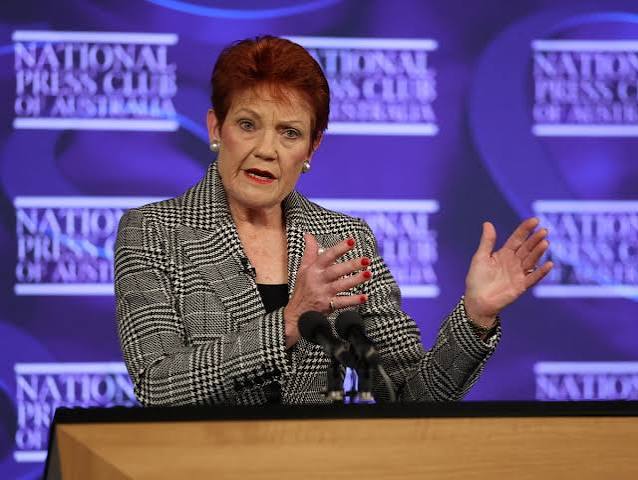
“Talk Is Easy—Governing Is Hard”: Pauline Hanson’s Record Faces Fresh Scrutiny. u1

The Disruption of the Crossbench: Deciphering the Three-Decade Calculus of Pauline Hanson
Background: The Maverick of Oxley
In March 1996, a former fish-and-chip shop owner from Ipswich, Queensland, pulled off one of the most stunning electoral upsets in modern Australian history. Disendorsed by the Liberal Party for her outspoken, controversial views on Indigenous funding and immigration, Pauline Hanson ran as an independent for the safe Labor seat of Oxley—and won with a massive swing.
Her maiden speech in federal parliament, which famously warned that Australia was in danger of being “swamped by Asians,” instantly drew a sharp, permanent ideological line across the nation.
┌────────────────────────────────────────────────────────────────────────┐
│                      THE 30-YEAR PARLIAMENTARY CAREER                  │
├──────────────────────────────────────┬─────────────────────────────────┤
│        HOUSE OF REPRESENTATIVES      │           THE SENATE            │
├──────────────────────────────────────┼─────────────────────────────────┤
│  • 1996–1998: Member for Oxley       │  • 2016–Present: Senator for    │
│    (Defeated in 1998 after redist-   │    Queensland. Re-elected in    │
│    ribution and preference flows).   │    2022 to a six-year term.     │
└──────────────────────────────────────┴─────────────────────────────────┘
For the three decades that followed, Hanson remained a household name, navigating political defeats, a brief period of imprisonment (later overturned on appeal), and multiple party fractures. By the 2025–2026 election cycle, with her party receiving historic funding boosts and high-profile defectors like former Deputy Prime Minister Barnaby Joyce, One Nation reached unprecedented polling heights, briefly threatening to eclipse the traditional Coalition as the primary force of the Australian right.
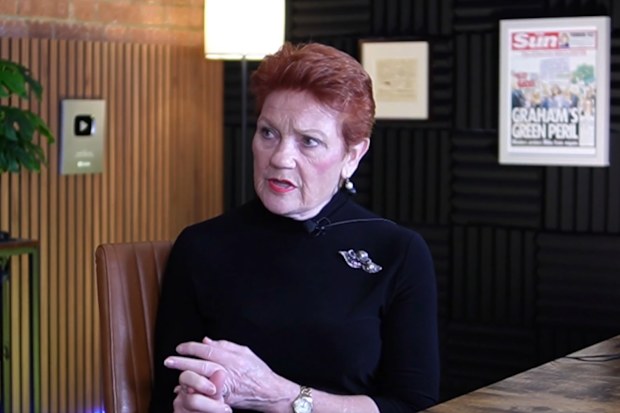
Yet, as Hanson celebrates thirty years in the public eye, her legacy faces intense scrutiny. Unlike major political parties that run the country, negotiate international treaties, and draft national budgets, Hanson has operated almost exclusively from the crossbench. Critics and supporters alike are left to debate: has three decades of “Hansonism” delivered concrete change, or has it simply mastered the art of political theater?
The Critique: The Empty Legislative Ledger
The core argument leveled by Hanson’s detractors is that her long tenure has yielded a remarkably empty ledger of tangible legislative achievements. While prime ministers and cabinets shoulder the complex, day-to-day burden of running a G20 economy, managing national security, and implementing policy, One Nation has operated in a parliamentary vacuum.
Critics point out that over thirty years, Hanson has rarely drafted, negotiated, or passed a significant piece of primary legislation that has improved the structural lives of Australians. When debates move past hot-button cultural issues—like immigration limits or national identity—into the highly technical realities of taxation reform, constitutional law, healthcare infrastructure, and public administration, her platform often lacks detailed, workable policies.
Opponents argue that Hanson has systematically prioritized symbolic, divisive battles over the hard, unglamorous work of policy compromise. They point to her voting record, which has frequently opposed major renewable energy investments, housing bills, and structural economic reforms, suggesting that her brand of politics is designed to exploit grievances rather than solve them.
"Influencing the national conversation is itself a powerful political achievement."
— One Nation Spokesperson
The Defense: Shifting the Overton Window
Supporters of One Nation strongly reject this criticism, arguing that it relies on a narrow, establishment-biased definition of political success. They assert that in a representative democracy, a minor party’s primary duty is not to govern, but to hold the major parties to account and champion the voices of the forgotten.
Hanson’s defenders point out that she has spent thirty years raising issues that the major parties desperately tried to ignore—particularly regarding the rapid rate of immigration, the preservation of Australian values, the struggles of regional and farming communities, and the soaring cost of living. They argue that by forcing these uncomfortable debates onto the floor of the Senate, Hanson has successfully shifted the “Overton window” (the range of ideas tolerated in public discourse).
From the introduction of stricter welfare waiting periods to the tightening of foreign ownership laws, supporters claim that many policies now considered mainstream by the Coalition were pioneered by Hanson decades ago. In their eyes, forcing the major parties to adapt to her platform is a far greater achievement than passing minor, compromise-laden bills from the crossbench.
The Climax: The Fragile Electorate
The ongoing debate over Hanson’s legacy comes at a time of unprecedented fragmentation in Australian politics. With the major parties struggling to maintain a primary vote above 30%, minor parties and independents are holding increasingly powerful hand on the levers of government.
For thirty years, Hanson’s core strategy has remained unchanged: appeal to a fiercely loyal, largely working-class and regional demographic that feels completely alienated by the metropolitan political elite. Yet, as the nation faces deep economic uncertainty and housing stress, the question of her practical efficacy becomes urgent.
My Professional Perspective
Having spent thirty years in the press galleries of Canberra and Westminster, I have watched Pauline Hanson’s political trajectory with a mixture of professional fascination and deep skepticism. To the casual voter, she is either a heroic, plain-speaking martyr or a divisive, backwards-looking bigot. But an experienced political analyst sees a much more sophisticated operational model.
The real story of Pauline Hanson isn’t her controversial rhetoric; it is her brilliant, decades-long exploitation of the “protest vote” to build a self-sustaining political enterprise.
The Hidden Dimension: The Business of Grievance
To understand the longevity of Pauline Hanson, one must look past the floor of the Senate and look directly at the unique mechanics of the Australian electoral system. Australia’s system of compulsory voting and compulsory preferential voting creates a highly lucrative environment for minor parties that can capture a dedicated, emotional slice of the primary vote.
                    THE FEEDBACK LOOP OF PROTEST POLITICS

  ┌──────────────────────────────────────────────────────────────────┐
  │                                                                  │
  ▼                                                                  │
Economic / Regional Decline ──► Outrage-Based Media Performance     │
  ▲                                 (High-Profile Press Coverage)    │
  │                                                                  │
  │                                                                  │
  └── Electoral Funding Harvested ◄── Primary Vote Retention (6-10%) │
      (Self-Sustaining Brand)
Hanson has realized a fundamental truth of modern populist politics: You do not need to govern to be highly successful.
By maintaining a consistent primary vote of between 6% and 10%, One Nation secures millions of dollars in taxpayer-funded electoral communication payouts after every election. This funding, combined with a highly profitable merchandise and digital media machine, turns the political party into a robust, self-sustaining commercial brand.
Because Hanson never has to face the real-world consequences of governing—such as balancing a budget, managing inflation, or making unpopular cuts to services—she is entirely insulated from the inevitable public backlash that breaks major party leaders. Her crossbench seat is a permanent, risk-free sniping position. She can promise uncosted, mathematically impossible solutions—like pausing the GST on building materials or completely banning foreign ownership—knowing she will never be called upon to write the legislation or manage the economic fallout.
The Unanswered Questions
As the 71-year-old senator prepares her party for yet another volatile election cycle, several critical questions must be asked about the future of her movement:
-
Who inherits the “Hansonism” brand when she retires? One Nation is uniquely built around the personal charisma and martyrdom of Pauline Hanson. Past attempts to transition leadership to others have resulted in catastrophic internal splits. Can a career politician like Barnaby Joyce truly command her highly loyal base, or will the movement disintegrate without its namesake?
-
What is the true legislative impact of her Senate voting record? While One Nation boasts about holding the balance of power, how often have they used that leverage to secure tangible, long-term investments for their regional heartlands, rather than trading their votes for short-term political concessions?
-
How does the influx of major corporate backing change her “outsider” status? With reports of Australia’s richest mining magnates quietly funding her party, can Hanson continue to run as a champion of the “battler” when her policy platform increasingly aligns with the interests of major resources and fossil fuel conglomerates?
-
Why have thirty years of major-party strategies failed to neutralize her appeal? Both Labor and the Liberals have tried to ignore her, attack her, and co-opt her policies. Why does a significant portion of the Australian electorate continue to prefer her symbolic protest over the major parties’ governance?
Beyond the Headline: The Performance vs. The Policy
The most concerning aspect of the Pauline Hanson phenomenon is what it reveals about the health of our democracy.
We have entered an era where political communication has been entirely decoupled from political delivery. Social media algorithms do not reward a backbencher who spends eighteen hours in a committee room quietly refining the wording of an NDIS bill to protect vulnerable families. They reward a senator who gets thrown out of the chamber, who tells a colleague to “piss off back to Pakistan,” or who posts a highly edited, dramatized video on TikTok.
Hanson is the pioneer of this performative politics. She has demonstrated that a politician can achieve massive, lifelong national prominence by masterfully generating headlines, completely bypassing the traditional requirement of legislative competence.
While her supporters are right that she has changed the national conversation, we must ask ourselves what that conversation is actually worth if it never translates into policies that build a single affordable home, train a single regional doctor, or lower a single household energy bill.
Pauline Hanson’s three-decade career is a towering monument to the power of symbolic politics. She remains the ultimate political survivor, a master of media manipulation who has successfully converted the genuine, painful grievances of regional Australia into a permanent, highly influential crossbench empire.
But as the country faces deep, complex structural challenges that require forensic policy, long-term planning, and delicate international negotiation, the limits of “Hansonism” are becoming increasingly obvious.
As the political center continues to fracture, we are left to confront a profound, systemic question that goes to the heart of our democratic values:
If our political system continues to reward those who are brilliant at dramatizing our divisions rather than those who do the hard, quiet work of governing, are we still capable of solving our greatest national crises—or have we resigned ourselves to a future where politics is nothing more than a permanent, highly televised culture war?