Switzerland’s Face-Covering Ban Sparks Global Clash Over Security, Religious Freedom and the Future of European Identity. n1

BEHIND THE VEIL: Switzerland’s Ban and the Fight Over Freedom, Identity, and Public Space
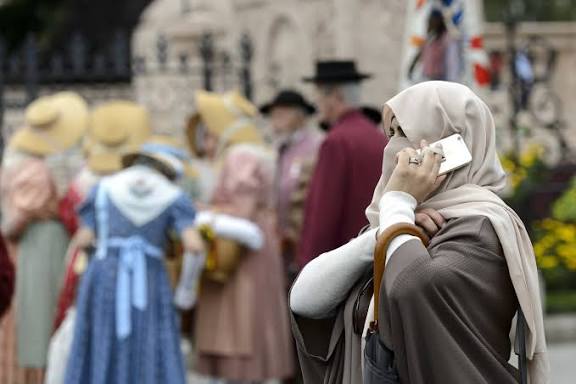
In a move that has drawn both applause and condemnation across Europe, Switzerland has officially enforced a nationwide ban on full-face coverings in all public spaces. Under the new law, anyone wearing garments such as the burqa or niqab — clothing that conceals the entire face — faces fines of up to 1,000 Swiss francs. The measure marks the latest and most prominent step in a long-running debate over how secular, democratic societies should manage diversity, security, and the visible expression of religious belief.
The legislation did not appear overnight. It followed years of political discussion, public consultations, and a national referendum in 2021, where 51.2% of voters supported the ban. Now, as enforcement begins, Switzerland has become a test case for an issue that has divided governments and communities from Paris to Copenhagen, from Vienna to Rome. On one side, supporters frame the law as a practical safeguard for security, communication, and shared social norms. On the other, critics warn it is a restriction targeted almost exclusively at Muslim women, one that undermines personal freedom and deepens feelings of exclusion.
At its simplest, the debate revolves around two seemingly reasonable principles that often clash in modern democracies: the right of individuals to live and dress according to their beliefs, and the right of the wider community to maintain safe, transparent, and accessible public spaces. But as with many such issues, the reality is far more layered than the headlines suggest.
Supporters of the ban advance three core arguments. First, they emphasize security and identification. In an era of open borders, digital travel, and public services, being able to see and recognize faces is seen as essential for law enforcement, border control, and the smooth functioning of transportation, healthcare, and administration. “Anonymity in public creates risks,” say advocates, arguing that visible faces build trust and accountability.

Second, they raise the issue of communication and social interaction. Human beings rely heavily on facial expressions, eye contact, and gestures to understand one another. In schools, workplaces, and public services, a fully covered face can create barriers to connection. Supporters argue that integration depends on being able to interact openly, and that removing those barriers helps people participate fully in society.
Third, some proponents frame the measure as a matter of gender equality. They contend that full-face coverings are not a choice but a symbol of oppression, imposed on women by conservative interpretations of religion or cultural norms. In this view, the state has a responsibility to protect women’s autonomy by ensuring they are not forced to hide their identities.
Critics, however, reject these justifications as incomplete or misleading. They argue that the law is not neutral — in practice, it affects only a tiny number of people, almost all of them Muslim women, and restricts a specific religious practice. They point out that security concerns can be addressed through targeted measures, such as requiring identification when accessing certain facilities, rather than imposing a blanket ban across all public spaces.
Human rights organizations, including Amnesty International and Human Rights Watch, have warned that the regulation violates international standards on freedom of religion, expression, and personal autonomy. They argue that telling women what they can and cannot wear, even in the name of “liberation,” replaces one form of external control with another. As many Muslim women themselves have stated: “We do not need the state to decide for us what makes us free.”
The debate also reflects broader tensions in Swiss society. Switzerland is a country defined by federalism, cultural diversity, and a long tradition of direct democracy. Yet it has also seen growing political pressure to define clearer boundaries around national identity and integration. Over the past decade, it has tightened immigration rules, restricted the construction of minarets, and debated limits on religious symbols in public institutions. The face-covering ban fits into this pattern: a visible policy choice that sends a clear message about what is considered acceptable in the public sphere.
As enforcement begins, the law faces legal challenges. Opponents argue it is disproportionate and discriminatory, and that it violates both the Swiss constitution and European human rights agreements. Supporters counter that it has already been validated by a popular vote and meets the legal test of being necessary for public order and social cohesion.
For now, Switzerland stands at the center of a European conversation. Other countries — France, Belgium, Austria, and Denmark among them — have already imposed similar restrictions, while others have rejected them. But as Switzerland’s experience shows, even when a law is passed, the debate does not end. It merely shifts from whether the rule should exist, to what it actually achieves, and what it says about the kind of society the country wants to be.
After three decades reporting on religion, migration, and human rights across Europe, North America, and Australia, I have observed that the most divisive issues are rarely about what they claim to be. Bans on clothing, restrictions on symbols, or limits on religious expression are almost always about something deeper: who belongs, what is considered “normal,” and how much diversity a majority is willing to accommodate.
Here is what I believe is often overlooked in the arguments for and against Switzerland’s new law.
The Illusion of Neutrality
The first mistake many observers make is accepting the idea that this is a “neutral” rule applying equally to everyone. In theory, yes — it bans all full-face coverings, whether worn for religious reasons, cultural reasons, or even to avoid recognition. But in practice, how many people wear full-face coverings in Switzerland? According to official estimates, fewer than 100 women across the entire country regularly wear the niqab or burqa. The number is so small that the law cannot be explained as a response to a widespread problem.
This means the regulation is not driven by scale or necessity — it is driven by symbolism. It sends a message about what is acceptable in public life, and that message is received loud and clear by Muslim communities: your faith is tolerated, but its most visible expressions are not welcome. When a law targets a practice that only one group follows, it stops being a general rule and becomes a specific restriction. That is why even if it appears fair on paper, it feels discriminatory in reality.
The Paradox of Integration
The most striking contradiction in this debate is the claim that a ban will improve integration. From my experience covering similar policies elsewhere, the opposite is more often true. When governments tell people they must change how they dress or appear to be accepted, the message they send is: “You are not acceptable as you are.”
Integration works best when people feel they can retain their identity while contributing to society. When they feel forced to choose between their beliefs and their place in the community, they often withdraw. Studies from countries that have already imposed these bans show that many women who wear the niqab simply stop going out in public, avoid schools, hospitals, and shops, and become more isolated. That does not create a more connected society — it creates a more divided one.
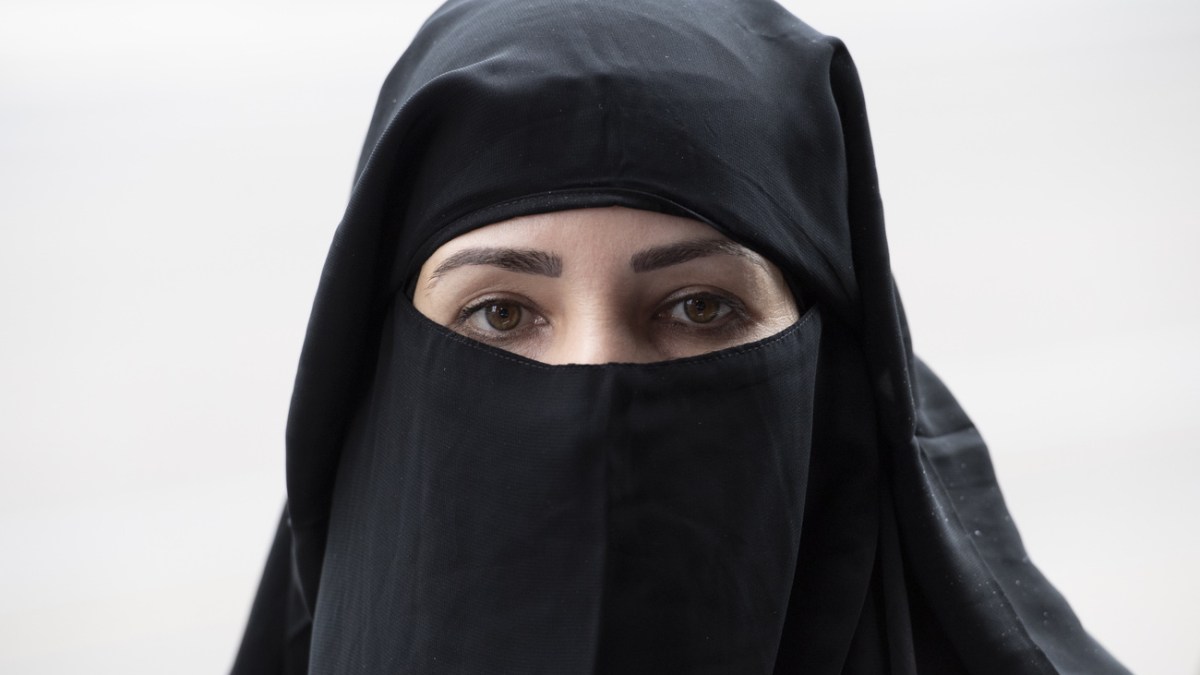
Integration is not about uniformity; it is about building trust. Trust is built when people feel respected, not regulated out of sight.
The Question of Choice and Agency
The argument that this ban “liberates” women raises one of the most complex questions in this debate. There is no denying that in some places, full-face coverings are imposed on women by family, community pressure, or conservative norms. But it is equally true that for many others, it is a deeply personal choice, an expression of devotion, modesty, and autonomy.
The problem arises when the state assumes it knows what is best for every woman. As a journalist, I have spoken to dozens of women on both sides: those who feel the niqab restricts them, and those who feel it gives them dignity and freedom from unwanted attention. The only consistent truth is that their experiences differ. A law that treats all women as if they are victims, or as if they have no capacity to decide for themselves, is paternalistic at best and controlling at worst. It replaces one set of rules imposed by tradition with another set imposed by the state.
The Larger European Pattern
Switzerland’s decision is not an isolated event. It is part of a broader shift across the continent, where public expression of Islam has become a focal point for debates over identity. Minaret bans, headscarf restrictions in schools, limits on the call to prayer — each measure follows the same logic: reduce visibility to reduce perceived influence.
But here is the risk: when a society defines itself by what it excludes, rather than by what it includes, it begins to narrow its own identity. Switzerland has always been a country of multiple languages, religions, and traditions. It has survived and thrived by finding ways to accommodate difference. This law marks a departure from that tradition, suggesting that difference is no longer a strength, but a problem to be managed.
Switzerland’s ban on full-face coverings is more than a new regulation. It is a turning point in how the country defines itself in a time of growing diversity. It promises greater security and social connection, but it also carries the risk of deepening divisions and limiting the very freedoms that democracies claim to protect.
We have learned that laws which appear reasonable at first glance can have unintended consequences. We have seen that security and integration are not achieved by making minorities less visible, but by ensuring they feel safe, respected, and included. And we have been reminded that the most difficult balance in democracy is not between right and wrong, but between two values that both matter: the collective good and individual liberty.
As this law is enforced and challenged, it will serve as a lesson not only for Switzerland but for all of Europe. It will show whether a society can preserve its shared values while still making room for those who look, dress, and believe differently.
And so, as we watch this debate unfold, we are left with a question that every diverse nation must answer: Does belonging require us all to look and act the same, or does it mean building a society where everyone is free to be themselves — while still being part of us?