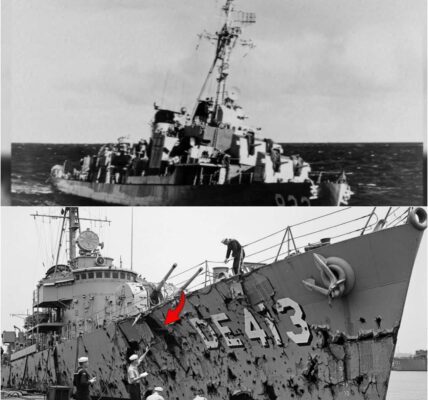
A photograph can preserve a moment long after the people who witnessed it have disappeared, but not every image reaches the public when it is first created. Some photographs are withheld because they reveal military positions, classified technology, or sensitive intelligence operations. Others remain buried in government files because nobody recognizes their future historical value. Still others survive in private albums, forgotten storage rooms, and collections whose contents may not be understood for generations. That is what makes the world of rare historical photography so compelling. Behind the familiar pictures reproduced in textbooks and documentaries lies a much larger visual record, filled with images that were never intended for ordinary public viewing. Some reveal uncomfortable realities. Others correct mistaken assumptions or expose the limitations of official accounts. Yet the story is more complicated than the dramatic promise of a title such as SHOCKING Rare Old Photos You Weren’t Supposed to See. Not every unfamiliar photograph was censored, and not every image described as forbidden was deliberately suppressed. The real history is fascinating enough without exaggeration: governments have restricted photographs, intelligence agencies have collected images in secrecy, and countless records have eventually entered public archives. What emerges is a story about power, memory, technology, and the difficult process of deciding what the world is allowed to see.

The Photographs That War Kept Out of Sight
During wartime, a photograph can be much more than a record of an event. It can reveal the location of a military installation, identify the equipment used by an army, expose the condition of troops, or disclose information that an enemy could exploit. For this reason, governments have long treated certain photographs as sensitive material.
The United States experienced this directly during the Second World War. Military photographers documented soldiers, training exercises, equipment, factories, battlefields, and the activities of civilians supporting the war effort. Their images became part of an enormous visual record, but the photographs were not all released immediately. Some had to pass through official review before publication.
The U.S. National Archives explains that wartime restrictions covered photographs showing military installations, secret operations, advanced technology, and information that could reveal the location or strength of military units. Images depicting dead American service members were also restricted under policies concerning family privacy and the graphic portrayal of death. Photographs considered embarrassing to individuals or the military could face restrictions as well.

These distinctions matter because they reveal that photographic censorship was not one single policy with one single purpose. Some restrictions were designed to protect military security. Others concerned privacy, public morale, institutional reputation, or the treatment of the dead.
Imagine a military photographer documenting a damaged vehicle near a strategically important facility. The image might be valuable to historians, but its immediate release could reveal information about the location, equipment, or capabilities of the unit involved. A photograph of a newly developed radar installation could be even more sensitive. Publishing it before the technology was understood by the opposing side might provide an advantage to the enemy.
In such circumstances, withholding an image did not necessarily mean that officials wanted to conceal a historical crime. The immediate concern could be operational security.

But censorship could also influence how a war was presented to the public. If photographs of suffering, military setbacks, or controversial conduct were restricted, people at home might receive a more selective picture of the conflict. Even when individual restrictions had defensible reasons, the cumulative effect could shape public understanding.
The historical question therefore extends beyond whether a photograph was withheld. Researchers must also ask who made the decision, what rule was applied, how long the restriction lasted, and whether the image eventually became available.
The National Archives holds extensive collections of photographs from both world wars, including military images and photographs produced by private photographers. Its records also include material connected with propaganda and the activities of official photographers. The collections illustrate how images created for different purposes can later become evidence for historical research.

Some photographs were intended to document events. Others were produced to communicate a particular message. Still others were collected as evidence. Their eventual historical value may be very different from their original purpose.
Vietnam: A War Photographed Before the World
The Vietnam War offers another important perspective on the relationship between photography, conflict, and public knowledge.
The conflict generated an extraordinary visual record. Military photographers documented operations and daily life, while newspaper photographers and television crews brought images of the war to audiences far from Southeast Asia. The U.S. National Archives describes the conflict as the first war widely experienced through television and living-room news coverage, noting that military photographers captured thousands of images covering many aspects of the war between 1962 and 1975.
This does not mean that every image was published or that viewers saw the conflict in its entirety. No news organization could show every operation, every civilian experience, or every consequence of military policy. Editorial choices, access restrictions, military rules, practical limitations, and the priorities of individual publications all influenced which photographs reached the public.
Nevertheless, Vietnam demonstrated how photographs could shape public discussion of a war while the conflict was still taking place.
An image of soldiers gathered around a guitar could show a quieter side of military life. A photograph of a wounded comrade being carried through difficult terrain could communicate the physical demands of an operation. Images of damaged villages or displaced civilians could prompt questions about the human cost of military strategy.
Each photograph offered a partial view, not a complete explanation. Its meaning depended on the accompanying caption, the location, the date, and the circumstances surrounding the scene. But together, photographs created a visual record that made it more difficult to imagine war solely through official announcements and battlefield maps.
This is an important distinction between Vietnam and earlier conflicts. The Second World War also generated vast quantities of photographs, but the media environment was different. During Vietnam, television and news photography allowed images to circulate much more rapidly among civilian audiences. The public could encounter visual evidence of the conflict while political and military decisions were still being debated.

The idea that all disturbing photographs from Vietnam were suppressed would be inaccurate. Many powerful images were published, circulated widely, and became central to public discussion. At the same time, the existence of extensive photographic archives reminds us that published images represented only a portion of the material created.
A photograph that remained in a military collection for decades might not have been deliberately hidden from the public. It may simply have lacked a reason for immediate publication, been difficult to identify, or remained within a collection that received little attention outside specialist research.
When such an image eventually appears online, its impact can feel like a revelation. But the historical explanation may be less mysterious—and more informative—than the claim that someone tried to erase it.
Inside the Secret World of Intelligence Photography
Perhaps no area of historical photography better illustrates the genuine existence of hidden visual records than Cold War intelligence.

During the 1950s, the United States faced significant uncertainty about the Soviet Union’s strategic military capabilities. Officials wanted reliable information about missile development, bomber production, military installations, and other activities taking place beyond the reach of ordinary observation.
Aerial reconnaissance offered one answer, but aircraft missions could not provide complete coverage of vast areas, and they carried considerable risks. The development of reconnaissance satellites promised a different solution: cameras could be placed in orbit, images could be collected from space, and photographic film could be returned to Earth for analysis.
The result was the CORONA reconnaissance satellite program, developed through cooperation between the CIA, the U.S. Air Force, and private industry. Its early missions were highly secret. The program was publicly associated with the name Discoverer, while its intelligence purpose remained concealed.

According to the CIA’s historical account, CORONA’s objective was to photograph areas that could not readily be observed through other means. The system had to launch a camera into orbit, photograph selected areas of the Earth’s surface, return exposed film in a capsule, and recover that capsule after it descended by parachute. The first attempts encountered repeated technical failures before the system achieved a successful recovery of usable imagery in August 1960.
This was not merely a technological experiment. The images were intended to answer urgent strategic questions.
Photographs of Soviet military installations could help analysts estimate the number and capabilities of missile sites, aircraft facilities, and other military assets. Over time, the imagery improved the United States’ understanding of Soviet strategic forces and helped reduce uncertainty that had influenced Cold War planning.
The significance of the program extended beyond military intelligence. Once the images were declassified, they became useful to researchers studying geography, environmental change, infrastructure, and the history of regions that had previously been difficult to examine through consistent aerial coverage.

In February 1995, President Bill Clinton signed an executive order directing the declassification of historical imagery from CORONA and related programs. More than 800,000 images were subsequently transferred to the National Archives and the U.S. Geological Survey’s Earth Resources Observation and Science Center for public access.
Consider what this means. Photographs originally created to answer secret military questions eventually became public historical resources. Images of strategic installations and restricted territories could be examined by researchers who were interested not in military planning, but in the changing landscape of the twentieth century.
An aerial photograph taken during the Cold War might show an airfield, a network of roads, agricultural land, or a settlement before later development transformed the region. The image could provide evidence about how a place looked decades before satellite mapping became commonplace.
This is one of the clearest examples of genuinely restricted photographs later entering the public record. Yet even here, the story should not be reduced to the claim that authorities feared people would discover an embarrassing truth. The images were classified primarily because they contained intelligence information. Their later release reflected changing security assessments and the recognition that historical material could be useful for purposes beyond its original mission.
The photographs had not changed. Their political and strategic significance had.
The Difference Between Secrecy and Suppression
When a photograph is described as something the public was never supposed to see, the phrase suggests a deliberate effort to prevent people from learning the truth. Sometimes restrictions do serve to conceal misconduct or protect an institution from embarrassment. But the existence of secrecy alone does not prove that this was the motive.
The distinction is essential to historical investigation.
A classified intelligence photograph may have been withheld because it exposed a sensitive capability. A military image may have been restricted because it revealed operational details. A photograph of a deceased person may have been withheld to protect the privacy of the family. A controversial photograph may have remained unpublished because an editor questioned its accuracy or considered its publication unethical.
These situations are not identical, even if all result in an image being unavailable to the public.
Researchers must therefore distinguish between classification, censorship, editorial decisions, archival inaccessibility, and the accidental loss of material. The terms can overlap in particular circumstances, but they should not be treated as interchangeable.
The National Archives’ records on Second World War photography demonstrate that restrictions could cover both legitimate military-security concerns and other matters, including privacy and images considered embarrassing to the military. <Cite refs={[“turn251356search5”]} />
That complexity is precisely why provenance matters. A photograph’s original caption, catalogue record, correspondence, classification history, and release documentation may reveal much more than the image alone.
If a photograph was classified, when was it classified? Which agency controlled it? Was it released later? Did a formal declassification decision occur, or was it simply transferred to a public collection? Did the original records explain the restriction?
Without answers, the phrase “hidden from the public” remains a description rather than a verified historical conclusion.
The distinction may seem technical, but it changes the story entirely. A photograph deliberately suppressed to protect an institution from accountability raises different questions from one withheld because it could disclose the location of a military installation during an active conflict.
Both deserve investigation. Neither should be assigned a motive without evidence.
The Faces and Communities Missing From the Official Record
Not every overlooked photograph concerns war or espionage. Some of the most important images preserve the lives of people who received little attention in official historical accounts.
For generations, public memory has often emphasized political leaders, famous generals, wealthy industrialists, and celebrated public figures. Yet societies were also shaped by domestic workers, factory employees, farmers, migrants, children, Indigenous communities, and people whose experiences were rarely recorded in documents designed for government or institutional use.
Photographs can help recover parts of those histories.
An image of workers leaving a factory may reveal the arrangement of a workplace, the clothing people wore, and the transportation available to them. A group portrait might preserve the faces of individuals whose names were never recorded in the accompanying description. A photograph of a community gathering could document cultural practices, architecture, and social relationships that changed substantially in later decades.
Such images may be described online as forbidden or hidden because their subjects were overlooked by mainstream historical narratives. But an absence from popular history does not automatically prove deliberate suppression.
Sometimes the photographs were preserved in family albums rather than public archives. Sometimes they were collected by local historical societies. Sometimes the records were catalogued under a business name, an administrative department, or the name of a photographer, making them difficult for researchers to discover through broad searches.
Other photographs were created within unequal social relationships. An official, colonial administrator, or outside photographer might have recorded a community according to the interests and assumptions of the person behind the camera. These images can still be valuable, but their framing and purpose need to be considered.
Who chose the subjects? Were people photographed as individuals or treated as examples of a broader category? Were their names recorded? Was the image created for personal, commercial, scientific, or administrative reasons?
These questions help explain both the value and the limitations of the surviving evidence.
The National Archives’ educational resources encourage researchers to examine who created a photograph, why it was made, what its caption claims, and what the image leaves outside the frame. They also emphasize that even staged or propagandistic photographs can provide historical evidence when their original purpose is understood. <Cite refs={[“turn251356search1″,”turn251356search3”]} />
A carefully posed photograph may tell us less about an unguarded moment than its appearance initially suggests. But it may reveal how a person or institution wanted to be seen. A photograph intended to communicate authority, prosperity, or social order can become evidence of the values and assumptions of the time.
The task is not to reject such images. It is to interpret them in context.
The Photographs of Famous People That Never Reached the Front Page
Images of famous individuals can also attract enormous attention when they reveal an unfamiliar side of a public personality.
A politician photographed away from a formal event, an entertainer captured during an ordinary task, or a monarch showing an unexpected expression may challenge the polished image associated with their public role. These photographs can be fascinating because they make celebrated figures appear more ordinary.
But claims that such images were purchased, confiscated, or destroyed by agents and publicists require evidence. A photograph that was never published might have been considered unremarkable, poorly composed, legally sensitive, or simply unsuitable for a particular newspaper. Its absence from the public record does not establish a conspiracy.
The same caution applies to photographs said to expose a famous person’s lie or reveal a secret relationship. A single image rarely provides enough information to establish motive or context. A facial expression cannot reliably prove dishonesty, and a person appearing beside someone else does not necessarily establish the nature of their relationship.
When an image does reveal something important, its significance usually emerges through comparison with other evidence: contemporary reports, personal correspondence, official records, or multiple photographs from the same event.
There is still a legitimate reason to seek out candid and overlooked images. Public figures often present carefully managed versions of themselves, and photographs can provide evidence about how public appearances were constructed. Yet historical interpretation should resist the temptation to transform every awkward expression or unfamiliar scene into a revelation.
The most revealing image may not be the one that humiliates its subject. It may be the one that shows how a public event actually unfolded, how people interacted behind the scenes, or how the visual conventions of a period shaped the way authority was represented.
When the Internet Turns an Old Photograph Into a Mystery
The internet has made it easier than ever to encounter photographs that were previously difficult to access. Archives publish digitized collections, museums share high-resolution images, family historians upload scanned portraits, and enthusiasts connect photographs to local histories.
This wider access is an important development. It allows people to explore historical material without necessarily visiting distant institutions. It can also help researchers identify people, places, and events that were previously poorly documented.
But the same process can detach photographs from their original context.
An image may be scanned from an old print, uploaded to a social media page, and copied by other accounts. Each new version may carry a different caption. A photograph of an unidentified street becomes a picture of a famous city. A group of soldiers is assigned to the wrong conflict. A genuine image is given an invented story about government censorship.
The more often the claim is repeated, the more authoritative it can appear.
The National Archives warns that photographs must be treated critically and that captions can alter how a scene is interpreted. Its educational materials include examples of how an incorrect caption can make an image appear to document something entirely different from what the original record establishes. <Cite refs={[“turn251356search1”]} />
This is a serious problem because the photograph itself may be authentic. The misleading element may be the date, the location, the identity of the people pictured, or the narrative attached to the image.
A photograph of a real military installation, for example, might be presented as evidence of a secret facility in a particular country even when the image was taken elsewhere. A genuine photograph from a past conflict might be recirculated with a claim that it depicts a more recent event.
The image’s authenticity does not automatically authenticate its caption.
Responsible investigation begins by looking for the earliest available version, identifying the institution or individual that holds the original, and checking whether the description can be corroborated by independent sources. Archival identifiers and original captions can be especially useful. Reverse-image searches can help locate earlier appearances, although they do not replace historical research.
If the available evidence cannot establish the exact date or location, the description should say so.
There is no need to invent certainty where none exists. An unidentified photograph can still be historically valuable. Its unknown details may even become the starting point for further research.
What Happens When a Photograph Is Altered?
Modern digital tools have created new opportunities to preserve old photographs, but they have also made it easier to manipulate images.
A damaged photograph may be scanned, cleaned, sharpened, or adjusted to make details more visible. A faded print may be restored, and a monochrome image may be colorized. These techniques can help audiences engage with historical material, especially when the original is fragile or difficult to read.
However, restoration and reconstruction are not the same thing.
Removing dust from a scan may help reveal details that were already present. Rebuilding a missing section of a photograph requires a different process because the missing information is no longer available in the surviving image. Colorization introduces further uncertainty when the original color information does not exist.
Digital tools can also be used to fabricate scenes, combine people from different photographs, or change the apparent circumstances of an event. Such alterations can be difficult to detect when an image is repeatedly copied and stripped of its original documentation.
The appropriate response is not to assume that all digitally restored images are false. It is to establish what has been changed and why.
Archives and researchers can preserve trust by maintaining the original image, documenting restoration work, identifying reconstructed details, and making clear when a color image is a modern interpretation rather than a photograph originally recorded in color.
The distinction becomes especially important when a photograph is presented as proof of a controversial event. If an image has been altered, viewers need to know whether the changes affect its historical meaning.
A dramatic photograph may attract attention immediately. A documented photograph, however, offers something more enduring: the possibility of examining the evidence and understanding how the conclusion was reached.
The Human Cost Behind the Lens
Some photographs remain difficult to view because they preserve moments of suffering. War, displacement, imprisonment, discrimination, and political violence have all left visual records that can challenge comfortable accounts of the past.
These images can help establish what happened, document the experiences of victims, and provide evidence for later investigations. They can also raise questions about the dignity and privacy of the people pictured.
A photograph of a devastated neighborhood may reveal the scale of destruction, but it may not identify who caused it or establish the sequence of events. A picture of civilians fleeing their homes can document displacement without explaining every circumstance that forced them to leave. Those questions require additional sources.
The emotional power of an image should not be confused with the completeness of its evidence.
There is also a difference between making difficult history visible and using suffering as a spectacle. A responsible account explains the historical context, avoids gratuitous detail, and treats the people depicted as human beings rather than anonymous objects of shock.
The same principle applies to photographs of people who were marginalized or exploited. Their images may be important to historical research, but the way they are presented today should reflect awareness of the circumstances in which they were created.
The most meaningful use of such photographs is not simply to provoke an emotional reaction. It is to help viewers understand the conditions people faced, the decisions that shaped their lives, and the ways their experiences were recorded—or excluded—from the historical narrative.
The Archives Are Still Full of Unanswered Questions
The history of photography is not finished. Large collections continue to contain images that have not been fully identified, digitized, or studied. Some are held by public institutions, while others remain in private collections and family albums.
A box of old negatives might contain photographs of a workplace whose name has changed. A group portrait might include people whose identities were never written down. An aerial image may preserve a landscape before a road, airfield, or settlement was built. A photograph taken for a routine administrative purpose might become important when compared with documents discovered decades later.
The CORONA program offers a striking example of how the future value of photographs can differ from their original purpose. Images collected for intelligence work during the Cold War eventually became publicly accessible resources for historical, geographical, and environmental research. <Cite refs={[“turn251356search0″,”turn251356search4”]} />
Other photographs may never become famous. Their importance may be local, personal, or limited to a particular research question. Yet a photograph does not need millions of views to be valuable.
Sometimes its significance lies in identifying a building. Sometimes it preserves the appearance of a community that has changed beyond recognition. Sometimes it provides one of the few surviving visual records of a person whose name appears only briefly in a written document.
Preservation makes these future discoveries possible. Proper storage, careful cataloguing, digitization, and reliable descriptions help prevent historical evidence from disappearing. Equally important is the willingness to revise earlier interpretations when new information becomes available.
The process can be slow. Identifying an unknown photograph may require comparing architecture, clothing, street layouts, weather conditions, and archival records. A single clue may lead nowhere, while another opens an entirely new line of investigation.
That work rarely resembles the dramatic revelation promised by viral headlines. It is built from patience, comparison, and the careful separation of fact from assumption.
Yet the results can be extraordinary.
What Were We Really Not Supposed to See?
The phrase “photos you weren’t supposed to see” invites us to imagine a hidden world in which powerful people control every image and the truth waits behind locked doors. History certainly contains genuine examples of classified photography, wartime censorship, restricted archives, and visual evidence that remained unavailable for decades.
But the surviving record is more complicated than that image suggests.
Some photographs were restricted for legitimate security reasons. Others were withheld to protect privacy or control public messaging. Some remained obscure because no one had identified them or made them accessible. Others were never hidden at all; they simply never became famous.
These distinctions do not weaken the fascination of rare historical photography. They make it more meaningful.
A photograph released after decades of classification can reveal how intelligence was gathered during the Cold War. A military image from the Second World War can illuminate the rules that governed wartime publicity. A neglected family portrait can help reconstruct the history of a community. An incorrectly captioned photograph can demonstrate how easily the past is distorted when evidence is separated from context.
The real story is not that every old photograph conceals a conspiracy. It is that images are created within systems of power, technology, culture, and human intention. Their meaning can change as those systems change, and their importance may emerge long after the original photographer has disappeared.
Every photograph has a frame, and every frame leaves something outside it. The person behind the camera chooses a viewpoint. The institution that stores the image decides how it is catalogued. The editor who publishes it chooses a caption. The person who shares it online may add a new story. Each decision can influence what later generations believe they are seeing.
That is why the search for rare photographs should involve more than looking for the most shocking image. It should involve asking where the image came from, why it was created, what happened to it afterward, and which parts of its story can actually be established.
The most important discovery may not be an image that authorities tried to hide. It may be an image that survived without anyone recognizing its significance, waiting for a researcher to connect it to the wider historical record.
The camera can preserve a moment, but it cannot explain that moment by itself. The explanation emerges when the image is examined alongside documents, testimony, dates, places, and the experiences of the people involved.
And perhaps that is the real power of the photographs we were supposedly never meant to see. They remind us that the past is not a perfectly arranged collection of famous events. It is a complicated record of human decisions, institutional interests, private lives, and evidence that sometimes takes generations to understand.
A classified aerial image, a censored wartime photograph, or a forgotten portrait may each reveal something different. Their stories are not interchangeable, and their importance should not be exaggerated. But each offers an opportunity to look more carefully at the relationship between what was recorded, what was published, and what eventually became part of public memory.
The search continues because the historical record is never entirely complete. Somewhere in an archive, a family album, or a collection of aging negatives, there may be a photograph that changes our understanding of a person, a place, or an event. Its significance will depend not only on the image itself, but also on the care with which its story is recovered.
When you encounter an old photograph described as “forbidden” or “hidden from the public,” what matters most to you: the possibility that someone deliberately suppressed it, or the historical evidence that finally reveals what the photograph actually shows?
Some content was generated using AI tools (including ChatGPT) and edited by the author for creativity, storytelling, and historical illustration purposes. Historical facts and key details should be verified against reliable historical sources. Any AI-generated or reconstructed visuals are intended for illustrative purposes and should not be interpreted as original historical photographs or archival evidence.