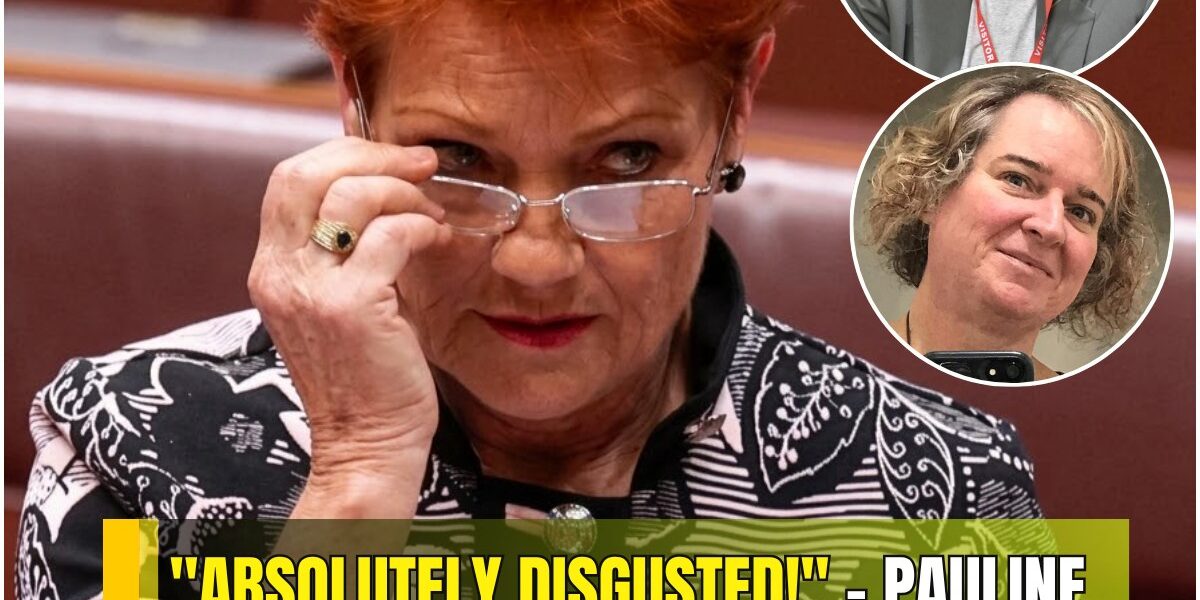

“SHE’S NOT A REAL WOMAN!” — AUSTRALIA ERUPTS OVER TRANS APP COURT BATTLE
Australia has erupted into another fierce culture war after a landmark court ruling declared that a female-only networking app unlawfully discriminated against a transgender woman. What began as a dispute over access to a social platform has now exploded into a national debate over biology, gender identity, women’s rights, free association, and the future of Australia’s discrimination laws.
At the centre of the controversy is the app Giggle for Girls, a platform created specifically as an online space “exclusively for women.” Founder Sall Grover said the app was designed to give women a safe environment away from harassment, intimidation, and unwanted interactions often experienced online.
But now, many Australians are asking whether spaces created specifically for biological women can legally exist at all.
The case began when transgender woman Roxanne Tickle joined the platform after passing an AI-based verification system intended to identify male users. The system initially approved her account, allowing her onto the app.
However, after personally reviewing Ms Tickle’s profile in 2021, Ms Grover removed her from the platform. According to court documents, Ms Tickle later attempted to regain access but was rejected again.

That decision would ultimately trigger years of legal battles, political outrage, and a nationwide ideological clash.
In August 2024, the Federal Court ruled that Ms Grover had indirectly discriminated against Ms Tickle and ordered her to pay $10,000 in damages. But the controversy did not end there.
Ms Grover appealed the decision, arguing that sex under Australian law is “binary and immutable.” Her legal team claimed the Giggle app existed specifically to address disadvantages and safety concerns faced by biological women in digital spaces.
Meanwhile, Ms Tickle cross-appealed parts of the ruling, arguing the discrimination was not merely indirect — but direct.
The appeal case quickly became one of the most watched legal showdowns in the country.
Activists, politicians, women’s groups, LGBTQI+ organisations, and free speech advocates all began treating the case as something much bigger than a dispute over a phone app.
For supporters of Ms Grover, the issue was simple: should women have the right to create spaces exclusively for biological females?
For supporters of Ms Tickle, the answer was equally clear: anti-discrimination laws protect transgender women too, and excluding them from public platforms is unlawful.

Then came the ruling that sent social media into meltdown.
On Friday, the Full Court of the Federal Court sided decisively with Ms Tickle. Justice Melissa Perry ruled that Ms Grover had directly discriminated against Ms Tickle twice — once when she removed her from the app, and again when she refused to reinstate her account.
According to the court, Ms Tickle had been treated “less favourably” than a biological woman.
That phrase instantly became one of the most debated lines online.
Critics of the ruling argued the decision effectively erased the concept of female-only spaces. Supporters celebrated it as a major victory for transgender rights in Australia.
The damages awarded to Ms Tickle were also increased. Ms Grover and Giggle for Girls were ordered to pay $20,000 in compensation, along with legal costs reportedly reaching up to $50,000.
The reaction from political figures was immediate and explosive.
One Nation leader Pauline Hanson declared she was “disgusted” by the ruling and vowed to support Sall Grover politically.
“I will back Sall Grover in parliament,” Hanson wrote on social media, instantly reigniting debate around the Sex Discrimination Act.
Opposition spokeswoman for women Melissa McIntosh also criticised the outcome, saying many Australians fighting for “biological rights of women” would be deeply disappointed.
“The issue is the Sex Discrimination Act,” she argued. “Our laws should be working for Australian women, not against them.”
Those comments triggered another wave of outrage online.
Some Australians accused politicians of undermining protections for transgender people. Others argued the ruling showed the law had drifted too far from biological reality.
Meanwhile, the Australian Human Rights Commission strongly welcomed the decision.
Sex Discrimination Commissioner Dr Anna Cody said the case highlighted how discrimination laws should apply “in practice” and stressed that legal protections extend to all women, including transgender women.
Equality Australia also celebrated the verdict, calling it a defining moment for transgender rights in the country.
Legal director Heather Corkhill said the ruling confirmed that Australian law does not restrict a person’s legal sex solely to the sex assigned at birth.
“This ruling affirms that all women deserve to live free from discrimination,” she said.
But for critics, those statements only intensified concerns that biological women are steadily losing the ability to maintain female-only environments.
Adding even more fuel to the fire was support from Harry Potter author JK Rowling.
Ahead of the appeal, Rowling publicly backed Sall Grover on X, posting: “Good luck, Sall, may the best woman (haha) win.”
The post immediately reignited global debate surrounding Rowling’s stance on transgender issues. Critics accused her of promoting exclusionary views, while supporters praised her for defending biological definitions of sex.
As clips, quotes, and reactions spread online, the case transformed from a legal dispute into a broader cultural flashpoint.
Some Australians now fear the ruling could have consequences far beyond one app.
Questions are already being raised about women-only gyms, shelters, clubs, networking groups, and private events. Could similar legal challenges emerge in the future?
Others argue those fears are exaggerated and that the ruling simply reinforces existing anti-discrimination protections.
Still, the emotional intensity surrounding the case shows no signs of fading.
What makes the controversy especially powerful is that both sides believe they are defending vulnerable groups.
Supporters of transgender inclusion argue trans women face exclusion, abuse, and discrimination every day and deserve equal access under the law.
Opponents argue women fought for decades to secure female-only spaces and now fear those boundaries are disappearing entirely.
That collision of rights, identity, and law is exactly why this case has struck such a nerve across Australia.
And perhaps the most explosive part of all is that the debate is no longer staying inside courtrooms.
It is now unfolding across parliament, television panels, universities, workplaces, and millions of social media feeds.
For some Australians, the ruling represents progress and equality.
For others, it represents the moment the definition of “woman-only spaces” fundamentally changed.
And as the political pressure grows, many believe this legal battle may only be the beginning.