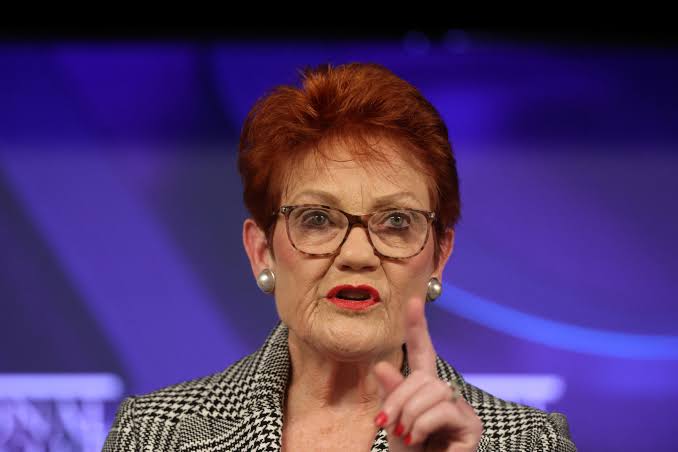
Pauline Hanson – The Woman Who Has Left a Distinctive Mark on Australian Politics. u1

The Disruptor of Australian Democracy: The Three-Decade Odyssey of Pauline Hanson
To understand the trajectory of modern Australian politics, one must examine the life and legacy of Pauline Lee Hanson. Over the past three decades, few political figures in Australia have generated as much fierce debate, fervent loyalty, or intense polarization. Born on May 27, 1954, in Brisbane, Queensland, Hanson’s route to the national political stage diverged sharply from the conventional pathways travelled by Australia’s political elite. She was not a career union official, a corporate lawyer, or a political staffer groomed in party headquarters. Instead, Hanson was a working-class mother of four and a small-business owner who operated a local fish-and-chips takeaway shop in Ipswich, a working-class city west of Brisbane.
Hanson’s political journey began in local government. In 1994, she successfully ran for the Ipswich City Council, serving as a councillor for Division 7. Her time on the council was short-lived, but it served as her entry point into organized electoral politics. In 1995, seeking a broader platform, Hanson joined the Liberal Party of Australia and was endorsed as their candidate for the federal seat of Oxley—a traditionally safe Australian Labor Party (ALP) stronghold—ahead of the March 1996 federal election.
It was during the 1996 campaign that Hanson’s name first exploded into national consciousness. Following controversial public statements she made regarding government assistance programs for Indigenous Australians and the policies of multiculturalism, the Liberal Party withdrew her official endorsement. Party leader John Howard publicly declared that Hanson would not be permitted to sit as a Liberal parliamentarian if elected. However, because the deadline for ballot printing had already passed, Hanson remained listed on the ballot as the Liberal candidate.

On election night in March 1996, Hanson delivered one of the most stunning upsets in modern Australian electoral history. Benefiting from a massive swing against Labor, she captured the seat of Oxley, entering the House of Representatives as an independent MP.
Six months later, on September 10, 1996, Hanson delivered her maiden speech to the House of Representatives. Delivered in accordance with parliamentary tradition without interruption, the speech ignited an immediate and unprecedented political firestorm across the nation. In her address, Hanson claimed that Australia was in danger of being “swamped by Asians,” criticized multiculturalism as a divisive policy, called for the abolition of specific welfare and assistance schemes for Indigenous Australians, and attacked economic rationalism and tariff reductions.
The maiden speech drew intense international attention and provoked fierce condemnation from major political parties, civil rights groups, and community leaders who accused her of stoking racial intolerance. Simultaneously, the speech resonated deeply with a segment of the electorate—particularly regional, rural, and working-class Australians who felt economically sidelined and politically ignored by the urban establishment.
Recognizing the potential to channel this public sentiment into an organized movement, Hanson co-founded One Nation (initially named Pauline Hanson’s One Nation) in April 1997 alongside political strategists David Oldfield and David Ettridge. The right-wing populist party quickly established a formidable grass-roots organization, capitalizing on widespread dissatisfaction with Australia’s two major political groupings—the Labor Party and the Liberal-National Coalition.
The electoral impact of One Nation was immediate:
-
The 1998 Queensland State Election: One Nation sent shockwaves through Australia’s political establishment by securing 22.7% of the primary vote and winning 11 seats in the Queensland Legislative Assembly.
-
The 1998 Federal Election: Facing a redrawn electoral boundary for her seat of Oxley, Hanson contested the newly created division of Blair. While One Nation secured over one million votes nationally in the Senate and won a Senate seat in Queensland, Hanson herself narrowly lost her bid for the lower house seat of Blair due to preference flows from both major parties working together to defeat her.
The years following 1998 brought severe turbulence for both Hanson and her party. One Nation suffered from intense internal feuds, defections, and legal challenges. In 2002, Hanson resigned from One Nation following leadership disputes. The lowest point of her political life came in August 2003, when Hanson was convicted of electoral fraud relating to the registration of One Nation in Queensland and sentenced to three years’ imprisonment. After serving eleven weeks in a maximum-security prison, her conviction was quashed on appeal by the Queensland Court of Appeal, which unanimously found that the prosecution had failed to establish guilt.
Undeterred by legal battles and repeated electoral defeats—including unsuccessful bids for various federal and state seats through the 2000s and early 2010s—Hanson maintained a persistent presence in public life. She used published works to communicate directly with her base, authoring books including Pauline Hanson: The Truth (1997), Untamed & Unashamed (2007), and Pauline: In Her Own Words (2018).
Hanson re-joined One Nation in 2013 and reassumed the party’s leadership in 2014. Two years later, during the 2016 federal election, Hanson orchestrated one of the most remarkable political comebacks in Australian history. Capitalizing on a double-dissolution election format, she was elected to the Australian Senate as a Senator for Queensland, alongside three other One Nation candidates across Australia.
Upon her return to Parliament, Hanson established herself as a permanent fixture in upper house politics. She was re-elected to the Senate in the 2022 federal election for another six-year term. Contrary to the perception that her career was defined entirely by public controversy, parliamentary records demonstrate her active participation in committee work. Notable committee appointments include:
-
Chair of the Senate Select Committee on Lending to Primary Production Customers (2017): Examining bank lending practices affecting regional and agricultural producers.
-
Deputy Chair of the Joint Select Committee on Australia’s Family Law System (2019–2021): Investigating reform, custody arrangements, and court processes.
-
Member of the Joint Standing Committee on the National Broadband Network (2016–2018): Monitoring infrastructure delivery to rural communities.
As recorded in official parliamentary files, Hanson was formally listed as the Leader of One Nation on January 28, 2026. Her political platform has remained focused on core populist themes: strict limits on immigration, protection for domestic industries and small businesses, border security, support for agricultural communities, and skepticism toward international treaties and climate policies.
┌─────────────────────────────────────────────────────────────────────────────────┐
│                           THE HANSON OVERTON WINDOW                             │
│                                                                                 │
│  [1996: Political Fringe] ──► [2000s: Mainstream Adoption] ──► [2026: Institutional] │
│   • Anti-multiculturalism       • Offshore border processing   • Structural shift │
│   • Protectionist trade         • Strict immigration caps      • Lower house seats │
│   • Anti-establishment          • Regional banking inquiry     • Balance of power │
└─────────────────────────────────────────────────────────────────────────────────┘
Having spent three decades covering political movements, electoral shifts, and statecraft across Washington, Westminster, and Canberra, I have witnessed many political meteors flare up and burn out. When Pauline Hanson walked into the Australian House of Representatives in 1996, the consensus among political analysts was that she was a temporary aberration—a flash in the pan born of localized economic anxiety in outer-metropolitan Brisbane.
That assessment was wrong.

To look at Pauline Hanson merely through the lens of controversial headlines is to misunderstand the mechanics of modern Western politics. Hanson was not an anomaly; she was the vanguard. Long before the Brexit referendum reshaped the United Kingdom, before Donald Trump dismantled the US Republican establishment, and before right-wing populist parties gained legislative holds across Continental Europe, an Ipswich fishmonger had already mapped the entire structural blueprint of modern anti-establishment populism.
The Discontent Engine: The Unseen Divide
What commentators in Sydney and Melbourne overlooked in 1996—and what many still overlook today—is the economic and cultural landscape that created the Hanson phenomenon. During the late 1980s and early 1990s, both major Australian political parties embraced economic rationalism: privatizing state assets, floating the currency, lowering tariffs, and opening Australia up to global markets.
While these reforms generated massive aggregate wealth in financial centers, they simultaneously gutted manufacturing hubs and created profound economic precariousness across regional and rural Australia. When small businesses folded and regional towns lost banking branches, post offices, and manufacturing plants, the major parties responded with economic statistics and policy jargon.
Hanson spoke a different language. Her appeal was never rooted in policy white papers; it was emotional, visceral, and personal. She validated the feeling among millions of voters that the nation’s political and economic leadership had abandoned them in favor of globalism and cosmopolitan urban interests. She provided a simple, powerful explanation for their decline—pointing the finger at international markets, rapid immigration, and specialized government support for minority groups.
The Overton Window: Shifted, Not Broken
The standard narrative surrounding Hanson focuses on her public repudiation by major party leaders. Yet an objective analysis of Australian public policy over the last 30 years reveals a striking paradox: while the political establishment repeatedly denounced Hanson’s rhetoric, it quietly adopted significant portions of her policy agenda.
Consider the evidence across three decades of Australian legislative history:
| Policy Area | 1996 Hanson Position | Initial Major Party Stance | Eventual Mainstream Policy Outcome |
| Border Enforcement | Unilateral border interception & offshore processing | Rejected as contrary to international norms | Implemented via Operation Sovereign Borders & Nauru/PNG processing |
| Immigration Caps | Drastic cuts to annual permanent migration intake | Supported high growth targets | Both major parties routinely campaign on lowering annual migration numbers |
| Foreign Ownership | Strict scrutiny of foreign purchases of agricultural land | Open-market deregulation | Establishment of the Foreign Ownership Register for Agricultural Land |
| Regional Banking | Inquiries into bank lending to farmers and regional closures | Market-driven bank discretion | Senate Select Committee inquiries and formal banking codes of practice |
This dynamic represents a classic textbook shift of the Overton Window—the spectrum of ideas tolerated in public discourse. Hanson positioned herself far to the right, taking the heat and condemnation of the press. The major political parties then moved into the space she opened, implementing tougher border controls, tighter immigration limits, and economic nationalism under polished administrative titles. Hanson was publicly rejected, but her ideas were privately harvested.
The Media-Populism Symbiosis
No political career of this duration exists in a vacuum; it requires a media ecosystem to sustain it. The relationship between Pauline Hanson and the Australian media is one of the most complex, mutually beneficial, and contentious in modern broadcasting history.

In the late 1990s, news organizations discovered that Hanson generated unmatched ratings. A television segment featuring Hanson guaranteed viewers, clicks, and furious public debate. For decades, commercial television networks and morning breakfast shows gave Hanson regular, uncritical commentary slots.
  ┌──────────────────────────────────────────────────────────┐
  │                 THE MEDIA FEEDBACK LOOP                  │
  │                                                          │
  │     [Controversial Statement]                            │
  │                │                                         │
  │                ▼                                         │
  │     [Prime-Time Media Coverage & High Ratings]          │
  │                │                                         │
  │                ▼                                         │
  │     [Increased Political Exposure & Base Support]        │
  │                │                                         │
  │                ▼                                         │
  │     [Establishment Backlash & Public Condemnation]       │
  │                │                                         │
  │                └──────────────────────────────────┐      │
  │                                                   │      │
  │                                                   ▼      │
  │     [Re-validation of Hanson's "Anti-Establishment" Claim]│
  └──────────────────────────────────────────────────────────┘
This feedback loop created an environment where Hanson could position herself simultaneously as an outsider silenced by the political elite and as one of the most visible media personalities in the country. Every public attack from political rivals or media commentators only served to reinforce her primary narrative: they are attacking me because I am speaking for you.
Granular Work vs. Public Spectacle
To evaluate Hanson solely by her controversial speeches is to ignore her functional legislative record. As an investigative analyst, one must look at committee attendance, voting patterns, and legislative deals.
When Hanson returned to the Senate in 2016, she brought a more disciplined approach to parliamentary procedure. During the 45th and 46th Parliaments, the Coalition government repeatedly relied on Hanson’s vote in the Senate to pass crucial tax, industrial relations, and deregulation legislation. In exchange for her vote, Hanson secured concrete policy concessions for regional Queensland, including funding for water infrastructure, support for regional apprenticeships, and inquiries into banking practices affecting primary producers.
This duality defines Hanson’s political career: in front of the cameras, she remains the provocative outsider challenging political correctness; inside committee rooms, she acts as a pragmatic transactional politician who understands the raw math of Senate power.
Unanswered Questions for Australian Democracy
As Hanson’s role continues to evolve into 2026, her political trajectory leaves Australian democracy facing critical unanswered questions:
-
The Succession Dilemma: One Nation has historically been a highly personalized political vehicle built almost entirely around Hanson’s brand and personality. Can the party survive her ultimate departure, or will it fracture as it did in the early 2000s?
-
The Fragility of the Two-Party System: Hanson’s enduring presence—and the surge of minor party support across the political spectrum—signals a permanent breakdown in the traditional two-party system. Are major political parties capable of rebuilding trust with regional and working-class voters, or has the electorate permanently fragmented?
-
The Balance Between Speech and Cohesion: How does a multicultural democracy manage political figures who articulate real economic anxieties while utilizing rhetoric that marginalized communities experience as deeply divisive?
Pauline Hanson’s journey from an Ipswich fish-and-chips shop to the high chamber of the Australian Senate is a narrative without parallel in modern Western governance. She has been imprisoned and exonerated, politically buried and triumphantly resurrected, intensely vilified and passionately revered.

Her enduring legacy cannot be reduced to a single headline, a simple ideological label, or a partisan soundbite. Whether one views her as a courageous champion of the forgotten working class or as a divisive figure who fractured social cohesion, one historical fact remains indisputable: Pauline Hanson fundamentally reshaped the landscape of Australian democracy.
She exposed the vulnerabilities of an arrogant political establishment, demonstrated the disruptive power of minor parties, and forced mainstream leaders to confront the deep economic and cultural anxieties of regional citizens. In doing so, she became a political mirror for Australia—reflecting both the unresolved tensions of its identity and the profound disconnect between the governed and those who govern.
As we look across the modern global political landscape—where the forces of populism, nationalism, and anti-establishment sentiment now define elections from Washington to Paris—we are left with one final, haunting question:
Did Pauline Hanson change Australian politics, or was she simply the first person with the audacity to reveal what Australian politics had already become?