
Identity, Faith, and Unity: The Debate Ignited by Pauline Hanson’s Latest Remarks
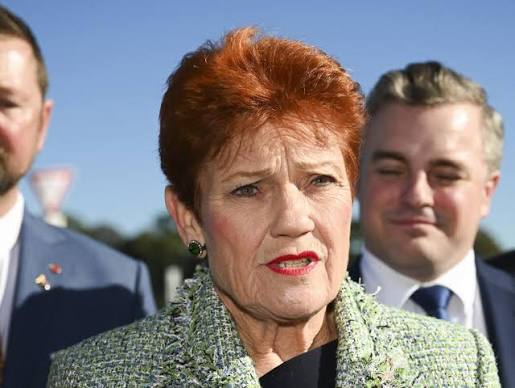
Australia’s conversation about who it is and what it stands for has once again flared into open division, sparked by fresh comments from One Nation leader Pauline Hanson. In a recent address, Hanson argued that the nation must remain firmly anchored in its existing laws, democratic institutions, and cultural traditions. She warned that the growing influence of Islam could challenge what she called “Australia’s established way of life” — remarks that have immediately reignited one of the most sensitive and long-running debates in modern Australian politics.
The Core of the Argument
Hanson’s position rests on a principle she has championed for decades: one nation, one law, one identity. She maintains that successful immigration and social cohesion depend on clear expectations — that everyone choosing to live in Australia must embrace its legal system, democratic values, and shared national culture, rather than expecting the country to adapt to foreign customs or religious frameworks.
For her supporters, this is not about exclusion, but about fairness and clarity. They say Hanson is giving voice to concerns many Australians have raised privately for years: that rapid population growth, changing cultural patterns, and differing beliefs can create barriers to community harmony. In their view, integration is a two-way street — and the responsibility lies with newcomers to adopt the values and rules of their new home.
Critics, however, see the remarks very differently. They argue that Hanson’s framing links an entire religion to a perceived threat, painting millions of law-abiding, contributing Australians with a single, broad brush. They point out that Australia was built by successive waves of migration, from European settlers in the 19th century to refugees and skilled workers from across Asia, the Middle East, Africa, and the Pacific in recent decades. Religious freedom, they note, is a right protected by Australian law, and diversity has long been a source of economic strength, cultural richness, and global influence.
The Wider Context
This debate does not exist in isolation. It unfolds against a backdrop of broader national challenges:
- Immigration and population: High migration levels have contributed to rapid growth, but also placed pressure on housing, healthcare, transport, and wages.
- Cost of living and affordability: Many families feel squeezed, and there is a natural tendency to link these pressures to changes in society.
- Changing demographics: As communities become more diverse, questions naturally arise about how to maintain a shared sense of belonging.
Hanson’s message has found a receptive audience among those who feel the major parties have failed to provide clear answers. At the same time, it has drawn condemnation from human rights groups, faith leaders, and many politicians who argue it deepens division rather than solving problems.
The Senate has previously censured Hanson for similar comments, highlighting the line many believe should not be crossed between legitimate debate and discrimination. Yet each time she raises these issues, they return to the center of public discussion — a sign that the underlying questions have not yet been fully resolved.
After thirty years of reporting on politics, culture, and social change across the world, I have learned that debates about identity and religion are rarely about the issues they claim to be. More often, they are a mirror held up to a nation’s anxieties — about change, about security, and about who belongs. This latest exchange is no different. To understand it fully, we must look past the rhetoric and examine what is really at stake.
What Most People Overlook
First, we must separate fact from fear. The claim that one religious group is a threat to Australia’s way of life is not supported by evidence. Australian courts, laws, and institutions remain fully in control; no religious legal system overrides the Constitution; and the vast majority of Muslim Australians are active, law-abiding citizens who contribute to business, education, healthcare, and community life. The problem is not a lack of clarity in the law — it is a lack of clarity in how the debate is framed.
Second, we must acknowledge the real concerns beneath the surface. When people talk about “preserving our way of life,” they are often not talking about religion itself — they are talking about the feeling that the world around them is changing too fast, that familiar neighborhoods are shifting, and that the system is not working for them. High housing costs, long hospital waiting lists, and stagnant wages create anxiety. Hanson takes that anxiety and gives it a simple, recognizable explanation — but it is not always the right one.
Third, we must recognize the difference between integration and assimilation. Hanson’s argument often leans toward assimilation: that everyone must adopt the same culture, customs, and beliefs. But successful societies around the world have shown that integration works better: you keep your identity, your faith, and your traditions, but you also agree to follow the same laws, respect the rights of others, and share a common civic purpose. Australia’s strength has always been its ability to be many cultures within one nation.

The Deeper Meaning: What Does “Australian Identity” Mean Today?
At the heart of this debate is a question that every diverse democracy must answer: How do we remain united when we are no longer all the same?
For much of its history, Australia defined itself by a narrow set of characteristics: Anglo-Celtic heritage, Christian traditions, and rural or working-class roots. Today, that definition no longer fits. The country is multicultural, multifaith, and globalized. This shift has brought immense benefits — but it has also created uncertainty. When the old sense of identity changes, people naturally feel unmoored.
Hanson offers a comforting but limited solution: go back to a simpler, more uniform vision. But the truth is, Australia cannot go back — and it does not need to. Its new identity is not about what everyone looks like or believes; it is about what everyone agrees to uphold: the rule of law, freedom of speech, equality before the law, and mutual respect. These are the shared values that bind the nation, regardless of background.
Why This Matters
This debate matters because it tests the very foundation of Australia’s democracy: can we disagree without dividing?
- If we allow anxiety to turn into suspicion of entire groups, we risk creating a society where communities live in parallel, not in partnership.
- If we ignore the genuine frustration that drives this conversation, we leave space for more extreme voices to fill the gap.
- If we assume that diversity automatically creates division, we overlook the fact that diversity has been the engine of Australia’s prosperity.
The challenge for leaders — both in government and in opposition — is to explain clearly that unity does not require uniformity. It requires trust: trust that everyone is playing by the same rules, and trust that the benefits of a diverse society outweigh the challenges.
The Unanswered Questions
This discussion leaves us with critical questions that will shape Australia’s future:
- Can we redefine “Australian identity” in a way that includes everyone, without losing the sense of shared purpose?
- How do we address the real economic and social pressures facing communities, without scapegoating immigrants or religious groups?
- Can we have open, honest conversations about integration without crossing into prejudice or discrimination?
- Will the major parties finally offer a clear, positive vision for Australia’s future — or will they continue to let others set the terms of the debate?
Pauline Hanson’s latest remarks have once again put Australia’s identity under the spotlight. They have divided opinion, stirred strong emotions, and reminded us that even after decades of discussion, the question of who we are and who we want to be remains unresolved.
But here is the most important truth: The debate is not really about Islam, or immigration, or even Pauline Hanson. It is about how Australia handles change. Every nation evolves, and every evolution brings uncertainty. The choice facing us is not whether to change — change is inevitable — but how to change.
We can choose a path of division, where we blame our problems on others and try to return to a past that no longer exists. Or we can choose a path of confidence: to uphold our laws, protect our freedoms, and build a nation where everyone — regardless of where they were born or what they believe — has a fair chance to belong and contribute.
And so I leave you with this thought: True national unity is not built by excluding those who are different — it is built by proving that our shared values are strong enough to hold us all together, no matter how diverse we become.