Labor Hikes Tobacco Tax Again as Black Market Explodes and One Nation Demands a 75% Cut. u1

The Anatomy of an Unintended Empire
In Melbourne’s northern suburbs, suburban strip malls and corner storefronts have spent the last three years bearing the physical scars of an escalating underground turf war. Smashed glass, charred brick facades, and police tape have become familiar landmarks across Victoria, South Australia, and Queensland.
What began as a public health policy—a steady, deliberate campaign of tax hikes designed to price cigarettes out of the reach of ordinary Australians—has transformed into one of the most violent and lucrative illicit booms in the country’s modern history.
Across Australia, the federal tobacco excise has climbed so high that a single legal packet of 20 cigarettes now commands upwards of $46.50. On September 1, the Albanese government is set to enforce yet another scheduled biannual indexation hike, pushing the retail price past $47.04. Of that total, the government’s tax take accounts for nearly 75%—roughly $30.57 in excise (climbing to $31.05) plus $4.23 in Goods and Services Tax (GST), leaving a modest $11.71 to be split across manufacturers, distributors, and licensed shopkeepers.
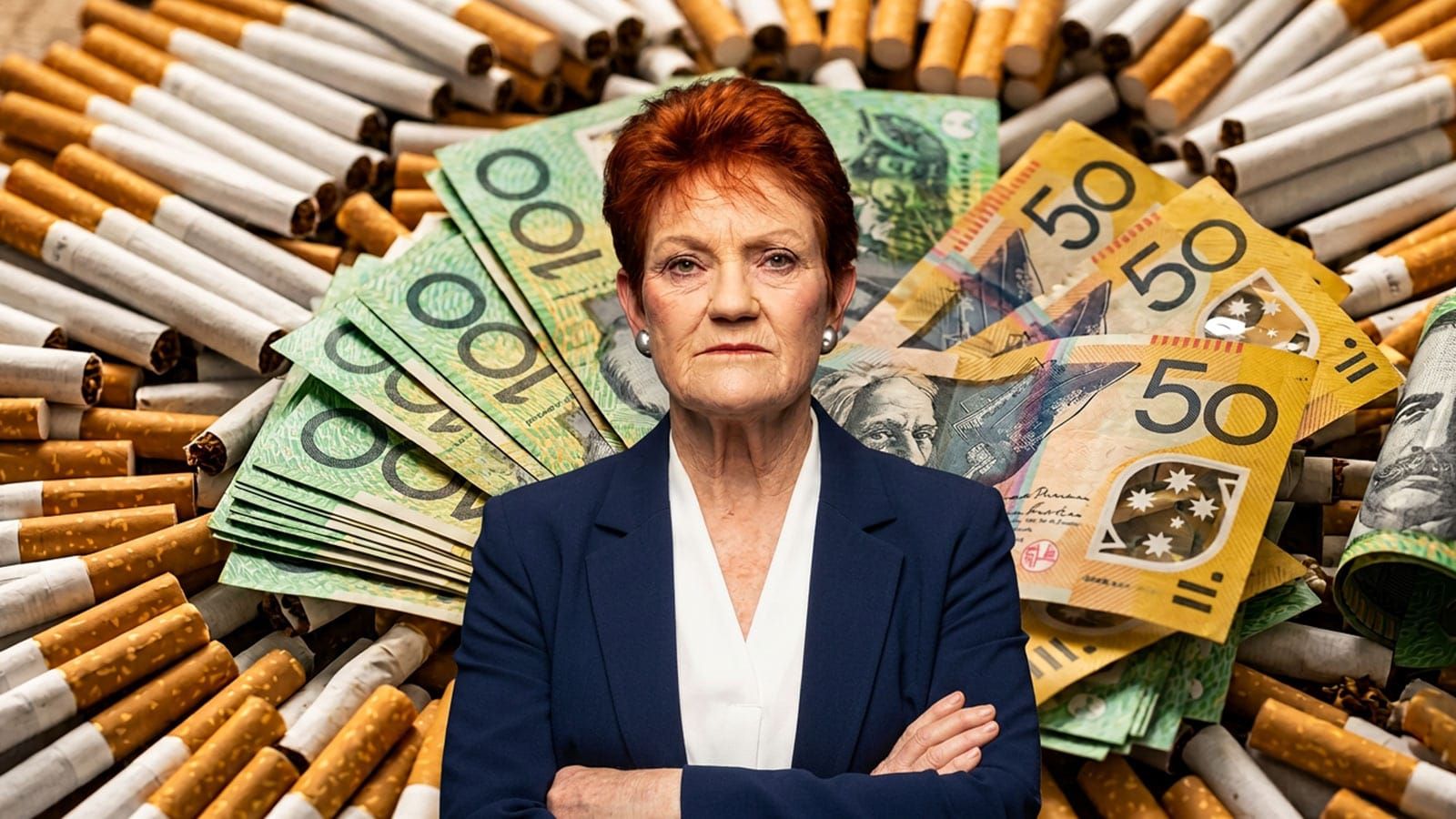
On the other side of the counter sits an untaxed shadow market selling illicit branded cartons, counterfeit “chop-chop” loose-leaf tobacco, and imported cigarettes for $12 to $25 a pack. The resulting price canyon—a gap of $21.50 to $34.50 per pack between legal and black-market stock—has created an unprecedented financial incentive. Organized crime syndicates, motorcycle gangs, and transnational syndicates have stepped into the vacuum, turning Australia into one of the highest-margin criminal commodities markets on Earth.
The Numbers, the Toll, and the Political Shockwave
The real-world consequences of this economic divide are detailed in government reports, intelligence assessments, and local police blotters.
+------------------------------------------------------------------------------------+
|                      AUSTRALIA'S TOBACCO TAX CRISIS AT A GLANCE                    |
+------------------------------------+-----------------------+-----------------------+
| Metric                             | Current Reality       | One Nation Proposal   |
+------------------------------------+-----------------------+-----------------------+
| Legal 20-Pack Retail Price         | $46.50 (Rising $47+)  | ~$21.29               |
| Total Federal Tax Share per Pack   | $34.80 (Excise + GST) | $9.58                 |
| Illicit Black Market Price         | $12.00 – $25.00       | $12.00 – $25.00       |
| Black Market Share of Supply       | 50% – 60% (up to 80%) | Target: Substantial ↓ |
| Federal Excise Revenue Peak        | $16.3 Billion (2020)  | Projected Stabilization|
| Current Forecast Excise Revenue    | ~$4.1 Billion (25-26) | +$3.1B vs Baseline    |
| Criminal Syndicate Annual Profits  | $4.1B – $6.9 Billion  | Broken Profit Margins |
| Arson Attacks & Homicides (Vic)    | 200+ Attacks / 6 Dead | Priority Enforcement  |
+------------------------------------+-----------------------+-----------------------+
According to Detective Inspector Chris Murray, head of the Victoria Police arson squad, the gang war over illicit distribution routes has sparked more than 200 arson attacks and attempted strikes, 193 confirmed tobacco-related firebombings, six homicides, and over 500 arrests since March 2023 alone. In several instances, firebombers targeted the wrong suburban residences, terrorizing innocent families.
At the federal level, Assistant Minister for Citizenship, Customs, and Multicultural Affairs Julian Hill acknowledged the crisis during official proceedings, citing the Illicit Tobacco and E-cigarette (ITEC) Commissioner’s annual reporting. Hill conceded that aggressive excise increases over the past decade served as “one of the key drivers of the growth of the black market.”
The ITEC figures illustrate the scale of this parallel economy:
-
Market Capture: Between 50% and 60% of all tobacco consumed nationwide is now sourced through illicit channels, alongside an estimated 95.7% of Australia’s $1.6 billion vape market.
-
Syndicate Windfalls: Organized criminal syndicates are extracting between $4.1 billion and $6.9 billion in annual net profit.
-
Treasury Losses: The federal government is hemorrhaging between $7.7 billion and $11.8 billion annually in evaded tax duties.
-
Nicotine Consumption: Australian Bureau of Statistics wastewater epidemiology reveals overall nicotine consumption climbed nearly 40% between 2017 and 2025, despite the national population growing by only 14%. Over that same span, illicit sources surged from supplying 12% of total consumed nicotine to an estimated 80%.
Despite these figures, the Commonwealth government has maintained its trajectory, committing more than $345 million to border and domestic enforcement—including $84 million directly to state and territory agencies—while rejecting any reduction in the excise rate.
Into this debate, Senator Pauline Hanson’s One Nation party released a comprehensive policy proposal calling for an immediate 75% reduction in the federal tobacco excise, accompanied by a mandatory three-year indexation freeze. Under One Nation’s model, if tax savings are passed through completely to the retail level, the price of a standard 20-pack would plummet from $46.50 to roughly $21.29 (with excise dropping to $7.64 and GST to $1.94). This price drop is designed to push legal shelf prices directly inside the $12-to-$25 range charged by criminal street vendors.
THE PRICE EQUATION: CURRENT VS. PROPOSED 75% EXCISE CUT
═══════════════════════════════════════════════════════════
Current Retail Pack: $46.50
┌───────────────────────────────────────────────┬─────────┐
│ Excise ($30.57) + GST ($4.23) = $34.80 Tax    │ $11.71  │
└───────────────────────────────────────────────┴─────────┘
                                                Retail/Mfg

One Nation Target Pack: $21.29
┌───────────────────────┬─────────────────────────────────┐
│ $7.64 Exc + $1.94 GST │ $11.71 Retailer & Mfg Margin    │
└───────────────────────┴─────────────────────────────────┘
The proposal has drawn sharp lines across Australia’s political and public health landscape:
-
The Economic Modeling: A landmark study conducted by Oxford Economics Australia, commissioned by supermarket group Ritchies IGA, demonstrated that rolling the excise back to 2019 levels alongside strict enforcement could reduce the illicit market share from 64% to 37% by 2029, while boosting federal revenue collections by $3.1 billion as consumers migrate back to taxed storefronts.
-
Public Health Opposition: Public Health Association of Australia (PHAA) Chief Executive Terry Slevin argued that lowering the excise would provide an estimated $2.3 billion annual windfall to multinational tobacco companies—including British American Tobacco, Imperial Brands, and Philip Morris—while undermining decades of smoking cessation progress.
-
Political Paralysis: Federal Opposition Leader Angus Taylor has deliberated over an alternative 50% excise cut without formalizing a platform. Meanwhile, state leaders like New South Wales Premier Chris Minns have sounded alarms, observing that ordinary citizens are turning to underground vendors when forced to choose between a $17 illicit pack and a $60 legal purchase.
My Professional Perspective
1. The Broken Mechanics of the Pigouvian Trap
For thirty years, reporting from conflict zones, backroom political summits, and financial investigations reveals that governments frequently fall into the trap of linear policy modeling.
The tobacco excise in Australia was designed as a classic Pigouvian tax—a fiscal mechanism created to correct a negative externality by artificially increasing the cost of an unhealthy product to reflect its true societal and healthcare burdens.
In economic theory, demand for addictive substances was long viewed as relatively inelastic; raising prices was expected to generate steady tax revenues while steadily encouraging casual users to quit. For two decades, that model appeared to function in Australia.
However, Pigouvian economics relies on a critical, often unspoken baseline: the state must retain an effective monopoly on market enforcement.
THE BREAKDOWN OF PIGOUVIAN ENFORCEMENT
─────────────────────────────────────────────────────────────
Traditional Theory:
[High Tax] ──> [Higher Shelf Price] ──> [Smokers Quit] ──> [Lower Health Burden]

The Reality of Extreme Price Disparity:
[Hyper-Excise] ──> [$47 vs $15 Gap] ──> [Black Market Emerges]
                         │
                         └───> [Crime Syndicates Take 60% Share]
                         └───> [Violence & Arson in Suburbs]
                         └───> [Treasury Receipts Collapse]
When an excise tax inflates the retail price of an agricultural commodity hundreds of percentage points above its cost of production and international transit, it creates an enormous arbitrage margin. At $47 a pack, Australia created the most lucrative profit-to-weight ratio for contraband goods outside of hard narcotics, but with lower legal penalties and simpler logistics.
The policy crossed what economists refer to as the Laffer threshold for sin taxes: the point where higher tax rates no longer yield higher compliance, but instead cause the legal tax base to collapse into the shadow economy.
THE COLLAPSING TREASURY RECEIPTS (2020 – 2030)
$18B ┬──────────────────────────────────────────
     │  $16.3B (2019-20 Peak)
$15B ┼───╮
     │    ╰──╮
$12B ┼       ╰─── $12.6B (2022-23)
     │
 $9B ┼
     │
 $6B ┼             $5.5B (2025-26 Est.)
     │                ╰───╮ $4.1B (Actual Projected)
 $3B ┼                    ╰──── $3.56B ────╮ $2.14B (2029-30)
     │                                     ╰──────────
 $0B ┴────────────────────────────────────────────────
The resulting budget shortfall affects the entire public ledger. In 2020, federal collections hovered around $16.3 billion. Today, official projections project revenue dropping to $4.1 billion, with forecasts tracking toward $2.14 billion by the end of the decade.
The Australian Institute of Health and Welfare estimates smoking-related healthcare expenditures at $5.7 billion annually. Consequently, the tax has ceased to cover the exact public costs it was designed to offset, leaving ordinary taxpayers to finance both the healthcare shortfall and millions of dollars in emergency law enforcement task forces.
2. The Street-Level Reality Beyond the Slogans
To understand the expansion of the illicit trade, one must look at how it operates within working-class neighborhoods and regional towns.
The conventional public narrative suggests that consumers purchasing illegal cigarettes are consciously funding organized crime syndicates. Yet on the ground, the demographic choosing the $15 pack consists largely of pensioners, blue-collar shift workers, and low-income families feeling the pinch of broader living costs.
When household energy bills, rents, and grocery costs rise simultaneously, a smoker facing a choice between a $47 legal pack and a $15 illicit option will rarely choose the legal alternative on civic principle alone. As NSW Premier Chris Minns observed, people who would otherwise never commit an offense find themselves participating in an underground cash economy out of basic financial pragmatism.
THE RETAIL DIVIDE: LEGAL VS. ILLICIT
┌────────────────────────────────────────┬────────────────────────────────────────┐
│ THE LICENSED RETAILER                  │ THE ILLICIT OPERATOR                   │
├────────────────────────────────────────┼────────────────────────────────────────┤
│ • $46.50 – $55.00 shelf price          │ • $12.00 – $20.00 street price         │
│ • Plain packaging (drab olive-brown)   │ • Glossy, colorful overseas branding   │
│ • Graphic health & disease warnings    │ • Zero regulatory health imagery       │
│ • Mandatory age verification (18+)     │ • Unregulated sales, accessible to minors│
│ • Compliant, traceable supply chain   │ • Untraceable syndicate logistics      │
│ • Margin squeezed to single digits     │ • Pure cash margin, zero excise paid   │
└────────────────────────────────────────┴────────────────────────────────────────┘
This dynamic creates an uncomfortable reality for policymakers: hyper-taxation has made the underground economy mainstream. When millions of citizens interact weekly with black-market vendors, public respect for the rule of law erodes. Illicit storefronts open in broad daylight near suburban rail stations, selling unregulated vapes to minors and untaxed cigarettes to adults, relying on the sheer volume of trade to outpace local municipal fines and police raids.
3. The Uncomfortable Political Deadlock
Why do major political parties struggle to alter course even when their own ministers acknowledge that the current system is feeding organized crime?
The answer lies at the intersection of political optics, public health funding, and legislative inertia. For decades, Australia earned global recognition for pioneering anti-tobacco measures, from mandatory graphic health warnings to plain packaging laws.
Lowering a tobacco tax—even as a strategic intervention to bankrupt criminal syndicates—exposes politicians to intense criticism from health advocacy groups. In Canberra, reducing an excise can be framed as capitulating to the tobacco lobby or encouraging smoking, regardless of whether criminal cartels currently control the lion’s share of the market.
                  THE POLICY TRILEMMA
               ┌───────────────────────┐
               │ The Current Stalemate │
               └──────────┬────────────┘
                          │
         ┌────────────────┴────────────────┐
         ▼                                 ▼
┌──────────────────┐              ┌──────────────────┐
│  PUBLIC HEALTH   │              │ LAW ENFORCEMENT  │
│  "Never cut tax; │              │ "Price gap fuels │
│  higher taxes    │              │ cartel violence; │
│  discourage use" │              │ enforcement alone│
│                  │              │ cannot win"      │
└────────┬─────────┘              └────────┬─────────┘
         │                                 │
         └────────────────┬────────────────┘
                          │
                          ▼
               ┌───────────────────────┐
               │    THE STATUS QUO     │
               │ • Cartels make $6.9B  │
               │ • Revenue drops $12B  │
               │ • 200+ Arson attacks  │
               └───────────────────────┘
Furthermore, public health advocacy groups operate under a strict philosophy: no concession to price reductions. PHAA Chief Executive Terry Slevin’s assertion that a tax cut amounts to a $2.3 billion corporate handout reflects this perspective. Yet this argument rests on an assumption that retail price points cannot be regulated or mandated during an excise restructuring.
Because excise duties are levied on a verifiable per-stick basis, any legislative rollback could be tied directly to retail price caps, ensuring savings flow to the register rather than corporate balance sheets.
The central paradox remains: by refusing to lower the excise to protect public health goals, current policy has generated a market where more than half the tobacco and almost all vapes sold are completely outside the regulatory framework.
These illicit products carry no plain packaging, feature no health warnings, and face zero quality-control testing, with laboratory analyses revealing contaminants ranging from industrial mold to banned chemical additives.
Unanswered Questions for the Public Record
As Australia approaches another scheduled excise hike on September 1, several fundamental questions remain unaddressed:
-
The Enforcement Ceiling: If the Commonwealth has committed $345 million to border task forces and local policing without stemming the growth of illicit market share, what scale of expenditure would be required to police a shadow market with a 300% profit margin?
-
The Revenue Deficit: With tobacco excise collections dropping from $16 billion toward an estimated $2.14 billion by 2030, how will the federal budget cover the ongoing $5.7 billion in smoking-related healthcare burdens without shifting the bill to broader income taxes and public debt?
-
The Public Safety Equation: At what point does the physical danger of suburban arson campaigns, firebombings, and gang-related violence outweigh the policy preference for ever-increasing sin taxes?
-
Supply-Side Intervention: If neither major party is willing to adjust the excise rate, what structural mechanism exists to prevent the remaining 40% of the legal market from migrating to the underground trade over the next three years?
A System at the Crossroads
The crisis unfolding across Australia’s retail centers is an illustrative case study in how well-intentioned policy can produce disruptive, counterproductive side effects when economic incentives are pushed to extremes.
When a government prices a commodity beyond the economic reach of its consumers, the demand does not simply disappear. It looks for alternative paths. In Australia, those paths have been paved by sophisticated transnational syndicates that built an untaxed, unregulated multibillion-dollar shadow network.
Suburban shopfronts continue to burn not because police lack dedication, but because the economic returns of the illicit trade dwarf the risks of arrest. As September 1 arrives with another automatic price increase, the divide between fiscal theory and street-level reality grows wider.
The debate is no longer just about public health metrics or corporate balance sheets. It concerns whether a modern state can maintain the rule of law when its own tax policies inadvertently fund the criminal cartels it is trying to eradicate.
Can a nation eliminate a violent black market by continuing the exact pricing policies that created it—or does real leadership require confronting the unintended economic realities of our own laws?