Hidden Old Photos That Will Change How You See the Past | Historical Photos – Archaeological Ruins .P2

Some photographs look ordinary until we learn what was happening around them. A family standing outside a company house in West Virginia can reveal an entire industrial system. A crowded New York subway can preserve the everyday habits of a vanished generation. A woman in a laboratory can represent a revolution in modern science. A group of employees watching a rocket launch can suddenly become witnesses to one of humanity’s greatest technological achievements. And sometimes, a photograph preserves something much harder to look at: a community reduced to ruins, as happened in Tulsa in 1921. These images are not connected by one war, one country, or one decade. They are connected by something larger—the extraordinary speed with which the modern world changed. Behind every machine, famous face, crowded street, scientific experiment, and historic event were ordinary people living through transformations they could not yet fully understand. What do these photographs reveal when we stop seeing them as isolated images and begin seeing them as pieces of the same story?
In 1930, a Coca-Cola soda fountain vehicle represented an unusual approach to advertising and public service. Instead of keeping the product inside a conventional store, the automobile itself could become part of the attraction. The idea reflected something important about twentieth-century consumer culture: companies were increasingly finding creative ways to bring products directly to the public.
The automobile had already begun changing American life. It was no longer simply a machine for transportation. It could become a mobile workplace, a delivery vehicle, an advertising platform, and eventually a symbol of personal freedom. Photographs of unusual vehicles from this era therefore tell us more than what the machines looked like. They show a society experimenting with new ways of moving people, products, information, and entertainment.
The same spirit of modernization can be seen in the construction of the Chicago Board of Trade building in the late 1920s. Chicago had become one of the central commercial cities of the United States, and agricultural commodities were traded on a scale that connected farmers, merchants, transportation companies, and financial institutions across enormous distances.
While skyscrapers and financial exchanges represented the power of modern commerce, another photograph from 1938 brings the story back to a very different environment.
A coal miner’s wife stands with three children outside a company house in West Virginia.

At first glance, it is simply a family portrait. But company housing was an important part of life in many mining communities. Coal companies could influence not only employment but also housing and other aspects of community life. The family standing outside the house therefore represents a larger industrial relationship between worker and employer.
Coal mining powered much of America’s industrial expansion, but the people who produced that energy often lived in difficult economic and social circumstances. The photograph does not need dramatic action to communicate this reality. The house, the clothing, the children, and the setting are enough to make the industrial system visible.
Then there is the automobile.
Early Cadillac models demonstrated how quickly transportation technology was evolving. What had once been a luxury available to very few people would gradually become an essential part of everyday life. Engineers experimented with engines, body designs, suspension, manufacturing methods, and controls. Every generation of automobiles made the previous one appear older.
By the middle of the twentieth century, engineers were experimenting with ideas that would have seemed almost impossible only decades earlier.
In 1969, the Soviet Union tested an experimental heavy mining vehicle powered by a gas turbine derived from helicopter technology. The concept illustrated the willingness of engineers to borrow technology from one field and apply it to another. Mining vehicles needed enormous power, and aviation engines represented one possible source.
This pattern would become one of the defining characteristics of the modern technological age: inventions rarely remained confined to the purpose for which they were originally designed.
The twentieth century was also shaped by political conflict.
In 1944, an Italian resistance fighter photographed in Florence represented a country divided by war and occupation. After Italy’s armistice with the Allies in September 1943, German forces occupied much of northern and central Italy, while Italian resistance movements developed in opposition to the occupation and to Fascist forces.
The people who participated in resistance movements were not always professional soldiers. Many were civilians, political activists, workers, students, and others who became involved in a conflict that had entered their streets and communities.

Elsewhere, the United States was experiencing a very different kind of transformation.
In December 1933, Prohibition came to an end with the ratification of the Twenty-first Amendment, which repealed the Eighteenth Amendment. The change marked the end of a thirteen-year period during which the manufacture, sale, and transportation of intoxicating liquor had been constitutionally prohibited.
Photographs of crowds and demonstrations from the Prohibition era capture the intensity of the debate. Prohibition had never been simply a question of alcohol. It was connected to ideas about morality, government power, crime, family life, public order, and individual freedom.
The photographs therefore preserve a society arguing with itself about what kind of country it wanted to become.
Technology could produce equally dramatic changes beneath the surface of everyday life.
In 1935, diver Jim Jarrett was associated with the exploration of the wreck of the RMS Lusitania while wearing a specialized diving suit. Deep-sea exploration required equipment that could protect the human body from pressure and allow divers to work in environments where conventional diving methods were impossible.
The history of diving is a story of gradual experimentation. Every improvement in suits, helmets, air supply, communication, and underwater equipment expanded the boundary of what humans could physically reach.
But technology did not always make life safer.
A photograph from 1949 showing an artificial tanning machine reflects an era fascinated by mechanical substitutes for natural experiences. The twentieth century repeatedly promised that technology could make life more convenient, more comfortable, and more controllable.
The same confidence appeared in medicine.
At exhibitions, radiology equipment demonstrated how invisible structures inside the human body could be examined using X-rays. What had once been impossible to see could suddenly become visible to doctors. Medical imaging would transform diagnosis and treatment, while also introducing new questions about radiation and safety.
Modernity was therefore a mixture of excitement and uncertainty.

The First World War had already demonstrated how industrial technology could change warfare. One extraordinary photograph shows a female worker cleaning the rifled interior of an enormous 15-inch naval gun at Coventry Ordnance Works. The image is remarkable because of its scale. The worker appears tiny compared with the weapon.
But the photograph also represents the changing role of women during wartime.
With millions of men serving in the armed forces, women entered industrial occupations on a massive scale. They worked in factories, transportation, offices, agriculture, and other industries previously dominated by men. Their contribution did not disappear when the war ended, although many women were pushed out of wartime jobs afterward.
Decades later, photographs would continue documenting the gradual expansion of women’s opportunities.
A 1914 image of women learning typing in London may seem mundane today, but the typewriter was part of a major transformation in office work. Typing became an increasingly important skill as businesses, government departments, newspapers, and other organizations expanded.
For many women, office employment created opportunities for economic independence and professional experience, even within a labor market that remained heavily unequal.
The transformation of women’s public roles continued through the twentieth century.
Photographs of women participating in aviation, engineering, entertainment, science, and other professions show a gradual expansion of possibilities. These changes did not happen overnight, and the photographs should not be treated as proof that equality had already been achieved. Instead, they capture individual moments within a much longer process.
Science provides another powerful example.
In 1905, Marie Curie was photographed in her laboratory, immersed in research that would transform modern understanding of radioactivity. Curie had already shared the 1903 Nobel Prize in Physics with Pierre Curie and Henri Becquerel. In 1911, she received the Nobel Prize in Chemistry for her work involving radium and polonium and the study and isolation of radium. She remains the only person to have received Nobel Prizes in two different scientific categories.

The photograph of Curie in her laboratory therefore represents much more than a scientist at work.
It captures a period when the structure of matter itself was being reconsidered.
Her laboratory did not resemble the image of a futuristic research center. Scientific breakthroughs could emerge from environments that looked modest by modern standards. What mattered was the question being asked, the persistence of the researchers, and the evidence they were able to produce.
At almost the opposite end of the technological spectrum were the enormous computers of the 1950s.
A 1958 photograph of an engineer working on early IBM computer equipment reveals just how physically large computing once was. Thousands of components and connections could occupy entire rooms. Today, a device carried in a pocket possesses vastly more computing power than the machines that once required dedicated facilities.
This contrast is one of the most revealing themes in historical photography.
Modern technology often looks inevitable when viewed backward.
It was not.
Every smaller computer, faster processor, portable device, and digital service came after generations of machines that were enormous, expensive, difficult to operate, and limited by the technology available at the time.
The same story appears in photographs of storage technology.
A device capable of storing only a few megabytes could once require equipment of astonishing size and could even become an object of logistical attention when transported. Today, a memory card smaller than a fingernail can hold thousands of photographs.
The difference is almost impossible to appreciate without seeing the older machines.
Consumer culture was changing just as rapidly.
Supermarkets with organized shelves and shopping carts transformed how people purchased food. Vending machines promised instant access to drinks and other products. Even specialized machines that mixed beverages represented a growing fascination with automation.
The idea was simple: why wait for a person to perform a task if a machine could do it?
That question would eventually reshape almost every aspect of daily life.
Transportation changed too.
A 1950 photograph of a Union Pacific Streamliner lounge car represents an era when rail travel could be presented as an experience of comfort and modernity. Long-distance trains connected cities across the United States while offering passengers dining, sleeping, and lounge facilities.
Meanwhile, London buses carried enormous numbers of people through increasingly crowded streets.
The automobile, railroad, bus, airplane, and eventually spacecraft all contributed to the same transformation: distance was becoming easier to overcome.
But photographs of transportation also reveal how people experienced that transformation personally.
A crowded subway car in New York in 1963 contains no famous historical figure. The passengers are simply reading their morning newspapers.
Yet the image is extraordinarily valuable.

Everyone is focused on the printed page. The scene captures a moment when newspapers were central to daily information. People could sit beside strangers while simultaneously following events happening elsewhere in the world.
Today, the technology has changed completely, but the underlying habit remains familiar: people surrounded by strangers, each consuming information from a device.
The photograph simply freezes an earlier version of that behavior.
Then came television.
By the 1960s, televisions were becoming central objects in many American homes. A family could suddenly watch events happening hundreds or thousands of miles away.
This transformation reached its most remarkable moment on July 16, 1969.
At Kennedy Space Center, the Saturn V carrying Apollo 11 lifted off with Neil Armstrong, Michael Collins, and Edwin “Buzz” Aldrin aboard. NASA records the launch at 9:32 a.m. Eastern Daylight Time. Four days later, Armstrong and Aldrin would land on the Moon, while Collins remained in lunar orbit.
Photographs of Armstrong’s wife Janet and their children watching the launch provide a completely different perspective from photographs of the rocket itself.
The Saturn V represents engineering.
The family represents human anticipation.
Elsewhere, employees gathered around televisions in stores to watch the same event. The Moon landing was not experienced only at the launch site. It was watched in homes, businesses, schools, offices, and public spaces across the world.
NASA estimates that hundreds of millions of people watched Armstrong’s televised first steps on the Moon.
That is why photographs of people watching Apollo 11 are historically important. They document not only the achievement itself, but the way an entire society experienced a technological event together.
Other photographs reveal how quickly popular culture was changing.
Sophia Loren, Grace Kelly, Audrey Hepburn, Carrie Fisher, Steve McQueen, Clint Eastwood, Donald Sutherland, and other performers appear in images from different stages of their careers. Some photographs show stars already famous; others preserve moments before they became household names.
Audrey Hepburn, for example, had trained seriously in ballet before her international film career developed. A photograph of her as a young woman in a ballet class therefore preserves a chapter of her life that existed before the image most people associate with her.
Grace Kelly’s early photographs similarly reveal a young performer before she became one of Hollywood’s best-known stars.
Carrie Fisher photographed with actors in stormtrooper costumes in London represents another era entirely—the emergence of blockbuster cinema as a cultural phenomenon.
These photographs demonstrate how fame changes the meaning of an ordinary moment.
A young actress in a studio is simply an actress.
Decades later, the same image becomes a historical artifact because we know what happened afterward.
The same principle applies to photographs of future public figures before they became famous.

But history is not only made by celebrities.
One of the most moving photographs in the collection is much less glamorous: a migrant family in California during the Great Depression.
During the economic crisis of the 1930s, agricultural workers and their families could travel from one region to another searching for seasonal employment. Families often lived in extremely basic conditions.
The photograph of parents and children does not need an elaborate explanation. Their faces and surroundings communicate the uncertainty of an economy in crisis.
Meanwhile, in cities, modern consumer life continued developing.
People shopped in supermarkets.
Passengers read newspapers.
Families watched television.
Manufacturers produced cars.
Companies experimented with vending machines.
The contrast reveals something essential about the twentieth century: prosperity and hardship could exist side by side.
The same country could contain technological optimism and economic desperation at the same time.
That contradiction becomes even more important when examining photographs of historical violence.
One of the most significant images in this collection concerns Tulsa, Oklahoma, in 1921.
The Greenwood District was a prosperous African American community often referred to as “Black Wall Street.” On May 31 and June 1, 1921, a white mob attacked the district, destroying homes and businesses. The Library of Congress documents photographs showing ruined buildings, destroyed homes, churches, and other structures in the aftermath.
The scale of the destruction was enormous. The Library of Congress notes that an estimated 9,000 Black residents were left without homes, possessions, or funds to rebuild, while hundreds of African Americans were estimated to have been killed.
The photographs are difficult not because they show spectacle, but because they show what remains after a community has been destroyed.
A building reduced to ruins.
A street that had once been full of businesses.
People standing among damaged property.
The camera records physical evidence of an event that might otherwise be reduced to a paragraph in a history book.
And this is where historical photography becomes particularly powerful.
A photograph can preserve the consequences of history long after the people who experienced it are gone.
The same is true of war.
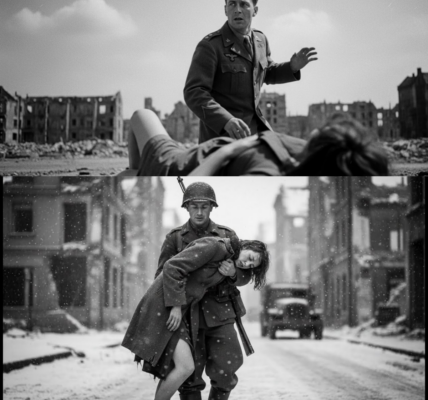
Photographs of Italian resistance fighters, military factories, aircraft assembly lines, and civilian families fleeing conflict all reveal different sides of the same century. One image may show a machine being constructed far from the battlefield. Another may show civilians trying to escape the consequences of the weapons that machine helped create.
During the Vietnam War, photographs of helicopters providing support for South Vietnamese forces became symbols of a conflict in which mobility and air power played major roles. Other images of civilian families fleeing toward Saigon show the war from an entirely different perspective.
For the soldiers, war could be measured in missions and operations.
For civilians, it could mean abandoning homes and trying to keep children safe.
Photography allows both realities to exist in the same historical record.
The same contrast can be found in photographs of the Second World War.
Factories produced aircraft such as the F4U Corsair and F6F Hellcat for the Pacific theater. Workers prepared machines that would eventually be used thousands of miles away.
At the same time, people in American cities celebrated the end of the war in August 1945.
A photograph from Times Square on V-J Day captures crowds filling the streets after Japan’s surrender. The image represents relief, celebration, exhaustion, and the end of a conflict that had consumed years of human effort.

But photographs also remind us that technological progress is never purely positive.
The aircraft factory in Seattle that was concealed beneath a false neighborhood during the Second World War demonstrates how industrial technology and military strategy had become inseparable. From above, the camouflage was designed to make an important factory appear less obvious to potential enemy aircraft.
The idea itself sounds almost unbelievable today: build a fake neighborhood above a real industrial facility so that the factory becomes difficult to recognize from the air.
Yet such measures reflected the realities of total war.
The modern world was becoming more interconnected, but it was also becoming capable of destruction on an unprecedented scale.
Even architecture reflected the ambitions of the age.
The Golden Gate Bridge opened in 1937, becoming one of the defining structures of San Francisco. Photographs from the opening celebrations show crowds crossing the bridge while aircraft passed between its enormous towers.
The bridge was not merely transportation infrastructure. It was a statement about what engineering could accomplish.
Similarly, New York’s massive water-supply system represented an extraordinary feat of engineering. Reservoirs, dams, tunnels, and aqueducts had to be constructed across enormous distances to provide water to a growing metropolis.
The city depended on infrastructure that most residents would never see.
That is another recurring theme in historical photography.
The modern world is built from systems that are usually invisible.
Water arrives through tunnels.
Electricity travels through networks.
Food reaches supermarkets through supply chains.
Messages travel through computers.
People cross oceans in aircraft.
But photographs occasionally expose the hidden machinery behind ordinary life.
They show the workers inside factories, the engineers beside machines, the construction crews on bridges, the technicians wiring computers, and the people maintaining infrastructure.
Without those people, the modern world could not function.
There are also photographs that simply capture the strange and playful side of the twentieth century.
A woman having her bathing suit measured reflects the rules and social expectations surrounding public beaches in the 1920s. Stunt performers jumping automobiles reveal the appetite for dangerous entertainment before modern safety standards became widespread.
A man holding a small donkey as though it were a baby reminds us that photographers of the past were not always interested in solemn historical subjects. Sometimes people simply wanted to create an amusing picture.
A young woman in a kimono during New Year celebrations in Japan preserves a different kind of everyday tradition, showing clothing and cultural practices that existed alongside rapid modernization.
Historical photography therefore does not always need to show a famous event.
Sometimes its greatest value is simply that it shows people being themselves.
They smile.
They work.
They shop.
They travel.
They learn.
They watch television.
They read newspapers.
They raise children.
They celebrate.
They wait.

They experiment.
And they continue with ordinary life while history moves around them.
That may be why these photographs remain compelling more than a century later.
The machines have changed.
The clothes have changed.
The buildings have changed.
The technology has changed.
Even the way people communicate has changed.
But the people in these photographs are still recognizable.
A mother watching a rocket launch is still a mother.
A worker repairing a machine is still a worker.
A child standing beside a family home is still a child.
A crowd watching an extraordinary event is still a crowd.
The photographs create a bridge between their world and ours.
They also remind us that the future rarely looks inevitable while we are living through it.
The people watching Apollo 11 could not know exactly what space exploration would become.
The engineer working on an early computer could not see the smartphone.
The shoppers in a new supermarket could not imagine online shopping.
The workers building a bridge could not know how many generations would cross it.
The families photographed during the Great Depression could not know when economic hardship would end.
And the residents of Greenwood could not know that photographs of the destruction would one day become crucial evidence of one of the darkest episodes in American history.
History becomes clearer with distance, but photographs allow us to recover something of the uncertainty that existed in the moment.
That is their greatest power.
They do not show us the future.
They show us the present as people once experienced it.
A Coca-Cola vehicle, a mining family, a computer technician, a Hollywood actress, a subway passenger, a scientist, a soldier, a migrant family, a child, a bridge, a rocket, or a ruined neighborhood may seem unrelated when viewed separately.
But together they form a portrait of the modern world being built.
It was a world of invention and inequality.
Of entertainment and war.
Of scientific discovery and social conflict.
Of consumer abundance and economic hardship.
Of famous people and anonymous workers.
Of breathtaking achievements and painful failures.
The camera could not explain all of this by itself.
But it could preserve the evidence.
And more than a hundred years later, that evidence still asks us to look carefully.
Because the most valuable historical photograph is not necessarily the one showing the most famous person or the most spectacular event.
Sometimes it is the photograph that makes us stop and ask what happened before the shutter clicked—and what happened after.
What kind of world produced the people standing inside the frame?
What did they believe was possible?
What did they fear?
What did they hope would change?
And how much of the world they were building can we still recognize in our own?
The answers are rarely contained entirely within the photograph.
They have to be discovered through context, records, testimony, and comparison.
But once we begin looking that way, old photographs stop being simply old pictures.
They become fragments of lived history.
And perhaps that is the real reason they continue to fascinate us: for one brief moment, the past stops feeling distant.
It looks back at us.
Some content was generated using AI tools (including ChatGPT) and edited by the author for creativity, storytelling, and historical illustration purposes. Historical facts and key details should be verified against reliable historical sources. Any AI-generated or reconstructed visuals are intended for illustrative purposes and should not be interpreted as original historical photographs or archival evidence.