Forgotten Snapshots That Prove History Was Different Than We Thought – Rare Historical Images – Decoding Ancient .V2

History is often remembered through its biggest turning points: wars that redraw borders, leaders who change nations, and disasters that leave entire communities struggling to rebuild. But photographs reveal something more intimate. They preserve the ordinary afternoons, private celebrations, strange fashions, public confrontations, and fleeting moments of courage that unfold alongside those monumental events.
A photograph taken on a beach in 1943 may preserve a glimpse of Marilyn Monroe before she became a Hollywood icon. Another, taken amid the ruins of Warsaw in 1944, bears witness to a city devastated by war. Elsewhere, a crowded train, a child’s school portrait, a protest in a public square, or a family standing beside a crashed aircraft can open a window onto a world that no longer exists in quite the same form.
The images gathered here span continents and generations, from the battlefields of the First and Second World Wars to the civil rights struggles of the twentieth century, from the end of apartheid to the upheavals of the Cold War. They also preserve the less familiar rhythms of human life: children playing, performers taking risks, families traveling, and people finding ways to live amid uncertainty.
Some photographs are joyful. Others are unsettling. A few demand that we reconsider what we thought we knew. Together, they remind us that history is not simply a sequence of dates and famous names. It is the accumulated experience of millions of people whose lives continued even when the world around them was changing beyond recognition.
In 1968, Atlantic City, New Jersey, became the setting for an event that challenged the racial boundaries of American beauty pageants. Sandra Williams was crowned the first Miss Black America, a milestone that carried significance far beyond the stage. At a time when Black Americans continued to confront discrimination in housing, education, employment, and public life, a pageant celebrating Black women offered a different image of beauty, confidence, and representation. The crown was not merely a personal achievement. It belonged to a broader struggle over who could be seen, celebrated, and recognized in American society.
Thousands of miles away, American Army nurses serving with the 42nd Mobile Army Surgical Hospital enjoyed the beaches of Mogadishu, Somalia, during Operation Restore Hope in 1993. The contrast was striking: medical personnel associated with emergency treatment and military hardship found themselves beside the Indian Ocean. Yet their presence was part of a larger international intervention in Somalia during a period of severe humanitarian crisis. A photograph of nurses at the beach captures a brief moment away from their responsibilities, while the circumstances surrounding their deployment remind us that military service often consists of alternating periods of intense pressure and ordinary human relief.
In August 1995, Croatian Army soldiers from the 101st Brigade celebrated after the success of Operation Storm, which brought the Serb-occupied Krajina region under Croatian control. The operation became a decisive moment in the Croatian War of Independence, but its consequences cannot be understood through celebration alone. The offensive was accompanied by the flight and displacement of large numbers of Croatian Serbs, as well as documented crimes against civilians. A photograph of victorious soldiers records one side of a complicated and painful historical event. Behind every military success lie questions about the people who lost homes, the communities that were emptied, and the long struggle to reconcile competing memories of war.
A much quieter photograph takes us to Iowa in 1965, where children jump rope. There are no international negotiations, no military operations, and no visible struggle for power. There is simply the familiar rhythm of childhood: feet lifting from the ground, a rope swinging through the air, and the small challenge of keeping pace. These scenes are easy to overlook because they seem so ordinary. Yet their ordinariness is precisely what makes them valuable. They preserve the everyday lives that existed alongside the political events later described in textbooks.
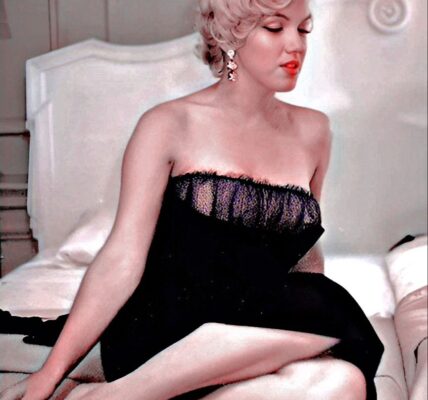
Around 1943, Marilyn Monroe appeared in a photograph with her mother, Gladys, and her sister, Bernice, at the beach. Long before she became one of the most recognizable figures in twentieth-century cinema, Monroe was Norma Jeane Mortenson, a young woman whose early life was marked by instability and difficult family circumstances. The beach photograph offers a glimpse of a life before worldwide fame transformed her public identity. The accompanying description also remembers her as a fearless horse rider, a detail that brings the future screen icon closer to the ordinary world of interests, abilities, and experiences that existed beyond the camera’s gaze.
In Shanghai in 1937, during the Battle of Sihang Warehouse, troops identified as members of the Shanghai Special Naval Landing Force’s 10th Battalion were photographed celebrating outside Shanghai North Railway Station. The battle unfolded during the Japanese invasion of China, when fighting devastated Shanghai and placed civilians in the path of extraordinary violence. Images of military celebration can be difficult to interpret without knowing the precise circumstances in which they were taken. A railway station, ordinarily associated with movement and commerce, could become a military landmark amid urban warfare. The photograph belongs to a city whose streets and buildings were transformed by a conflict that would continue to spread across China.
Another image takes us away from the battlefield and into the luxurious world of commercial aviation during the 1950s. First-class passengers could enjoy spacious seating, carefully prepared meals, and attentive service at a time when flying remained beyond the reach of many ordinary travelers. Air travel was becoming a symbol of modernity, but it was also a marker of economic privilege. The cabin represented a future in which distance seemed increasingly manageable, even as the ability to enjoy that future remained unevenly distributed.
In 1936, a little girl was photographed with a store attendant carrying gifts purchased at a department store. The scene suggests a world in which shopping itself could be an occasion, with employees assisting customers and carefully handling their purchases. Department stores were more than places to exchange money for goods. Their displays, service counters, and elaborate interiors helped turn consumption into an experience associated with aspiration and social standing. A photograph of a child and her gifts captures a small domestic pleasure, while preserving the commercial culture of another era.
At a school dance in 1962, students inspected Polaroid photographs. Instant photography offered something that conventional film could not easily provide: a picture that appeared within minutes, ready to be passed around and examined. For young people, the technology made it possible to preserve the excitement of an event before the evening had even ended. Today, digital images appear almost immediately on screens, but the fascination of seeing a moment become a photograph remains familiar. The equipment changes; the desire to hold on to a memory does not.
The early development of military camouflage during the First World War revealed how rapidly warfare was changing. Soldiers and military planners increasingly recognized that visibility could determine survival. Uniforms, equipment, and defensive positions were adapted to reduce their visibility against surrounding terrain. The conflict accelerated a transformation in which concealment became an essential part of military thinking. What had once been a relatively visible display of uniforms and formations gave way, in many circumstances, to attempts to disappear into landscapes scarred by trenches, smoke, and destruction.

In 1923, a train wreck at Red Hill preserved another consequence of the industrial age. Railways had transformed transportation, bringing distant communities into closer contact and moving passengers and goods across enormous distances. But the same infrastructure that connected societies could also produce devastating accidents. A wrecked train was not simply a damaged machine; it represented interrupted journeys, disrupted schedules, and the human risks that accompanied a world increasingly dependent on complex technology.
A full-length portrait from Oregon in 1910 shows a Nez Perce girl identified as Umatilla, standing beside a tree and facing slightly to the right. The description reflects the complicated way Indigenous identities were sometimes recorded in historical photography, where tribal affiliations and individual details could be imprecise or inconsistently documented. Such photographs should be approached with care. Indigenous people were not merely subjects of an expanding photographic archive; they belonged to living communities with their own histories, identities, and traditions. Preserving the image also means recognizing the limits of the caption and the importance of treating the person depicted with dignity.
Near Leningrad in 1925, a Soviet soldier guarded a telephone booth on a beach. The image combines military duty with an unexpectedly ordinary object. A telephone booth offered a connection to the outside world, while the soldier’s presence reminded viewers that public spaces could also be governed by security concerns. In the years after revolution and civil war, the Soviet state was consolidating its authority, and the everyday landscape increasingly reflected the presence of official institutions.
During the 1940s, high school rifle clubs were, in some American communities, treated as ordinary extracurricular activities. Photographs of these clubs document a period when firearms training could occupy a place in school life that might seem unfamiliar to many students today. The images are evidence of changing attitudes toward education, marksmanship, and preparedness. They also invite questions about how societies define normality and how those definitions shift across generations.
A photograph associated with a major Oklahoma tornado in 1898 recalls the vulnerability of communities before modern forecasting and warning systems. Tornadoes have long been a feature of life across the American Great Plains, but the ability to predict their movement and warn residents has changed dramatically over time. Historical storm images can preserve the scale of destruction, yet they may not establish every detail of a particular event. What remains clear is the enduring challenge of living in a landscape where the weather can change from ordinary to catastrophic with astonishing speed.

In 1922, sixteen-year-old Canadian Aloha Wanderwell began the journey that would make her famous as a pioneering woman traveler. Her travels eventually took her around the world, and a photograph of her in Japan records one moment in a journey that challenged contemporary expectations of women’s mobility and independence. International travel in the early twentieth century required considerable persistence. Roads were inconsistent, transportation systems varied dramatically between countries, and the world was far less connected than it is today. Wanderwell’s story belonged to an era when a young woman undertaking such a journey could attract attention precisely because it challenged established boundaries.
On the Western Front in 1945, an American M40 or M12 self-propelled gun fired toward German positions along the Rhine. By this stage of the Second World War, Allied forces were advancing into Germany, and heavy artillery played a crucial role in supporting ground operations. The thunder of large guns formed part of a battlefield environment in which industrial production, mechanical power, and logistical coordination shaped the course of combat. Each weapon represented not only destructive capacity but also the vast systems of manufacturing, transportation, and supply required to keep an army moving.
In 1952, an eighteen-year-old Brigitte Bardot was photographed in Louveciennes, France, before she became an international symbol of film and popular culture. Her early photographs belong to the period when postwar European entertainment was developing a new visual language of glamour and youthful independence. A portrait of a young actress can be read as a record of an emerging public persona, but it also preserves a moment before fame made every aspect of her appearance and life subject to public scrutiny.
Warsaw in 1944 presented a profoundly different scene. After the Warsaw Uprising against German occupation, the city suffered enormous destruction. German forces systematically demolished large portions of the city, leaving streets and buildings reduced to rubble. Photographs of the ruins show more than damaged architecture. They document the physical destruction of a place that had been home to generations of families, workers, students, and artists. A city can be rebuilt, but its original streets, familiar landmarks, and vanished communities cannot always be restored in their former form.
In 1962, Graham and Barbara Brown carried their daughters, Rosalyn, aged seventeen days, and Susan, aged nineteen months, during a climb toward the summit of Mount Agwin in Snowdonia, Wales. The image captures a family undertaking an ambitious outdoor adventure with two very young children. Without additional information, it is impossible to know every practical detail of their journey, but the photograph preserves a striking combination of parental determination and family companionship. In an age increasingly defined by rapid travel and organized leisure, the scene reminds us that people have long sought meaning in the challenge of moving through the natural world together.
Another image from 1962 records a way of coping with summer heat. Before air conditioning became common in many homes, people relied on shade, fans, open windows, and public spaces to make hot weather more bearable. What looks unusual or amusing to a modern viewer may once have been a perfectly practical solution. Everyday photographs often preserve these small adaptations better than formal records do.

In 1944, bombs fell from an American B-17 bomber in front of a German Focke-Wulf Fw 190 fighter aircraft. The image belongs to the dangerous aerial war over Europe, where bomber crews faced enemy fighters, anti-aircraft fire, and the constant risk of mechanical failure. The B-17 became famous for its role in American strategic bombing, while the Fw 190 was among Germany’s important fighter aircraft. A single photograph can freeze aircraft in a dramatic arrangement, but it cannot convey the full complexity of the operation or the experiences of everyone involved.
A much later school yearbook photograph, dated 1991 and identified in the caption as Jonathan H. Smith, known as Lil Jon, captures a future music figure before widespread recognition. Yearbook portraits are among the most democratic forms of historical photography. They were created for ordinary students as well as those who would later become famous. Looking back, viewers often know what the person eventually achieved, but the original image was simply a record of someone at a particular stage of life.
In 1941, German soldiers were photographed at Thermopylae in Greece, where they reenacted the ancient battle associated with Spartan resistance to the Persian invasion. The choice of location carried symbolic meaning. Throughout history, governments and armies have invoked earlier battles to frame contemporary struggles as part of a larger national story. Yet the ancient battle and the modern occupation belonged to very different historical circumstances. The photograph shows how military power can appropriate the past, using familiar places and remembered events to construct an image of legitimacy or destiny.
On May 9, 1968, American and Army of the Republic of Vietnam forces defended the Cholon district of Saigon amid the fighting that followed the Tet Offensive. Cholon, a densely populated urban district, was caught in a conflict that brought combat into streets and neighborhoods where civilians lived and worked. The Vietnam War repeatedly blurred the distinction between military front lines and ordinary urban life. A street could become a defensive position; a building could become a refuge or a target. The photographs of such fighting preserve the difficulty of separating the battlefield from the community surrounding it.
A photograph of a bicycle club from 1885 takes us back to a time when cycling was becoming an important part of modern leisure and transportation. Bicycles offered a new degree of personal mobility, although their designs and costs varied widely. For many riders, cycling represented freedom from fixed routes and schedules. The image also reflects the social nature of early cycling, when clubs helped enthusiasts share routes, organize excursions, and participate in a growing culture of mechanical innovation.
In Mongolia’s Khalkhin Gol region in 1939, Soviet soldiers inspected a downed Japanese aircraft. The Battle of Khalkhin Gol, also known as the Nomonhan Incident, was a major undeclared border conflict between Soviet-Mongolian forces and Japanese forces. It ended in a decisive Soviet-Mongolian victory and influenced Japanese strategic calculations before the wider Second World War. The aircraft in the photograph represents the technological dimension of the confrontation, but the larger conflict was shaped by competing territorial ambitions and the strategic calculations of two expanding military powers.
In 1979, Margaret Thatcher celebrated her election victory as the new prime minister of the United Kingdom. Her arrival at Downing Street marked a major political transition and the beginning of a period of profound economic and social change. Thatcher became Britain’s first female prime minister, a historic achievement in political representation. Her policies, however, remain deeply contested, particularly over industrial restructuring, trade unions, privatization, and the social costs of economic change. Photographs of political celebrations preserve the moment of victory; the consequences of governing unfold over years.

At a California car dealership in 1979, salesmen sat on the hoods of new vehicles while waiting for buyers. The image captures a moment in American consumer culture when automobiles remained central symbols of mobility and personal independence, even as economic uncertainty and energy concerns affected the industry. A car could represent employment, family convenience, status, or freedom. It could also be an expensive purchase made more difficult by inflation and changing economic conditions.
In 1938, Civil War veterans dropped flowers from the air onto the Gettysburg battlefield. The scene connected two generations of American history: the survivors of the nineteenth-century conflict and a country approaching another period of global upheaval. By then, the Civil War was more than seventy years in the past, and the veterans who had lived through it were growing old. Their presence transformed Gettysburg from a battlefield preserved in stone and memory into a place where living witnesses could still be seen. The flowers offered a gesture of remembrance, linking the personal experience of war with the national effort to interpret its legacy.
At the Boston Garden in 1973, fans went wild at an Alice Cooper concert. The shock-rock performer had built a reputation around theatrical costumes, dark imagery, and provocative stagecraft. The audience’s reaction was part of a broader transformation in popular music, when concerts increasingly became spectacles that combined sound, fashion, performance, and audience participation. Such photographs capture the relationship between an artist and a crowd at a time when rock music could challenge established ideas about entertainment and acceptable public behavior.
In 1964, workers were photographed holding up the Verrazano-Narrows Bridge during its construction. The bridge, connecting Staten Island and Brooklyn in New York City, represented a massive engineering undertaking. Its construction demanded extensive planning, specialized labor, and the coordination of many different trades. Images of workers beside enormous structures reveal the human effort often concealed behind completed infrastructure. Once a bridge opens, it becomes part of the landscape, and its construction fades from daily awareness. Photographs return attention to the people who made it possible.
In 1981, someone reportedly ran out of an office to reach the Simon & Garfunkel concert in Central Park. The concert, attended by a vast audience, became a major cultural event in New York City. The story of a person abandoning work to attend it captures the personal urgency that music can create. A concert may last only a few hours, yet for those present it can become a lasting memory of a city, a particular moment in their lives, and the shared excitement of hearing familiar songs performed before a crowd.
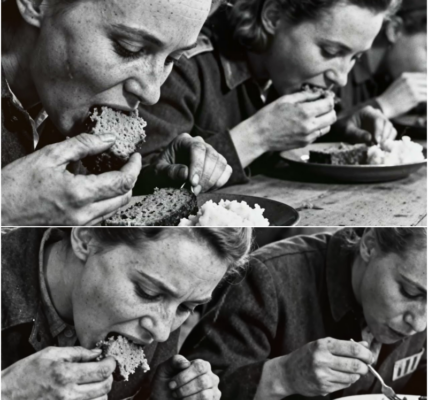
By April 1945, the German concentration camp system was collapsing under the Allied advance. A photograph dated April 21 shows women associated with the SS at Bergen-Belsen, a camp where prisoners had endured catastrophic overcrowding, starvation, disease, and abuse. Women guards were not merely passive observers of the camp system; historical evidence documents the brutality of female personnel at several Nazi camps. The liberation of Bergen-Belsen exposed conditions that shocked the world and provided evidence of the systematic cruelty inflicted on prisoners. Photographs from this period demand sober attention, because the crimes they document should not be reduced to spectacle or detached from the victims whose suffering made the evidence necessary.

On August 17, 1962, Peter Fechter was shot while attempting to escape from East Berlin to West Berlin. He was seventeen years old. Fechter fell near the Berlin Wall and lay wounded in the border zone, where he was unable to reach safety. His death became one of the most widely remembered tragedies associated with the Wall. The photograph of East German border guards carrying him away records a moment in a divided city where a physical barrier had become an instrument of political control. The Wall separated neighborhoods, families, friends, and entire ways of life. For people attempting to cross it, the desire for freedom could carry a deadly cost.
In 1992, Hurricane Andrew devastated parts of southern Florida and Louisiana, destroying homes and leaving communities to confront enormous losses. Photographs of homes reduced to rubble reveal the vulnerability of even substantial buildings when powerful winds strike. The aftermath of a hurricane extends beyond the visible destruction: families must find temporary shelter, replace essential possessions, navigate insurance claims, and rebuild their sense of security. The image of a ruined neighborhood can capture the scale of a disaster, but recovery is measured in the years of work that follow.
During the 1980s, a solar radio telescope at the Irkutsk Scientific Center represented a very different effort to understand forces beyond everyday perception. Radio astronomy allows scientists to study emissions that cannot be seen with ordinary optical telescopes. Research into the Sun’s radio signals contributes to the understanding of solar activity and its potential effects on Earth’s technological systems. Scientific instruments may lack the immediate drama of a battlefield or a political gathering, but they preserve another important dimension of history: the continuing human effort to investigate the universe.
A photograph described as showing Kurt Cobain dressed as a vampire for Halloween in the 1970s offers a glimpse of a much younger person long before he became associated with Nirvana and the musical movement of the early 1990s. The date and identification of historical photographs should be verified carefully, particularly when captions circulate online without detailed provenance. What makes such images compelling is the contrast between an ordinary childhood or adolescent moment and the later public identity attached to the person pictured.
In Milan in 1996, photographer Peter Lindbergh worked with model and actress Milla Jovovich. Lindbergh became known for a photographic style that often emphasized natural expression and a less artificial form of beauty than the highly polished imagery common in fashion advertising. Photographs from the fashion world reveal how ideals of appearance are constructed, circulated, and transformed. They also show the people behind those images, whose professional lives are shaped by the demands of photographers, designers, editors, and audiences.
An early twentieth-century portrait of an Ainu woman records a cultural tradition associated with tattooing around the lips. The Ainu are an Indigenous people whose history is closely connected to northern Japan and nearby regions. Lip tattooing formed part of traditional practices for some Ainu women, although customs varied across communities and periods. Such photographs must be understood in the context of the pressures that assimilation policies and social discrimination placed on Ainu culture. A portrait preserves a visible feature, but it cannot by itself explain the meanings, relationships, and traditions that gave that feature significance.

On May 10, 1994, Nelson Mandela was inaugurated as South Africa’s first democratically elected president under the country’s new multiracial democratic system. His inauguration followed decades of apartheid, the state-enforced system of racial segregation and white minority rule. Mandela had spent twenty-seven years in prison, and his election represented a remarkable political transformation. Yet the end of apartheid did not immediately erase economic inequality, racial divisions, or the legacies of state violence. The inauguration marked a beginning as well as an ending: the beginning of a difficult effort to build a democratic society from the remains of an unjust system.
In 1971, a man balanced on a wire between the towers of Notre-Dame Cathedral in Paris. High-wire performances have long drawn audiences because they combine technical skill with the possibility of catastrophe. The cathedral itself, with its soaring towers and centuries of history, provided an extraordinary setting for such a feat. The photograph captures a moment of apparent balance above the city, but the achievement would have depended on preparation, equipment, and practiced control. Spectacle often looks effortless from a distance; the work behind it remains largely invisible.
In Spain in 1981, Arnold Schwarzenegger ate lunch on the set of Conan the Barbarian. Before becoming a major Hollywood star and later entering politics, Schwarzenegger had established himself as a champion bodybuilder. The film helped turn his physique into a central element of his screen identity. A candid lunch photograph offers a reminder that even highly choreographed productions are made up of ordinary intervals: meals, breaks, rehearsals, and conversations between takes.
A photograph from 1968 shows an Afghan man holding a traditional Pashtun rifle known as a jezail. Such long-barreled firearms have historical associations with South and Central Asia, where local craftsmen produced weapons adapted to regional needs and traditions. A single photograph, however, cannot establish the man’s identity, circumstances, or the precise origin of the particular weapon. It can still prompt a wider appreciation of Afghanistan’s complex history, where local customs, trade, political rivalries, and outside interventions have repeatedly intersected.
During the winter of 1906, a fountain in Detroit froze. The image records a moment when cold weather transformed a familiar public feature into something visually striking. Before widespread climate-controlled buildings and modern weather information, winter shaped everyday routines in particularly visible ways. Frozen pipes, difficult travel, and icy streets could disrupt urban life, while public fountains and other exposed structures became temporary records of the weather’s power.
A caption about cell phones in the 1960s points toward an era when mobile communication looked radically different from today’s pocket-sized devices. Early mobile telephone systems were limited, expensive, and often installed in vehicles rather than carried by individuals. The modern idea of a phone as a personal computer, camera, map, and constant connection to the world would have been difficult to imagine in that period. Technological progress is often easiest to appreciate when the past is placed beside the present.
At the 1952 Miss Universe pageant in Long Beach, California, delegates gathered during the early years of an international competition that would become a major part of global beauty-pageant culture. Such events brought together contestants from different countries while presenting carefully constructed images of national identity and femininity. They offered opportunities for visibility and professional advancement, but they also reflected changing and often contested standards of beauty.
Another photograph identifies the wife of photographer E. F. Buchan of Worthington, Minnesota. Without additional details, the image offers limited information about the subject’s life. Yet that limitation itself is worth remembering. Historical archives are full of people whose names survive only through their relationship to someone better documented. The absence of a detailed biography does not mean that the person’s life lacked depth; it means that the surviving record is incomplete.

In New Orleans in 1961, a performer known as Evangeline the Oyster Girl reportedly smashed the tank of Davina the Mermaid during a performance. The caption attributes the incident to a dispute over top billing, though the circumstances would require independent verification. The story belongs to the theatrical world of novelty acts, sideshow entertainment, and performers competing for audience attention. Beneath its apparent absurdity lies a familiar human dynamic: the struggle to secure recognition in an environment where visibility can determine a livelihood.
During China’s Cultural Revolution, which began in 1966, Buddhist artifacts and other cultural objects were destroyed as political campaigns targeted traditions associated with the country’s past. Temples, religious practices, historical monuments, and works of art faced attacks in different parts of the country. The destruction formed part of a wider campaign against what revolutionary authorities described as old ideas, old culture, old customs, and old habits. Photographs of damaged artifacts preserve the material consequences of political movements that seek to reshape not only institutions but also collective memory.
In Paris in 1965, Melvin Sokolsky created fashion photographs for Harper’s Bazaar. His work became known for imaginative compositions that placed models in surreal environments, turning fashion imagery into a form of visual storytelling. The photographs remind us that not every historical image records an event in the documentary sense. Some are carefully constructed artistic statements. Their historical value lies in what they reveal about design, advertising, photographic technique, and the cultural imagination of their time.
In the 1930s, kittens could apparently find themselves in precarious positions around electrical infrastructure, sometimes creating problems for utility workers. The caption’s playful framing brings a lighter note to an archive otherwise filled with conflict and disaster. The appeal of such a photograph is easy to understand: a small animal, an unexpectedly dangerous setting, and workers faced with an unusual problem. Even the history of industrial development contains moments of accidental comedy.
On October 1, 1949, Mao Zedong proclaimed the establishment of the People’s Republic of China in Beijing. The declaration marked the victory of the Chinese Communist Party after years of civil war and decades of political upheaval. It established a new state that would transform China’s government, economy, and society. The event also began a new chapter in international relations, as China emerged under a communist government during the early Cold War. The photograph of the proclamation captures a decisive political moment, but the experiences of ordinary Chinese people under the new regime would unfold through a far more complicated series of changes.
In Chicago in 1941, Dorothy Eagles gave a dog a ride in a baby carriage. The image offers a charming interruption in the historical record. It preserves a small gesture of affection, perhaps intended simply to make daily life easier for an animal companion. The photograph reminds us that people have always found ways to turn ordinary routines into moments of amusement and tenderness.
In 1983, actor Reb Brown stood beside a billboard advertising his film, dressed in costume. The image belongs to the world of cinema promotion, where posters, billboards, and publicity photographs transform actors into instantly recognizable figures. Advertising is often temporary, but photographs preserve the visual culture that once occupied streets and public spaces. A billboard that has long since disappeared can survive in an image, carrying the style and ambitions of its era into the present.
A photograph of a battery of enormous motors associated with Yorktown and the American Civil War evokes the machinery that supported military operations during the nineteenth century. The precise equipment and setting would need confirmation from the original archival record, but the broader significance is clear: warfare has always depended on systems of engineering and supply as well as the actions of soldiers. The visible battle is only one part of a much larger structure.
In 1940, two eleven-year-old cousins, Wendy Anderton and Kathy Jones, posed beside the tail section of a German Heinkel He 111 P2 aircraft that had crash-landed near their home at Borderhouse Farm, close to Chester in Cheshire, England. For children living through the Second World War, the conflict was not an abstract subject confined to newspapers and radio broadcasts. Aircraft could appear unexpectedly in fields and near homes, bringing the machinery of a distant war into familiar surroundings. The photograph preserves a remarkable encounter between childhood curiosity and a global conflict that had entered the British landscape.
During the 1920s, flagpole sitting became an unusual fad in the United States. Participants climbed tall poles and attempted to remain perched on small platforms for extended periods, attracting attention from newspapers and spectators. The craze belonged to an era fascinated by endurance challenges, publicity stunts, and new forms of mass entertainment. It also demonstrated how quickly an unconventional act could become a public spectacle when newspapers and crowds rewarded novelty.
A childhood photograph of Winston Churchill, taken around 1881 when he was approximately six or seven years old, reveals a future political leader at a stage of life far removed from the responsibilities he would later carry. Churchill became Britain’s prime minister during the Second World War and was closely associated with the country’s resistance to Nazi Germany. But the child in the photograph could not yet be understood through the events of the future. Historical hindsight makes childhood images fascinating, although it can also encourage us to forget that the people pictured once lived without knowing what history would ask of them.
Gertrude Hall, described as standing 213 centimeters tall, appears in another portrait. Photographs of people whose height placed them outside ordinary expectations often attracted public curiosity, particularly during periods when popular entertainment exhibited unusual physical characteristics. Such images can reveal the social attitudes of their time, including the tendency to treat bodily difference as spectacle. Looking at them today requires a distinction between historical interest and the dignity owed to the person depicted.
When Ellis Island opened as a federal immigration station in 1892, medical examinations became a central part of the inspection process for arriving immigrants. Photographs of children undergoing checkups preserve a defining aspect of the American immigration experience. Officials assessed newcomers for signs of illness or conditions that could affect their admission, and medical inspections could be intimidating for families who had traveled long distances in hope of a new beginning. Ellis Island became a symbol of immigration, but the experience of arrival could involve anxiety, separation, and uncertainty as well as opportunity.
On April 24, 1989, thousands of students and supporters gathered in Beijing’s Tiananmen Square to mourn the death of Hu Yaobang, a former Communist Party leader associated by many reform-minded citizens with political change. The mourning developed into a broader protest movement demanding reform, accountability, and greater political openness. Demonstrations continued for weeks and spread to other parts of China. On June 3 and 4, 1989, the Chinese military violently suppressed the movement in Beijing, killing an unknown number of people. The photograph of the gathering in April preserves an early moment in a movement whose hopes and consequences would become central to modern Chinese history.
A photograph of baby racing in July 1946 offers a very different scene. Such contests were part of the unusual entertainment events sometimes organized at fairs and public gatherings. The image invites a smile, but it also reveals how family life and public amusement were recorded in the years immediately after the Second World War. In a period when many societies were attempting to rebuild, ordinary entertainment provided moments of relief and a return to familiar routines.
In May 1945, the Brandenburg Gate stood in a captured Berlin. The defeat of Nazi Germany had left the capital devastated, with damaged buildings, disrupted infrastructure, and a population facing an uncertain future. The gate, once associated with Prussian power and later with the symbolism of the German state, stood amid the collapse of the Nazi regime. Its later role as a symbol of a divided city and eventually of German reunification would give it further historical significance. In the immediate aftermath of the war, however, it belonged to a landscape shaped by defeat, occupation, and reconstruction.
A photograph taken by Otto Frank in 1935 shows his daughter Anne on the doorstep of his first office in Amsterdam. Anne Frank would later become one of the most widely known victims of the Holocaust through the diary she kept while hiding from Nazi persecution. The photograph preserves a moment from her childhood before the war transformed her family’s circumstances. It is difficult to look at such an image without knowing what came later, but the child in the photograph was not yet a historical symbol. She was a young girl living an ordinary life, unaware of the terrible events that would eventually define her story.
Around 1945, an American soldier was photographed inside a church somewhere in Europe. The exact location is not established by the caption, and it would be misleading to invent one. Still, the image points toward a recurring feature of wartime Europe: religious buildings that continued to stand amid destruction, sometimes serving as shelters, landmarks, or places of reflection. Churches could be damaged or abandoned, but they also remained part of the physical landscape through which soldiers and civilians moved.
A photograph of a French GIGN member armed with a twelve-gauge autoloading shotgun reflects the changing equipment and tactics of specialized security units in the late twentieth century. GIGN, France’s National Gendarmerie Intervention Group, was established in 1974 and became known for counterterrorism and hostage-rescue operations. Images of armed personnel can appear dramatic, but their historical significance lies in the changing ways governments prepared for hostage situations, terrorism, and other security threats.
A daring hairstyle from 1966 preserves a fashion moment when personal appearance became a visible arena for experimentation. The 1960s brought major changes in music, youth culture, fashion, and social attitudes. Hairstyles that once seemed shocking could quickly become fashionable, while older styles came to signify a previous generation. Photographs of hair and clothing are valuable because they record how cultural change appears in everyday life, long before it is summarized in histories of social transformation.
In the United States during the 1930s, schoolchildren were photographed reciting the Pledge of Allegiance. The ritual expressed a particular understanding of citizenship, patriotism, and national belonging. Its presence in schools reflected the role of public education in shaping civic identity. Such images can also prompt questions about how national symbols are taught and how the meaning of patriotism changes over time, especially during periods of economic hardship or political uncertainty.
In 1915, French soldiers passed a dog wearing goggles and apparently smoking a pipe. The image’s unusual combination of military surroundings and playful presentation belongs to the long history of photographs that use animals to attract attention or provide comic relief. During the First World War, animals served in many practical roles, including transport, communication, and companionship. A photograph of a dog in an elaborate costume, however, should not be taken as evidence of a standard military practice. It is better understood as a moment of curiosity captured amid an otherwise demanding period.
Queen Elizabeth II was crowned in 1953 in a ceremony that blended centuries-old ritual with the technology of modern mass media. Her coronation took place at Westminster Abbey and was televised, allowing audiences far beyond the church to witness an event traditionally reserved for those physically present. The ceremony became a defining moment of the early television age, bringing royal pageantry into homes across Britain and beyond. The images preserve both the continuity of monarchy and the transformation of how national events were experienced by the public.
In 1951, American Vice President Richard Nixon arrived in Kabul and reviewed the honor guard of the Royal Afghan Army alongside an officer of the Royal Afghan Air Force. The visit took place during a period when Afghanistan was navigating its relationships with major international powers. As the Cold War intensified, governments across Asia and the Middle East sought military assistance, economic development, and diplomatic influence from competing countries. Photographs of official visits can look ceremonial, but they also record the careful work of diplomacy and the strategic interests behind it.
A mid-nineteenth-century portrait of a Māori person preserves an image from a period of profound change in Aotearoa New Zealand. Māori communities were confronting expanding European settlement, land disputes, and the growing influence of colonial institutions. Portrait photography became a way of recording individuals and communities, but the meaning of a particular image depends on its provenance, the identity of the subject, and the circumstances of its creation. The photograph should be approached as a record of a person, not merely as an illustration of a vanished past.
Mick Meaney, described as thirty-three years old, prepared to attempt a record for the longest time spent buried alive. His apparently calm expression contrasts with the danger associated with the stunt. Endurance challenges have long attracted public attention by testing the limits of the human body and the audience’s tolerance for suspense. Without further information about the precise attempt and its outcome, the photograph should be treated as evidence of the challenge being promoted rather than proof of a verified record.
A computer store in 1984 captures a moment when personal computing was moving from specialized workplaces and hobbyist communities into a wider consumer market. Computers were still far less powerful and versatile than today’s devices, and buying one often meant choosing among unfamiliar systems with limited compatibility. Yet the basic transformation was already underway. The machines in such stores would eventually contribute to changes in communication, education, entertainment, business, and the organization of daily life.
On June 9, 1993, Crown Prince Naruhito of Japan and Masako Owada posed in traditional Japanese clothing before their wedding. Their marriage united a future emperor with a woman whose professional background included international diplomacy. The photographs reflect the ceremonial traditions of the Japanese imperial family, while the couple’s public roles would later become part of a changing discussion about monarchy, duty, privacy, and expectations placed on women within royal institutions.
During the 1918 influenza pandemic, an officer in California was photographed arresting a man who refused to wear a mask. The pandemic caused enormous loss of life worldwide, and authorities in many places introduced public-health measures intended to reduce transmission. Mask rules could provoke resistance, particularly when people viewed them as an intrusion on personal freedom. The photograph preserves a moment of conflict over public health, reminding us that debates about individual choice and collective responsibility did not begin with modern pandemics.
A caption describing English nationalists in the late 1950s points toward the period’s anxieties over immigration, race, and national identity. The exact organization and circumstances of the photograph are unclear, so its meaning depends on further identification. The wider historical setting, however, included postwar migration to Britain, the arrival of workers from Commonwealth countries, and growing public disputes over belonging and discrimination. Photographs of political groups can preserve how people presented themselves, but the context is essential for understanding what their presence represented.
On September 16, 1920, a bomb exploded on Wall Street in New York City, killing dozens of people and injuring many more. The attack used a horse-drawn wagon carrying explosives, and it struck the financial district at a time when Wall Street had become a powerful symbol of American economic life. The bombing was among the deadliest acts of political violence in the city during that period. Despite extensive investigation, the attack was never conclusively solved. The photograph of the damaged street captures the vulnerability of a bustling commercial center, where ordinary work could be interrupted by sudden violence.
In the 1950s, residents and visitors in Las Vegas could view atmospheric nuclear tests conducted at the Nevada Test Site from locations around the city. Some hotels and businesses promoted viewing opportunities, turning the mushroom cloud into an extraordinary, unsettling spectacle. The practice reflected a period when nuclear weapons occupied a central place in public imagination, combining fear of annihilation with the language of technological achievement and national security. The tests were not harmless fireworks. They formed part of a nuclear arms race whose health, environmental, and geopolitical consequences extended far beyond the desert.
A photograph of a carnival mask from Fano, Italy, around 1920 preserves the visual culture of a festival tradition with deep regional roots. Masks have long allowed participants to adopt temporary identities, exaggerate familiar social types, or step outside everyday expectations. The image belongs to a world where public celebrations offered a temporary release from ordinary routines, while passing down local customs through clothing, performance, and communal participation.
A further Māori portrait photograph provides another reminder of the limitations of the historical archive. Many nineteenth-century images were produced in circumstances shaped by colonial power, commercial demand, and the photographer’s assumptions about the people being recorded. A portrait can be a valuable visual document, but it should not be treated as a complete account of a community’s identity. The people pictured had lives, relationships, and knowledge that the photograph alone cannot reveal.
In Huntington Beach, California, a bikini contest in the 1980s reflected the growing visibility of beach culture, televised entertainment, and commercialized ideals of physical appearance. Such events offered participants a public platform while also exposing them to judgments shaped by the beauty standards of their time. Fashion and leisure photography can reveal changing attitudes toward the body, but it also shows how public images are influenced by advertising, entertainment, and social expectations.
In Cologne, Germany, a monorail train associated with the Alweg system was photographed in 1952. The Alweg concept became known for its straddle-beam design, in which the train rides over a supporting guideway rather than running on conventional rails. Such projects reflected the postwar fascination with new transportation systems and the possibility of redesigning urban mobility through engineering. Not every experimental system became widely adopted, but these innovations formed part of the broader search for faster, more efficient ways to move people through growing cities.
In Chicago in 1960, a model posed with children on Wall Street, according to the caption. The unusual setting suggests a staged fashion or advertising image rather than an ordinary street scene. Fashion photography frequently places carefully styled subjects in recognizable public environments, creating a contrast between glamour and daily life. The image’s original purpose would help clarify its meaning, but even without that information, it preserves a visual intersection between commerce, fashion, and urban culture.
A First World War aviation oxygen mask from 1918 reflects the challenges pilots faced as aircraft began operating at greater altitudes. As military aviation developed, pilots encountered low temperatures, reduced oxygen, and increasingly demanding flight conditions. Equipment that now appears primitive represented important steps toward safer and more capable aircraft operations. The history of aviation was built not only through celebrated pilots and famous aircraft but also through the gradual improvement of masks, instruments, engines, and other essential technologies.
In Washington, D.C., riots erupted in 1968 after the assassination of Martin Luther King Jr. on April 4. The violence and unrest affected several American cities, exposing deep anger over racial inequality, discrimination, and the slow pace of social change. King’s death removed one of the most prominent leaders of the civil rights movement, leaving many Americans grieving and uncertain about the future. Photographs of the Washington unrest document a moment when the struggle for racial justice collided with fear, frustration, and the consequences of longstanding structural inequality.
Two young women were photographed driving and riding on a Lawson’s motor wheel in 1902. Such devices belonged to an experimental period in transportation when inventors sought ways to attach mechanical power to bicycles and other lightweight vehicles. Early motorized inventions were often awkward by modern standards, but they reveal the restless curiosity that drove the development of personal transport. The image captures a moment when the boundaries between bicycle, motor vehicle, and mechanical experiment had not yet settled into their familiar modern forms.
During the First World War, Sigmund Freud was photographed with his sons Ernst and Martin. Freud’s work in psychoanalysis had already begun to influence debates about the human mind, memory, dreams, and behavior. The family photograph, however, presents a more personal dimension of a figure usually discussed through theories and publications. The First World War also had a profound impact on European intellectual life, raising questions about aggression, trauma, social order, and the psychological consequences of mass violence.
Around 1991, Latvians and Lithuanians protested against decades of Soviet occupation. Their demonstrations formed part of the broader movement that led to the restoration of independence for the Baltic states as the Soviet Union disintegrated. These protests were not isolated acts of dissent; they reflected long-standing national aspirations and the growing weakness of Soviet authority. Images of crowds gathering in public spaces preserve the determination of people who sought to recover political independence after decades of external control.
At the Devonshire Ball in 1897, the Duchess of Portland dressed as the sixteenth- or seventeenth-century Duchess of Savoy. Elaborate costume balls allowed members of high society to recreate historical styles and display wealth, creativity, and social standing. Such events reveal the fascination with the past that existed within elite culture, although their historical costumes often reflected contemporary fantasies as much as precise historical reconstruction.
In 1979, a test audience reacted to the chest-burster scene in Alien, the science-fiction horror film directed by Ridley Scott. The scene became famous for its sudden eruption of violence and its impact on unsuspecting viewers. The audience reaction illustrates how cinema can manipulate expectation, suspense, and surprise to produce a collective emotional response. Film history is often told through directors, actors, and box-office figures, but photographs of audiences remind us that movies are also experiences shaped by the people watching them.
A 1987 photograph of Courtney Thorne-Smith preserves an early moment in the career of an actress who would later become known for television roles. A photograph of Freddie Mercury, meanwhile, recalls a performer whose voice and stage presence helped make Queen one of the most influential rock bands of its era. Both images belong to the world of entertainment, where a single portrait may become more recognizable as the years pass and the public identity of the person grows.
During the 1960s, Muhammad Ali was known not only for his boxing ability but also for his showmanship and the theatrical exchanges that preceded many fights. A caption describes him allowing fans to win their fights, though the exact circumstances would need confirmation. Ali’s relationship with audiences was distinctive: he combined extraordinary athletic skill with humor, confidence, and a talent for turning public attention into part of the performance. His broader legacy also includes his opposition to the Vietnam War, his refusal to be drafted, and the political consequences he faced for that decision.
The USS Maryland was present during the Japanese attack on Pearl Harbor on December 7, 1941. The attack brought the United States directly into the Second World War. Photographs of American battleships during the assault preserve a moment when a conflict already devastating Europe and Asia reached the American Pacific Fleet. The attack killed military personnel and civilians, damaged or destroyed ships and aircraft, and reshaped American public opinion. For the sailors aboard the ships, the attack was not a distant geopolitical event. It was a sudden emergency unfolding around them.
In 1922, a test flight associated with the work of Spanish engineer and aviation pioneer Raúl Pateras Pescara demonstrated another stage in the development of helicopters. Early rotary-wing aircraft struggled with stability, control, and reliable lift, and many experimental designs required extensive refinement before practical use became possible. The photograph represents a period of invention when engineers were exploring multiple approaches to vertical flight, long before helicopters became familiar parts of civilian and military transportation.
Along the Skagit River in Washington State, flooding in November 1949 demonstrated the danger of homes and communities built near levees that can fail. Levees protect low-lying land from rising water, but they cannot eliminate flood risk. When a structure is overtopped or breached, water can move rapidly into areas where residents may have little time to respond. Photographs of flood damage preserve the consequences of decisions about settlement, infrastructure, and the management of rivers.
In 1942, a Standard Oil service-station attendant was photographed at work. Gas stations were increasingly familiar features of American roads, reflecting the growth of automobile ownership and the infrastructure needed to support it. Before self-service became common in many places, attendants often pumped fuel, checked oil, cleaned windshields, and assisted drivers. The image captures an ordinary occupation embedded in a larger transformation of transportation and consumer life.
During the civil unrest in Albania from January to August 1997, a woman was photographed carrying an AK-pattern rifle reportedly looted from military storage. The unrest followed the collapse of fraudulent investment schemes that devastated the savings of many Albanians and contributed to the breakdown of public order. Large quantities of weapons entered civilian hands as military depots were looted. The photograph belongs to a period of institutional crisis in which economic collapse, political distrust, and the circulation of weapons made daily life dangerous and uncertain.
In 1971, John List murdered his wife, mother, and three children before disappearing. He remained at large for eighteen years, living under an assumed identity until his arrest in 1989. The case became notorious because of the calculated nature of the killings and the length of time List avoided detection. It also demonstrated the limits of ordinary assumptions about family life: outward appearances can conceal realities that those nearby do not recognize. Photographs associated with criminal cases can preserve the public face of a person whose private actions were far more disturbing.
An overcrowded train in Germany in 1948 captures the pressures of life in postwar Europe. Millions of people had been displaced by the conflict, transport systems were damaged, and communities were attempting to recover amid shortages and uncertainty. Trains remained essential for moving workers, refugees, returning prisoners, and families trying to rebuild their lives. Crowded carriages were a visible expression of a society still struggling with the consequences of war.
In 1957, singer Jerry Lee Lewis married his cousin Myra Gale Brown, who was thirteen years old at the time. The marriage provoked major controversy when the details became widely known, damaging Lewis’s career during a period when his musical success was rising rapidly. The photograph preserves a moment from the couple’s life, but it also illustrates the importance of examining historical practices and relationships through the standards of informed ethical judgment. The age difference and the circumstances of the marriage raise serious questions that should not be obscured by nostalgia for early rock and roll.
The 1955 Lincoln Futura became famous years later when it was transformed into the original Batmobile used in the 1960s Batman television series. The car’s futuristic styling already made it distinctive, and its later conversion gave it a second life as an icon of popular culture. The story demonstrates how objects can acquire new meaning long after their original purpose has passed. A concept car became a television legend, joining automotive design with the imaginative world of superheroes.
A young clockmaker at work in the 1860s represents a trade that required patience, precision, and specialized knowledge. Before electronic timekeeping became widespread, clocks depended on intricate mechanical components that had to be designed, assembled, and adjusted with care. Accurate timekeeping was increasingly important to railways, industry, commerce, and everyday life. The photograph records a craft whose importance was closely connected to the expanding industrial world.
In 1928, chicken fights were recorded in a photograph. Animal fighting has appeared in various societies as a form of gambling or public entertainment, but it has also become the subject of legal restrictions and ethical opposition. The caption alone cannot establish the location or circumstances of the particular event. What the image can do is remind viewers that practices once treated as entertainment may later be reassessed in light of changing attitudes toward animal welfare.
On September 15, 1950, United States Marine Dwayne L. Boyce was photographed burning out a weapons emplacement on Wolmi-do Island during the Korean War. The operation formed part of the fighting surrounding the Inchon landings, a major amphibious assault that helped change the course of the war. The Korean Peninsula had been divided after the Second World War, and the invasion of South Korea by North Korean forces in June 1950 triggered an international conflict involving United Nations forces and Chinese intervention. Photographs of individual Marines at work amid combat preserve the immediate actions through which large military operations were carried out.
On January 30, 1972, British soldiers opened fire during a civil rights march in Derry, Northern Ireland, killing thirteen people on the day and fatally wounding another person later. The event became known as Bloody Sunday and profoundly damaged trust in the British authorities among many members of the nationalist community. The caption also refers to the use of CS gas during clashes, but the central historical significance of Bloody Sunday lies in the fatal shooting of unarmed marchers and the controversy that followed. The event became a defining episode of the Troubles, the prolonged conflict over Northern Ireland’s political status and relations between its communities.
A photograph from Cairo in 1942 shows a South African, a New Zealander, and four Indians enjoying themselves in the streets. During the Second World War, Cairo became a major hub for Allied military personnel moving through North Africa and the Middle East. Soldiers from different parts of the British Empire and Commonwealth served in a war that linked distant societies through military mobilization. The image preserves a moment of camaraderie across national backgrounds, even as the larger conflict placed those individuals within a global system shaped by imperial history.
A photograph of Donald Trump with his son from the 1970s belongs to the public record of a businessman who would later become a prominent political figure. Images of public figures’ family lives often acquire new significance as their careers develop, although the original context may have been ordinary rather than political. The historical value of such a photograph lies partly in the contrast between the moment it records and the public role that came afterward.
In 1995, California criminal Christopher Lightsey caused a disturbance in court during his trial for the robbery of an elderly cancer patient. The caption offers a brief account, and additional details would be needed to reconstruct the case fully. Courtroom photographs can document the public process of justice, but they also raise questions about how defendants, victims, and witnesses are represented. A legal proceeding is more than a dramatic scene; it is a process in which evidence, rights, and accountability must be considered.
A late-1960s photograph shows a Black man and a white woman embracing on a New York City subway. Interracial relationships were deeply contested in many parts of the United States, where racial prejudice and the legacy of anti-miscegenation laws shaped social attitudes long after the civil rights movement began. Although New York did not share the same legal history as states that prohibited interracial marriage, public displays of affection across racial lines could still attract hostility. The photograph captures an intimate moment that may have been considered controversial by some observers, revealing how social norms can intrude upon private life.
In February 1942, Princess Elizabeth was appointed to succeed her great-great-uncle, the Duke of Connaught, as Colonel of the Grenadier Guards. The appointment came during the Second World War, when the young princess was growing into a public role within the British monarchy. Her later reign would span decades of immense social and political change. Photographs of her early official duties reveal how royal responsibilities were introduced gradually, long before she became queen.
In 1970, a Convair F-106 Delta Dart landed in a Montana farmer’s field after its pilot ejected. The aircraft reportedly sustained little damage. The incident became known as the “Cornfield Bomber” and is remembered as an unusual episode in American aviation history. It demonstrates how aircraft design, emergency procedures, and chance can combine to produce outcomes that seem almost unbelievable. A fighter jet, built for high-speed military operations, ended up resting in an agricultural field rather than a runway.
Around 1900, Welsh strongwoman and bodybuilder Miriam Kate Williams, known as Vulcana, performed feats of strength that challenged contemporary assumptions about women’s physical capabilities. She became part of a tradition of strongwomen who demonstrated lifting, balancing, and other athletic skills before audiences. In an era when women’s public roles were often narrowly defined, such performances could challenge conventional ideas about femininity and physical power. Her story belongs to a broader history of women who pursued athletic careers despite social expectations that limited their opportunities.
A photograph of New York City traffic in 1929 captures a city increasingly shaped by automobiles, commercial deliveries, streetcars, and pedestrians competing for limited space. Traffic congestion is often treated as a modern problem, but urban streets have long been sites of negotiation between different forms of movement. As vehicle ownership expanded, cities faced new demands for road design, regulation, and public safety. The image reveals an early stage of a transformation that would profoundly alter the appearance and organization of urban life.
A gritty scene from the Bronx in the 1970s offers a glimpse of New York during a period of fiscal crisis, urban disinvestment, and social strain. The experience of the Bronx varied greatly from neighborhood to neighborhood, and photographs should not be mistaken for a complete portrait of an entire borough. Still, images from this period preserve the challenges faced by residents as buildings deteriorated, services came under pressure, and communities worked to maintain their neighborhoods. The decade’s visual record also captures the creativity that emerged in the city, including cultural movements that would influence music, art, and fashion around the world.
In 1915, Viola Savoy starred as Alice in a silent-film adaptation of Alice in Wonderland. Early cinema frequently adapted popular books and theatrical works, using visual effects and expressive performance to translate familiar stories to a new medium. Silent films relied on gestures, composition, and intertitles to communicate meaning. Although many early productions have been lost or survive only in fragments, their photographs and publicity materials preserve traces of a rapidly evolving art form.
In Indiana during the late 1940s, women served as some of the state’s first female sheriffs. Their presence reflected a gradual expansion of women’s participation in law enforcement, a field long dominated by men. Women had taken on policing and public-safety responsibilities in various forms before this period, but leadership positions remained difficult to access. Such photographs document the slow process through which women entered roles that had previously been treated as exclusively male.
A photograph of a Roma camp from the 1930s belongs to a broader visual history of communities whose lives were frequently recorded by outsiders. Roma people have faced centuries of discrimination, forced assimilation, exclusion, and persecution across Europe. During the Nazi era, Roma communities were among those targeted for mass persecution and murder. Historical images of Roma life should therefore be interpreted with sensitivity to the circumstances of their creation and the wider history of prejudice that shaped how these communities were represented.
On September 17, 1979, Egyptian President Anwar Sadat met actress Elizabeth Taylor during her visit to Egypt. Taylor reportedly also developed a friendship with Sadat’s wife, Jihan. The meeting connected two different worlds: international politics and global celebrity. During the late twentieth century, famous entertainers increasingly participated in diplomatic, charitable, and cultural encounters that attracted international media attention. Such photographs preserve a moment when a political leader’s public image intersected with the glamour of Hollywood.
Around 1900, a woman was photographed inside an electric bath at an institute devoted to light therapy. Early therapeutic electrical and light-based devices were promoted for a variety of purposes, reflecting the period’s fascination with scientific innovation and new approaches to health. Some practices were based on limited evidence or theories that later changed substantially. The image is best understood as a record of historical medical culture rather than proof that the treatment was effective by modern standards.
A Zulu family photographed around 1925 preserves a moment of family life in South Africa during the colonial era. The image belongs to a period shaped by land dispossession, racial hierarchy, and expanding systems of political control. Yet the people in the photograph should not be reduced to those circumstances alone. They were members of families and communities with their own identities, traditions, and experiences. A photograph of a family can remind us that life continued through political changes, and that individuals existed beyond the categories imposed upon them by colonial authorities or outside observers.
In 1977, the Worksop Silver Jubilee Parade marked the twenty-fifth anniversary of Queen Elizabeth II’s accession to the throne. Across Britain and the Commonwealth, the Silver Jubilee was celebrated through street parties, public ceremonies, and local events. The photographs of these gatherings preserve the festive atmosphere of a national occasion, but they also reveal how public celebrations were experienced differently by individual communities. A parade is both a national ritual and a collection of local moments, each shaped by the people who take part.
On March 28, 1936, two women enjoyed a game of leapfrog on the beach at Blackpool, England. The date places the photograph in the years between the world wars, when seaside resorts provided opportunities for recreation and escape from the pressures of daily work. The image captures a playful moment of physical movement and shared amusement. Its value lies partly in its refusal to be monumental: the women were not making a political statement or witnessing a historic event. They were simply enjoying themselves.
Elizabeth Hurley’s appearance in a photograph from the 1990s recalls a decade in which fashion, celebrity culture, and the global entertainment industry became increasingly interconnected through television, magazines, and international publicity. Public figures could become known for a particular image or outfit, sometimes to the point that their broader work was overshadowed by their appearance. The photograph preserves the visual language of its time, when celebrity images circulated with growing speed and reach.
Finally, a late-1970s block party in Park Slope, Brooklyn, brings the story back to the shared life of a neighborhood. Block parties have long offered residents a way to occupy their streets together, turning spaces normally used for traffic into places for music, conversation, food, and play. In a city as large and varied as New York, these gatherings can create a sense of belonging that extends beyond the walls of individual homes. The photograph records more than a party. It captures the temporary transformation of public space into a shared living room.
Taken together, these photographs do not tell one simple story. They reveal a world repeatedly remade by conflict, innovation, political struggle, fashion, entertainment, and the routines of daily life. The same century that produced the devastation of Warsaw also produced new forms of music and cinema. The same era that witnessed the rise of nuclear weapons preserved children playing, families traveling, and people inventing ways to make ordinary life more comfortable. Political milestones and private memories existed side by side, often without the people living through them knowing which moments would later become historically significant.
The photographs also remind us that an image is not the whole truth. A caption may be incomplete, a date may be mistaken, and a dramatic scene may conceal circumstances that cannot be reconstructed from appearance alone. Responsible historical storytelling requires curiosity, but it also requires restraint. We must distinguish what an image demonstrably shows from what we infer, and we must remember that the people within these frames had lives extending far beyond the instant the shutter captured.
Perhaps that is the deepest power of historical photography. It interrupts the distance between the present and the past. A child standing beside a crashed aircraft, a nurse relaxing on a distant beach, a family facing the camera, or a crowd gathering to demand political change becomes more than a name or date in a textbook. Each image reminds us that history was lived one moment at a time, by people who had hopes, fears, obligations, ambitions, and relationships of their own.
We cannot return to those moments, and we cannot always recover every missing detail. But we can look carefully, question what we are told, preserve the evidence, and recognize the humanity of those who came before us. When you look at these photographs, which moment makes you feel the strongest connection to the past—and what do you think it reveals that a history book might leave out?
Some content was generated using AI tools (including ChatGPT) and edited by the author for creativity, storytelling, and historical illustration purposes. Historical facts and key details should be verified against reliable historical sources. Any AI-generated or reconstructed visuals are intended for illustrative purposes and should not be interpreted as original historical photographs or archival evidence.