EUROPE’S BORDER BATTLE ENTERS A DANGEROUS NEW CHAPTER: POLAND’S HARD LINE WITH BELARUS PUTS SECURITY, ASYLUM AND THE FUTURE OF THE EU TO THE TEST. n1

The Steel Curtain: How a 400-Kilometer Borderlands Frontier is Rewriting the Future of Europe
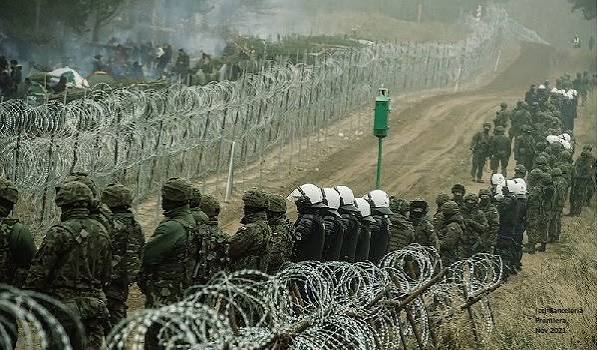
Through the dense, primeval canopy of the Białowieża Forest—where European bison still roam across damp peat and tangled pine roots—the silence of Eastern Europe has been permanently replaced by the hum of high-frequency thermal optics, the drone of reconnaissance quadcopters, and the metallic glint of a 5.5-meter-high steel wall topped with razor wire.
This is the Poland–Belarus frontier. Stretching roughly 400 kilometers across marshes, rivers, and dense woodland, this line was once merely a quiet administrative border on the geographic periphery of the European Union. Today, it has become the most militarized geopolitical fault line on the continent: a physical crucible where the post-World War II international legal order, human rights doctrines, and the realities of twenty-first-century hybrid warfare have violently collided.
                   THE EASTERN FLANK CHOKEPOINT
  ┌─────────────────────────────────────────────────────────────┐
  │                                                             │
  │   [ MINSK / MOSCOW: Hybrid Vector & Facilitated Transit ]   │
  │                              │                              │
  │                              ▼                              │
  │              THE BUFFER ZONE & PHYSICAL WALL                │
  │       (186 km Steel Barrier / Thermal Sensors / Exclusion)  │
  │                              ▲                              │
  │                              │                              │
  │   [ WARSAW / BRUSSELS: Territorial Integrity & Defense ]    │
  │                                                             │
  └─────────────────────────────────────────────────────────────┘
What began years ago as an unprecedented migration emergency has evolved into an entrenched security perimeter. Poland’s response—combining physical barriers, electronic sensor grids, military deployments, and unprecedented legal suspensions of asylum applications—has yielded dramatic statistical results. Yet, it has opened a profound constitutional, moral, and strategic crisis at the very heart of Western democracy: Can a modern liberal civilization protect its external borders from authoritarian subversion without dismantling the foundational human rights codes established in the ashes of the twentieth century?
The Chronicle: From the 2015 Shockwave to the Hybrid Frontier
To understand the fortress rising in the East, one must trace the decade-long chain reaction that transformed European political geography.
       TIMELINE: THE ROAD TO FORTRESS POLAND
  2015 ─── Mediterranean Migration Shock / EU Relocation Feud
  2021 ─── Lukashenko Regime Weaponizes Transit via Minsk
  2022 ─── Russian Invasion of Ukraine / Construction of 186-km Wall
  2025 ─── Polish Parliament Passes Emergency Asylum Suspension Bill
  2026 ─── Crossings Plummet by 98% (215 Attempts Jan–May vs 10,600+ YoY)
The Legacy of 2015: The Shattered Consensus
The ideological roots of Warsaw’s fortification trace back to Europe’s 2015 migration crisis. When more than a million people crossed into southern and central Europe via Mediterranean and Balkan corridors, Germany opened its doors, and Brussels sought to enforce mandatory redistribution quotas across all EU member states.
In Central Europe—led by Poland and Hungary—the backlash was immediate, fierce, and institutionalized. Warsaw viewed mandatory relocation as an existential infringement upon national sovereignty. Polish leadership maintained that decisions regarding who enters and permanently settles within a nation’s borders must remain under national democratic control.
Warsaw argued that redistributing arrivals after the fact created a perpetual pull factor that enriched criminal smuggling cartels while leaving external frontiers porous. While Western European capitals initially condemned this stance as a breach of European solidarity, the ideological rift became permanent, laying the groundwork for the hardline border doctrines of today.
The 2021 Belarus Rupture: Migration as a State Weapon
In the summer of 2021, the nature of European border management shifted. Alexander Lukashenko’s regime in Belarus, reeling from European sanctions following contested elections and a brutal crackdown on domestic dissent, opened a state-sponsored transit corridor.
Working through state-run travel agencies, visa-free transit schemes, and commercial aviation routes, Belarusian authorities facilitated the movement of thousands of migrants—primarily from Iraq, Syria, Afghanistan, and sub-Saharan Africa—directly to Minsk. From the Belarusian capital, state security services escorted groups directly to the wooded frontiers of Poland, Lithuania, and Latvia, providing logistical support, wire-cutters, and instructions on how to breach the border.
European institutions, NATO, and Warsaw ceased classifying the situation as a standard asylum crisis. Instead, they designated it as “hybrid warfare” and the state-driven “instrumentalization” of human beings. The migrant was no longer viewed through the lens of individual movement, but as a geopolitical vector directed by an adversary to induce domestic political instability, drain emergency resources, and polarize European electorates.
The Wall, the Sensors, and the 2026 Statistical Collapse
Poland’s physical response was swift and uncompromising. By 2022, Warsaw had completed a 186-kilometer steel wall standing 5.5 meters tall, fortified with motion detectors, ground sensors, and high-resolution thermal cameras. This physical rampart was subsequently reinforced by exclusion zones, dedicated military detachments, and specialized border-intervention units.
By 2025, the Polish parliament took the controversial step of enacting emergency legislation granting the Council of Ministers temporary authority to restrict the submission of international protection applications along targeted border sectors.
By mid-2026, the Polish Ministry of the Interior released empirical data demonstrating the operational impact of this strategy:
-
January–May 2025: Over 10,600 recorded unauthorized border breach attempts.
-
January–May 2026: Just 215 recorded breach attempts.
-
Net Reduction: A 98% decline in illegal crossings along the Belarusian frontier.
       UNAUTHORIZED BORDER CROSSING ATTEMPTS (JAN–MAY)
  Year
  2025  ████████████████████████████████████████ 10,600+
  2026  ▏ 215 (-98%)
        └────────────────────────────────────────► Attempts
While supporters cite these figures as proof that physical and legal deterrence can alter migration trajectories, international legal scholars and human rights advocates have raised alarms. They caution that the human toll remains obscured behind the statistics and that international non-refoulement guarantees are being systematically eroded.
1. The Overlooked Reality: The Exploitation Engine and the “Dismantled Middle”
Having covered humanitarian crises, insurgencies, and geopolitical proxy fights across four continents over the past thirty years, I have witnessed how international treaties look inside carpeted conference halls in Geneva compared to how they function in wet, sub-zero forests.
The conversation surrounding the Polish-Belarusian frontier is plagued by a dangerous intellectual binary that systematically ignores the ground truth.
                    THE DUAL-REALITY FAULT LINE
  ┌───────────────────────────────┬───────────────────────────────┐
  │   THE RIGID LEGALISTIC VIEW   │    THE HYBRID WARFARE VIEW    │
  ├───────────────────────────────┼───────────────────────────────┤
  │ Sees only an asylum seeker    │ Sees only an orchestrated     │
  │ exercising universal rights   │ geopolitical weapon           │
  │ under the 1951 Convention.    │ engineered by hostile states. │
  ├───────────────────────────────┴───────────────────────────────┤
  │                     THE GROUND TRUTH:                         │
  │ The individual in the forest is SIMULTANEOUSLY a victim of   │
  │ state-sponsored trafficking AND a tool in a geopolitical      │
  │ destabilization campaign. Denying either fact produces fatal │
  │ policy failures.                                              │
  └───────────────────────────────────────────────────────────────┘
The reality is that both narratives are entirely true at the exact same moment.
The young Syrian or Yemeni national shivering in the peat bogs along the Narew River is often a desperate civilian who paid thousands of dollars to ruthless smuggling syndicates, only to be beaten by Belarusian security forces with batons if they attempt to turn back toward Minsk. They are undeniably victims of state-sponsored human trafficking.
At the very same time, from the perspective of a Polish military commander or a European security analyst, that same individual represents an engineered entry designed to stress domestic infrastructure, inflame far-right and far-left populist factions, tie down intelligence assets, and test the response times of NATO’s eastern defenses.
When the political debate forces societies to choose between humanitarian innocence and geopolitical defense, policy becomes dysfunctional. By treating every individual crossing as either purely a refugee or purely an invader, both Western humanitarians and nationalist hardliners ignore the machinery driving the crisis: the intentional conversion of Western human rights obligations into asymmetric vulnerabilities by adversarial regimes.
2. The Deeper Meaning: The Quiet Death of the 1951 Geneva Architecture
The profound significance of Poland’s actions—and the quiet acquiescence of Brussels—is that the post-World War II global asylum regime is reaching its functional endpoint in Europe.
The 1951 Refugee Convention was drafted in the shadow of the Holocaust and the mass displacements of mid-century Europe. It was constructed around several clear, unspoken baseline assumptions:
-
People would flee across immediate land borders to the nearest safe sanctuary.
-
Movements would be driven by organic civilian desperation rather than organized state transport.
-
Host states would evaluate claims individually without facing coordinated state-sponsored campaigns designed to overwhelm administrative capacity.
       1951 GENEVA FRAMEWORK vs. 2026 GEOPOLITICAL ENVIRONMENT
  ┌───────────────────────────────┬───────────────────────────────┐
  │ 1951 HISTORICAL ASSUMPTION    │ 2026 OPERATIONAL REALITY      │
  ├───────────────────────────────┼───────────────────────────────┤
  │ Organic, spontaneous flight   │ State-facilitated commercial  │
  │ to nearest contiguous haven.  │ transit across continents.    │
  ├───────────────────────────────┼───────────────────────────────┤
  │ Unilateral asylum claims by   │ Coordinated, weaponized       │
  │ individual persecuted persons.│ flows engineered by rivals.   │
  ├───────────────────────────────┼───────────────────────────────┤
  │ Processing systems capable of │ Infinite legal appeals used   │
  │ individualized management.    │ to paralyze state capacity.   │
  └───────────────────────────────┴───────────────────────────────┘
In Moscow and Minsk, state strategists recognized that Western liberal democracies are bound by domestic courts, judicial reviews, and international human rights treaties. If an authoritarian regime can funnel 50,000 individuals toward a targeted sector of a democracy’s border, that democratic state is legally obligated to process, house, feed, and adjudicate every individual claim through multi-tiered appeals processes that take years and cost billions.
Poland’s decision to temporarily suspend the processing of asylum applications along specific sectors of the Belarusian frontier is not merely a local border decree; it is an open admission that when international humanitarian law becomes an operational weapon in the hands of an adversary, nation-states will abandon the law to preserve territorial integrity.
Warsaw has created a legal precedent: National security and the prevention of hybrid destabilization take precedence over universal individual asylum claims at the frontier. If this precedent stands without formal EU sanction, the universal right to claim asylum on European soil will effectively cease to exist as an absolute standard.
3. Why This Story Matters: The Continental Shift to “Fortress Europe”
The political landscape in Europe has inverted. A decade ago, Poland was viewed by Brussels, Berlin, and Paris as an ideological outlier—a recalcitrant Eastern European state clinging to outdated concepts of Westphalian sovereignty while the rest of the Union moved toward borderless integration.
Today, Warsaw is no longer isolated; Poland has become the vanguard of European policy.
               THE EUROPEAN MIGRATION PARADIGM SHIFT
  ┌─────────────────────────────────────────────────────────────┐
  │ 2015 PARADIGM: "Willkommenskultur"                          │
  │ • Open corridors, internal redistribution, Dublin reviews.  │
  │ • Moral universalism prioritized over physical barriers.    │
  │                                                             │
  │                              │                              │
  │                              ▼                              │
  │ 2026 PARADIGM: "Forward Deterrence"                         │
  │ • Steel barriers, AI sensor arrays, externalized hubs.      │
  │ • Territorial defense prioritized over absolute asylum.     │
  └─────────────────────────────────────────────────────────────┘
Across the continent, the political center of gravity has shifted decisively:
-
Germany has instituted spot checks and expanded physical controls along its own land borders, including those with Poland, Austria, and the Czech Republic, effectively suspending Schengen fluidity during periods of perceived security stress.
-
The Nordic States—long considered the moral arbiters of global humanitarianism—have enacted some of the continent’s strictest immigration and return policies, with Finland entirely shuttering its land border with Russia to prevent identical hybrid transit operations.
-
Italy and Greece have forged third-country processing agreements and external maritime interception compacts with North African and Balkan partners.
-
The EU Migration and Asylum Pact has codified faster border screenings, detention procedures at external frontiers, and accelerated deportations.
The Polish model—physical barriers, electronic eyes, rapid intervention, and statutory emergency suspensions—is the blueprint Europe is adopting to insulate its political systems from domestic populist upheavals and foreign pressure campaigns.
4. The Critical Unanswered Questions
As this fortified reality settles across the European frontier, several strategic, humanitarian, and constitutional questions remain unanswered:
-
The Durability of the “Emergency”: How long can a democratic nation-state maintain an “exceptional” suspension of legal asylum procedures before the exception becomes the permanent statutory baseline? When does an emergency mechanism stop being an operational tool and start functioning as the de facto death of constitutional rights?
-
The Escalation Threshold: If steel walls, thermal arrays, and statutory suspensions successfully choke off standard unauthorized entries (as demonstrated by Poland’s 98% drop), how will Minsk and Moscow adapt their hybrid doctrine? Will pressure shift toward underwater sabotage, cross-border kinetic provocations, or armed smuggling incursions?
-
The Schengen Contradiction: Can the European Union maintain an internal zone of passport-free movement (Schengen) if member states systematically reintroduce bilateral border checkpoints out of fear that external frontiers remain vulnerable to secondary movement?
-
The Displacement Vector: If the Eastern land route is effectively sealed by Polish and Nordic barriers, where will the underlying global displacement pressures redirect? Will Mediterranean and Atlantic sea routes see historic, lethal spikes in maritime traffic as human smuggling networks adapt to Eastern Europe’s closure?
5. What Audiences Must Understand Beyond the Headline
The average news consumer scrolling past headlines about border walls and asylum bans sees a localized struggle between border guards, desperate migrants, and human rights lawyers.
What they are actually watching is the end of the post-Cold War illusion of a borderless world.
| Dimension | The Superficial Headline | The Investigative Ground Reality |
| The Wall | A simple engineering obstacle to keep unauthorized migrants out. | A forward military defense line designed to deter state-sponsored hybrid aggression. |
| The 98% Drop | Proof that tough policies cleanly solve migration problems. | Evidence that pressure can be suppressed in one sector, likely forcing displacement into higher-risk maritime corridors. |
| The Legal Battle | A technical disagreement between domestic judges and international treaties. | The functional collapse of 20th-century international asylum treaties in an age of multi-domain hybrid conflict. |
| The Humanitarian Crisis | A binary struggle between heartless border guards and helpless refugees. | A tragic proxy dynamic where human beings are weaponized by authoritarian regimes to exploit the legal architecture of democratic states. |
The steel fence rising out of the primeval mud of Eastern Poland is not an anomaly. It is the architectural archetype of the twenty-first century: an era defined not by the expansion of international treaties, but by their retrenchment behind physical barriers, drone surveillance grids, and national security exceptions.
The transformation of the Polish-Belarusian frontier marks the close of an era. The vision of an interconnected, borderless European space governed primarily by universal humanitarian conventions has run headlong into the realities of regional state aggression, mass displacement, and sovereign self-preservation.
Poland has drawn an unambiguous line in the dirt. It has proven that a modern state with sufficient political willpower, technological infrastructure, and physical fortifications can achieve a near-total reduction in unauthorized land crossings. It has demonstrated to its electorate and its allies that territorial boundaries can still be defended.
Yet this operational success leaves Europe standing before an unresolved moral reckoning. A border wall can halt unauthorized crossings, thermal cameras can illuminate the night, and emergency legislation can freeze legal claims—but no barrier can eliminate the global conditions of war, persecution, and climate breakdown that force human beings to move in the first place.
As Europe seals its Eastern flank and fortifies its perimeter against hostile regimes, it must confront a sobering reality: In building the physical and legal fortresses necessary to protect our democratic institutions from external manipulation, are we preserving the values of our open societies—or are we slowly walling them off from the inside out?