DEBATE GROWS OVER FULL-FACE VEILS IN BRITAIN AS CALLS FOR NEW RULES COLLIDE WITH RELIGIOUS FREEDOM AND INDIVIDUAL RIGHTS. n1

The Unseen Fabric: Inside Britain’s Battle Over the Veil and the Soul of a Democracy
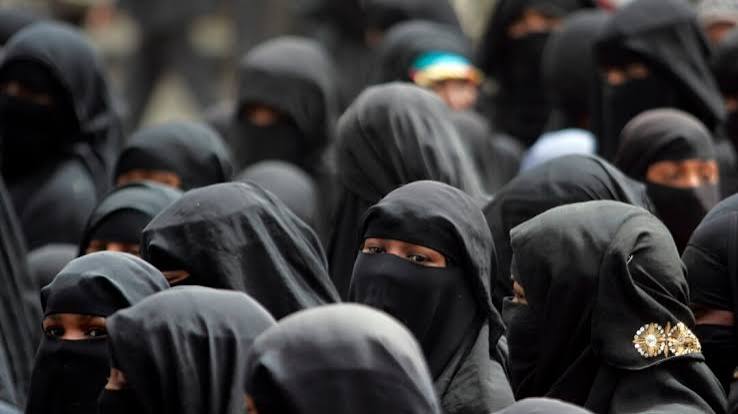
A few yards from the Houses of Parliament, where the Gothic spires of Westminster cast long shadows across the River Thames, a woman walks toward an Underground station. She wears a black niqab, leaving only an amber sliver of eyes exposed to the damp London air. Hundreds of commuters brush past her in purposeful silence, their coats zipped high against the chill, their phones held inches from their faces.
In this fleeting streetscape lies the friction point of modern Britain: a collision between privacy, religious conscience, and the communal compact of an open society.
Once again, the question of whether Britain should legislate against the full-face veil in public spaces has returned to the fore. It is a recurring fault line in British politics, resurfacing whenever questions of immigration, national cohesion, and security converge. Yet behind the headlines lies a complex institutional and cultural struggle that reaches far beyond fabric and fashion.
At its core, this controversy asks a fundamental question of contemporary governance: In a diverse, mature democracy, where do the liberties of the individual end, and where do the mutual expectations of public citizenship begin?
1. The News Story: Anatomy of a Cultural Dilemma
The Backdrop: A Pragmatic Tradition Under Strain
For decades, the United Kingdom treated religious dress with institutional accommodation. Unlike the strict secularism (laïcité) of France, where the state enforces a visible neutrality in civic life, Britain’s common-law heritage traditionally favored pragmatic exception over centralized proscription.
Sikh men wearing turbans have been exempt from motorcycle helmet laws under the Motor-Cycle Crash Helmets (Religious Exemption) Act since 1976. Jewish men wearing kippahs, Christian clergy in clerical collars, and Muslim women wearing standard hijabs have long formed part of Britain’s civic tapestry.
However, the niqab (which cloaks the head and lower face while leaving the eyes visible) and the burqa (a full-body garment covering the entire face behind a mesh screen) occupy an entirely different tier of social contestation.
The number of women who wear full-face veils in Britain remains relatively small. The Muslim Council of Britain and various sociological surveys estimate that only an exceptionally slender minority of British Muslim women—fewer than a few thousand across a total Muslim population exceeding four million—wear a full-face covering. Yet the political and symbolic weight attached to this garment vastly outstrips its statistical presence.
The Core Contenders and Arguments
The modern argument breaks along several well-defined fronts, dividing parliamentarians, legal scholars, civil liberties advocates, and feminist organizers.
-
The Case for Restriction and Facial Visibility:Proponents of state intervention argue that a functional liberal democracy relies on mutual legibility. In their view, seeing another citizen’s face is not an arbitrary aesthetic preference; it is the baseline human currency of communication, trust, and social cohesion.Advocates note that public institutions cannot operate effectively under conditions of total anonymity. In classrooms, teachers depend on non-verbal cues to gauge comprehension and emotional distress. In medical settings, practitioners must diagnose distress, monitor breathing, and establish empathetic rapport. In the judicial realm, jurors must observe the demeanor of witnesses to evaluate credibility.Furthermore, supporters highlight practical security demands. Border control, airports, high-security facilities, and courtroom proceedings routinely require definitive identity verification. From this viewpoint, setting clear civic boundaries does not indicate religious hostility; rather, it establishes a common minimum standard of public engagement.
-
The Defense of Civil Liberties and Personal Autonomy:Opponents approach the issue from constitutional principle: What right does the state have to police the wardrobe of a law-abiding adult walking down a public thoroughfare?Civil liberties organizations, such as Liberty, argue that individual freedom is tested precisely when an individual makes an unpopular, non-conformist, or counter-cultural choice. If liberty protects only mainstream, majority-approved behavior, it ceases to be a meaningful right.These advocates draw a strict operational boundary between temporary identification checks—such as lifting a veil for an airport security officer or a court clerk—and a blanket prohibition that turns a religious garment into a criminal violation on a public street. They argue that existing UK common law already allows officials to demand identification whenever legitimate grounds exist, rendering blanket bans not only draconian, but legally redundant.
                    THE SPECTRUM OF VEIL POLICY
┌─────────────────────┬──────────────────────────┬─────────────────────┐
│    Blanket Ban      │   Targeted Regulation    │ Pure Laissez-Faire  │
├─────────────────────┼──────────────────────────┼─────────────────────┤
│ Prohibits face      │ Mandates visibility for  │ No state rules;     │
│ concealment in all  │ identification, courts,  │ individual choice   │
│ public spaces.      │ schools, and security.   │ entirely unregulated│
│ (e.g., France,      │ (Current UK policy &     │ in public spaces.   │
│  Belgium, Austria)  │  proposed compromise)    │                     │
└─────────────────────┴──────────────────────────┴─────────────────────┘
The Feminist Paradox
Perhaps nowhere is the debate more fractured than within women’s advocacy movements. One perspective views the veil as an instrument of patriarchal subordination. Proponents of this view argue that societal, familial, or ideological pressures frequently compel women to cover themselves, denying them equal physical presence in the public sphere. For these advocates, state intervention provides a protective shield against domestic coercion.
Yet another current of feminist analysis insists that true autonomy includes the right to choose traditionalism, modesty, or religious orthodoxy. If a woman freely concludes that her spiritual devotion requires a niqab, depriving her of that choice through fines or police enforcement simply swaps family control for state coercion.
Crucially, critics of a ban warn of a devastating real-world consequence: if a woman is forbidden from veiling outdoors, she will not simply remove the fabric and assimilate. Instead, she is far more likely to retreat inside her home, severing her connection to education, healthcare, and employment, thereby exacerbating the very isolation the law claimed to resolve.
The European Precedents
Britain does not debate this in a vacuum. Cross-Channel neighbors have taken aggressive, prescriptive paths:
-
France (2010): Enacted a total ban on concealing the face in public spaces (Loi interdisant la dissimulation du visage dans l’espace public), framing it as an essential defense of laïcité and the republican concept of “living together” (le vivre-ensemble). The European Court of Human Rights (ECHR) upheld the law in the landmark 2014 case S.A.S. v. France, determining that the state had legitimate discretion to guarantee social interaction.
-
Belgium (2011) & Austria (2017): Implemented comparable nationwide bans penalizing full-face concealment in public with fines.
-
Denmark, Switzerland, & the Netherlands: Adopted either full or sectoral bans (e.g., the Dutch law targets public transport, schools, hospitals, and government buildings rather than the open street).
Yet critics caution against importing Continental European models. Britain’s unwritten constitution and historical posture toward religious pluralism developed along entirely different lines. Britain maintains an established church (the Church of England) with Bishops sitting in the House of Lords, paired with a broad tolerance for non-conformism. Superimposing French-style state-mandated secularism onto the British legal landscape risks unintended legal and social friction.
2. Professional Perspective: The Unseen Architecture of the Debate
By an Investigative Correspondent
When you have spent three decades covering global conflict zones, legislative chambers, and deeply divided communities, you learn that every public controversy carries two scripts. There is the noisy, performative script delivered to television cameras and political rallies, and there is the silent, structural reality running beneath it.
The public argument over the veil in Britain is presented as a straightforward conflict between national security, women’s liberation, and individual rights. But when you examine the mechanisms behind it, the conventional narrative begins to unravel.
What Has Been Overlooked: The Asymmetry of Modern Surveillance
The primary justification for banning the veil is public visibility and identification. Yet this argument rests on an intellectual contradiction that few politicians care to address.
We are navigating an era where facial anonymity has been systematically transformed. During the COVID-19 pandemic, governments across the Western world mandated surgical and FFP2 masks for millions of citizens entering banks, transit networks, and supermarkets. At the exact moment face masks were declared an act of civic duty, the fundamental security claim—that society collapses when faces are obscured—became logically fragile.
       CONVERGENCE OF FACIAL VISIBILITY POLICIES (2010–2026)
┌──────────────────────────────────────────────────────────────────┐
│  2010: Face concealment framed as an existential security risk   │
│  2020: Face concealment legally mandated for public health       │
│  2024+: Mass AI facial-recognition rolled out on British streets │
│                                                                  │
│  Tension: Does the citizen owe the street an unmasked face?      │
└──────────────────────────────────────────────────────────────────┘
More quietly, Britain has become one of the most intensively surveilled nations on earth. In major urban centers, automated Live Facial Recognition (LFR) cameras deployed by police forces regularly scan crowds, matching civilian faces against digital biometric watchlists in real time.
Against this technical backdrop, the demand that every human face remain permanently visible takes on a different dimension. The debate over the niqab is not merely about whether a passerby can read a smile; it is tied up with whether an individual has any residual right to be unreadable to the apparatus of modern urban life.
When politicians frame the veil as an unprecedented security hazard, they gloss over existing police powers. Under Section 60AA of the Criminal Justice and Public Order Act 1994, British police already have statutory authority to order the removal of any item worn mainly to conceal identity within designated zones where violence is anticipated. The legal machinery to identify individuals already exists.
The Deeper Meaning: The Veil as a Lightning Rod
Why does a garment worn by only a few thousand women generate thousands of column inches and dominate parliamentary debate?
Because the veil is an empty screen onto which modern anxieties are projected. It serves as an easy proxy for intractable, complex anxieties that British society has failed to address directly:
-
The lingering disorientation over rapid demographic change.
-
The perceived failure of multiculturalism to produce shared social bonds.
-
Discontent among working-class communities who feel ignored by cosmopolitan elites.
-
The global ideological clashes between secular liberalism and religious revivalism.
It is far easier for a politician to point to a woman’s face covering and propose a simple ban than it is to address the systemic challenges of urban segregation, the housing crisis, the chronic underfunding of integration programs, or the economic isolation of immigrant enclaves. The garment is tangible, visible, and photogenic. It provides a visual headline that conceals policy inaction elsewhere.
The Silenced Voices
Throughout thirty years of reporting, one rule has proven constant: the people most spoken about in the press are the people least listened to.
The mainstream debate treats the woman beneath the veil as an abstraction. To the hard right, she is an emblem of cultural separatism; to the paternalistic liberal, she is a passive victim awaiting rescue.
Yet when you sit down in a community center in Birmingham, Bradford, or Tower Hamlets and actually interview the women wearing the niqab, you find an entirely different reality. Many are articulate, British-born, highly educated women who adopted the veil in direct opposition to their own families. For these women, the veil is not a relic imported from a rural village abroad; it is an active, modern assertion of identity, an explicit refusal to submit to Western consumerist beauty standards, and an intentional spiritual discipline.
Whether one agrees with their theology or finds it deeply alien, treating these women as voiceless victims erases their agency. When we pass laws over their heads without engaging their lived experiences, the state commits the exact sin it accuses traditional patriarchies of committing: denying women the authority to govern their own bodies.
The Core Question
The question audiences must understand beyond the headline is simple: Can a liberal state remain truly liberal while forcing its citizens to conform to a state-approved dress code?
Once a democracy establishes that the state owns the visual boundary of the citizen’s body, a perilous legal threshold has been crossed. Today, the target is a minority religious garment disdained by the broader electorate. But the precedent endures: it codifies the principle that the state may dictate what private individuals place over their skin in a public street, solely to placate societal discomfort. That is not the triumph of liberal democracy; it is its quiet erosion.
If you stand on Westminster Bridge on an autumn afternoon, you can watch the world cross in a single file. You will see young men in hooded sweatshirts and sunglasses, tourists with protective face masks, corporate lawyers in tailored wool coats, and, occasionally, a Muslim woman in a niqab pushing a stroller.
Each has dressed for different reasons: climate, fashion, corporate conformity, privacy, or ancient faith.
The impulse to legislate away the veil is understandable. Human beings rely on faces to read intentions, and when a face is covered, our evolutionary instinct registers wariness. In an era marked by rapid social shifts and cultural anxiety, a desire for visual unity is deeply human.
                    TWO VISIONS OF BRITISH PLURALISM
┌──────────────────────────────────────┬──────────────────────────────────────┐
│       The Civic Republican Model     │       The Classical Liberal Model    │
├──────────────────────────────────────┼──────────────────────────────────────┤
│ * Uniform public standard            │ * Broad individual autonomy          │
│ * Visual legibility is a duty        │ * Pluralism allows visible difference│
│ * State guarantees secular commons   │ * State intervenes only on harm      │
│ * Compulsory integration             │ * Voluntary social accommodation     │
└──────────────────────────────────────┴──────────────────────────────────────┘
True democratic strength, however, has never been measured by how comfortably a society polices uniformity. It is measured by its capacity to endure difference.
If Britain chooses the path of state-mandated dress codes, it will not resolve its underlying identity crisis. It will simply declare that British tolerance stops at the boundary of things the majority finds unfamiliar. It risks exiling a vulnerable population from the public square, trading genuine, hard-won integration for an illusion of cultural safety.
The veil remains a mirror. When Britain looks at it, does it see a threat so fragile that it requires the coercive power of the state to extinguish? Or does it see a democracy confident enough in its own values to say: We may not agree with your choices, we may not share your faith, but in this country, the street belongs to the free?