
“Cretins” Comment Sparks Political Firestorm: How One Published Letter Reignited Australia’s Debate Over Media, Democracy, and Respect for Voters
Political controversies do not always begin inside Parliament.
Sometimes they emerge from a government policy. Sometimes from a fiery campaign speech. And occasionally, they start with something far more ordinary—a single letter printed in a newspaper.
That is precisely what has happened in Australia.
A reader’s letter published in The Sydney Morning Herald has triggered a debate that extends far beyond Pauline Hanson, One Nation, or even the newspaper itself. What initially appeared to be one citizen’s opinion has evolved into a national conversation about political respect, media culture, and whether Australians who support smaller or populist parties are increasingly being judged not only for their political beliefs but for their intelligence.
At the centre of the controversy is one word.
“Cretins.”
The letter’s author questioned why Pauline Hanson continued receiving extensive media coverage before referring to her and what was described as a “cavalcade of cacophonous cretins.”
Although the comment was directed toward Hanson and those associated with her movement, many readers interpreted it as an insult aimed at the Australians who vote for One Nation.
That interpretation transformed a newspaper opinion into a wider political controversy.
The discussion was no longer about Pauline Hanson herself.
It became a debate about democracy, political disagreement, and whether voters deserve respect regardless of whom they support.
The Letter That Sparked the Debate
The published letter appeared in The Sydney Morning Herald‘s Saturday edition after the writer questioned why Hanson continued receiving prominent attention within the newspaper.
The author wrote that they were “disturbed” by seeing multiple photographs of Hanson before asking why she and her supporters continued occupying so much editorial space.
The description of Hanson and her “cavalcade of cacophonous cretins” immediately became the story.
The word “cretin” is commonly understood as a derogatory term describing someone as foolish, unintelligent, or lacking common sense.
For critics of the letter, the issue was not whether Pauline Hanson should face criticism.
Public figures regularly receive criticism in democratic societies.
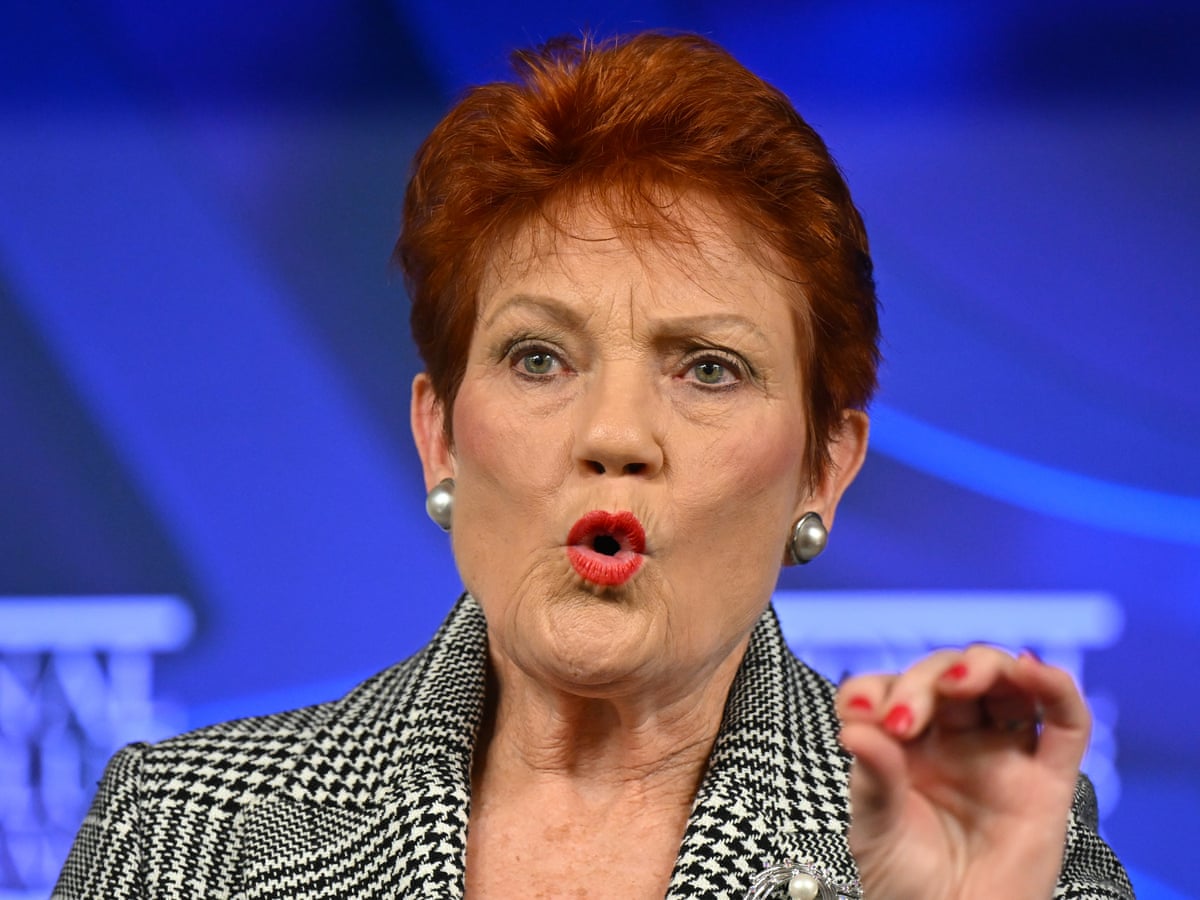
Instead, the controversy centred on whether the language appeared to dismiss ordinary Australians who choose to vote differently from the political mainstream.
One Nation Responds
One Nation responded quickly.
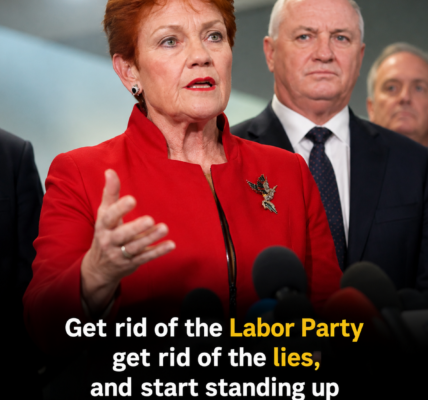
Party representatives argued the published letter reflected what they described as a broader attitude within sections of Australia’s political and media establishment toward voters who reject the traditional Labor–Coalition system.
According to the party, criticism of policies and politicians is entirely legitimate.
However, they argued that describing supporters in dismissive or insulting terms crosses an important democratic line.
A One Nation spokesperson described the language as demonstrating what the party called “sneering contempt” toward Australians who believe the major political parties no longer represent their concerns.
Supporters argued that many Australians vote for One Nation because they feel overlooked on issues such as immigration, housing affordability, regional development, cost-of-living pressures, and national identity.
From their perspective, insulting those voters does nothing to address the reasons they support alternative political parties.
Instead, they argue it deepens political alienation.
The “Basket of Deplorables” Comparison
One Nation also drew comparisons with one of the defining moments of modern American politics.
During the 2016 United States presidential campaign, Democratic nominee Hillary Clinton referred to many Donald Trump supporters as belonging in a “basket of deplorables.”
The comment quickly became one of the campaign’s defining moments.
Many political analysts later argued that the remark reinforced existing perceptions among some voters that political elites looked down upon them.
One Nation argues that a similar dynamic may now be emerging in Australia.
Its representatives contend that insulting voters rarely persuades them to change political allegiance.
Instead, they argue such language often strengthens the belief that mainstream institutions neither understand nor respect their concerns.
The comparison, however, remains open to debate.
Australia’s political system differs substantially from that of the United States, and a published reader’s letter does not carry the same political significance as remarks made by a presidential candidate during a national election campaign.
Nevertheless, the comparison has resonated with many supporters who believe political disagreement increasingly focuses on the character of voters rather than on the policies they support.
A Changing Political Landscape
The controversy comes during a period of renewed attention surrounding Pauline Hanson and One Nation.
Recent polling has suggested increased support for the party among voters concerned about housing affordability, inflation, migration, energy policy, and dissatisfaction with both major political parties.
As the party’s profile has grown, media coverage has naturally increased.
Supporters argue this reflects public interest in an increasingly competitive political landscape.
Critics counter that repeated coverage risks amplifying controversial figures beyond their electoral influence.
This debate itself raises an important journalistic question.
What responsibility do media organisations have when reporting on parties experiencing growing public support?
Should they reduce coverage to avoid increasing visibility?
Or should they report political developments proportionately regardless of whether the subjects involved generate controversy?
There is no universally accepted answer.
The Media’s Difficult Position
Modern news organisations frequently face criticism from opposite directions simultaneously.
Some readers argue controversial politicians receive excessive coverage.
Others believe those same politicians are deliberately marginalised through selective reporting or negative framing.
Both criticisms can emerge from the same publication.
This reflects one of journalism’s enduring challenges.
Media organisations are expected to inform the public about significant political developments while avoiding accusations of bias from competing perspectives.
Achieving that balance becomes increasingly difficult as political polarisation intensifies.
Pauline Hanson’s Long-Running Complaint
Pauline Hanson has frequently argued that sections of Australia’s media treat One Nation differently from other political parties.
She maintains that her supporters are often portrayed through stereotypes rather than being recognised as legitimate participants in democratic debate.
According to Hanson, the party’s continued electoral presence demonstrates that significant numbers of Australians feel disconnected from traditional political institutions.
Her supporters believe language such as “cretins” reinforces that perception.
Critics respond that Hanson herself has often employed highly provocative political rhetoric throughout her career and therefore cannot reasonably expect unusually gentle treatment from opponents.
They argue vigorous criticism remains an essential feature of democratic politics.
Yet even among Australians who strongly oppose One Nation, some have questioned whether insulting voters rather than debating policies improves political discussion.
That distinction has become central to the current controversy.
More Than a Single Newspaper Letter
Although the controversy began with one published opinion, its significance extends much further.
It reflects broader concerns about how democratic societies discuss political disagreement.
Healthy democracies depend upon vigorous debate.
But they also depend upon recognising that citizens may reach different political conclusions without losing their legitimacy as participants in public life.
When disagreement shifts from challenging policies to questioning the intelligence or worth of fellow citizens, political divisions can become more difficult to bridge.
This concern extends well beyond Australia.
Many democracies have experienced growing tensions over how political opponents are described both online and in traditional media.
My Professional Perspective
Having covered elections, political campaigns, and media controversies for more than three decades, I believe this story is not fundamentally about one newspaper letter.
It is about trust.
Trust in journalism.
Trust in political institutions.
And trust between Australians who increasingly hold very different views about the country’s future.
The word “cretins” attracted attention because it appeared to move the discussion beyond criticism of a political leader and into criticism of the people who support that leader.
Whether or not that was the author’s intention, perception matters in politics.
When voters believe they are being mocked or dismissed, they rarely become more open to opposing arguments.
More often, they become more deeply committed to the communities and political movements that they feel respect them.
This is a lesson seen repeatedly across democratic societies.
Another important point is that media organisations routinely publish readers’ letters expressing a wide range of opinions. Publishing a controversial letter does not necessarily indicate editorial endorsement of every opinion it contains.
However, once such a letter enters the public domain, it inevitably becomes part of the broader national conversation.
The controversy also reflects Australia’s changing political landscape.
Support for independents and minor parties has grown steadily over the past decade.
As the electorate becomes more fragmented, debates over media fairness, political representation, and respect for different viewpoints are likely to become increasingly prominent.
Perhaps the most overlooked aspect of this story is that respectful disagreement and robust criticism are not mutually exclusive.
Journalists, commentators, and political opponents should continue scrutinising policies vigorously.
Equally, democratic debate is generally strongest when criticism focuses on ideas and evidence rather than assumptions about the intelligence or character of those who vote differently.
That principle applies regardless of which political party is involved.
Conclusion
What began as a single published letter has developed into a much broader discussion about political respect, media responsibility, and the language Australians use when debating each other.
Supporters of One Nation argue the incident illustrates a pattern of dismissive attitudes toward voters outside the political mainstream.
Critics maintain that strong criticism of controversial political figures is a normal and necessary part of democratic discourse.
Both arguments reflect genuine concerns about the health of Australia’s political culture.
As support for smaller parties continues to grow and public confidence in traditional institutions evolves, debates over how political opponents—and their supporters—are portrayed may become almost as significant as debates over policy itself.
Ultimately, this controversy poses a question that extends beyond Pauline Hanson, One Nation, or one newspaper.
In a democracy built on free elections and competing ideas, how should citizens challenge political beliefs without diminishing the dignity of the people who hold them?
The answer may shape not only the tone of Australia’s political debate, but also the level of trust that underpins it.