A Rare 1982 Interview With Ali Khamenei Resurfaces Amid Escalating Middle East Conflict
As the Middle East enters one of its most volatile periods in decades, a rare archival interview with former Iranian President Ali Khamenei has resurfaced — offering an unusually personal glimpse into the thinking of the man who would go on to shape Iran’s political destiny for nearly four decades.
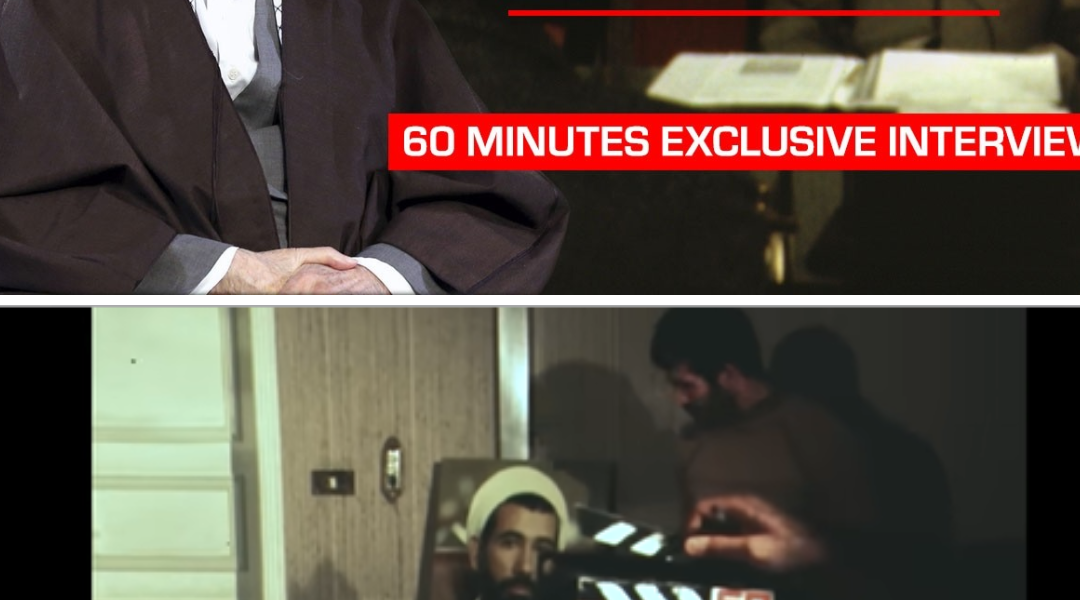
Filmed in 1982 by the Australian edition of 60 Minutes, the interview remains the only one-on-one televised conversation Khamenei ever granted to Western media. Conducted inside one of the former Shah’s palaces — by then transformed into a government headquarters after the 1979 Islamic Revolution — the exchange captured a young revolutionary leader defining his worldview at a pivotal moment in Iran’s modern history.
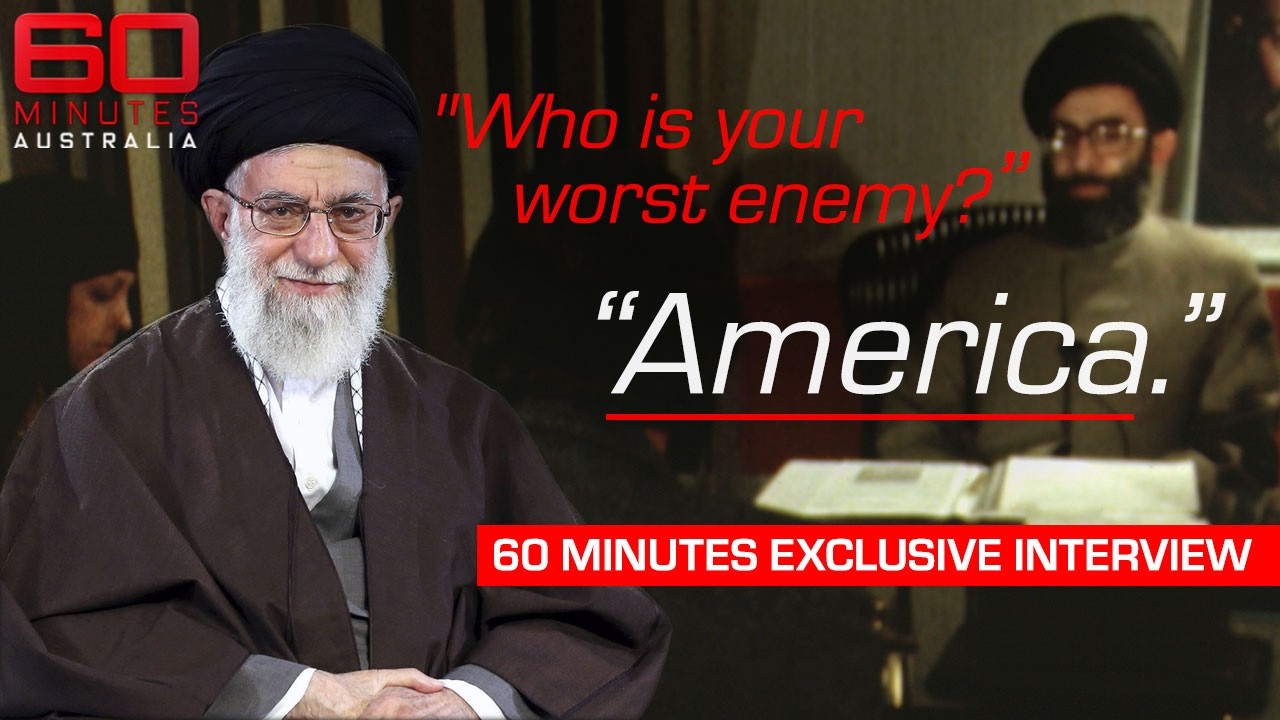
Now, following Khamenei’s death during recent joint Israeli–American strikes on Tehran, the interview has taken on renewed significance.
A Revolutionary Leader in Transition
In 1982, Ali Khamenei was serving as President of the Islamic Republic, just three years after the overthrow of Shah Mohammad Reza Pahlavi. Iran was in the midst of the Iran-Iraq War, international isolation was deepening, and the country’s revolutionary identity was still being shaped.
During the interview, Khamenei spoke through a state-appointed translator. His tone was measured but firm. He framed the revolution not as an act of aggression, but as a moral and spiritual correction to what he described as decades of Western interference and internal corruption.
“The West does not know the truth about Iran,” he said, insisting that Western governments and media had misunderstood the Islamic Republic’s intentions and values.
At the time, Iran was widely portrayed abroad as radical and unpredictable. Khamenei used the interview to argue that the revolution represented a return to dignity, independence and religious authenticity.
The Palace as Symbol
The setting itself carried symbolic weight.
The interview was conducted in a palace once occupied by the Shah — a figure closely aligned with the United States and Western powers. After the revolution, these opulent spaces became state institutions of the Islamic Republic.
That transformation mirrored Iran’s political shift: from monarchy backed by Western influence to a theocratic system grounded in revolutionary ideology.
For viewers in 1982, the imagery was striking. For historians today, it underscores how deeply the revolution sought to redefine not only governance, but identity.
Anti-Western Sentiment and Strategic Patience
Throughout the interview, Khamenei emphasized Iran’s rejection of foreign domination. He argued that Western narratives distorted the Islamic Republic’s goals and minimized the grievances that fueled the revolution.
But he also demonstrated a strategic awareness of global politics.
Even in 1982, Khamenei appeared conscious of Iran’s long-term positioning. He portrayed the country as misunderstood rather than expansionist — a state seeking sovereignty rather than confrontation.
Those themes would define much of his later leadership after he became Supreme Leader in 1989.
From President to Supreme Leader
Seven years after the interview, following the death of Ayatollah Ruhollah Khomeini, Khamenei assumed the role of Supreme Leader — Iran’s highest political and religious authority.
Over the next decades, he presided over dramatic geopolitical shifts: nuclear negotiations, regional proxy conflicts, sanctions regimes and waves of domestic unrest.
Under his leadership, Iran expanded its regional influence through allied groups in Lebanon, Iraq, Syria and Yemen. At the same time, internal dissent grew, especially among younger generations.
The 1982 interview now appears almost prophetic in tone — revealing the ideological framework that would guide Iranian policy for decades.
A Different Era of Engagement
What makes the interview remarkable is its rarity.
Since that broadcast, Khamenei never again agreed to a one-on-one interview with Western television. His communications became increasingly formal and tightly controlled.
The 1982 program thus stands as a unique historical artifact — capturing a moment when Iran’s leadership still engaged, albeit cautiously, with Western journalists.
Some portions of the interview were reportedly never aired at the time. Newly released segments provide additional insight into Khamenei’s early thinking about governance, religion and international relations.
Relevance Amid Current Conflict
The resurfacing of the interview comes amid intense military confrontation between Iran and a U.S.–Israel alliance.
Recent strikes targeting Tehran reportedly resulted in Khamenei’s death, an event that has sent shockwaves through the region. Iran has responded with missile launches across multiple countries, while international markets brace for further escalation.
In this context, the 1982 interview serves as both historical reflection and cautionary lens.
It reminds viewers that the ideological roots of the current conflict stretch back decades — to the revolution itself and the worldview articulated by its leaders.
Legacy and Unanswered Questions
Khamenei’s legacy remains deeply polarizing.
Supporters credit him with maintaining Iran’s sovereignty and resisting foreign pressure. Critics argue that his leadership entrenched authoritarian rule and isolated the country internationally.
The rare interview does not resolve those debates. Instead, it reveals the conviction and clarity with which Khamenei articulated his beliefs early in his career.
As Iran navigates a post-Khamenei future, the footage offers insight into the foundational ideas that shaped the Islamic Republic’s path.
A Window Into History
Archival interviews often fade into obscurity. But at moments of geopolitical rupture, they can return with renewed relevance.
The 1982 conversation between George Negus and Ali Khamenei is more than a historical curiosity. It is a snapshot of a revolutionary leader defining his country’s stance toward the West — a stance that would influence decades of tension, diplomacy and conflict.
Today, as the region stands on uncertain ground, that early declaration — “The West does not know the truth about Iran” — echoes with enduring weight.
Whether the next chapter brings reform, retrenchment or further confrontation remains to be seen.
But the interview reminds us that the present crisis did not emerge overnight.
Its roots run deep — and history is still unfolding.