Disturbing historical photos that only get darker once you know the real truth behind them .P2

Disturbing historical photos that only get darker once you know the real truth behind them
Some photographs appear completely ordinary at first glance. A young girl standing before a camera, a soldier on a battlefield, a family smiling during a vacation, or a watch that has stopped working. But when we discover what actually happened before and after those moments, we begin to realize that history can sometimes be more horrifying than any work of fiction. These images take us from concentration camps during World War II to Hiroshima, from forgotten atrocities to criminal cases that shocked the world. And the most disturbing part is not always what appears in the photograph, but everything the photograph cannot tell us.
History is often remembered through dates, battles, generals, and decisions that changed the fate of entire nations. But sometimes, history is preserved in a single, seemingly insignificant frame. A watch, a piece of clothing, an unfamiliar face, or an ordinary gesture can become evidence of what human beings once endured.
When looking at old photographs, we often search for something extraordinary. Yet sometimes, the most ordinary details are the ones that make us stop and look a little longer.
One of the most extraordinary stories belongs to Lina Medina, a girl from Peru born in 1933 who is recognized as the youngest medically confirmed mother in recorded history. In 1939, when she was only five years old, Lina gave birth to a baby boy through a surgical procedure. The child was named Gerardo.
Her case astonished the medical community because Lina had experienced extremely early puberty. Doctors initially suspected that the swelling in her abdomen might be caused by a tumor before discovering that she was pregnant. After the birth, Gerardo grew up within the family and was initially introduced as Lina’s younger brother. He later learned that the woman he had called his sister was actually his biological mother.
The identity of the person responsible for the abuse was never conclusively established. Lina’s father was arrested during the investigation but was eventually released because of insufficient evidence. Lina herself never publicly discussed what had happened to her.
Behind the extraordinary medical record was a little girl who experienced something no child should ever have to endure. Her story should not be treated as an unusual curiosity for entertainment, but as a reminder of vulnerability, the right to protection, and the painful realities that a photograph cannot explain.
If Lina’s story reveals the vulnerability of an individual in the face of abuse, photographs from concentration camps during World War II reveal what happens when violence becomes an organized system.
In 1943, within the territory of the Independent State of Croatia, the Ustaše regime continued its systematic persecution and mass murder of Serbs, Jews, Roma, and political opponents. One of its most notorious sites was the Jasenovac concentration camp complex.
Jasenovac was not a single camp but a network of camps established in 1941 and operated until 1945. Prisoners were subjected to starvation, forced labor, torture, and murder. According to the United States Holocaust Memorial Museum, historians estimate that between 77,000 and 99,000 people were murdered by the Ustaše regime at Jasenovac.
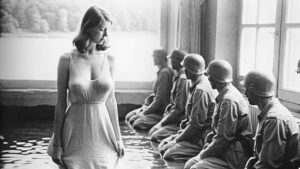
Some photographs associated with Jasenovac document the brutality inflicted on prisoners by camp personnel. However, not every image circulating online has a verified caption or independently established victim identity. It is therefore important to distinguish between the historically documented atrocities and the specific stories attached to individual photographs.
What cannot be disputed is that Jasenovac became one of the most notorious symbols of Ustaše brutality. When the war ended, survivors carried memories of a system in which human lives could be taken simply because of someone’s background, identity, or political beliefs.
But war does not leave behind only graves and records of the dead. It also leaves consequences that continue to exist in people’s bodies, families, and memories long after the fighting has stopped.
Another extraordinary story takes us to Paris, where Marie Curie is buried in the Panthéon. She was a pioneering scientist in the study of radioactivity, dedicating many years to research involving radium and polonium at a time when the dangers of ionizing radiation were not yet fully understood.
Years of exposure to radioactive materials without adequate protective measures had serious consequences. Marie Curie died in 1934 from aplastic anemia, a condition believed to have been associated with prolonged radiation exposure.
In 1995, her remains were transferred to the Panthéon, the resting place of many of France’s most distinguished historical figures. Her remains were placed in specially protected coffins incorporating lead shielding. Her notebooks and personal belongings also remain potentially radioactive and require special handling.
Marie Curie’s notebooks are therefore more than old scientific documents. They are remnants of an era when humanity was discovering entirely new laws of nature without fully understanding the risks involved.
Her story is often remembered as a tragic paradox: a woman who devoted her life to discovering a phenomenon that would transform medicine and physics eventually suffered the consequences of the very environment in which she worked. However, claims that her remains still emit dangerous levels of radiation or that all her belongings will remain radioactive for exactly 1,500 years should be treated cautiously. What is established is that some of her contaminated documents and personal objects still require careful preservation.
Leaving Paris, we return to August 1945, to Hiroshima, Japan.
On the morning of August 6, at approximately 8:15 a.m., the American B-29 bomber Enola Gay dropped the atomic bomb known as Little Boy over the city. In that moment, a weapon never before used in warfare changed the course of human history.
A watch recovered after the disaster had stopped at exactly 8:15 a.m. The watch belonged to Akito Kawagoe, a survivor who was approximately 1,700 meters from the hypocenter. According to records from the Hiroshima Peace Memorial Museum, he was seriously injured when his barracks collapsed but managed to escape. When he later examined his watch, he realized that its hands had stopped at the moment the bomb exploded.
That watch was not the only thing that stopped functioning that day. Buildings disappeared, streets were reduced to ruins, and tens of thousands of lives were lost. According to historical records from the United States National Archives, approximately 70,000 people may have died immediately in the explosion, while countless others died later from burns, injuries, and radiation exposure.
For some survivors, the intense heat from the explosion left permanent marks on their bodies that reflected the objects they had been wearing. In certain cases, the patterns of clothing could be reproduced on the skin because different fabrics and colors absorbed heat differently.
One frequently mentioned image shows a Hiroshima woman with scars corresponding to the pattern of her kimono. It is a heartbreaking reminder of how an ordinary piece of clothing could become a permanent record of a catastrophe. However, the identity and personal history of the woman in any specific photograph should be verified before making definitive claims about her experience.
Just a few years earlier, across Europe, war had left different kinds of wounds, caused not only by bombs and bullets but also by atrocities committed against civilians.
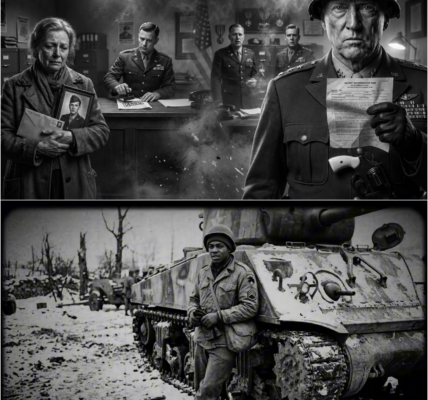
In 1944, Allied forces advanced through Italy in an effort to liberate the country from German occupation and fascist control. Following the Battle of Monte Cassino, members of the French Expeditionary Corps were accused of committing widespread sexual violence and other atrocities in areas through which their forces passed.
These crimes became known in Italian collective memory as the marocchinate, referring to acts of violence committed by some North African soldiers serving in the French forces.
A frequently repeated story claims that General Alphonse Juin gave his soldiers 50 hours of unrestricted freedom after breaking through the German defensive line. However, historical research from the University of Poitiers indicates that this alleged statement lacks reliable supporting evidence and forms part of a distorted collective memory. This does not mean the atrocities did not happen. It means that documented crimes must be distinguished from an unverified military order.
The most difficult truth to accept is that even during a military campaign intended to defeat an invading regime, innocent civilians could become victims of the very forces expected to bring them freedom.
The end of a war does not mean that every crime immediately disappears. Some survivors carry physical and psychological wounds for the rest of their lives. Some families never recover their missing relatives. And some atrocities take decades before they can be openly acknowledged.
One of the greatest tragedies inflicted on civilians during World War II occurred in Manila, Philippines, in February 1945.
As American and Filipino forces advanced into the city to liberate Manila, Japanese troops remained in several areas. During the fighting and their withdrawal, Japanese soldiers committed widespread atrocities against civilians. Tens of thousands of Filipinos died during those horrific weeks.
Survivors faced destroyed homes, shattered families, and a city reduced to ruins. Some postwar photographs show the injuries suffered by survivors, including severe wounds caused by swords and other forms of violence.
When looking at these images, it is important to remember that Manila was not simply a battlefield between two military forces. It was also a city inhabited by hundreds of thousands of ordinary people: children, elderly residents, and families trying to survive a war they had never chosen.
World War II also had another devastating dimension that receives less attention: the fate of children whose identities were stolen.
In 1942, in German-occupied Poland, a young girl named Zyda Sus was reportedly among the victims of the Nazi regime’s kidnapping program, which sought to Germanize children considered racially suitable according to Nazi ideology.

This policy was part of the broader Germanization program, through which children were separated from their families, given new names and identities, and placed with German families.
For a child, losing a name and parents means more than physical separation. It can also mean losing the memories and knowledge of their own origins.
After the war, many children were discovered in orphanages and care institutions. Some were reunited with their families. Others never found their biological parents.
The story of Zyda, unless supported by specific archival records confirming every detail, must be treated cautiously. However, the Nazi kidnapping and Germanization of children was a documented historical policy that demonstrates how deeply the regime interfered with the lives of people in occupied territories.
A child could grow up in a new family without ever knowing that their entire past had been erased. And sometimes, even after a war ends, the question of identity remains unanswered forever.
But not every story told through historical photographs ends with World War II. Some tragedies occurred decades later, inside seemingly ordinary homes, along deserted roads, or in places crowded with people. They reveal another uncomfortable truth: sometimes, danger does not arrive in the form of a war. It hides behind familiar faces and ordinary circumstances.
One of the most shocking cases involved Genie, a girl discovered in California in 1970 when she was 13 years old. From approximately 20 months of age, she had been confined by her father to a room, frequently restrained in a chair, and deprived of almost all normal human contact.
When she was rescued, Genie suffered severe difficulties with communication, movement, and language development. She had been denied many of the ordinary social experiences that children need to develop.
Researchers later became particularly interested in her case because it offered rare insight into the effects of extreme social isolation on human development. However, Genie’s life was not an experiment deliberately created for scientific purposes. She was a victim who needed protection and care.
Her story raises an important question: How much affection, communication, and human interaction does a child need to develop into a healthy individual? And what happens when all of these things are taken away during the earliest years of life?
Another case revealed how danger can exist behind the doors of an ordinary family home. It involved Josef Fritzl in Austria. For many years, Fritzl imprisoned his daughter in a secret basement beneath their house, sexually abused her, and fathered several children with her.
The crime was discovered in 2008 after one of the children required medical attention and doctors began asking questions about the family’s circumstances.
What made the case particularly horrifying was not simply the length of the imprisonment, but the way an apparently ordinary life continued above ground while an unimaginable crime remained hidden beneath it.
The family continued its everyday activities. Neighbors still saw the house. Life outside continued as usual. Meanwhile, in a space nobody could see, other human beings were living without freedom.
The case demonstrated that an ordinary appearance does not always reflect the truth inside a family.
Another family photograph that shocked the world showed the Turpin family in the United States. On the surface, it appeared to be a large family that enjoyed taking photographs during trips and dressing its children in matching outfits. But behind those smiles, all 13 children endured years of abuse, starvation, and confinement.
In 2018, a 17-year-old daughter managed to escape the house and contact emergency services. When authorities arrived, they discovered the children living in extremely disturbing conditions.
Some of the children had grown up with so little exposure to the outside world that they struggled to understand basic social concepts and everyday activities.
The family photographs, originally taken to preserve happy memories, became a painful contrast to the truth uncovered afterward.
And some people who once experienced terrible abuse later found the courage to protect others.
Steven Stayner was kidnapped at the age of seven and held for years by Kenneth Parnell. In 1980, when Parnell abducted another young boy named Timmy White, Steven decided that he could not allow another child to experience what he had endured.
He managed to escape and took Timmy with him. Eventually, both boys reached safety and were reunited with their families.
Steven later died in a motorcycle accident at the age of 24.
His story remains a remarkable example of how someone who has experienced suffering can make a decision that protects another person. What deserves to be remembered is not simply what he endured, but his refusal to allow another child to become a victim.
Photographs sometimes capture moments when the people in them have no idea that they are standing just seconds away from disaster.
On August 20, 1975, at Sequoia National Park in California, two brothers, Michael and Sean McQuilken, posed for a photograph as their hair stood on end because of electrical activity in the atmosphere. This was a warning sign that lightning could strike nearby.
Shortly afterward, lightning struck the area, and both brothers survived. However, the experience left lasting consequences for the family. Sean died by suicide in 1989.
The photograph is still discussed as an example of the natural warning signs that can appear before a lightning strike. But it also reminds us that a seemingly joyful moment can sometimes occur just before a dangerous event that people do not recognize.
Another photograph captured the final moments of a man in the Philippines. Reynaldo Dagsa was taking a family photograph on New Year’s Day in 2011 when a man appeared in the background pointing a gun toward him. The image accidentally captured the gunman’s face.
Shortly afterward, Dagsa was shot and killed. The photograph became important evidence that helped authorities identify the suspect.
In this case, the camera was not being used to document a family memory as originally intended. Instead, it accidentally preserved a detail that became significant to a criminal investigation.
Photographs of crimes can sometimes survive as the last available evidence of victims whose identities remain unknown.
One photograph, reportedly taken by serial killer Dean Corll, shows a young boy whose identity has never been conclusively established. Corll, known in American media as the Candy Man, murdered numerous teenage boys in the Houston area during the 1970s.
The identity of the boy in the photograph remains unresolved. This is why images connected to unsolved crimes must be treated carefully: a photograph may provide a clue, but it cannot independently prove someone’s identity or establish the complete circumstances of a crime.
Similarly, family home videos of Jeffrey Dahmer are often mentioned when people look back at the life of one of America’s most notorious serial killers. A man can appear in ordinary family activities, talking and smiling in front of a camera, while the truth about terrible crimes remains unknown to those around him.
This contrast makes many people question how easily we judge someone based only on outward appearances.
But not every disturbing photograph involves a murderer. Some reveal the consequences of poor decisions, accidents, and risks that people failed to anticipate.
In 2007, Australian adventurer Andrew McAuley attempted to kayak across the Tasman Sea from Australia to New Zealand. It was an extraordinarily demanding expedition requiring skill, endurance, and the ability to survive harsh ocean conditions.
After nearly a month at sea, New Zealand was finally within sight, but he had not yet completed the journey. He contacted his family and expressed hope that he would soon return home. Later, however, a distress signal was sent reporting that his kayak was sinking.
Search teams eventually located his kayak, but Andrew was nowhere to be found. His body was never recovered.
For his family, what had begun as a journey they eagerly awaited became a loss without a final answer.
Another tragedy involving underwater diving was the death of Tina Watson at Australia’s Great Barrier Reef in 2003. She died during a diving trip with her husband. The incident attracted considerable controversy because of questions surrounding her husband’s actions underwater. Gabe Watson was convicted of manslaughter in Australia and later returned to the United States.
However, speculation that her breathing apparatus had been disconnected or that a particular underwater action had caused her death should not be presented as proven fact without supporting legal evidence. The significance of the case lies in how an activity normally associated with adventure and enjoyment became a tragedy that left many unanswered questions for the victim’s family.
Other photographs document historical events just moments before they unfolded.
On March 20, 1993, a car bomb exploded in Warrington, England, during an IRA bombing campaign. Two children, three-year-old Jonathan Ball and 12-year-old Tim Parry, were killed. Many other people were injured.
A photograph mentioned in the original account is said to show moments before the explosion. However, the photographer’s identity must be distinguished from the identities of those who died, as some circulating captions confuse these details.
What cannot be changed is that two children lost their lives in an attack that targeted civilians. The Warrington bombing intensified public anger toward political violence and became an important part of the collective memory of innocent victims of the Northern Ireland conflict.
Military history also includes individuals remembered for their exceptional hand-to-hand combat abilities.
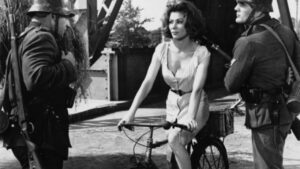
Colonel Anthony Biddle of the United States Army became known for teaching close-combat techniques to military personnel and law enforcement officers. He remained involved in training activities across several periods of the twentieth century.
Stories claiming that he instructed Marines to attack him with bayonets to demonstrate his defensive skills are frequently repeated in military anecdotes. However, details concerning the number of participants and the supposedly flawless results should be verified before being treated as established facts.
In another historical context, photographs reveal how people were once treated simply because they were considered different.
In 1906, Ota Benga, a member of the Mbuti people from the Congo, was brought to the United States and displayed at the Bronx Zoo in New York. He was placed in an enclosure alongside animals while thousands of visitors came to look at him.
The exhibition provoked strong opposition from anti-racism activists and social reformers. Eventually, the public display was discontinued.
Today, Ota Benga’s story is remembered as a disturbing example of colonialism, racial prejudice, and the misuse of supposed scientific authority to justify discrimination.
A human being had been turned into an exhibit. An entire life had been judged through the prejudices of an era. And a photograph can help future generations recognize the injustice that the person in it once endured.
Photographs from wartime Europe also reveal how brutality could be carried out by very young individuals.
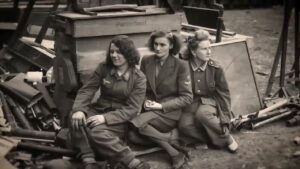
Jenny-Wanda Barkmann was a female guard at the Stutthof concentration camp. She was convicted of atrocities against prisoners and executed in 1946 following the trials concerning crimes committed at the camp.
Accounts describing her appearance, behavior, and the nicknames prisoners gave her frequently appear in popular historical articles. However, quotations attributed to her during the trial should be checked against original court records before being presented as exact statements.
What matters most is the responsibility of those who participated in the concentration camp system. They were not simply individuals standing outside a machinery of terror. Many actively carried out, maintained, and supported the abuse of prisoners.
Another figure in American criminal history was Albert Fish, a serial killer active during the 1920s. Investigative records documented extremely serious crimes against children. Doctors also discovered numerous metal objects inside his body after his arrest.
Fish’s case shocked American society because of the brutality involved and the details uncovered during the investigation. However, excessively graphic descriptions of his crimes should not be repeated simply for entertainment.
What deserves to be remembered are the victims who lost their lives and the families who were left with immeasurable grief.
Another historical photograph shows Polish civilians being executed during the German occupation. In occupied Poland, the German authorities implemented a policy of terror intended to eliminate suspected resistance members and destroy the population’s ability to oppose the occupation.
Public executions, arrests, and killings without trial became part of the repression. Tens of thousands of people were murdered during the first months of the occupation.
Photographs documenting these executions do more than reveal the brutality of the occupying forces. They also show how a regime can use fear as a weapon to control an entire society.
From Europe, we turn once again to the United States, where certain forms of punishment remained legally permitted much longer than many people realize.
In Delaware, corporal punishment by whipping remained part of the state’s legal system until 1972. Prisoners could be restrained against a post and subjected to punishment in front of witnesses.
This is a little-known chapter of American legal history, especially because many people assume that such physical punishments disappeared long before the twentieth century.
Another turning point in the history of punishment was the introduction of the electric chair.
On August 6, 1890, William Kemmler became the first person to be executed using this method at Auburn Prison in New York.
The execution did not proceed smoothly. The first electrical charge failed to kill Kemmler immediately. A second application of electricity, lasting more than two minutes, was then carried out.
Witnesses described the scene as horrifying. A method that had been promoted as a more humane alternative to hanging became a deeply controversial event.
History does not only record human cruelty. It also records attempts to change legal systems, mistakes, and the irreversible consequences of decisions made in the name of justice.
Other photographs make people reflect on the thin line between survival and death.
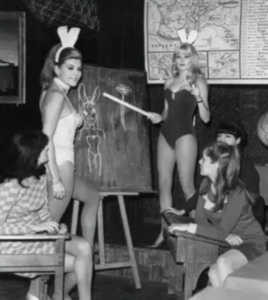
During the 1973 Stockholm bank robbery, armed criminals held bank employees hostage for approximately 131 hours. What attracted particular attention after the incident was that some hostages expressed sympathy toward their captors and even opposed the way authorities handled the situation.
This phenomenon contributed to the popularity of the term Stockholm syndrome. However, it is not an officially recognized psychiatric diagnosis in modern diagnostic classification systems. The term is commonly used to describe certain psychological responses that may occur under conditions of captivity and threat.
Another story involves Iranian woman Marzieh Ebrahimi, who became the victim of an acid attack in 2014. After losing an eye in the attack, she continued participating in protests against acid violence and speaking publicly about women’s right to protection.
Her photographs do more than document the consequences of an attack. They also show how a survivor can continue speaking out against injustices after experiencing them personally.
Meanwhile, in Hawaii, a hiking trip reportedly undertaken by Daylen Pua along the Haiku Stairs in 2015 ended in disappearance. Some photographs shared during the search led to speculation that a person could be seen hiding in the vegetation behind him. However, without confirmation, it is impossible to conclude that this individual was following or harming Pua. The case reminds us of the limitations of drawing conclusions from photographs with incomplete information and uncertain perspectives.
Another tragedy occurred aboard Japan Airlines Flight 123 on August 12, 1985. The Boeing 747, carrying 524 people, suffered catastrophic control problems after structural failure in its rear section. The aircraft eventually crashed into Mount Takamagahara in Japan.
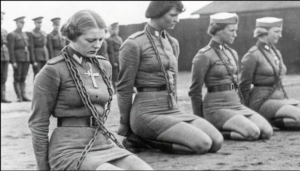
Only four people survived. It became one of the deadliest aviation disasters in history.
Investigators later determined that the disaster was connected to an improperly repaired rear pressure bulkhead following an earlier incident. Over time, the structure weakened, eventually contributing to the catastrophic failure.
A modern aircraft, operated by highly trained professionals, can still suffer a disaster because of a technical mistake made years earlier. This is why the aviation industry places such importance on inspections, maintenance, and the documentation of repairs to every component.
In another story, a photograph taken by Turkish war correspondent Coşkun Aral during a 1980 Turkish Airlines hijacking shows the hijackers and the pilot appearing together inside the same frame.
The contrast between the presence of weapons and the apparent smiles makes the image particularly unusual. However, the exact dialogue attributed to the pilot in various retellings should be checked against the original source rather than automatically treated as a verbatim recording.
Another kidnapping case that attracted widespread attention in the United States involved Elizabeth Smart. She was abducted from her home as a teenager and held captive for nine months before being rescued in 2003.
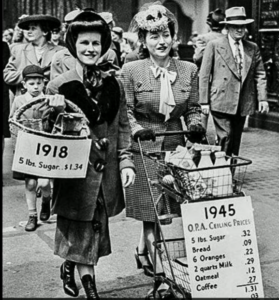
Her captors were Brian David Mitchell and Wanda Barzee. During her captivity, Elizabeth was forced to conceal her identity and appear in public without being able to freely reveal who she was.
After her rescue, she became an active advocate for child protection and support for victims of kidnapping and abuse.
Elizabeth’s story demonstrates something deeply unsettling: sometimes, a person can be surrounded by crowds and still have no opportunity to tell the truth about what is happening to them.
Another photograph often mentioned in discussions of World War II atrocities involves Bruno Tesch, a German chemist and businessman associated with the commercial distribution of Zyklon B.
Zyklon B was originally a pesticide product that released hydrogen cyanide gas. During the Nazi era, it was used in gas chambers at extermination centers to carry out mass murder.
Tesch and his associate Joachim Drosihn were prosecuted in postwar trials concerning the supply of Zyklon B to concentration camps, with knowledge that the chemical was being used to kill human beings. Tesch was sentenced to death and executed in 1946.
This is one of the most disturbing aspects of technological history: a chemical product developed for industrial and pest-control purposes could become an instrument of mass murder when placed in the hands of a genocidal regime.
Not everyone who participates in atrocities directly carries a weapon. Some help build the system, provide materials, maintain operations, or deliberately ignore the consequences.
Historical photographs can also capture moments before political and social tragedies unfold.

At the 1972 Munich Olympics, members of the Israeli team participated in the opening ceremony in an atmosphere of excitement and optimism. But on September 5, the Palestinian militant group Black September attacked the Israeli team’s accommodation and took members of the delegation hostage.
The rescue operation at Fürstenfeldbruck Airport failed. Eleven members of the Israeli delegation were killed, along with one German police officer and five attackers.
Photographs of the athletes before the tragedy have become part of the historical memory of an event that transformed an international sporting celebration into one of the most devastating hostage crises of the twentieth century.
Another tragedy involving science occurred during nuclear research at Los Alamos National Laboratory.
On May 21, 1946, physicist Louis Slotin conducted an experiment involving a plutonium core known as the Demon Core. He used a metal tool to prevent two halves of a neutron-reflecting shell from closing completely.
During the experiment, the tool slipped, allowing the two sections to move closer together and briefly create a supercritical configuration. This triggered an intense burst of neutron and gamma radiation.
Slotin immediately separated the two sections, stopping the reaction. However, he had already received a fatal radiation dose and died nine days later.
Other people in the room were also exposed, although at lower levels.
The story is often told as an example of Slotin’s courage in attempting to prevent the danger from spreading. Nevertheless, it is important to distinguish documented actions from details added through later retellings.
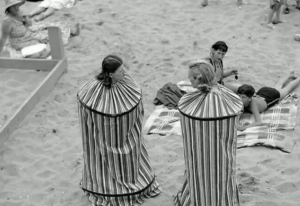
Whatever the interpretation, the incident demonstrates the dangers of nuclear experiments during an era when humanity was exploring the limits of modern physics.
In a completely different setting, on December 8, 1980, musician John Lennon signed an autograph for a fan outside the Dakota building in New York City. The person receiving the autograph was Mark David Chapman.
Just hours later, Chapman returned and shot Lennon. The musician died that night.
The photograph of the autograph became one of the most frequently revisited images associated with Lennon’s murder. It captured what appeared to be an ordinary interaction between an artist and a fan, but it took place only hours before a killing that shocked the music world.
Lennon’s death was not simply the loss of a famous musician. It left an enormous void in the cultural lives of millions of people who loved his music.
Nearly two decades later, on May 29, 1997, musician Jeff Buckley disappeared while swimming in the Wolf River in Memphis, Tennessee. He entered the water fully clothed and was caught in the wake created by a passing boat.
His body was recovered several days later. His death at just 30 years old deprived the music world of an artist whose potential was still developing.
Another story involving an unexpected death concerns four-year-old Paulette Gebara Farah in Mexico. In 2010, she was reported missing. The search lasted several days and attracted widespread media attention.
Paulette’s body was eventually discovered in a gap between her mattress and bed frame inside her own bedroom. Investigators concluded that she had become trapped and died from suffocation.
The case generated considerable controversy surrounding the search and investigation. But the most heartbreaking fact remains that a child died inside what was supposed to be the safest place in her life.
Not every story of survival ends in tragedy.
In 1978, 15-year-old Mary Vincent was attacked by Lawrence Singleton after accepting a ride in California. After sexually assaulting and severely injuring her, Singleton abandoned her in an isolated area.
Mary survived. She managed to escape the location and continued walking until she found help.
She received medical treatment and later testified during Singleton’s prosecution. When he committed another crime after being released, the case once again attracted public attention and raised questions about weaknesses in the justice system.
Mary Vincent later became an artist and an advocate for victims’ rights.
Her story should not be presented as some extraordinary adventure. It is the story of a young person who endured horrific violence but still fought to survive and reclaim her life.
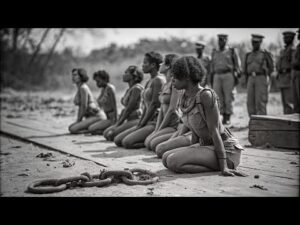
In colonial history, photographs showing French soldiers escorting Algerian prisoners in chains form part of the historical record of oppression in North Africa.
Algeria experienced decades of French colonial rule before achieving independence in 1962.
The Algerian War, which lasted from 1954 to 1962, involved repression, arrests, torture, and serious violence committed by multiple sides. Civilians lived in circumstances where their freedom and safety were constantly threatened.
Photographs of prisoners being escorted in chains do more than document a particular action. They reflect the unequal balance of power between colonial authorities and the people living under their rule.
And sometimes, history also preserves stories of deception.
Colin Evans, a self-proclaimed spiritualist active during the 1930s, attracted attention with performances that supposedly demonstrated his ability to levitate in complete darkness. Some accounts suggest that he used filming techniques and controlled lighting conditions to create the illusion.
Although the exact technical details should be verified through original documentation, the story reflects a phenomenon that has existed for centuries: people can easily believe in mysterious events when they do not understand how those events are produced.
Finally, we return to one of the most famous maritime disasters in history: the sinking of the Titanic.
Benjamin Guggenheim, a wealthy American businessman, was aboard the ship during its ill-fated maiden voyage in April 1912. When the Titanic struck an iceberg and began sinking, he was among those who did not survive.
Stories claiming that Guggenheim refused a life jacket and chose to face death dressed in formal clothing are frequently repeated in popular accounts of the disaster. However, such stories should be distinguished from details that can be independently confirmed through eyewitness records.
The Titanic carried more than 2,200 people, and over 1,500 lost their lives. The disaster became a turning point in maritime safety, leading to major changes in lifeboat regulations, communication systems, and rescue procedures at sea.

A modern ship for its time, a voyage promoted as a symbol of technological progress and confidence in human achievement, ultimately became a warning about the limits of humanity when confronted by nature.
Looking back at all these stories, we realize that they cannot all be placed in the same historical period or described as events from World War II. Some belong to wartime history, while others involve scientific history, crime, accidents, and social tragedies. Yet they all demonstrate the extraordinary power of photography to preserve human memory.
A photograph cannot tell the whole truth. It cannot explain every cause, reconstruct everything that happened beforehand, or replace historical documentation. But when placed alongside reliable records, it can help us see parts of the past that numbers and written accounts sometimes struggle to communicate.
Most importantly, we must remember that behind every frame there may be a real human being. A child, a mother, a soldier, a scientist, a victim, or a survivor. These people did not exist merely to become characters in shocking stories. They had lives, families, hopes, and dreams that were never fulfilled.
History should not be remembered only for its victories and extraordinary achievements. It must also be remembered for its mistakes, its atrocities, and the lives that humanity must never allow itself to forget.
In your opinion, which of these stories or photographs makes you think most deeply about what human beings are capable of doing to one another, and what lessons must we learn from the past to prevent such tragedies from happening again?
Some content was generated using AI tools (including ChatGPT) and edited by the author for creativity, storytelling, and historical illustration purposes. Historical facts and key details should be verified against reliable historical sources. Any AI-generated or reconstructed visuals are intended for illustrative purposes and should not be interpreted as original historical photographs or archival evidence.