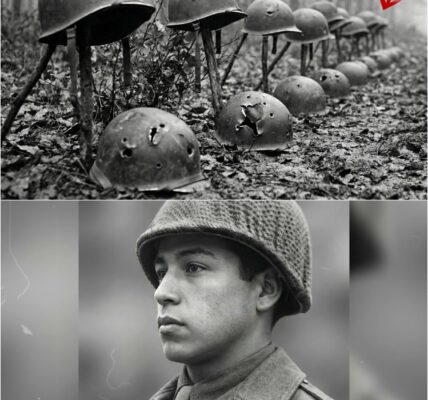
A photograph can survive long after the moment it captured has disappeared. It may lie forgotten in a box, remain sealed inside an archive, or be withheld from publication because someone believes the public should not see it. Decades later, when the image finally emerges, it can seem to offer a glimpse into a hidden world. But what does it really reveal? And when a photograph has been kept from public view, does that automatically mean someone was trying to conceal the truth?
The title “100 Photos They Tried to Hide from the Public” captures a powerful modern fascination: the possibility that history contains evidence we were never meant to see. The idea is compelling, particularly when the images concern war, political power, or human suffering. Yet the historical record is more complicated than a dramatic title suggests. Some photographs were genuinely restricted, others were classified for reasons of national security, and many were simply difficult to locate, unpublished, or separated from their original context. To understand what these images mean, we must first understand the world that created them—and the institutions that decided when they could be seen.

During the world wars, a photograph was never merely a picture. It could become a military record, a propaganda tool, an intelligence source, a family keepsake, or evidence of events that governments preferred to present in a particular way. The same image might serve several purposes at once. Its publication could inform the public, damage morale, reveal military capabilities, expose misconduct, or preserve a moment that future generations would struggle to understand.
That is where the story begins: not with the assumption that every hidden image reveals a conspiracy, but with the recognition that controlling photographs has long been part of controlling information.

In wartime, the camera occupied an unusual position. It was both an instrument of observation and a potential threat to secrecy. A photograph could record troop movements, military equipment, defensive positions, damaged infrastructure, or the consequences of an attack. In the wrong hands, seemingly minor details could reveal information that commanders did not want an enemy to obtain.
Military authorities therefore imposed restrictions on photography and publication. In some circumstances, photographers needed permission to capture military subjects. Certain images could be released only after review by authorized officials. The United States Navy’s historical regulations, for example, included provisions stating that photographs in designated categories could be made public only after approval by a censor. <Cite refs={[“turn603926search11”]} />
These rules did not necessarily mean that every restricted image contained evidence of wrongdoing. A photograph of a ship, a harbor, or a military installation might reveal details useful to an adversary even if the picture itself appeared ordinary. A single image could show the layout of a facility, the design of equipment, or the presence of a particular unit.

The decision to restrict it might therefore concern operational security rather than an attempt to rewrite history.
But that distinction becomes harder to assess when a war is being fought not only on the battlefield but also in the minds of the public.
Governments have long understood that photographs shape how people perceive conflict. A picture of soldiers marching confidently can communicate strength. An image of damaged buildings can communicate the cost of war. A photograph of civilians receiving assistance can reinforce a narrative of protection, while an image of destruction can challenge claims that a military operation has been controlled or successful.
The selection of images for publication therefore matters. Editors, officials, photographers, and military censors make decisions about what audiences are allowed to see. Even when every published photograph is genuine, the collection as a whole may present an incomplete picture if certain experiences are consistently omitted.

During the First World War, photographs and posters became part of a broader propaganda system. Governments sought to encourage recruitment, maintain public support, and portray the enemy in ways that reinforced the national cause. Images of soldiers, ruined towns, and civilian suffering could be used to mobilize public opinion. Captions and accompanying text often directed viewers toward a particular interpretation.
A photograph could be real while the message attached to it was selective. The camera might show a destroyed building, but the caption could omit when the damage occurred, who caused it, or what preceded the event. A picture of a soldier might accurately depict a uniform while leaving out the circumstances surrounding the person’s actions.
This is why historical photographs cannot be understood through appearance alone. The surrounding information matters just as much as the visible scene.

The Second World War intensified this problem on an enormous scale. Combat photographers documented military operations, destroyed cities, displaced civilians, prisoners, and the everyday lives of troops. Their images became part of the historical record, but publication was shaped by military priorities, editorial judgment, and the limits of wartime communication.
Some images were withheld because they revealed too much about military operations. Others raised questions about public morale or the treatment of the dead. Images showing casualties could be distressing to families and communities far from the front. Authorities and editors had to consider whether publication would inform the public, harm those directly affected, or disclose information that might compromise ongoing operations.
There was no single rule governing every photograph. Decisions varied by country, institution, conflict, and period. Some images were published immediately; others were circulated internally; still others remained in official files until restrictions were lifted or researchers discovered them years later.
The fact that a photograph was not published during a war does not, by itself, tell us why. The answer may lie in a censorship order, an intelligence assessment, an editor’s decision, a photographer’s personal choice, or simply the practical limitations of distributing images at the time.
That uncertainty is important. It prevents us from replacing one simplified story with another.
The history of classified aerial photography offers a particularly clear example of genuine secrecy followed by public release. During the Cold War, the United States operated the CORONA satellite reconnaissance program, which collected images of areas of strategic interest. These photographs were not ordinary vacation snapshots. They were produced through a classified intelligence system designed to observe locations that could not be monitored openly in the same way.
For years, the imagery remained outside ordinary public access. Later, declassification made it possible for historians, scientists, and other researchers to examine the material. The Central Intelligence Agency’s account of the CORONA program states that more than 800,000 photographs were transferred to the National Archives and the U.S. Geological Survey, with the imagery to be declassified and made available to the public. <Cite refs={[“turn603926search2”]} />

This was a real example of photographs being withheld for national security and later released. But it also illustrates why context matters. The images were not necessarily suppressed because they contradicted an official account of a battle or exposed an atrocity. Their restricted status was connected to intelligence capabilities, the methods used to collect information, and the strategic environment of the Cold War.
Once released, however, the photographs became useful for purposes beyond their original military mission. Researchers could examine landscapes, infrastructure, and environmental changes across time. Material once created for intelligence could acquire new scientific and historical value.
The transformation is striking. A photograph originally considered sensitive can eventually become a public resource. Its meaning changes as the circumstances surrounding it change.

Other declassified records show how carefully officials considered the release of intelligence imagery. In a 1982 memorandum preserved in the CIA’s records, officials discussed whether photographs that had been declassified should be distributed to the press and public. The document reflects concerns about the potential exposure of intelligence collection methods and the practical consequences of disclosure. <Cite refs={[“turn603926search0”]} />
This kind of document offers something more valuable than a sensational claim that “they hid the truth.” It shows the actual process through which officials weighed security, disclosure, and public access. It provides names, dates, institutional responsibilities, and reasoning that researchers can investigate.
A historical claim becomes stronger when it can be traced to such evidence.
Yet secrecy is only one part of the story. Another involves photographs that were withheld not because they revealed classified military information, but because they showed human suffering.

War produces images that are difficult to look at. The dead, the wounded, the displaced, and the traumatized often appear in photographs that challenge the distance between the battlefield and the home front. For families waiting for news, such images could be devastating. For a government seeking public support, they could undermine carefully managed messages about progress or victory.
Editors have therefore sometimes chosen not to publish certain images, even when the images were genuine. The reasons may include respect for the dead, concern for relatives, privacy, the possibility of identifying vulnerable people, or the belief that a picture is too graphic for its intended audience.
These decisions can be debated. Withholding a photograph may protect a family from unnecessary distress, but it may also limit the public’s understanding of what a war actually involved. Publishing an image may preserve evidence, but it can also turn a person’s suffering into an object consumed by strangers.

There is no universal answer that resolves every case. The ethical question depends on the image, its historical importance, the rights and dignity of those depicted, and the consequences of publication.
That is why the word “hidden” can be misleading. A photograph may have been restricted for reasons that were legitimate at the time, even if later generations decide that it should be accessible. Another photograph may have been deliberately withheld to avoid political embarrassment. A third may never have been suppressed at all; it may simply have remained unpublished because no editor considered it relevant.
The images can look similar when they eventually appear online. Their histories are not.
The same caution applies to photographs associated with political repression. In authoritarian states, visual records could become dangerous when they contradicted official representations of political leaders, social conditions, or public opinion. Governments could control which events photographers were permitted to document, which pictures newspapers could publish, and which images were preserved in official collections.
Sometimes the record was altered or selectively presented. At other times, photographs were never taken because photographers were excluded from a location or feared the consequences of documenting what they saw. The absence of an image may itself raise questions, but absence alone cannot prove that a specific act of censorship occurred.

To establish deliberate suppression, historians need evidence. That evidence might include correspondence, publication restrictions, official orders, records of confiscated material, testimony from photographers, or a documented chain of custody showing that an image was intentionally removed from circulation.
Without such evidence, a caption claiming that a photograph was “banned” or “hidden by the authorities” remains a claim, not a verified conclusion.
This distinction has become especially important in the digital age. Photographs that once circulated in books, newspapers, or specialized archives can now spread around the world in a matter of hours. A striking image may be reposted thousands of times, often with a shortened caption that becomes more dramatic each time it is repeated.
A photograph of a military exercise can become an image of a secret operation. An unpublished portrait can be described as a picture that a government tried to erase. A photograph whose original date has been lost may acquire a precise but incorrect year. In some cases, the image is genuine while the story attached to it is not.
The internet makes discovery easier. It also makes misinformation easier to reproduce.
A title such as “100 Photos They Tried to Hide from the Public” should therefore prompt questions before conclusions. Which photographs are included? Who originally took them? Where are the original negatives or prints held? Was there a documented restriction on publication? Has the institution responsible for the archive explained why the material was withheld? Are the dates and identities supported by independent evidence?
If a collection does not provide a clear list of images or reliable provenance, it is impossible to establish that every photograph was deliberately suppressed. The collection may still contain historically important material, but its broad claim requires separate verification.
The National Archives of the United Kingdom provides an instructive example of how photographic history can be approached systematically. Its collections include photographs created by government departments and other sources, covering subjects from transport and industry to war, policing, and overseas affairs. The archive explains that its holdings were assembled through different administrative processes and that many photographs are accessible through its image collections, while others require further research or an in-person visit. <Cite refs={[“turn603926search4″,”turn603926search10”]} />
This is an important reminder: not every photograph that cannot immediately be found online has been concealed. Large archives contain millions of images. Records may be incompletely catalogued, separated from their original files, restricted for legal reasons, or simply not digitized.
Discovery is not the same as declassification. An old photograph found in a private collection may be new to the public without ever having been classified. A government photograph may have been publicly available for decades but remain unfamiliar to most viewers. Another image may genuinely have been withheld under official restrictions.
The details determine the story.
For historians, the work begins when the dramatic title ends. They compare the image with contemporary records, trace its ownership, examine the photographer’s notes, and look for independent descriptions of the event. They ask whether the image has been cropped, retouched, or reproduced with an altered caption. They consider the intended audience and the circumstances in which it was first created.
They also ask what the photograph cannot show.
A single frame rarely provides a complete explanation of a complex event. It captures one angle at one moment. The photographer may have been unable to see what happened immediately before or after. People outside the frame may have played a decisive role. A caption written years later may reflect knowledge unavailable to the photographer—or assumptions that subsequent research has disproved.
This does not make photography unreliable. It makes photography a historical source that must be interpreted.
The power of an image often lies in its ability to expose the gap between a public narrative and lived experience. A government may describe a military campaign as orderly, while photographs reveal damaged homes and displaced civilians. An official statement may present a political movement as marginal, while a sequence of images shows large crowds. A carefully controlled portrait may communicate strength, while private correspondence reveals uncertainty behind the public image.
But the photograph must be placed beside other evidence before it can support a strong conclusion. Images, documents, eyewitness testimony, and material evidence work best when they can be compared rather than treated as substitutes for one another.
This is especially true when the subject is war. Photographs of destruction can communicate the scale of damage, but they do not independently establish every cause or responsibility. Images of soldiers can document uniforms and equipment, but they may not reveal the orders they received or the decisions they made. A picture of a crowd can show its visible size at a particular location, but it cannot necessarily establish the political views of everyone present.
The historian’s task is to connect the visible moment to the wider record without forcing the evidence to say more than it can support.
There is also a human responsibility involved. Photographs of war often show people who never consented to becoming symbols. A person caught in a moment of fear or grief may later be used to support a political argument that has little to do with their own life. A photograph of a dead or wounded individual may be reposted without identifying the person, explaining the circumstances, or considering the impact on relatives.
The pursuit of historical truth should not require abandoning human dignity. The fact that an image is powerful does not mean it should be circulated without context. The fact that it is disturbing does not automatically mean it must remain unseen. Responsible publication requires both historical judgment and ethical care.
So what should we make of a collection that claims to contain one hundred photographs the public was never meant to see?
Its most valuable contribution may not be the promise of a hidden revelation. It may be the questions it encourages us to ask about the production, control, preservation, and circulation of historical images. The title can serve as a starting point, but it cannot serve as proof.
Some photographs truly were restricted. Some were later declassified and made available to researchers. Others were withheld from publication for editorial or ethical reasons. Many remained obscure for less dramatic reasons. Each image has its own history, and each deserves to be investigated on its own terms.
The larger lesson is that historical memory is shaped not only by what survives, but also by the systems through which evidence is selected, stored, described, released, and interpreted. Archives preserve the past, but they also reflect the decisions of the people and institutions that created them. Declassification can open new avenues of research, while digitization can bring unfamiliar material to wider audiences. Yet neither process eliminates the need for critical judgment.
When a photograph finally reaches the public after decades of restriction, its release can be meaningful. It may illuminate a forgotten operation, reveal how intelligence was collected, or allow researchers to reconstruct a part of history that had remained difficult to examine. But the release itself does not prove that the most dramatic interpretation is correct.
Truth is not made more reliable simply by being described as forbidden. Nor does an official archive become trustworthy merely because it is official. Evidence must be examined, claims must be tested, and uncertainty must be acknowledged where the record remains incomplete.
That is the difference between uncovering history and turning history into a mystery for its own sake.
The photographs that matter most are not necessarily the ones with the most shocking captions. They are the ones that help us understand what happened, who was affected, which decisions shaped the outcome, and how later generations came to remember the event. Sometimes their significance is dramatic. Sometimes it lies in a small detail that challenges a familiar assumption. Sometimes the most honest conclusion is that we do not yet know enough.
A photograph can preserve a moment that powerful people wanted to control. It can also preserve a moment that nobody recognized as important when it occurred. In either case, its value depends on our willingness to look carefully, ask difficult questions, and resist the temptation to confuse suspicion with proof.
History does not become clearer simply because an image has been hidden or released. It becomes clearer when the image is examined in context, compared with other evidence, and understood as part of a larger human story.
Perhaps the most important question is not whether every photograph was deliberately concealed. It is whether we are willing to investigate what each image can genuinely tell us—and to admit what it cannot.
When you encounter a photograph described as “hidden from the public,” what matters more to you: the possibility that it was deliberately suppressed, or the evidence that reveals what actually happened?
Some content was generated using AI tools (including ChatGPT) and edited by the author for creativity, storytelling, and historical illustration purposes. Historical facts and key details should be verified against reliable historical sources. Any AI-generated or reconstructed visuals are intended for illustrative purposes and should not be interpreted as original historical photographs or archival evidence.