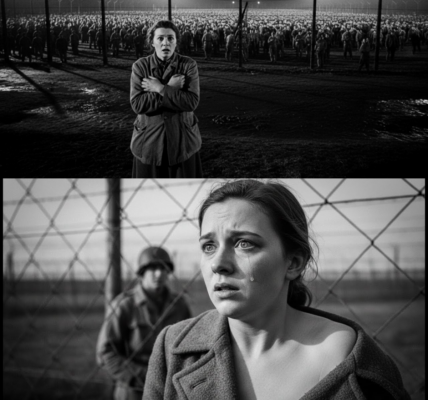
25 BANNED WWII Punishments So BRUTAL You’ll Think They’re Fake! – Archaeological Ruins .P2

25 BANNED WWII Punishments So BRUTAL You’ll Think They’re Fake! – Archaeological Ruins
During World War II, punishment did not always come in the form of a battlefield execution or a military prison sentence. Sometimes it was humiliation. Sometimes it was isolation. Sometimes it was forced labor, public degradation, or the destruction of a person’s identity. And in the darkest systems of the war, punishment could extend beyond the accused and reach their families, their communities, and even people who had never taken part in the alleged offense.
Across Europe and the Pacific, governments and military authorities developed systems designed to enforce obedience under conditions of extreme violence. Some were formal disciplinary measures written into regulations. Others were improvised acts of revenge or intimidation. Some were presented as military necessity. Others were openly designed to terrorize.
The photographs and surviving records left behind can be difficult to understand because many of these practices were carried out within institutions that claimed to represent order, discipline, or national security.
Behind the uniforms and official paperwork were individual human beings.
Some were soldiers who had refused an order. Some were prisoners who attempted to escape. Some were civilians accused of helping resistance movements. Others were family members punished simply because someone related to them had been accused of opposing the regime.
And in several of the worst cases, the punishment was not intended merely to hurt the individual.
It was intended to send a message to everyone watching.
One of the most disturbing examples can still be seen in the remains of the concentration camp system established by Nazi Germany.

At Auschwitz-Birkenau, prisoners could be confined in extremely narrow standing cells known as Stehzellen.
These cells were located in the basement of the camp’s Block 11, the building associated with punishment and interrogation.
The spaces were so narrow that prisoners could not properly sit or lie down.
Several people could be forced into a single compartment, leaving them standing for extended periods.
The physical discomfort was only part of the punishment.
Prisoners had already endured exhausting labor, inadequate food, overcrowding, disease, and constant fear. Removing the possibility of normal rest turned confinement into an additional form of physical and psychological pressure.
The surviving cells are now preserved as historical evidence.
They are small enough that visitors can immediately understand something that written descriptions cannot fully communicate.
There was almost no room to move.
The architecture itself became part of the punishment.
Within the German military system outside the concentration camps, discipline could also be deliberately humiliating.
The Wehrmacht maintained formal disciplinary regulations, and practices involving temporary restraint or attachment to a fixed object existed in military discipline under certain circumstances.
One such measure was known as Anbinden.
A soldier could be physically restrained or attached to a post or other fixed structure for a prescribed period.
The purpose was disciplinary rather than judicial execution.
But the humiliation was part of its effect.
Military organizations depend heavily on hierarchy and belonging. A soldier who was publicly separated from his comrades and displayed as an offender was being punished socially as well as physically.
The message was directed at everyone.
Obedience was not merely expected.
It was enforced through the fear of becoming the next example.
In the Japanese prisoner-of-war system, Allied prisoners experienced another form of punishment that survivors later described as extraordinarily painful.
Prisoners could be forced to remain in the seiza position, kneeling with the legs folded beneath the body.
For people unfamiliar with the posture, remaining in it for long periods could cause severe pain.
In some camps, prisoners were required to maintain the position for extended periods, sometimes under harsh environmental conditions.
A prisoner who collapsed or moved could face further punishment.
The physical weakness of many prisoners made such disciplinary practices particularly dangerous.
They were already suffering from inadequate food, disease, exhaustion, and poor medical care.
What might appear from a distance to be simply a posture was therefore transformed into a mechanism of control.
At Stalag Luft III, a German prisoner-of-war camp for captured Allied airmen, isolation was another important disciplinary weapon.
The camp became famous because of the enormous escape attempt of March 1944, later popularized by the film The Great Escape.
The escape operation was organized by prisoners under the leadership of Squadron Leader Roger Bushell, known among the prisoners as “Big X.”
But long before the escape, prisoners at Stalag Luft III faced disciplinary confinement in cells commonly known as the cooler.
The rooms were deliberately uncomfortable and could be cold, particularly during winter.
Food and reading materials could be restricted, and prisoners could be isolated from the rest of the camp.
The intention was clear.
Escape attempts were to become psychologically expensive.
Yet confinement did not necessarily eliminate the prisoners’ determination.
Instead, the camp became one of the most famous examples of the extraordinary lengths to which captured airmen were willing to go to regain their freedom.
The German military also used public humiliation as a disciplinary tool.
In some cases, soldiers accused of serious offenses could be stripped of rank or insignia.
Military uniforms are designed to communicate identity.
Rank indicates authority.
Badges indicate membership.
Decorations represent achievement.
Removing those symbols publicly therefore attacked more than appearance.
It communicated that the individual had been rejected by the institution to which he belonged.
Such ceremonies could become deliberate examples for other soldiers.
The accused stood before comrades while the symbols of military status were taken away.

The spectacle reinforced the idea that disobedience could result not only in punishment but in public disgrace.
In the Japanese military police system, the Kempeitai became notorious for interrogation and torture.
One method described in surviving testimonies was sometimes called “water treatment.”
Prisoners could be forced to swallow large quantities of water, sometimes through a funnel or similar method, followed by physical pressure or other forms of abuse.
The technique created extreme distress and could produce serious injury or death.
The Kempeitai operated as a military police and security organization, but its activities extended far beyond ordinary military policing.
It became associated with the suppression of dissent, interrogation, and brutal treatment of prisoners and civilians.
After the war, evidence concerning such practices was presented in war-crimes proceedings.
The records demonstrated that torture was not merely an isolated act committed by an individual interrogator.
In many cases, it existed within systems of authority in which violence was tolerated or encouraged.
German security forces used similarly brutal interrogation techniques.
One of the best-known was the strappado.
The prisoner’s arms were bound behind the back, after which the person could be suspended or lifted by the restraints.
The position placed enormous strain on the shoulders and arms.
The technique had a long history predating the twentieth century, but its use by Nazi security and police organizations became part of a much larger system of political repression.
It was intended not simply to obtain information.
It was also intended to break resistance.
The victim was placed in a position where pain and fear became part of the interrogation itself.
Survivor testimony and postwar investigations documented the use of torture in Gestapo and concentration-camp detention systems.
These records later became important evidence in the prosecution of Nazi crimes.
But perhaps one of the most frightening German disciplinary systems did not require physical torture at all.
It could begin with a sentence.
During the war, Nazi Germany criminalized what it considered acts of “undermining military morale,” under the concept known as Wehrkraftzersetzung.
Statements expressing defeatism, criticism of the regime, or doubts about Germany’s chances could potentially lead to prosecution.
Special courts operated under increasingly severe wartime conditions.
As Germany’s military position deteriorated, the regime became more paranoid about defeat and internal disobedience.
A soldier who complained about the war could find himself accused of weakening morale.
A civilian who predicted defeat could be treated as a threat.
The boundary between political criticism and a criminal offense became dangerously narrow.

Thousands were prosecuted under laws associated with undermining military strength, and many received severe sentences, including death.
The system demonstrated how authoritarian governments can transform ordinary speech into an act of alleged treason when survival of the regime becomes the overriding objective.
On the opposite side of the Eastern Front, the Soviet Union also imposed severe disciplinary measures.
In July 1942, during one of the most dangerous moments of the German advance, Joseph Stalin issued Order No. 227.
Its famous phrase was “Not One Step Back.”
The order responded to catastrophic Soviet retreats.
It demanded that commanders prevent unauthorized withdrawal and introduced harsh measures against units and individuals considered responsible for abandoning positions.
Blocking detachments operated behind some Soviet formations to prevent unauthorized retreat and apprehend stragglers.
Their exact role and scale changed during the war, and later popular accounts have sometimes exaggerated what they routinely did.
They were not simply machine-gun lines executing every soldier who retreated.
But the underlying system was undeniably severe.
The Soviet leadership was willing to use coercion to keep an army from collapsing.
Another part of this system was the creation of penal military units.
Known as shtraf units, these formations included soldiers who had been convicted or punished for various offenses.
They could be assigned to especially dangerous missions.
Some were sent into heavily contested areas or used for tasks that exposed them to exceptional risks.
The purpose was not simply revenge.
There was also a possibility of restoring a soldier’s status through service.
But the reality could be brutal.
For a man already condemned by the military system, being sent into a dangerous combat assignment could become a second sentence.
The penal units became part of the enormous machinery the Soviet Union used to maintain military cohesion during a war in which millions of Soviet soldiers were killed or captured.
Italy also used severe disciplinary practices during the war.
The Fascist regime revived the language and concept of Roman “decimation” in military discipline.
The ancient Roman practice involved selecting a portion of a group for punishment, but the twentieth-century application was not a simple recreation of the ancient system in every case.
Italian military justice imposed severe penalties on soldiers accused of desertion, disobedience, or other offenses.
The practice became particularly controversial as Italian forces suffered serious setbacks, including on the Eastern Front.
The use of collective or exemplary punishment revealed a fundamental problem.
When an army begins to lose confidence, commanders can respond in two very different ways.
They can attempt to restore morale.
Or they can attempt to create fear strong enough to replace morale.
The latter approach may produce obedience for a time, but it also reveals how fragile the institution has become.
One of the most famous examples of military punishment in the American forces was the case of Private Eddie Slovik.
Slovik was a young American soldier serving in France in 1944.
He was afraid of returning to combat and eventually left his unit.
Unlike many soldiers accused of desertion, Slovik openly acknowledged what he had done.
He hoped that surrendering himself would result in imprisonment rather than a return to the front.
Instead, his case became a symbol.
As the war intensified and desertions increased, the U.S. Army sought to reinforce discipline.
General Dwight Eisenhower approved Slovik’s execution.
On January 31, 1945, Slovik was executed by firing squad.
He was the only American soldier executed for desertion during World War II.
The case remains controversial because thousands of American service members were charged with desertion, but Slovik alone received the death penalty.
His story later became widely known through journalism and historical research.
The punishment had been intended to deter others.
Instead, it became one of the most debated examples of wartime military justice in American history.

Prisoners of war were also caught in retaliatory cycles.
After the failed Allied raid on Dieppe in August 1942, German forces captured thousands of Canadian soldiers.
The raid had been extremely costly for the Allies.
German authorities accused the Canadians of violating accepted rules by restraining German prisoners during the operation.
In retaliation, German authorities ordered Canadian prisoners to be shackled.
The dispute escalated.
Canada responded by imposing similar restrictions on German prisoners.
For more than a year, the issue became an international dispute involving the treatment of prisoners of war and the interpretation of the Geneva Conventions.
Eventually, pressure from humanitarian organizations and negotiations helped end the practice.
The episode demonstrated how quickly prisoner treatment could become part of a cycle of retaliation.
A rule designed to protect prisoners could become meaningless when each side justified its own violation by pointing to the other.
Britain’s military and prison history also contained disciplinary practices that appear shocking by modern standards.
The cat-o’-nine-tails had a long history in the British naval and prison systems.
By the Second World War, its use had already been heavily restricted and was no longer the routine punishment associated with earlier centuries.
But corporal punishment did not disappear from the British imperial system overnight.
Its legal remnants survived in certain contexts until the postwar period.
The eventual abolition of corporal punishment in British prisons reflected a broader transformation in ideas about state authority and physical punishment.
The war accelerated that transformation.
Millions had seen what happened when governments claimed unlimited authority over human bodies.
The difference between discipline and cruelty had become a central question of the modern age.
In 1944, the Soviet government staged one of the most remarkable demonstrations of wartime victory.
Thousands of German prisoners captured during the Red Army’s advance were marched through Moscow.
The event became known as the Parade of the Defeated or “parade of the Germans.”
The prisoners were marched through the streets while Soviet citizens watched.
The event served a powerful propaganda purpose.
Only a few years earlier, German forces had stood near Moscow.
Now German prisoners were being displayed in the Soviet capital.
The symbolism was deliberate.
The parade communicated that the German advance had been reversed.
But it also demonstrated the complicated boundary between military victory and human dignity.
The prisoners were no longer simply combatants.
They had become symbols.
And once human beings become symbols, their individual identities can disappear behind the political message being communicated.
When German occupation ended in Western Europe, another form of public punishment appeared.
Women accused of collaboration were sometimes publicly humiliated.
In France and elsewhere, some women accused of relationships with German soldiers had their heads forcibly shaved.
The practice became known as tonte.

Crowds gathered.
Women were marched through streets.
Their heads were shaved as a public sign of alleged collaboration.
Some women may indeed have cooperated with occupying forces.
But many cases were never subjected to anything resembling a fair judicial process.
Personal rivalries, resentment, revenge, and the desire to demonstrate patriotic purity could influence accusations.
The gender dimension was particularly striking.
Women could be publicly punished for sexual relationships while men involved in political or economic collaboration sometimes avoided comparable humiliation.
The shaved head therefore became more than a punishment.
It became a symbol of postwar anger.
It also revealed how societies emerging from occupation can struggle to distinguish justice from revenge.
The Nazi regime went much further by extending punishment beyond the accused.
This system was associated with the concept known as Sippenhaft.
Under Sippenhaft, family members could be targeted because of the alleged disloyalty or resistance of a relative.
The practice became especially notorious after the failed assassination attempt against Adolf Hitler on July 20, 1944.
People connected to the conspirators were arrested.
Families were broken apart.
Children were separated from parents.
Some children were given new identities.
The objective was psychological as much as political.
The regime wanted resistance to carry consequences far beyond the individual who participated.
The message was terrifying:
Oppose the state, and your family may suffer with you.
This was not ordinary military discipline.
It was collective terror.
The same principle appeared in occupied Eastern Europe.
German occupation authorities frequently used collective reprisals against civilians after attacks by resistance groups.
Poland experienced some of the harshest examples.
Civilians could be arrested and executed in retaliation for attacks against German personnel.
The massacre at Wawer near Warsaw in December 1939 became one of the early examples of this policy.
German forces arrested residents after an incident involving German soldiers, and more than one hundred Polish men were executed.
The killings demonstrated the logic of collective punishment.
The objective was not simply to punish those responsible.
It was to terrorize the surrounding population into silence.
Entire communities could therefore become hostages to the actions of resistance fighters and the retaliatory policies of occupying forces.
The Night and Fog decree represented another form of terror.
Issued by Nazi Germany in December 1941, the decree targeted resistance and political opponents in occupied Western Europe.
Some prisoners were secretly transferred into the German system.
Families were often left without information.
They did not know whether their relatives were alive.
They did not know where they had been taken.
They did not know whether a trial had occurred.
The uncertainty was intentional.
A person who simply disappeared could become a warning to everyone else.

The policy helped create a system of enforced disappearance that would later be recognized as one of the most serious forms of state repression.
There was perhaps no darker collision between punishment and pseudo-science than the medical experiments carried out at Dachau.
During the war, physicians associated with the SS conducted experiments on prisoners without consent.
Among them were experiments involving extreme cold.
Prisoners were exposed to freezing conditions or icy water in an attempt to study hypothermia and survival.
The experiments caused severe suffering and death.
The supposed scientific purpose could not justify the methods.
The prisoners were not volunteers.
They had no meaningful choice.
The experiments therefore represented not medical research in the ethical sense, but the destruction of the basic principles that make medical science legitimate.
Evidence from Dachau was later presented during the Doctors’ Trial at Nuremberg.
The proceedings contributed to the development of the Nuremberg Code, which emphasized voluntary consent as a fundamental requirement for human experimentation.
The lesson was one of the most important to emerge from the war:
Scientific knowledge cannot be separated from human ethics.
Another dark aspect of the Pacific War involved deception on the battlefield.
The white flag had traditionally been associated with surrender.
But Allied soldiers encountered cases in which apparent surrender was followed by renewed fighting.
Such incidents were reported in several Pacific campaigns.
The existence of deceptive surrender tactics created an enormous psychological problem.
If soldiers could not trust a surrender signal, approaching an enemy who appeared ready to give up became dangerous.
That distrust could make future surrender attempts more difficult.
The battlefield depended not only on weapons but also on signals.
Once those signals were deliberately manipulated, the basic rules governing surrender became harder to enforce.
Traditional sword practices also acquired a darker meaning during the war.
Tameshigiri was a Japanese practice involving the testing of sword cutting ability.
It had historical roots in martial training and swordsmanship.
During the Second World War, however, Japanese military culture sometimes connected swordsmanship with the ideology and traditions used to reinforce military identity.
Historical evidence also exists of Japanese soldiers using swords in atrocities against prisoners and civilians.
The distinction is important.
Tameshigiri itself was not inherently a punishment.
But the sword could become a symbol of authority, intimidation, and violence when placed within the context of an occupation army and a brutal war.
Some stories about wartime discipline have also survived in forms that are much harder to verify.
One example concerns claims that young SS recruits were deliberately forced to surrender dogs they had raised in order to weaken emotional attachment and strengthen ideological obedience.
Such stories have circulated in accounts of Nazi psychological conditioning.
But the extent, regularity, and institutional nature of this alleged practice remain difficult to establish.
What can be documented more clearly is the regime’s broader effort to shape the emotional and ideological lives of young Germans through organizations, education, propaganda, and military training.
The story of the dogs therefore needs to be treated cautiously.
It illustrates an important problem in historical storytelling.
A disturbing story can become popular precisely because it sounds believable.
But historical truth requires more than a powerful narrative.
It requires evidence.
One of the most extreme practices attributed to the war involved using prisoners to clear or locate minefields.
There were documented cases in which prisoners of war or civilians were forced to perform extremely dangerous labor in combat zones.
Minefields presented an obvious lethal threat.
Forcing unprotected prisoners to move through areas suspected of containing mines represented an extreme violation of basic protections for prisoners and civilians.
The practice also demonstrates how war could reduce a human being to a disposable tool.
A prisoner was no longer treated as an individual.
He became something placed between soldiers and danger.
The photographs and testimonies associated with these practices remain disturbing precisely because they reveal how quickly ordinary concepts of dignity can collapse under total war.
But perhaps the most important point is that these punishments were not all the same.
Some were official military penalties.
Some were prison practices.
Some were instruments of political terror.

Some were retaliation.
Some were torture.
Some were propaganda.
And some were acts of revenge carried out by individuals or crowds after formal authority had collapsed.
Putting them into one category would erase important historical differences.
Yet they shared one common feature.
They treated obedience as more important than human dignity.
During the Second World War, governments mobilized millions of soldiers and civilians.
They demanded sacrifice on a scale that few previous conflicts had ever seen.
That enormous mobilization required discipline.
But the war also demonstrated what could happen when discipline became absolute.
A soldier could be punished for retreating.
A prisoner could be punished for attempting to escape.
A civilian could be punished because someone else had attacked an occupying force.
A family could be punished because one member was accused of betrayal.
A woman could be publicly humiliated because of an alleged relationship.
A prisoner could be subjected to medical experimentation.
And in the most extreme systems, even death could become an administrative decision recorded on a form.
That is why these historical photographs matter.
They do not merely show cruelty.
They show systems.
Behind every punishment was an institution capable of organizing it.
There were regulations.
Orders.
Courts.
Guards.
Police.
Officers.
Prisons.
Camps.
Files.
And people willing to carry out the instructions.
The most frightening part of these records is therefore not that individual human beings could be cruel.
History has demonstrated that many times.
The more difficult question is how cruelty becomes organized.
When humiliation becomes procedure.
When retaliation becomes policy.
When collective punishment becomes normal.
When a prisoner becomes an object.
When a family becomes a target.
When obedience becomes more valuable than conscience.
The Second World War eventually ended.
The camps were liberated.
The dictatorships collapsed.
Millions of prisoners returned home.
Military courts prosecuted some of the people responsible for atrocities.
International law developed stronger protections for prisoners, civilians, and medical subjects.
The Geneva Conventions were strengthened.

The Nuremberg trials established important principles concerning individual responsibility for international crimes.
The Nuremberg Code emphasized voluntary consent in medical experimentation.
And the world gradually confronted a difficult truth.
The greatest danger of war is not only the destruction caused by weapons.
It is what war can permit people and governments to justify.
The punishments of World War II therefore remain more than historical curiosities.
They are warnings.
A standing cell warns what happens when imprisonment becomes deliberately inhuman.
Public humiliation warns how authority can turn shame into a weapon.
Penal units show how governments can sacrifice their own soldiers to maintain discipline.
Collective reprisals demonstrate the danger of punishing people for crimes they did not commit.
Night and Fog demonstrates how disappearance itself can become a weapon.
Medical experiments show what happens when scientific ambition is separated from consent and ethics.
And the stories of prisoners, soldiers, civilians, and families remind us that behind every military order was a human life.
Today, many of these practices appear almost unbelievable.
But that is precisely why they must be remembered.
They were not invented in a fictional world.
They emerged during a real war, inside real institutions, carried out by real people, and experienced by people whose lives were permanently changed.
The photographs remain because memory is one of the few defenses against repetition.
They force us to look beyond the uniforms and military terminology and see the human being standing underneath.
Because history’s darkest lesson may not be that war makes people cruel.
It may be that war can create systems in which cruelty begins to look like procedure.
And once that happens, the distance between discipline and dehumanization can become frighteningly small.
Some content was generated using AI tools (including ChatGPT) and edited by the author for creativity, storytelling, and historical illustration purposes. Historical facts and key details should be verified against reliable historical sources. Any AI-generated or reconstructed visuals are intended for illustrative purposes and should not be interpreted as original historical photographs or archival evidence.