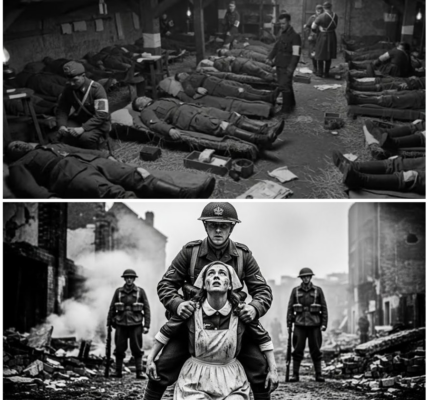
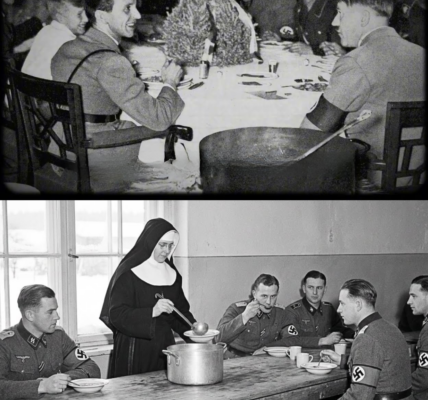
There are photographs from wartime that need no long caption.
A soldier standing among the ashes. A child wearing a gas mask far too large for their face. Ships carrying wounded men away from a volcanic island. And, somewhere else, former officials of a brutal regime sitting silently before a courtroom.
Viewed separately, these images may seem like disconnected moments.
But placed side by side, they begin to tell another story.
A story about how war moved from battlefields into ordinary lives. From soldiers to children. From distant islands to European cities. And finally, into courtrooms where the world tried to give responsibility a name.
Perhaps the most disturbing part of history is not always found in a battlefield scene.
Sometimes, it is found in the moment when people realize that war has become part of everyday life.
A gas mask.
An air-raid siren.
A shelter.
A blackout.
A ship carrying the wounded.
A funeral at sea.
And a photograph.
These surviving images remind us that these things really happened.

Before the Second World War began, the world had already experienced a conflict that many believed would be “the war to end all wars.”
It did not.
During the First World War, soldiers and laborers from across the empires were sent thousands of miles away from their homes. Photographs from that era show Indian troops in the Middle East, Australian soldiers training in Egypt, and colonial forces from distant territories being drawn into a conflict whose decisions were often made in capitals far from the battlefields.
The Mesopotamian Campaign is one example.
It became a major theater of the First World War in the Middle East, where Allied forces, including large numbers of troops from British India, fought the Ottoman Empire.
Yet photographs from this campaign rarely tell the entire story.
They show groups of men standing for the camera.
Soldiers resting.
Animals carrying wounded men.
Columns moving through unfamiliar landscapes.
A single photograph may contain only a few people.
But behind every face was a family.
A hometown.
A life that existed before the uniform.
War had a way of turning people into numbers on military reports.
Photography sometimes gave those numbers a face again.
Then the war ended.
But peace did not erase everything the conflict had created.
Two decades later, Europe entered another crisis.
This time, the scale was larger.
The technology was more advanced.
And the capacity for destruction was greater.
When the Second World War began, war was no longer something that belonged only to soldiers at the front.
It entered people’s homes.
In Britain, preparations were made for the possibility of attacks from the air. Civilians were issued gas masks. Air-raid precautions became part of daily life. Children were provided with specially designed masks intended to protect them from chemical weapons.
Today, a photograph of a child wearing a gas mask can look almost surreal.
But at the time, it was part of reality.
The child did not need to understand military strategy.
They only needed to know that the adults had told them to put the mask on.
And that may be one of the most profound changes war can make to ordinary life.
It turns the extraordinary into something routine.
A mask.
A siren.
A shelter.
A blackout.
A night spent underground.
Things that had never belonged in childhood suddenly became part of childhood.
Photographs of wartime Britain show a society trying to continue living under the shadow of danger.

Children were evacuated.
Hospitals prepared for air raids.
Civilians took part in emergency services.
Cities disappeared into darkness during blackouts.
War was not visible only in explosions.
It was visible in the way an entire society changed its habits.
But on the other side of the world, the war was unfolding in a very different environment.
On December 7, 1941, the forward superstructure of USS Arizona burned at Pearl Harbor.
The photograph of the battleship engulfed in flames did more than capture an attack.
It captured a moment when the United States entered a war that had previously seemed distant to many Americans.
From that point forward, the conflict was no longer simply a European or Asian war.
It had become a truly global conflict.
B-25 bombers were prepared for missions.
Crews inspected their aircraft, equipment, and weapons.
Only months after Pearl Harbor, American aircraft would carry a message of retaliation across the Pacific.
But behind every aircraft was more than machinery.
There were people.
A crew.
A mission.
And a flight from which no one could be completely certain they would return.
Modern warfare increasingly depended on machines.
But ultimately, human beings were still sitting inside those machines.
And in the Pacific, the distance between technology and survival could become terrifyingly small.
In November 1943, American forces launched the campaign to seize Makin in the Gilbert Islands.
The operation was part of the American advance across the Central Pacific. American forces landed on Butaritari between November 20 and 24.
On a map, the objective looked like a small piece of territory.
For the men approaching it, it was something entirely different.
Water.
Sand.
Mud.
Gunfire.
Every meter had to be crossed in reality, not on paper.
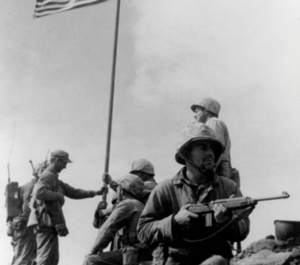
And if Makin demonstrated the difficulty of fighting across tropical islands, Iwo Jima revealed how brutal such warfare could become when soldiers faced volcanic terrain and deeply fortified defensive positions.
On February 19, 1945, American Marines began landing on Iwo Jima.
USS Hansford was among the transports supporting the operation.
The ship carried troops and equipment into the combat zone and later transported wounded Marines away from the battlefield.
Some of those wounded men did not survive.
Between February 25 and 28, Hansford transported casualties from Iwo Jima toward Saipan.
On February 26, three Marines who had died aboard the ship were buried at sea.
The Navy preserved photographs of the ceremony.
There was nothing glamorous about such a moment.
Only the ocean.
A ship.
Comrades.
And the distance separating them from the island where the men had fought.
This is where war reveals another face.
On a map, Iwo Jima is a small island.
In military history, it is a campaign.
But on the deck of Hansford, it was a human being.
And three men who would never return home.
War photographs are often remembered because of action.
But sometimes, what makes them unforgettable is the silence afterward.
A soldier looking on.
A stretcher being carried away.
A ceremony taking place.
An endless ocean beyond the ship.
And the war continuing.
At Iwo Jima, American Marines faced volcanic terrain and a complex Japanese defensive system built around caves, tunnels, and fortified positions.
The landscape itself became part of the battle.
The photographs of Marines advancing with flamethrowers can be difficult to look at.
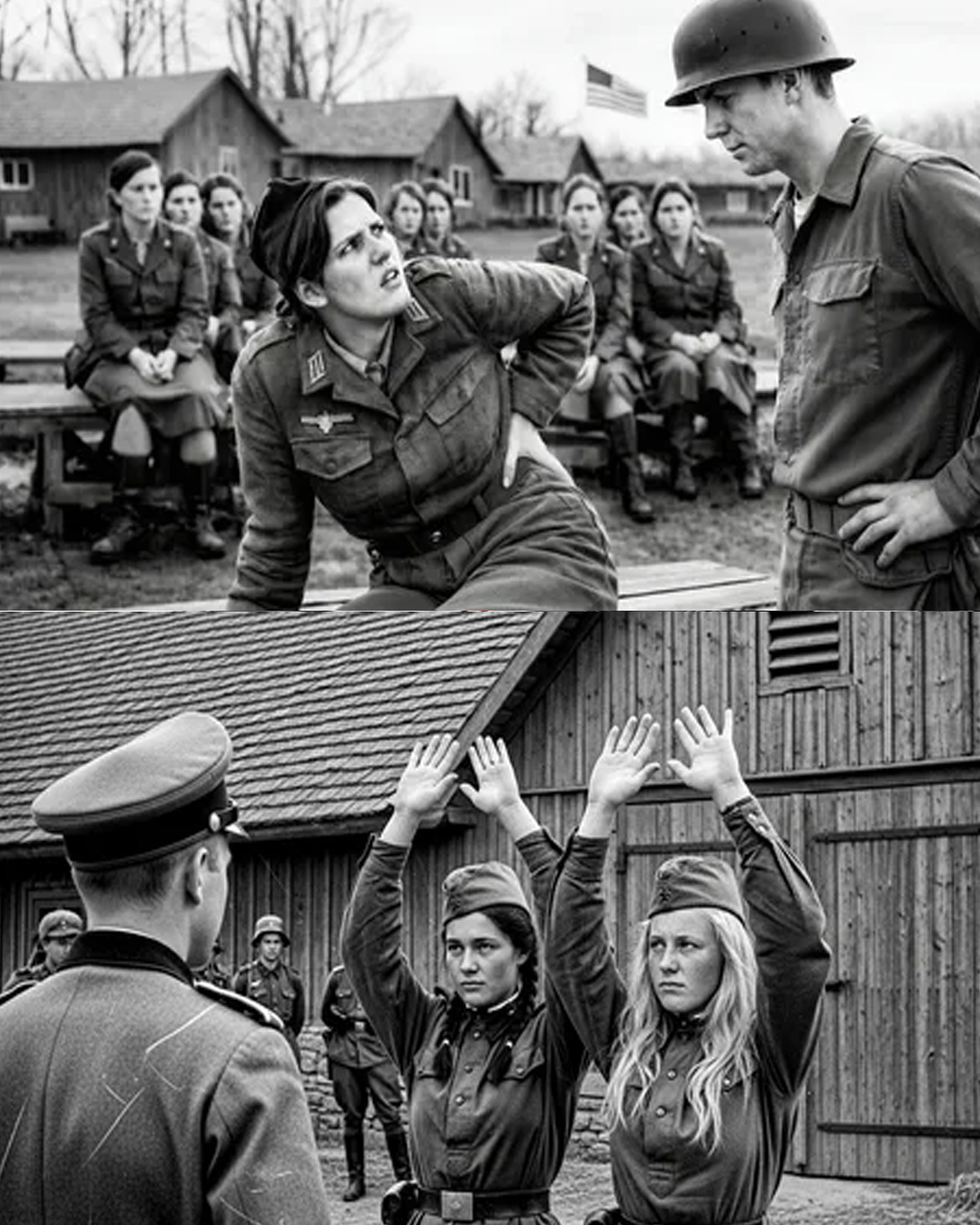
One image shows a Marine flamethrower operator moving toward a Japanese position near one of the island’s airfields.
It captures only one moment.
But it represents something much larger.
The uncertainty of moving forward without knowing exactly what waits ahead.
That is one of the realities of modern warfare.
A soldier rarely sees the entire battlefield.
He sees the ground directly in front of him.
A position.
An order.
A comrade beside him.
And then he moves.
By late 1944 and early 1945, the war in Europe was also entering its decisive phase.
Cities that had once represented ordinary life were carrying the scars of conflict.
In Athens, when German forces withdrew and the city was liberated in October 1944, British soldiers could stand on the Acropolis among monuments that had existed for thousands of years before modern warfare.
The contrast is striking.
A war can last only a few years.
A civilization can endure for thousands.
Soldiers pass through a place that had already witnessed countless generations come and go.
The distance between ancient history and modern warfare can sometimes say more than any speech.
Human beings can transform the world in an astonishingly short period of time.
And then, in 1945, the war in Europe ended.
But peace did not immediately make everything normal.
Cities were destroyed.
Families had lost loved ones.
Millions of displaced people faced uncertain futures.
And another question remained.
Who was responsible?
That question entered one of the most important courtrooms of the twentieth century.
Nuremberg.
Beginning in late 1945, the International Military Tribunal prosecuted leading figures of Nazi Germany.
The proceedings ended with judgments on October 1, 1946.
Among those placed in the dock were Hermann Göring, Rudolf Hess, Joachim von Ribbentrop, Wilhelm Keitel, and Ernst Kaltenbrunner.
The courtroom looked nothing like Iwo Jima.
There were no beaches.
No landing craft.
No artillery.
No gunfire.
Yet in another sense, it was still a battlefield.
This was a battlefield of documents.
Witnesses.
Evidence.
Law.
And responsibility.
The world was attempting to turn the events of the war into a record that could be examined, challenged, and judged.
Nothing in that courtroom could bring the dead back.
It could not rebuild destroyed cities.
It could not erase the memories of survivors.

But it established a principle that would become central to the postwar understanding of international justice:
Actions committed during war could still be subject to accountability.
Uniforms did not automatically erase responsibility.
Government authority did not automatically erase responsibility.
And following orders was not simply the end of the question.
Nuremberg became part of the historical legacy of the war because it attempted to confront responsibility after the battlefield had fallen silent.
But the story of the Second World War cannot be told only through leaders and generals.
Because wars are ultimately experienced by millions of people who never appear at the center of history books.
Workers.
Drivers.
Nurses.
Engineers.
Farmers.
Dock workers.
Factory workers.
Children.
Families.
And soldiers who came from places thousands of miles from the capitals making the decisions.
That is why photographs of colonial troops and laborers deserve attention.
During the First World War, large numbers of people from French Indochina were mobilized to support the French war effort, many serving as laborers rather than combat troops.
Their stories belong within the larger history of colonialism.
A photograph of a colonial soldier or worker can look simple at first.
A uniform.
A group portrait.
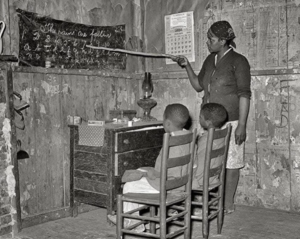
A line of men.
But behind that uniform was a society.
A family.
A homeland.
A colonial system.
And circumstances that were often shaped by forces beyond the individual’s control.
This is why looking back at the world wars should not be reduced to counting battles.
If history is told only through victories and defeats, much of the human story disappears.
A photograph of exhausted soldiers resting in a trench may not record a major battle.
But it records something just as real.
Soldiers became tired.
They needed sleep.
They needed food.
They needed moments when there was no gunfire.
Those quiet moments are part of military history too.
Perhaps they are among the most important.
Because they bring history down from the level of statistics and return it to ordinary human life.
War is often described with enormous words.
Empire.
Campaign.
Front.
Victory.
Defeat.
Liberation.
Surrender.
But the people living through war experienced much smaller things.
A mask.
A letter.
A meal.
A shelter.
A ship.

A friend.
A family member who never came home.
And a photograph.
That is why photographs of children wearing gas masks remain so powerful.
Not because they are strange.
But because they show how deeply war entered civilian life.
A child did not need to understand the map of Europe.
They only needed to know that when the siren sounded, they had to find shelter.
A Marine on Iwo Jima did not need to understand the entire global war.
He needed to understand the position ahead.
A sailor aboard Hansford did not need to know how historians would judge the campaign.
He needed to help bring the wounded to safety.
And a prosecutor at Nuremberg could not change the past.
He could only place what had happened into the historical and legal record.
Perhaps that is what old photographs do best.
They do not give us the entire history.
But they force us to stop.
To look.
And to ask questions.
What happened before this moment?
What happened afterward?
Who lived with the consequences?
And why do we still remember?
Years after the war, cities that had been devastated began to rebuild.
Roads were repaired.
Buildings rose again.
Ports returned to work.
Children grew up who had never heard the air-raid sirens of wartime Britain or the artillery of a Pacific battlefield.
That may be one of the most hopeful lessons history can offer.
Not war.
But reconstruction after war.
Yet rebuilding does not mean forgetting.
A city can be reconstructed.
A road can be repaired.
A harbor can become busy again.
But the memory of those who never returned cannot be rebuilt in the same way.
It can only be preserved.
In documents.
In cemeteries.
In museums.
In photographs.
And in the stories passed from one generation to another.
Perhaps that is why these photographs do not really belong to the past.
They belong to the way we understand the present.
When we look at a child wearing a gas mask, we are not simply looking at Britain in wartime.
We are seeing how deeply war can enter civilian life.
When we look at Marines on Iwo Jima, we are not simply seeing February 1945.
We are seeing the human cost of a military campaign.
When we look at the burial at sea aboard USS Hansford, we are not simply seeing a military ceremony.
We are seeing the final journey of men who left a battlefield but never returned home.
And when we look at the courtroom at Nuremberg, we are not simply seeing defendants sitting before judges.
We are seeing a world attempting to find a way to confront what had happened.
History does not always give us comfortable answers.
It does not always offer a perfect ending.
But the photographs that remain give us something rare.
They allow us to look into the past through moments captured by people who were actually there.
A soldier looking forward.
A child looking into a camera.
A ship crossing the ocean.
A city being rebuilt.
A courtroom falling silent.
These moments are different.
But together, they tell us something important.
War may be decided by people with political and military power.
But its consequences are lived by ordinary human beings.
And when the guns finally fall silent, history does not end.
It moves into another chapter.
The chapter of memory.
The chapter of responsibility.
And the chapter of questions every generation must eventually answer.
When we look back at the photographs left behind by war, should we remember only the victories and defeats — or should we also remember the ordinary people who paid the price for history to reach its ending?
Some content was generated using AI tools (including ChatGPT) and edited by the author for creativity, storytelling, and historical illustration purposes. Historical facts and key details should be verified against reliable historical sources. Any AI-generated or reconstructed visuals are intended for illustrative purposes and should not be interpreted as original historical photographs or archival evidence.