
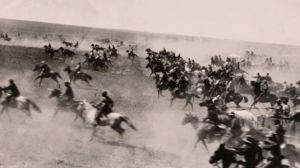
Welcome to the Nation of History channel. Be sure to subscribe and like so you don’t miss out on more videos like this one. A crowd of riders and wagons charges across Oklahoma land during the 1893 run.
And the Cherokee Strip run record shows the frantic push of thousands of settlers seeking farm property as dust and chaos marked the final claiming of a vast American region. Tasa known as plenty horses stands beside two United States government agents around 1891 and their placement near large equipment reflects postconlict tensions at Pine Ridge highlighting the complex pressures of forced cultural change and surveillance over native peoples. A native community watches closely as food is prepared and a cow is readied in a photo by John Grabbil around 1887 documenting a forced shift from traditional subsistence to reliance on government supplied cattle on Great Plains reservations.
Workers swing pickaxes inside a mine in Virginia City, Nevada in 1867, documenting unhealthy conditions and heavy manual labor during the industrial boom as the underground scene reveals the rough structure that supported the local economy. Hydraulic mining in Rockerville, South Dakota, is shown in 1889 using pressurized water jets to wash down hillsides. A technique that made largecale gold recovery easier, but deeply changed the natural landscape of the Black Hills, reflecting a technological shift in the hunt for precious metals.
Travelers ready for a hard winter leave Beaver City, Alaska in 1899 in search of caribou using supply loaded sleds and dogs for travel on snow, showing the survival strategies needed in remote northern lands. A caravan of 20 mules crosses the dry ground of Death Valley around 1900, hauling borax ore toward the railroad. and the massive logistical effort shows the transport challenges of the California desert and the industry’s regional importance in the late 19th century.
David Denny rests in front of a rustic log cabin near Kichulus Lake in Washington State in 1899 and the simple structure set among dense forests reflects pioneer life in the United States in the late 19th century and the settlement of the western frontier. Pay people in northern Arizona were recorded around 1874 using an ancestral friction method to make fire, wearing fringed hide clothing while working sticks and dry fibers to preserve traditional survival skills in the area’s aid environment. The Chinese hose team, Champions of America, poses after winning the major hub and hub race in Deadwood, Dakota on July 4th, 1888, wearing traditional uniforms and straw hats that highlight integration and cultural competition as western communities developed.
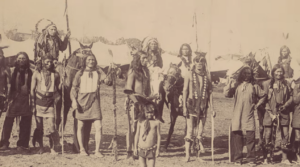
Gaul, the influential hunka Lakota leader, was photographed at Fort Buford, North Dakota in 1881. And after years of resistance and involvement in the little big horn conflict, his surrender marked a forced move to reservation life and a complex power relationship between native nations and the army. EOSI Chief Red Cloud’s home at the Pine Ridge Agency was recorded around 1891 during a period of deep transition for the Oglala Lakota and the white wooden house symbolizes a government push towards settled life.
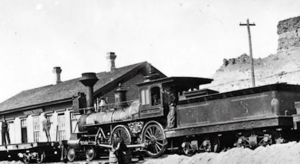
In contrast to the nomadic way the leader defended for decades, Frankie Weber sits on his horse wearing the typical Pony Express rider outfit around 1861, highlighting the early mail delivery logistics of the American West with native people and other animals visible in the background along the route. A Union Pacific Railroad locomotive waits at Green River Station in Sweetwater County, Wyoming in 1869. And the record highlights the station’s wooden structure and the rail technology of the time, key elements in economic integration and settlement of the American West.
A steam locomotive rounds the horseshoe curve on the Burlington and Missouri River Railroad in 1891, capturing a passenger train near Kuster City, South Dakota, winding through dense pine forest and towering rock formations that define the local landscape. A lone prospector works his pan in the wet ground of Gnome, Alaska around 1905. And the scene highlights human persistence through isolation and cold temperatures during the peak of early 20th century mineral exploration there.
Travelers and prospectors gather in front of the White Pass and Yukon Railroad Station in Alaska around 1900. And the bustle shows how rail transport became vital for supplies and movement during the last major gold rush in the far north of America. Miners in Skagway, Alaska around 1897 prepare for the exhausting trek toward the Klondike region in search of gold.
And the makeshift camp of white tents in the mud shows the harsh conditions of the gold rush where hopes of a payoff outweighed the hardship. Several native canoes lined the shore in Da around 1897, highlighting how vital they were for transport during the Klondike gold rush, with the settlement behind them and the mountains showing the complex logistics and cultural contact in a demanding place. In the icy hills of Deadwood in 1887 and 1888, the miners McMillan and Hubard recorded the success of their expedition.
And the improvised camp in the snow shows how tough life was in South Dakota, where the hunt for a living brought together men of many trades. A stage coach packed with passengers crosses the Deadwood area in 1889, showing how important shared transport was for linking frontier communities with a rugged build for rough roads and travelers, filling every available space for the trip. Moving across open plains, the last big ox train heads from the railroad junction toward the Black Hills, pulling covered wagons in an orderly line, marking the end of an era when animal power carried long supply routes in the American West.
Prospectors driven by gold fever guide ox carts toward new claims around 1889, capturing determined travelers in dry country and illustrating the mass movement and pursuit of wealth that shaped economic expansion in the American West. Miners pose as a group during the height of the California gold rush around 1850, holding shovels and wearing worn workclo embodying the frantic chase for fortune in the west as the image reflects both diversity and hardship in American mining camps. Deep inside the Gould and Curry mine, the exhausting routine of Nevada miners around 1866 is shown, highlighting minecarts on rails within the tunnels during the silver boom that helped drive economic growth in the American West.
Workers at the Montana mine pose at the entrance around 1889 with digging tools and orcarts. And Gravel’s photo captures mining expansion in the United States at the end of the 19th century when extraction was key to the growth of mountain towns. Chinese miners in Tu Alumni County faced hard conditions in California around 1866 while searching for gold and already worked deposits and their bamboo carrying poles show traditional Asian methods adapted into daily American mining life.
Chinese workers run slle boxes in search of ore around 1871 reflecting the major contribution of Asian immigration to mining and infrastructure and the hands-on method demanded teamwork and patience in harsh weather. Chinese workers played a vital role in building American rail infrastructure, as shown in this 1880 record at Summit Tunnel, where a laborer stands at the North Portal beside cut slopes and rough wooden housing, highlighting human endurance against difficult mountain terrain. Blacksmiths work in an improvised shop under the trees in Skagway, Alaska in 1897.
While horses and cattle wait in rough ground, and the men use hand tools, a vital service for the steady flow of gold rush travelers. A rustic supply store in Canyon City served miners on the Da Trail in Alaska in 1898, acting as a crucial support point during the Klondike Gold Rush by providing tools and basic equipment for adventurers facing harsh Arctic weather. The first blacksmith shop in Guthrie was set up during the hectic land run of 1889 as two men work rough tools and handbellows outdoors surrounded by white tents that served as temporary homes for new settlers seeking expansion and progress.
Wooden storefronts line the business scene on Broadway Street in Oklahoma territory. And a January 1894 record points to places like the Pioneer Meat Market and the Nelson Restaurant, while men and a dog on the sidewalk show the rough everyday life of Round Pond during settlement. The wooden front of the English Kitchen restaurant in Round Pond in 1894 shows everyday business life in Oklahoma territory as men posed by an entrance marked Williams and a sign offers meals for 20 cents and the rough building reflects frontier town development.
A panoramic view shows the early camp in Anadarko, Oklahoma territory in the summer of 1901. And the scene dated August 8th, 1901, features canvas tents and rough structures used as temporary shelter for new settlers, marking the area’s rapid shift toward town growth. The Cosmopolitan Social Hall stood in Yusede Valley around 1872 as a gathering place and bath house for visitors.
And men rest on the wooden porch beneath a sign with an eagle while the simple building points to the rise of local tourism. Ferdinand Hayden’s geological expedition explored Wyoming territory in 1870. And at Red But the team ate outdoors among field equipment and wagons as this survey proved key to detailed mapping of local natural resources.
Members of the historic expedition led by John Wesley Powell gather at their first camp on the Green River in Wyoming territory in an 1871 record that shows surveying gear and a large format camera, essential tools for scientific mapping of the American West. The United States Geological Survey Expedition set up this camp in Laram County in 1870, and technical staff with helpers stand near white canvas tents that supported mapping of Wyoming territory and the expansion of railroads across the American West. Members of the King survey occupy a makeshift canvas tent camp in an arid region in a record made between 1869 and 1878, showing geologists and explorers resting during systematic mapping of the American West, a scientific effort crucial for cataloging natural and topographic resources.
Photographer William Henry Jackson’s assistant readies a pack mule in Colorado around 1873. And the animal carries heavy photo gear like large format cameras and glass plates that made it possible to capture remote landscapes documenting western expansion and natural beauty. Buffalo hunters rest in front of a dugout shelter in Sheridan, Kansas around 1873 with hides and food hanging on lines showing subsistence and trade on the central plains as the Kansas Pacific Railroad in the background symbolizes the region’s growing commercial links.
A caravan of covered wagons carries Mormon immigrants along a winding trail in the middle of 1879, crossing mountain ground near a waterway with draft animals pulling their belongings, reflecting a religious migration in search of new western land. A sturdy prairie schooner built in the 1850s appears preserved in an 1894 record. And this kind of wagon was the main transport for families crossing the American plains, symbolizing migration and settlement in the West.
Two covered wagons for the shallow water of the Little Colorado River around 1903 beside a cable ferry, capturing the steady travel logistics of the American Southwest, where horses helped overcome natural barriers during a transition period in transportation routes. Guards stand a top a conquered coach to provide security on overland routes out of Hayes, Kansas. in a scene dated around 1867 to 1869, highlighting their use by express companies and the constant risks faced on western trails.
A coach on the Myrtle Point to Roseberg line changes horses at a strategic stop in Oregon, reflecting how the stage system was vital for carrying mail and passengers between isolated settlements and depended on rested animals for dusty roads and rough northwestern terrain. Cowboys handle livestock and switch horses near the Cheyenne River between 1887 and 1892. And open range roping was essential for organizing the herd on long work drives, keeping crews mobile across the wide central plains.
Cowboys switch mounts during a work maneuver in South Dakota territory in 1890. And the steady care and rotation of horses was central to the ranching economy, keeping transport and cattle handling fast across the wide prairies. Cowboys eat at a makeshift camp along the Yellowstone River in Montana using metal plates and simple cups near a covered wagon that serves as their support, illustrating the nomadic and rugged life needed for cattle work on the vast American prairies.
At a plains camp, cowboys eat beside the chuck wagon while horses and cattle rest nearby in a quiet open field, showing the simple logistics that supported long stretches of ranch work, a slice of everyday life in the American West around 1890. A cowboy restrains a calf in open country in Graham County, Arizona between 1896 and 1897. And beside a saddled horse, the scene captures typical ranch work in the American Southwest, reflecting exhausting routines and hurting techniques central to the era’s economy.
Ranch workers and a child pose in front of a log cabin in Converse County, Wyoming between 1870 and 1890, wearing widebrim hats, suspenders, and utility belts. And these settlements were central to expanding cattle ranching across the western plains. Life in the Dakota territories in the middle of 1888 demanded extreme resilience from settlers chasing the dream of land ownership.
And this wood and log home shows the shift from bare survival to a settled family setup surrounded by farm tools and draft animals. A rustic log cabin in South Dakota frames a group of settlers between 1887 and 1892, reflecting typical frontier housing built from local materials to endure the harsh prairie climate where rural livingshaped settlement on new land. A farming family poses in front of their home in Kuster County, Nebraska around 1887 with a rustic earthn house, handplow tools, and draft animals showing the hard conditions of farm life and the effort required to work Great Plains land.
The Hallmont family poses in front of their two-story sodb block home in Kuster County, Nebraska around 1886 with dogs and a horse showing an unusual design for the time and the practical adaptation required on the Great Plains. Residents and travelers pose in front of a boarding house in Delamir, North Dakota around 1890. And the wooden building with twin chimneys, plus a horse-hed carriage, shows how small prairie communities formed and served as key places for welcome and rest.
Wagons and horses rest outside a livery business in quiet Webster, Kansas in the early 20th century. And the main street view shows practical frontier town buildings where local trade and animal drawn transport supported the rural economy. A panoramic view shows Flagstaff in Arizona territory developing around 1899 with wood and stone buildings set against a broad wooded area and mountains behind while people on porches and sidewalks highlight everyday life on the American frontier.
A line of men stands in front of the Eagle Social Hall in Reton, Washington around 1900 as wooden storefront signs advertise a restaurant and local services, while the group’s hats and coats reflect the social and business routine of growing western towns. Donkeys loaded with cornstalks move along a street in Santa Fe, New Mexico between 1880 and 1890. And behind them, storefronts like hardware shops and wholesale warehouses show early urban growth and the importance of animal transport for supplying the Southwest.
Men and pack animals cross dry ground near the Mexico border in an 1883 record as a government party uses mules to carry essential supplies through remote areas. and the group paused by low brush illustrates frontier logistics in the late 19th century. Ranch workers ran complex furnaces to power steam pumps at McClung Ranch in 1888.
And in Kern County, California, this setup was vital for pumping water, sustaining farm work and survival in dry regions. A prospector travels through the Grantspass area of Oregon around 1903 with a pack donkey loaded with tools and basic supplies, carrying travel gear for personal protection on the frontier as the hunt for precious metals fueled the economy and settlement of the American West Coast. Under the rising Colorado sun, a prospector in fair play in the early 20th century, works his pan for small gold nuggets among gravel and stream bed stones.
And the wooden pan and shovel underline the grueling hand labor that shaped western economies and settlement. A lone hunter displays large deer antlers in a photo studio, suggesting a triumphant return to camp in Oregon around 1880. And the image reflects both subsistence living and trophy pride in the northwest forests where field gear was part of everyday life.
Hunters pose beside an animal at Fort Pierre, South Dakota in 1903 with saddled horses in a snowy landscape as they carry field gear and wear typical riding clothes that reflect subsistance practices and expeditions across American territory. Captain Scott’s outdoor camp at the Washita River Reservation is recorded around 1895 with Victorian era formal clothing and structured canvas tents reflecting upper class leisure in native territories blending exploration with social time in the American interior. Sue men gather at a plains camp in the final decades of the 19th century and traditional adornments, horses and tents in the background highlight social organization and cultural resilience amid territorial changes between 1880 and 1890.
Lakota leaders pose for a group portrait around 1891, wearing traditional clothing and feather adornments that signal leadership and bravery in a time of deep transition for Great Plains Native Nations that still reflects cultural resistance and political dignity. A Crow delegation sits for a formal record in 1872, wearing richly decorated traditional clothing that contrasts with white men in suits and top hats behind them as the diplomatic meeting aimed to negotiate territorial terms and secure peace agreements with the American government. Leaders of the Kya, Apache, and Comanche nations form a delegation in Washington in the late 19th century, including Apache John and Bigl lookinging glass in an official record dated March 24th, 1894, reflecting complex diplomatic negotiations over territorial autonomy.
Members of the Pagon tribe rest at their camp around 1893. And the traditional tepee structure with their typical clothing reflects community organization and cultural endurance across the wide landscapes of North America. Native women preserve food at a camp dating between the 1880s and 1890s.
And the lines of food drying in the sun with types behind them show social organization and survival skills essential to Plains Native communities. Two Native Americans look with curiosity at a strip of photographic film by a river around 1913. And with village tents behind them, the scene suggests an ancient culture beginning to capture its own image through modern technology.
linking tradition and modern life in the early 20th century. A PBLO hunter poses around 1890 in traditional clothing with field equipment, highlighting outside technology entering native life alongside subsistence hunting set against adobe buildings typical of southwestern indigenous communities. A Cheyenne elder nearly 100 years old sits for a portrait in 1888, preserving the face and traditional clothing of a survivor from transformative eras on the central plains.
And the record emphasizes longevity and native cultural resilience under 19th century outside pressures. A wagon decorated with expedition gear and Black Hills signs sits on 16th Street in Denver around 1875, showing Colorado city bustle, where miners and travelers displayed hides and animal horns as symbols of journeys through the Wild West. Teams of oxen rest on a street in Sturgis in Dakota territory in a photo made between 1887 and 1892, underscoring their importance for hauling heavy loads in covered wagons as local businesses show the wooden storefronts typical of westward expansion.
Booten Company operated as a store in the Colorado mountains in the middle of the 1890s, serving as an essential supply hub for miners and travelers with meat, provisions, and everyday goods, while loaded mules waited to haul supplies along the trails. The Slippery Ford House operated as an important inn for travelers in Elorado County, California as published in 1866. And the record shows muledrawn wagon caravans parked in front of the wooden building, a vital stop on the route across the Sierra Nevada mountains.
Swift Station served as a strategic stop on the eastern summit of the Sierra Nevada mountains around 1866. And the image shows a long caravan of loaded wagons climbing a steep grade, highlighting the logistical strain of moving goods during California settlement. The Homestake mine facilities in Leed City run at full steam around 1889 with smoke rising from industrial stacks and huge ore piles with complex wooden structures dominate the South Dakota landscape.
Students take part in a blacksmithing class at Forest Grove School in Oregon in the middle of 1882. And the record shows youths handling tools and working with horses under a wooden structure reflecting hands-on training tied to self-reliance in western communities. Lamar Pokey Bro and his family of the Banick Nation posed for a studio portrait around 1897, wearing clothing that blends traditional elements with outside influence to show cultural exchange in the northwestern United States, preserving the lineage and identity of a resilient people.
Men gather for a card game at John Doyle’s ranch in Arizona in a photo taken between 1887 and 1889. And the log cabin with a wagon parked beside it sets a typical scene of social life and downtime on isolated American frontiers. The Roadhouse, a gathering spot in Bluff City, captured social life in Alaska around 1906, has a rustic wooden interior sheltered prospectors seeking refuge from harsh weather and oil lamps overhead lit conversations about working conditions.
A pharaoh game plays out in full swing at the Orient Saloon in Bisby, Arizona around 1900 as men in hats and coats crowd the table watching the cards and chips. And CS Flies photo captures the everyday social life of American mining towns. Men gather inside the yellow aster saloon in Ransburg around 1900 when gold mining was driving California.
And the ornate bar with entertainment tables shows miners socializing and relaxing in a rough wooden building that signals western town growth. Patrons pose in front of JW Schwarz Saloon in Charleston, Arizona in 1885. And a wooden sign advertising drinks for 12 1/2 cents reflects the cost of living and the rough daily routine of mining settlements in the American Old West.
If you enjoyed this video and want to support the channel, please use the Superthanks tool below. Your contribution helps us keep bringing you amazing historical content. Thank you so much for your support and see you in the next video.
Note: Some content was generated using AI tools (ChatGPT) and edited by the author for creativity and suitability for historical illustration purposes.