
UK Home Secretary Shabana Mahmood Faces Dual Political Pressure Over Small Boats and Protest Crackdowns
Home Secretary Shabana Mahmood is navigating a fierce political firestorm as the UK government attempts to balance rigorous border enforcement against the growing threat of civil unrest following recent anti-migration demonstrations.
UK Home Secretary Shabana Mahmood is facing intense political scrutiny over Britain’s ongoing small-boats crisis, caught between public demands to halt Channel crossings and mounting pressure to crack down on disruptive anti-migration protests.
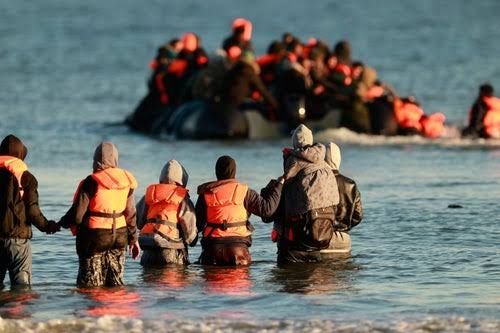
The political friction has escalated sharply following high-profile demonstrations in Dover and Portsmouth. In both towns, hundreds of activists gathered to protest as asylum seekers arrived or were brought ashore after crossing the English Channel.
For Mahmood and the Home Office, the current political battle is being fought on two distinct fronts. The first involves securing the border, dismantling human-smuggling networks, and deporting individuals who lack a legal right to stay in the UK.
The second front requires maintaining public order when anger over immigration boils over into road blockades, intimidation, and physical assaults. While critics argue that stopping the boats should command the entirety of the government’s attention, Mahmood maintains that the state must manage both challenges simultaneously.
Why Small Boats Remain a Powerful Political Symbol
Despite recent reductions in overall crossing numbers, the English Channel remains one of the most visible symbols of Britain’s broader immigration debate. The arrival of small boats on the south coast creates a powerful public perception that the government lacks total control over its borders.
Yet, the statistical reality is more complex than simple narratives suggest. Reporting surrounding recent unrest in Portsmouth indicated that small-boat crossings have run substantially below previous years, with authorities pointing to the disruption of smuggling operations as a key factor.
However, the problem is far from resolved:
-
Boats continue to make the hazardous journey across the Channel.
-
Migrants continue to risk their lives at sea.
-
Smuggling networks rapidly adapt their logistical tactics.
-
Every highly visible arrival on British shores instantly renews political pressure on the Home Office.
Examining the Numbers: What Do Home Office Return Figures Show?
To measure the government’s enforcement progress, analysts frequently look at the volume of individuals returned from Britain. Home Office data reveals a total of 80,286 returns recorded between July 1, 2024, and July 31, 2026.
However, experts emphasize that this figure requires careful interpretation. The total encompasses both enforced and voluntary returns, meaning it cannot be framed simply as 80,286 deportations.
Breakdown of Recent Returns
-
Enforced Returns: 19,622 individuals without a legal right to remain.
-
Asylum-Related Returns: 24,471 individuals.
-
Small-Boat Arrivals: 6,103 individuals returned over the 25-month period.
-
Recent 12-Month Trend: 3,427 small-boat arrival returns were recorded in the year leading up to July 2026—marking a 39% increase compared to the previous year.
While these figures demonstrate a clear rise in enforcement activity, critics argue they fall short of providing a definitive solution to the Channel crisis.
The France Deal Under Scrutiny
A cornerstone of Mahmood’s containment strategy is the bilateral agreement with France. Under the current arrangement, some migrants arriving via small boats can be returned to France, while the UK accepts eligible applicants through controlled legal pathways.
By mid-September, approximately 1,400 individuals had been returned under the scheme. While supporters point to these numbers as proof of active enforcement, the policy faces heavy financial criticism.
Mahmood acknowledged that the programme costs roughly £56,000 for every person returned. Although the Home Office defends this by comparing it to the annual expenditure of housing asylum seekers in hotel accommodations, opponents continue to question whether the financial scale and overall impact are enough to create a genuine deterrent.
Protests Erupt in Dover and Portsmouth
The political landscape shifted dramatically when immigration friction spilled over into aggressive street demonstrations. In Dover, hundreds of masked protesters gathered, blocking roads and disrupting traffic around the major port.
A similar confrontation occurred in Portsmouth after asylum seekers rescued in the Channel were brought ashore near Eastney. Roughly 200 black-clad demonstrators blocked roads, leading to reported clashes and alleged assaults on police officers.
The initial police response drew sharp criticism. Kent Police admitted they failed to properly act upon early warning calls regarding the Dover demonstrations, prompting government demands for vastly improved intelligence-gathering protocols ahead of public gatherings.
Mahmood Directs Police to Utilize Full Powers
In response to the unrest, Mahmood held urgent discussions with senior police commanders, urging forces to make “full use” of existing legal powers. This directive includes authorized arrests, dispersal orders, and the deployment of advanced surveillance tools such as CCTV, body-worn cameras, automatic number-plate recognition, and facial-recognition technology.
Under recent legislation, police are also empowered to establish designated zones where individuals attempting to conceal their identities during protests can be legally required to remove face coverings.
This intervention sparked a fresh debate, with some anti-migration campaigners questioning why the government appeared more eager to confront protesters than to stop the boats arriving on the coast. Legally and operationally, however, officials maintain these are separate mandates handled by entirely different agencies.
Drawing the Line Between Lawful Protest and Criminality
A central tenet of the government’s response is the distinction between peaceful political expression and criminal behavior.
Citizens retain the legal right to oppose government immigration policies, campaign for lower migration levels, demand stricter borders, or peacefully protest against local asylum housing. Mahmood has not outlawed these viewpoints.
Instead, police instructions target situations where demonstrations cross the legal threshold into intimidation, violence, or criminal disruption. During subsequent weekends of protests in Portsmouth, police made numerous arrests for offences including concealing identity, obstructing highways, and violent disorder.
The RNLI Caught in the Crossfire
The emotional intensity of the debate has increasingly impacted humanitarian organizations like the Royal National Lifeboat Institution (RNLI). Crews have faced verbal abuse and hostility after rescuing migrants from dangerous waters.
Security concerns and subsequent protests forced the temporary suspension of operations at the Portsmouth lifeboat station, though search-and-rescue coverage was maintained via alternative assets.
The RNLI has repeatedly emphasized a singular, humanitarian mandate: its crews rescue people whose lives are in danger at sea. Determining whether those individuals are permitted to remain in the UK is strictly the responsibility of immigration authorities, not volunteer lifesavers.
Internal Enforcement Increases Across Britain
Away from the Channel, immigration enforcement teams have stepped up domestic operations. Home Office statistics show that Immigration Enforcement made more than 17,000 arrests during illegal-working visits between July 2024 and June 2026—representing a 122% increase over the preceding two-year period.
A nationwide operation in June, involving immigration teams and 39 local police forces, targeted over 900 businesses and resulted in 326 arrests, including 269 for immigration-related offences. While these numbers highlight aggressive domestic policing, public opinion remains deeply divided on whether these efforts are sufficient to address systemic concerns.
The False Choice Between Borders and Public Order
At the heart of the ongoing political controversy lies a deceptively simple question: Should the government concentrate exclusively on stopping small boats rather than policing citizens protesting them?
In practice, experts argue this presents a false choice. A sovereign government carries a dual responsibility: securing national borders and maintaining domestic public order. Disrupting Channel crossings does not absolve authorities of investigating crimes committed during protests, nor does effective crowd control resolve underlying border vulnerabilities.
For Shabana Mahmood, the ultimate political test will be judged on tangible outcomes—crossing volumes, smuggling network disruptions, deportation efficiency, system costs, and the state’s ability to protect peaceful dissent while punishing criminal disorder.
How do you think the government should balance the enforcement of border security with the protection of the right to peaceful protest?