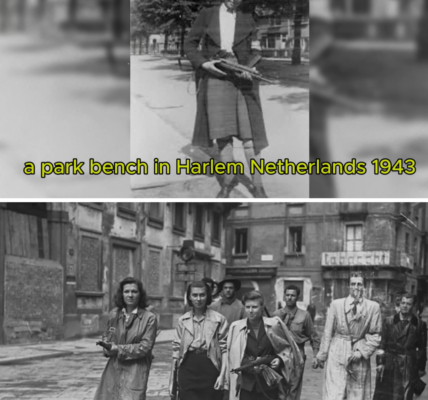
These UNBELIEVABLE Historical Pictures Tell Stories Beyond Words | RARE Historical Photos .NH

There was a time when taking a photograph required patience. People had to stand still, cameras were cumbersome, and the resulting images were often formal and carefully composed. Yet every so often, something unexpected happened: a person laughed, a child moved, a soldier looked away, or a crowd revealed an emotion no photographer could have staged. More than a century later, those moments can still stop us. What is it about a single old photograph that can make the distance between our world and theirs suddenly disappear?
Today, history reaches us through screens, headlines, documentaries, and endless streams of images. We scroll past thousands of photographs without remembering most of them. But an old photograph can sometimes break that rhythm. Its imperfections seem to slow time down. Scratches in the paper, faded tones, damaged edges, and unfamiliar clothing tell us that the people inside the frame belonged to another world.
And yet, they were not as distant as they appear.
They waited.
They worked.
They worried.
They celebrated.
They lost people they loved.
They hoped that tomorrow would be different.
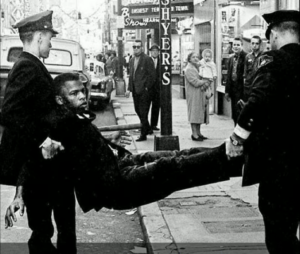
A historical photograph cannot tell us everything about a person. But sometimes it can remind us that the people who lived before us were never simply “the past.” They were living through their own present.
That is what gives rare historical photographs their particular power.
The age of an image alone does not make it extraordinary. Nor does the fame of the person standing in front of the camera. Some of the most revealing photographs are almost completely ordinary. A worker pauses beside a machine. A family gathers outside a home. Children look toward something beyond the frame. A soldier writes a letter. A nurse works quietly while the world around her is consumed by war.
Nothing appears monumental.
Until we remember what happened next.
Or what had happened before.
Early photography makes this especially clear. During the nineteenth century, photographic processes often required long exposure times, making spontaneous images difficult. Portrait subjects frequently had to remain still for considerable periods, which helps explain the formal appearance of many surviving photographs. The people in those images can seem distant, serious, almost frozen outside ordinary human emotion.
But then an unusual photograph appears.
Someone smiles.
Someone laughs.
A child moves.
A woman turns slightly toward another person.
Suddenly, the century between us seems smaller.
The formal conventions of early photography were never proof that people of the past lacked spontaneity or humor. They were partly a consequence of the technology and social conventions of the time. The camera demanded stillness, and the resulting photograph often preserved that stillness as though it were a permanent characteristic of the sitter.
It was not.
Behind every rigid portrait was a person who lived an entire life beyond the few seconds captured on the photographic plate.
That realization becomes even more powerful when we turn toward war.
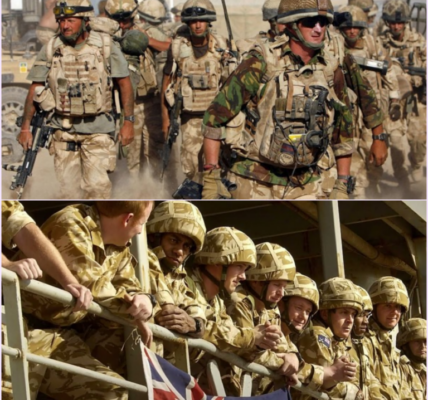
The history of modern warfare is filled with photographs that have become visual shorthand for entire conflicts. Gettysburg, the trenches of the First World War, the destruction of cities, the liberation of concentration camps, and the aftermath of battles have all been preserved through photography.
Some images became famous.
Many did not.
And sometimes the less famous photograph tells us something the iconic image cannot.
A soldier writing a letter home does not show a battle.
A nurse tending to the wounded does not show a military victory.
A quiet pause between periods of fighting does not reveal a strategic decision.
But such images can show what war meant at human scale.
This distinction matters.
War photography can easily become a collection of dramatic images: explosions, destroyed buildings, soldiers advancing, flags being raised. Those photographs have historical value, but they can also make war appear like a sequence of spectacular moments.
The quieter photographs complicate that picture.
They show waiting.
Fatigue.
Separation.
Routine.
Fear without spectacle.
Moments in which people were simply trying to continue living inside circumstances they did not choose.
That is one reason photographs of letters, medical care, meals, rest, and ordinary work can be so powerful. They restore something that military history can sometimes obscure: wars are experienced by individuals long before they become paragraphs in history books.
The same principle applies to photographs from the First World War.
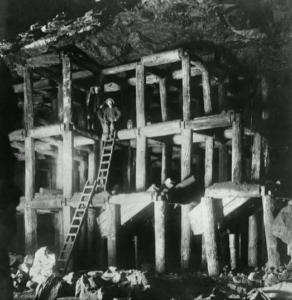
The trenches have become one of the defining images of that conflict. Mud, wire, dugouts, uniforms, artillery positions, and exhausted soldiers appear again and again in the surviving visual record.
But look beyond the famous images and another world appears.
Men read.
Write.
Eat.
Repair clothing.
Wait for orders.
Wait for relief.
Wait for the next bombardment.
The waiting itself became part of the experience.
A photograph cannot reproduce the sound of artillery or the smell of mud. It cannot tell us precisely what one soldier was thinking. But it can show posture, environment, clothing, equipment, and relationships between people. Combined with letters, diaries, military records, and other sources, such photographs can become part of a much larger historical picture.
That combination is important because a photograph is never the whole story.
It is a fragment.

The same is true of photographs from the liberation of concentration camps at the end of the Second World War. These images became some of the most important visual evidence of the crimes of Nazi Germany. They documented survivors, liberated prisoners, camps, material evidence, and the physical conditions encountered by Allied forces.
Their historical importance is enormous.
But even here, context matters.
A photograph of a survivor cannot by itself explain the entire system that imprisoned that person. A photograph of a camp cannot tell us every event that occurred there. The visual record becomes meaningful when connected with documents, testimony, records, and established historical research.
The photograph opens the door.
Evidence beyond the photograph helps explain what lies behind it.
That relationship between image and context becomes increasingly important as photography enters the twentieth century.

The rise of photojournalism transformed the relationship between the public and distant events. Publications such as Life became associated with photographic storytelling on a mass scale, while organizations including National Geographic developed extensive photographic records of people, places, cultures, science, and exploration.
Millions of photographs were created.
Only a fraction became famous.
That leaves an enormous visual archive filled with images that may have appeared briefly in publications, remained in contact sheets, survived as negatives, or were stored in institutional collections.
Sometimes the photograph that never became iconic can be historically valuable precisely because it was not selected for mass publication.
A famous photograph represents what editors, photographers, publishers, and audiences eventually came to remember.
An unpublished image may reveal something that did not fit that narrative.
That does not automatically make the unpublished image more truthful.
It makes it another piece of evidence.
And sometimes that additional piece changes the way an event is understood.
A contact sheet is particularly fascinating in this respect. Instead of seeing the one photograph chosen for publication, we may see the frames surrounding it: the moments immediately before and after. A famous image that appears perfectly composed can suddenly become part of a sequence.

The photographer moved.
The subject shifted.
The crowd changed.
The expression lasted only briefly.
The image that entered history was one frame among many.
That discovery can change how we understand photographic history without changing the underlying event itself.
The same is true of negatives discovered decades later.
A negative can preserve possibilities that the published photograph concealed. It may show a wider field of view, another person standing nearby, a different composition, or simply another moment from the same sequence.
But even then, caution remains essential.
A newly discovered photograph does not automatically “rewrite history.”
Sometimes it fills a gap.
Sometimes it confirms what was already known.
Sometimes it corrects an identification.
Sometimes it raises a new question.
And sometimes it turns out to be less extraordinary than the story surrounding its discovery suggested.
That last possibility is important because our fascination with rare historical photographs can create its own mythology.
The words “lost,” “forbidden,” “banned,” “never before seen,” and “hidden” are powerful because they suggest that someone deliberately prevented us from seeing the truth.
Sometimes that really happened.

But sometimes a photograph was simply overlooked.
Sometimes it was poorly catalogued.
Sometimes the owner did not know its significance.
Sometimes it survived in a private collection because nobody had yet digitized it.
There is a difference between suppression and obscurity.
Understanding that difference protects the historical record from becoming another form of entertainment.
Technology has changed this landscape dramatically.
Images once accessible only to specialists can now be scanned, catalogued, restored, and displayed online. Museums and libraries have developed extensive digital collections, allowing researchers and the public to examine photographs that previously required physical visits to archives.

The Library of Congress, for example, provides extensive online access to photographs and prints, along with catalog information and research guidance. Its Prints and Photographs Division holds millions of items documenting American history and culture.
Digital access changes more than convenience.
It changes who gets to look.
A photograph that once sat inside a box in an archive can suddenly be viewed by thousands of people around the world.
A family photograph can be compared with other images.
A building can be identified.
A uniform can be researched.
A date can sometimes be narrowed.
A name can be recovered.
A forgotten story can begin to emerge.
But the digital age has also created a new problem.

More photographs are circulating than ever before, and many travel without their original captions.
An image can be removed from its context, reposted, cropped, recolored, mirrored, incorrectly dated, or attached to an invented story.
Once that happens, the photograph may remain genuine while the story surrounding it becomes false.
This is one of the greatest challenges facing anyone who wants to understand rare historical images today.
Authenticity is not only about whether the photograph itself is real.
It is also about whether the description is accurate.
Who took it?
When?
Where?
Why?
Who are the people?
What happened before the shutter was pressed?
What happened afterward?
And what evidence supports the answer?
These questions may sound less exciting than a dramatic headline.
They are also what separates historical research from historical fantasy.

A photograph of a child in a refugee camp, for example, may immediately evoke compassion. But the photograph alone cannot tell us the child’s name, exact circumstances, family history, or eventual fate unless other evidence identifies those details.
The emotional response may be genuine.
The historical interpretation still needs evidence.
The same applies to photographs of couples reunited after long separation, workers returning home, families standing outside damaged houses, or crowds celebrating the end of a conflict.
The image may communicate emotion without words.
But emotion and historical identification are not the same thing.
This distinction becomes especially important with photographs of people who left few written records.
For many ordinary people, a photograph may be among the few surviving traces of their existence.
They may never have appeared in newspapers.
They may never have written memoirs.

Their names may not appear in official histories.
Yet someone photographed them.
Perhaps outside a house.
Perhaps at work.
Perhaps in a schoolyard.
Perhaps during a journey.
Perhaps beside a person whose name has also been forgotten.
The photograph survives even when the surrounding biography disappears.
That is why historical photography can democratize memory.
History is not only made up of famous figures.
It is also made up of people whose names were never preserved.

A photograph can restore a face to that larger human story, even when the identity remains unknown.
And sometimes the smallest details become the most revealing.
Clothing can reveal social conventions.
Architecture can help establish location.
Vehicles can narrow a date.
Tools can identify an occupation.
Signs can reveal language.
Postures can suggest relationships without proving them.
The background can sometimes tell us more than the person standing in the foreground.
A photograph is therefore not simply a picture.
It is a collection of clues.
But clues are not conclusions.
That distinction is worth repeating because it is easy to forget when looking at a compelling image.
The human brain naturally tries to complete incomplete stories.
We see a serious expression and imagine sadness.

We see two people standing close together and imagine intimacy.
We see a crowd and assume celebration.
We see soldiers and assume courage or fear.
But those interpretations may or may not be correct.
The photograph records what the camera captured.
It does not automatically record the private thoughts of the people inside the frame.
That limitation does not make photographs less powerful.
It makes them more honest.
A historical photograph asks us to look carefully while accepting that some things may remain beyond our reach.
Perhaps that is why the oldest photographs can feel so intimate.
Their technical imperfections make them seem fragile.

The edges fade.
The surface scratches.
The faces soften.
The paper yellows.
Yet the people remain.
Someone who lived more than a century ago can suddenly appear in front of us for the first time.
They are not an abstraction.
They are a face.
And for a brief moment, the past becomes personal.
This is particularly powerful with children.
A child standing beside a damaged building does not know that a future generation may one day examine the photograph.
A child smiling at a camera cannot know that the photograph may outlive everyone who knew them.
A group of schoolchildren may appear entirely ordinary until we learn what happened to their town, their country, or their generation.
But here again, responsible history requires restraint.
We should not assign tragic futures to people simply because the photograph comes from a difficult period.
We should not turn every smile into a symbol.
Sometimes a smile was simply a smile.

Sometimes an ordinary afternoon was simply an ordinary afternoon.
And that may be the most human thing about the photograph.
Not every image needs to contain tragedy.
The past was not made exclusively of catastrophes.
People laughed during wars.
They celebrated during depressions.
They fell in love during political crises.
They raised children during periods of uncertainty.
They went to work while history was changing around them.
They lived.
That is why the most unforgettable historical photographs are not necessarily the most shocking.
They are the ones that allow us to recognize ourselves.
A worker’s tired posture.
A parent holding a child.
Friends standing shoulder to shoulder.

A young person looking directly into the camera.
A soldier reading a letter.
A family waiting for someone to return.
The clothing changes.
The technology changes.
The architecture changes.
But certain human experiences remain recognizable.
That continuity can be comforting.
It can also be unsettling.
Because if people in the past experienced hope, fear, affection, uncertainty, and loss much as we do, then history is not as distant as we sometimes imagine.
It is the accumulated record of people living through their own present.
And every photograph freezes only one fraction of that experience.
The remarkable thing is not that a photograph can tell the entire story.
It cannot.
The remarkable thing is that one small frame can make us realize how much story exists outside it.
Look at the soldier.
What happened before the photograph?
Who was waiting for his letter?
Look at the worker.

What did the factory mean to the community around it?
Look at the crowd.
Why had they gathered?
Look at the child.
What happened after the photographer lowered the camera?
Those questions are where historical curiosity begins.
Not in invention.
Not in sensationalism.
In the gap between what we can see and what we still need to learn.
That gap is the space in which historians work.
It is also the reason archives matter.
A photograph preserved without context can become an orphaned image.
A photograph preserved with a name, date, location, photographer, accompanying documents, and provenance becomes something much more powerful: a historical record that can be tested against other evidence.

The work may be slow.
It may be frustrating.
Sometimes the answer never comes.
But every reliable identification matters.
Because once a face has a name, the photograph changes.
Once a place has been identified, the photograph changes.
Once the date is established, the surrounding events can be reconstructed.
Once the photographer is known, the purpose may become clearer.
The picture has not changed.
Our understanding of it has.
That is the quiet miracle of historical research.
The image was always there.
The knowledge was not.
And so, when another “unbelievable” historical photograph appears on a screen, perhaps the best response is not immediately to ask whether it is shocking.
Ask what it can actually tell us.
Ask what remains unknown.
Ask what evidence surrounds it.
Ask who preserved it.
Ask who might have been left outside the frame.

Because the true value of rare historical photographs is not that they give us a perfect view of the past.
They remind us how incomplete our view has always been.
A photograph can preserve a moment.
An archive can preserve a trail.
A historian can reconstruct a context.
And together, they can bring part of the past back into focus.
But there will always be photographs whose stories remain incomplete.
A face without a name.
A date without a place.
A negative without a caption.
A family album whose owner is forgotten.
A contact sheet whose other frames have disappeared.
These fragments should not be treated as failures.

They are reminders of how much history has been lost—and how much may still be waiting to be found.
Perhaps that is why an old photograph can stop us in the middle of an endless digital scroll.
It asks for something the modern world rarely demands.
Attention.
For a few seconds, the speed of the present gives way to the stillness of the past.
The image does not speak.
It does not move.
It does not explain itself.
And yet we look.
Then we look again.
And somewhere between those two glances, the distance between “them” and “us” becomes smaller.
The most unbelievable historical pictures are therefore not necessarily those that show the strangest event or the most dramatic scene.

They may be the photographs that remind us that history was lived by people who did not know they were making history.
They were simply living through their own moment.
The camera happened to be there.
And now, decades later, so are we.
A photograph cannot tell us everything.
But sometimes it tells us enough to make us ask the question that matters most:
What else was happening just beyond the edge of the frame?
Some content was generated using AI tools (including ChatGPT) and edited by the author for creativity, storytelling, and historical illustration purposes. Historical facts and key details should be verified against reliable historical sources. Any AI-generated or reconstructed visuals are intended for illustrative purposes and should not be interpreted as original historical photographs or archival evidence.