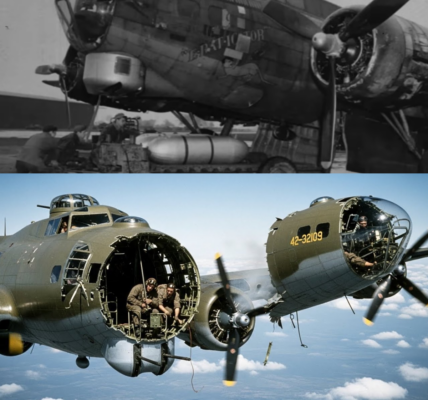
A photograph can freeze a single second forever. But freezing a moment does not necessarily freeze its meaning. Behind some of the most famous images of the twentieth century lie questions about staging, editing, context, memory, and the people who stood behind the lens. Some mysteries have been solved. Others have not. And sometimes, the most important discovery is not what the photograph shows, but what it leaves outside the frame.
In 1917, in the quiet English village of Cottingley, two young cousins produced photographs that seemed to show something impossible: fairies appearing beside them in a garden. The pictures eventually attracted the attention of Sir Arthur Conan Doyle, who believed they supported his interest in spiritualism. The images became famous precisely because they appeared to offer something photography was supposedly incapable of inventing.
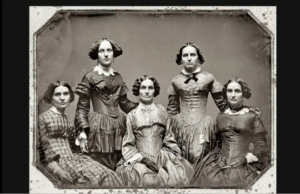
For decades, the photographs occupied an uncomfortable space between evidence and belief. The girls, Elsie Wright and Frances Griffiths, did not publicly admit the deception until 1983. The fairies had been constructed, and the photographs were not evidence of supernatural beings. Yet the episode remains historically important because it demonstrates something more complicated than a simple hoax: people do not always believe an image because the evidence is strong. Sometimes they believe because the image confirms something they desperately want to be possible. (Smithsonian Magazine)
That lesson becomes even more important when the subject is war.
During the Second World War, photographs were no longer merely private records. They could become instruments of national memory, morale, propaganda, and political symbolism. Millions of people who would never see a battlefield could experience the war through photographs printed in newspapers and magazines.
And among those images, few became more powerful than Joe Rosenthal’s photograph of American Marines raising the flag on Mount Suribachi during the Battle of Iwo Jima.
The photograph was taken on February 23, 1945, the fifth day of the American operation on the Japanese island. But the familiar image was not the first flag raising that day. Marines had already raised a smaller flag on the summit. A larger flag was subsequently ordered to be raised, and Rosenthal photographed that second raising. The National Archives confirms that distinction, as well as the existence of motion-picture footage documenting the event. (National Archives)

This is where photographic history becomes more subtle.
The famous picture was sometimes described as though it were a staged scene created for propaganda. That is misleading. The second flag raising was a real event, and Rosenthal’s photograph captured it. What changed was the meaning assigned to the image afterward. The photograph became a symbol far larger than the few seconds it actually recorded.
It was reproduced repeatedly, became the model for the Marine Corps War Memorial, and was used in wartime fundraising campaigns. The image therefore tells two stories at once: one about Marines raising a flag on a battlefield, and another about how societies transform a real event into a national symbol. (National Archives)
The distinction matters.
A photograph can be genuine and still become part of a carefully constructed public narrative.
That tension becomes even clearer when the war reaches its final days in Europe.

In April and May 1945, Soviet photographer Yevgeny Khaldei created one of the defining images associated with the fall of Nazi Germany: Soviet soldiers raising the red flag over the Reichstag in Berlin. The image echoed the visual power of Rosenthal’s Iwo Jima photograph and became an enduring symbol of Soviet victory.
But Khaldei’s photograph also reminds us that wartime images could be altered and shaped before becoming historical icons. The photographer worked within a Soviet system in which photography served political purposes as well as documentary ones. Historical accounts of Khaldei’s work have therefore drawn attention not only to what his camera recorded, but also to the circumstances surrounding the creation and later presentation of the image. (United States Holocaust Memorial Museum)
The crucial point is not that the victory was invented.
Berlin really fell. The Reichstag really became one of the central symbols of the German defeat. Soviet forces really raised their flag over the building.
The photograph exists within that reality.
But the exact image is also a constructed representation of that reality. That difference is easy to overlook because photographs possess an extraordinary psychological authority. When we see an old image, we instinctively feel that we are looking directly into the past.
We are not.

We are looking through a frame.
The photographer decides where that frame begins and ends. Someone decides which photograph is published. Editors decide which image reaches the public. Governments can decide which photographs are celebrated, suppressed, altered, or forgotten.
And sometimes the controversy becomes even more complicated.
Consider the photograph known as “Tank Man,” taken during the events surrounding the Tiananmen Square protests in Beijing in 1989. The image shows a lone man standing before a column of tanks. Stuart Franklin of Magnum Photos photographed the scene from a balcony near the Beijing Hotel, while other photographers captured related views. Franklin’s film was later smuggled out of China. (Magnum Photos)
The man’s identity remains unknown.
That fact alone gives the photograph an unusual quality. We know what the camera recorded, but not the full story of the person standing in front of the tanks. What had brought him there? What happened afterward? Who was he?

The photograph does not answer those questions.
And perhaps that is why it became so powerful.
It demonstrates that historical evidence can be simultaneously clear and incomplete. The image itself is famous. Its central figure is unmistakable. Yet some of the most basic details about the individual remain unknown.
The camera captured his action.
It did not capture his entire life.
That distinction should remain in our minds whenever we encounter supposedly “mysterious” historical photographs. Sometimes the mystery is not evidence that something supernatural or secret occurred. Sometimes it simply reflects the limits of the surviving record.
The same warning applies to photographs surrounded by conspiracy theories.
In 1969, Buzz Aldrin was photographed beside the American flag during Apollo 11. To some viewers, the flag appeared to be fluttering, leading to claims that the image could not have been taken on the Moon because there is no lunar atmosphere capable of producing an ordinary Earth-like breeze.
The explanation, however, is considerably less mysterious.

NASA designed the flag with a horizontal support rod because, in the vacuum of the Moon, a conventional flag could not simply hang outward as it would on Earth. During deployment, the rod did not extend completely, leaving wrinkles in the fabric. Those wrinkles created the appearance of movement. (NASA)
Here, the photograph actually teaches a valuable lesson about skepticism.
Questioning an image is healthy.
But questioning is not the same as assuming that the most extraordinary explanation must be true.
Sometimes the answer is hidden not in the photograph itself, but in the technical details surrounding how the photograph was made.
This is also why the story of the Mary Celeste needs to be treated carefully.

The ship was discovered abandoned in the Atlantic in December 1872, creating one of maritime history’s enduring mysteries. Over time, countless stories and legends accumulated around the disappearance of its crew. The original event is documented, but later claims about supernatural explanations and supposed photographic evidence belong to a much more uncertain layer of the story.
That distinction is essential.
A mysterious event can generate fictional evidence.
A photograph can then be repeated so many times that people eventually forget to ask where the original actually came from.
And once an image enters popular culture, separating historical evidence from later invention becomes increasingly difficult.
This is perhaps the most haunting lesson of all.
Photography feels objective because the camera appears incapable of having an opinion. But cameras do not decide what matters. People do.
A photographer chooses the moment.

An editor chooses the crop.
A publisher chooses the caption.
A government may choose the context.
And later generations may choose the meaning.
That is why the most famous photographs of the Second World War deserve more than admiration. They deserve examination.
The photograph from Iwo Jima is real, but its meaning expanded far beyond the instant captured by Rosenthal. The photograph associated with the Reichstag records a real victory, while also reflecting the political environment in which Soviet wartime photography was produced. These distinctions do not destroy the historical value of the images. They make that value more complicated.
A photograph is not necessarily false because it is symbolic.
Nor is it necessarily complete because it is authentic.
That is the line historians must constantly walk.
The modern world has made the problem even harder. Digital editing, artificial intelligence, manipulated images, synthetic media, and increasingly sophisticated visual tools mean that future generations will face photographs that can be altered almost invisibly.
Yet the problem itself is not new.

The technology has changed.
Human psychology has not.
People have always wanted photographs to confirm the stories they already believed.
That is why the Cottingley photographs could persuade intelligent people. It is why wartime images could become symbols of national identity. It is why an apparently waving flag on the Moon could become the center of a conspiracy theory. And it is why an incomplete photograph can sometimes become more powerful than a complete historical record.
Perhaps the greatest mistake is to ask only, “Is this photograph real?”
A better question is: What exactly is real about it?
Is the event real?
Is the person real?
Was the photograph staged?
Was it edited?

Was the caption accurate?
What happened immediately before the shutter clicked?
What happened afterward?
Who preserved the image?
Who published it?
And perhaps most importantly, what has been added to its meaning by generations of people who came afterward?
These questions do not weaken history.
They strengthen it.
The past does not become less meaningful when we discover that a famous photograph has a complicated story. In many cases, the opposite happens. We begin to understand not only the event itself, but also the society that remembered it.

That may be the deepest lesson hidden inside these controversial photographs.
The camera can preserve a second.
It cannot preserve everything.
It can show a battlefield, but not every thought of the people standing there. It can record a flag rising above a ruined building, but not the full political machinery that later turns that image into a symbol. It can show one anonymous man standing before tanks, but not tell us his name or what became of him.
The photograph gives us a fragment.

History asks us to understand the fragment without pretending it is the whole.
My own view is that these photographs are most valuable not when they give us easy answers, but when they teach us to look more carefully. The past deserves neither blind belief nor automatic suspicion. It deserves evidence, context, patience, and respect for what remains unknown.
Because sometimes the most important truth is not hidden inside the photograph.
It is hidden in everything we have not yet learned to see around it.
And when you look at a famous historical photograph today, do you see a complete record of the past—or only one carefully preserved second of it?
“Some content was generated using AI tools (including ChatGPT) and edited by the author for creativity, storytelling, and historical illustration purposes. Historical facts and key details should be verified against reliable historical sources. Any AI-generated or reconstructed visuals are intended for illustrative purposes and should not be interpreted as original historical photographs or archival evidence.”