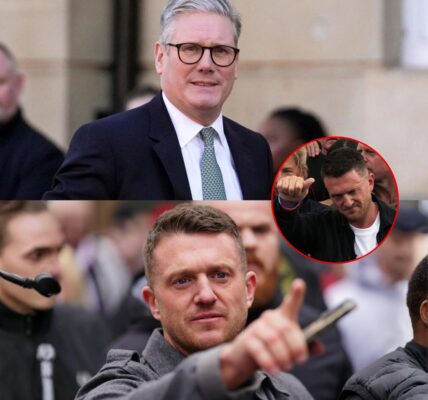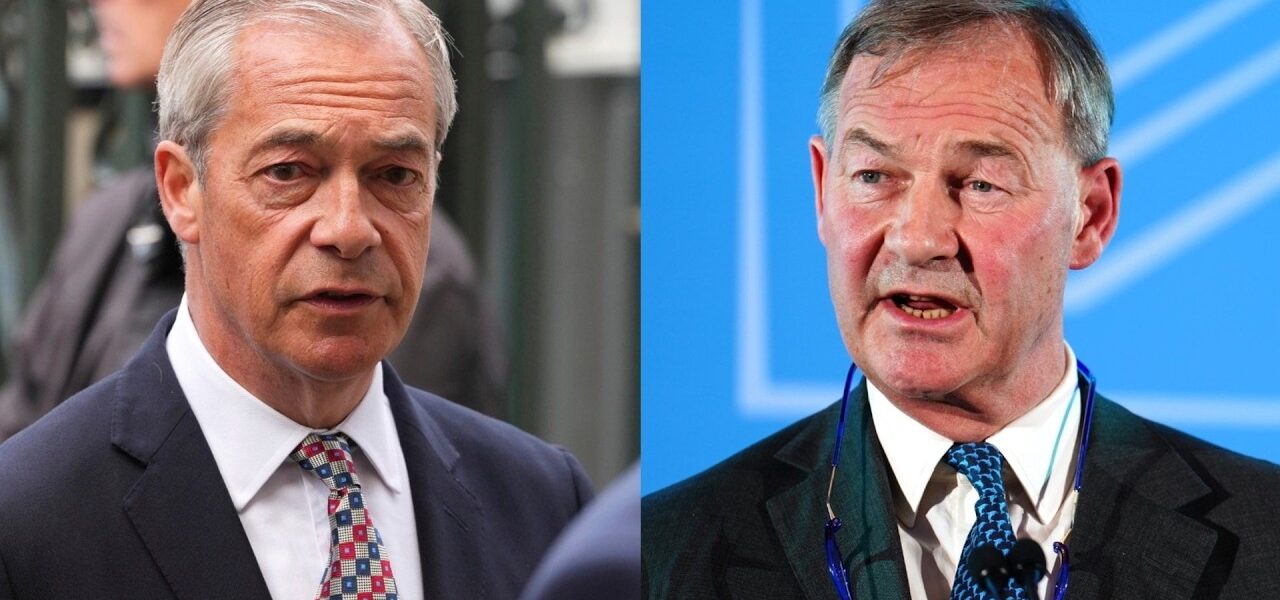

Farage and Lowe Clash Over Masked Protesters as Immigration Debate Splits the British Right
A sharp disagreement between Nigel Farage and Rupert Lowe over masked anti-immigration demonstrators in Dover highlights a growing strategic divide on the British right over protest tactics, policing, and political discipline.
A bitter disagreement between Nigel Farage and Rupert Lowe over masked anti-immigration protesters in Dover has exposed a deeper divide on the British political right.
The core question dividing figures on the right is simple: how far should public resistance to the government’s border policies be allowed to go before protest crosses the line into intimidation, disorder, or unlawful civil disobedience?
The dispute erupted after recent demonstrations in Kent placed the port of Dover once again at the center of Britain’s increasingly heated immigration debate.
According to accounts surrounding the controversy, Farage strongly criticized masked demonstrators involved in the protests, reportedly describing their appearance and behavior as unacceptable.
Lowe, meanwhile, adopted a markedly different tone, defending the rights of citizens angry about immigration policy and warning against what he views as excessive or politically selective policing.
While online commentators quickly labeled the disagreement a “right-wing civil war,” the reality reflects a genuine strategic debate over how a populist movement should conduct itself under intense public scrutiny.
Farage Draws a Line Between Protest and Confrontation
Nigel Farage has built his political career around challenging Britain’s immigration system and the established political parties.
From Brexit to the small-boats crisis, he has repeatedly argued that successive governments have failed to control the country’s borders and that public frustration over immigration has been ignored by Westminster.
That history makes his public criticism of anti-immigration demonstrators particularly significant.
Farage’s objection is not directed at the underlying frustration over immigration, but rather at protesters concealing their identities while participating in confrontational street actions.
For political movements seeking mainstream electoral legitimacy, the distinction is critical.
A politician can campaign vigorously for lower immigration, stronger borders, and deportations while insisting that political change must occur through elections, Parliament, and peaceful demonstrations.
Masked demonstrations create an entirely different public image.
Even where no criminal offense is committed, concealing one’s identity during an emotionally charged confrontation is widely perceived as intimidating, especially when protests involve clashes with police or attempts to obstruct traffic.
If Reform UK wants to transition from an insurgent protest movement into a credible party of government, it must convince a broad electorate that public anger can be translated into disciplined democratic policy without encouraging street disorder.
Lowe Focuses on Police Conduct and Public Grievance
Rupert Lowe has frequently positioned himself as a more uncompromising voice on issues of public order and immigration.
His response to controversies surrounding anti-immigration demonstrations has focused heavily on defending civil liberties and questioning the consistency of law enforcement.
The argument advanced by Lowe and his supporters is that ordinary citizens should not be treated as extremists simply because they are furious about government border policies.
They also question whether police respond with equal vigor to different ideological types of demonstrations.
That concern touches on a recurring theme in modern British politics, where activists across the political spectrum frequently accuse authorities of practicing “two-tier policing”—a charge that senior police leaders have consistently rejected.
From Lowe’s perspective, condemning demonstrators too quickly risks shifting public attention away from the underlying political failure that brought citizens onto the streets in the first place.
For his supporters, the protests are merely a symptom of a deeper crisis: the persistent arrival of small boats despite repeated government pledges to secure the nation’s coastline.
The Legal Reality of Face Coverings at Protests
Amid the political friction, legal experts emphasize that wearing a face covering during a demonstration is not automatically a criminal offense.
Simply wearing a balaclava or mask does not prove that an individual is violent, extremist, or engaged in unlawful activity.
Participants often cite legitimate concerns ranging from personal safety to a desire to protect their employment or avoid unwanted online harassment.
However, police possess specific statutory powers relating to face coverings under certain conditions.
When authorities reasonably believe that masks are being utilized to conceal identities in connection with criminal behavior, or where specific legal designations have been authorized by senior officers, concealing one’s face can become an offense.
The surrounding conduct therefore matters enormously.
A peaceful masked demonstrator holding a placard occupies a very different legal position from someone hiding their identity while damaging property, threatening opponents, or obstructing emergency vehicles.
Partisan online discussions frequently blur those boundaries, with critics portraying entire demonstrations as criminal mobs and supporters dismissing all police interventions as authoritarian overreach.
Dover as a Symbolic Flashpoint
Dover carries immense symbolic weight in Britain’s immigration debate.
The white cliffs and Channel coastline have become visual shorthand for the small-boats crisis.
When migrants arrive after crossing from northern France, images of Border Force vessels bringing individuals ashore dominate national news broadcasts.
For opponents of current immigration policies, Dover represents physical proof of a border that remains inadequately controlled.
For refugee advocacy organizations, it represents vulnerable people risking their lives on one of the world’s busiest shipping lanes.
For the government, it presents an intractable operational challenge involving international criminal gangs, bilateral cooperation with France, asylum processing backlogs, and removal agreements.
These competing interpretations help explain why demonstrations in Dover evoke such intense emotions and volatile confrontations.
The Broader Strategic Divide on the British Right
The disagreement between Farage and Lowe illustrates a broader strategic tension within the British right, which increasingly encompasses two distinct political instincts.
The first instinct seeks radical policy change through conventional democratic institutions, combining tough immigration restrictions with strict electoral discipline, organizational professionalism, and respect for the rule of law.
The second instinct is more sympathetic to direct public resistance, arguing that traditional political mechanisms have repeatedly failed to deliver what voters demanded and that establishment rules are designed to stifle dissent.
For the first group, uncontrolled street confrontations are politically dangerous because they alienate moderate voters and discredit legitimate policy concerns about immigration.
For the second group, constant calls for restraint sound like another way of preventing dissatisfied citizens from challenging the political establishment.
This dilemma is particularly acute for populist parties, which draw their energy from public anger toward institutions yet must rely on those same institutions if they ever hope to govern effectively.
What Happens Next as Protest Tensions Continue
As Britain’s immigration debate remains highly charged, politicians demanding stricter border controls will likely face recurring questions regarding the boundaries of acceptable activism.
The rift between Farage and Lowe demonstrates that shaping a populist movement involves more than just opposing government policy; it requires defining how a political coalition handles public dissent, law enforcement, and public order.
Whether the right leans toward disciplined electoral organization or unyielding street protest could determine its trajectory heading toward the next general election.
Interactive Discussion Question
How should political movements balance the right to express deep public anger with the necessity of maintaining public order during street protests?