
Inside Nigel Farage’s 100-Day Blitz: Reform UK’s High-Stakes Gamble to Upend British Governance
Nigel Farage has unveiled an aggressive first-100-days agenda for a Reform UK government, promising to halt Channel crossings, slash welfare, cut energy bills, and force an emergency budget through an extended Parliament.
Nigel Farage has laid out a radical governing blueprint designed to reshape the United Kingdom at breakneck speed, pledging that an incoming Reform UK administration would halt small-boat crossings, deliver sweeping welfare cuts, reduce household energy bills, and push an emergency budget through Parliament within its first three months.
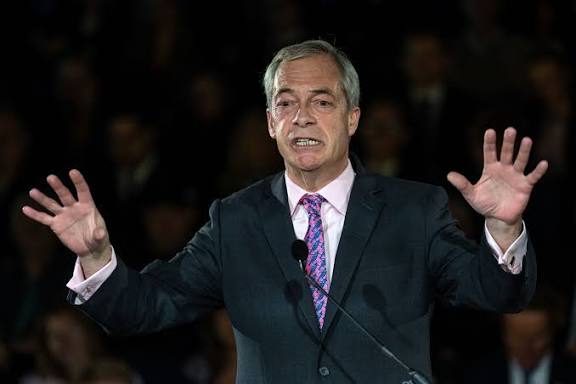
The ambitious agenda, formally presented at Reform UK’s autumn party conference, abandons traditional multi-year manifesto horizons in favor of a rigid 100-day countdown. Farage declared that failing to meet these benchmarks would represent a direct failure of the government itself.
To force the legislation through, Farage says he would declare a “national emergency,” cancel parliamentary recesses, keep lawmakers sitting up to six days a week, and threaten to pack the House of Lords with newly appointed peers if the upper chamber attempts to delay his agenda.
The strategy represents a high-stakes bet that an increasingly fatigued British electorate prioritizes rapid, disruptive action over traditional institutional processes. Yet the plan faces immense legal, diplomatic, constitutional, and economic hurdles that could test the limits of executive power.
The Core Pledges of the 100-Day Plan
Reform UK’s platform compresses multiple complex policy overhauls into a single, coordinated legislative offensive:
-
Border Enforcement (“Operation Fortress”): Deploy the Royal Navy alongside civilian maritime units to intercept unauthorized dinghies in the English Channel and return passengers directly to France or Belgium.
-
Mass Deportations: Launch the largest removal operation in modern British history, targeting individuals who entered without authorization and foreign national offenders while expanding domestic detention capacity.
-
Emergency Fiscal Package: Table an emergency budget to enact deep cuts in public spending alongside targeted tax reductions.
-
Income Tax Relief: Increase the personal tax-free allowance from £12,570 to £15,000, removing an estimated 2.9 million people from the income tax roll and saving typical earners roughly £486 annually.
-
Energy Bill Reductions: Cut average household utility bills by approximately £250 per year by permanently eliminating VAT on domestic power and scrapping green levies tied to Net Zero frameworks.
-
Welfare and Civil Service Cuts: Enact wide-ranging reductions in welfare expenditure and trim the Whitehall bureaucracy to fund tax cuts.
The Flagship Test: Stopping Channel Crossings in 100 Days
The centerpiece of Farage’s agenda—and its most legally hazardous component—is the pledge to end small-boat crossings within 100 days.
Under the party’s “Operation Fortress” plan, detailed by home affairs spokesman Zia Yusuf, the Royal Navy would be tasked with blocking unauthorized vessels from entering British territorial waters and escorting passengers back to French shores.
The proposal taps into deep public frustration over years of failed political efforts to curb unauthorized arrivals. However, international maritime law and sovereign borders present significant obstacles that military deployments alone cannot dissolve:
First, under the International Convention for the Safety of Life at Sea (SOLAS), any vessel—including a warship—is legally obligated to render immediate assistance to persons in distress at sea. Fragile, overloaded inflatables cannot simply be pushed back without creating severe maritime safety emergencies that trigger mandatory rescue operations.
Second, a British government cannot unilaterally force a sovereign neighbor to accept intercepted passengers. Farage has cited an informal political understanding with Jordan Bardella, leader of France’s right-wing National Rally party, as evidence that cross-Channel returns could be negotiated.
Yet National Rally does not hold power in Paris. An understanding between two opposition parties holds no binding legal authority over the French state or its border police.
Without a bilateral readmission treaty with France or the wider European Union, returning individuals to continental Europe remains diplomatically and operationally unfeasible, regardless of which flag flies on the intercepting vessel.
Mass Removals and Institutional Bottlenecks
Beyond stopping future arrivals, Reform UK has promised the largest deportation drive in modern British history.
Executing large-scale deportations requires far more than political instructions. Administrative removals demand extensive infrastructure:
-
Verifying identities and securing travel documentation from non-cooperative countries of origin.
-
Massive expansions in physical immigration detention space and contracted charter flights.
-
Navigating complex appeals within domestic courts and international human rights conventions.
Even if an administration reorganizes central departments around removals, civil servants and immigration tribunals are bound by statutory standards that cannot be dismantled overnight without triggering prolonged constitutional litigation.
The Fiscal Gamble: Balancing £91 Billion in Proposed Savings
Reform UK frames its economic strategy as a pro-growth alternative to current fiscal policy. The party states it has identified £91 billion in savings and non-tax revenues to fund an estimated £58 billion in spending pledges and tax relief.
A major pillar is raising the income tax personal allowance to £15,000. The reform offers immediate appeal to lower-wage workers and pensioners whose state pensions are creeping toward the current frozen threshold of £12,570.
To balance these reductions, Farage points to sharp cuts in welfare rolls, significant reductions in the civil service, and steep rollbacks in overseas development aid.
However, fiscal experts routinely note that large-scale savings from welfare reform rarely materialize rapidly. Tightening eligibility rules or combating benefit fraud requires complex administrative rewrites and software overhauls.
Furthermore, broad cuts to working-age benefits risk shifting immediate financial burdens onto local councils, emergency healthcare systems, and temporary housing programs.
Energy Bills: Shifting Costs from Consumers to the Treasury
The promise to cut household energy bills by roughly £250 per year targets an acute cost-of-living pressure point.
Reform proposes removing environmental policy charges, eliminating the 5% VAT rate on domestic energy, and rolling back aspects of the UK’s Net Zero targets.
While removing levies from consumer invoices would reduce monthly utility statements, it does not erase the state’s underlying contractual obligations. Many legacy subsidies for renewable energy projects are governed by legally binding private contracts.
If these costs are removed from household bills, the government must either absorb them into the national debt, fund them through general taxation, or face protracted legal challenges from energy operators. In practice, a lower utility invoice could simply shift the bill onto taxpayers through other avenues.
Challenging the Westminster Machine: 6-Day Sittings and Packing the Lords
Farage’s timetable requires an unprecedented acceleration of the parliamentary process.
To prevent legislative gridlock, Farage says his government would cancel upcoming recesses and mandate that the House of Commons sit up to six days a week, conducting around-the-clock debates if necessary.
While Parliament possesses the constitutional authority to alter its own standing orders and extend sitting hours, rushing sweeping legislation sharply curtails scrutiny. Complex bills drafted and passed in days routinely suffer from drafting ambiguities that invite subsequent judicial reviews.
The steepest institutional roadblock, however, lies in the House of Lords.
The unelected upper chamber holds significant power to amend, delay, and scrutinize legislation passed by the Commons. Farage has warned that if peers attempt to block his 100-day package, he would advise the Crown to create hundreds of new Reform-aligned peers to force the legislation through.
While Prime Ministers historically held the prerogative to recommend peerages, executing mass appointments specifically to swamp legislative opposition would trigger a constitutional crisis unseen since the passage of the Parliament Act of 1911.
Domestic Training vs. Immediate Workforce Realities
The platform extends beyond immigration and taxation into public services. Shadow Education Secretary Suella Braverman has outlined proposals to uncap domestic medical school places, offer zero-interest student loans for nursing candidates, and reduce overall university loan issuance by approximately 20% to steer young people toward vocational trades.
While expanding domestic medical training addresses long-standing complaints regarding Britain’s reliance on overseas healthcare staff, training a physician requires a minimum of five to seven years of undergraduate and clinical education.
The policy highlights an essential distinction within Reform’s agenda: launching an initiative within 100 days does not mean solving an underlying shortage within that same timeframe.
Executive Will Versus Institutional Reality
Nigel Farage’s 100-day manifesto is designed to exploit public disillusionment with political gradualism. By tying specific numerical targets and immediate deadlines to his leadership, he is framing administrative speed as the ultimate measure of competence.
For supporters, the programme offers an unapologetic break from decades of institutional inertia, Whitehall consensus, and parliamentary compromise.
For critics, the strategy relies on unrealistic fiscal assumptions, disregards international law, and threatens constitutional norms that protect against unchecked executive power.
Ultimately, governing through political urgency carries significant risks. By establishing an explicit 100-day stopwatch, Farage has eliminated the usual ambiguities and long-term excuses that shield incoming administrations.
If Reform UK ever assumes power, its political standing will be judged against the concrete targets it set for itself: whether the boats stop, whether tax bills fall, and whether an emergency budget can withstand the realities of public administration.
Can an incoming government fundamentally overhaul border security and public spending in 100 days without undermining essential constitutional checks and balances?