CHINA’S FAITH CONTROVERSY ERUPTS: HARDLINE RELIGIOUS POLICIES RAISE NEW QUESTIONS ABOUT POWER AND IDENTITY! .N1

Inside China’s Push to Reshape Religion: Security Strategy or State Control?
Beijing insists tighter oversight and its ‘Sinicization’ drive protect national unity, but international critics say state power is steadily swallowing religious independence.
In cities and rural townships across China, minarets and Arabic-style domes have quietly disappeared from historic mosques, replaced by traditional Chinese pagodas and flat tile roofs. In official Christian sanctuaries, pastors deliver sermons framed by national policy slogans. And across the northwestern region of Xinjiang, digital surveillance cameras monitor the entrances of places of worship.
These visible shifts are part of Beijing’s systematic overhaul of religious life.
Chinese authorities argue that tighter state oversight is an essential shield against extremism, separatism, and foreign interference. Western governments, United Nations experts, and independent human rights advocates view it through a far darker lens. They argue the initiative has steadily turned into an aggressive campaign to bring personal faith under total Communist Party control.
The clash is not merely a bureaucratic dispute. It strikes at the heart of how a rising superpower governs a deeply diverse population of hundreds of millions of believers.
What Is Happening on the Ground
China’s constitution formally guarantees “freedom of religious belief.” In practice, however, that freedom comes with strict legal parameters.
Religious groups must register with five state-sanctioned associations: the Buddhist Association of China, the Chinese Taoist Association, the Islamic Association of China, the Protestant Three-Self Patriotic Movement, and the Catholic Patriotic Association.
Any gathering outside these officially managed groups is technically illegal.
Under President Xi Jinping, the central pillar of religious governance has become a concept known as Sinicization (Zhongguohua).
Officially, Beijing defines Sinicization as adapting religious traditions to Chinese culture, aligning practices with national legal frameworks, and rejecting external interference. In practice, the policy has altered the everyday visual, organizational, and theological realities of faith.
State administrators oversee clergy appointments, dictate seminary curriculums, and establish strict administrative rules for houses of worship. In multiple provinces, state directives have prohibited minors under 18 from attending religious services or participating in organized faith education, prompting warnings from parents that passing down family traditions has become perilous.
The Controversy Behind the Architectural Overhaul
Few aspects of Sinicization have drawn as much public attention as the physical alteration of places of worship, particularly mosques.
Across Gansu, Ningxia, Yunnan, and Henan provinces, local authorities have modified the architecture of hundreds of mosques. Domes, crescent moons, and Arabic-style arches have been dismantled and replaced with traditional Han-style sloping roofs.
Government officials defend the renovations as standard urban renewal, infrastructure safety upgrades, and cultural alignment.
Critics and local community members, however, describe the changes as a deliberate effort to strip ethnic minority communities of their cultural identity.
The alterations have touched both the Uyghur population in the northwest and the Hui Muslims—a Mandarin-speaking Muslim minority distributed throughout China that historically enjoyed cooperative ties with Beijing.
Even in Hui-majority areas that long avoided political friction, the removal of distinct architectural markers has sparked quiet resentment and occasional public standoffs.
Xinjiang: The Sharpest Fault Line
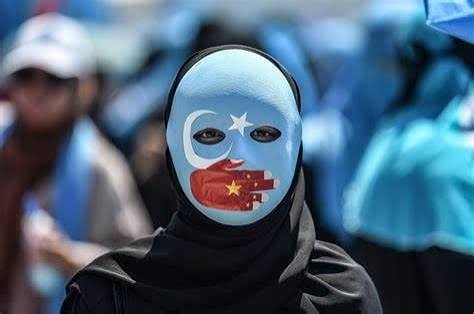
The international standoff over China’s religious policies reaches its most contentious point in the Xinjiang Uyghur Autonomous Region.
For years, Beijing has argued that Xinjiang faces severe threats from religious extremism, ethnic separatism, and violent terrorism. Chinese officials routinely point to fatal attacks, including the 2009 Ürümqi riots and a series of knife and vehicle assaults between 2013 and 2014, as justification for a sweeping security dragnet.
The Chinese government maintains that its policies restored peace, eliminated terrorist violence, and boosted regional economic growth. State representatives describe extensive vocational education facilities as training programs that counter radicalization while teaching marketable skills.
International organizations paint a radically different picture.
Reports from the United Nations Office of the High Commissioner for Human Rights (OHCHR), human rights researchers, and foreign investigative journalists have documented:
-
Mass detentions in high-security facilities;
-
Intrusive biometric and algorithmic surveillance;
-
Severe curbs on religious customs, including fasting during Ramadan;
-
Demolition or restructuring of religious sites;
-
Systemic pressure on the Uyghur language and cultural heritage.
Beijing has rejected these findings, accusing Western nations of manufacturing narratives to destabilize China’s sovereignty.
Independent Churches and the Vatican Dilemma
The squeeze is equally visible across Chinese Christianity, which is divided between registered state-backed churches and independent, unregistered networks commonly called “house churches.”
State officials insist that church registrations protect public order and national security. Independent congregations, however, counter that signing up with state-sanctioned bodies requires submitting sermon topics and church finances to administrative monitoring.
As enforcement tightened, authorities shuttered prominent unregistered churches, brought legal charges against uncooperative pastors, and dismantled outdoor crosses. Officials frame these operations as straightforward zoning and legal compliance actions. Church leaders view them as an effort to eliminate independent worship.
Meanwhile, Chinese Catholics remain caught in a delicate diplomatic arrangement.
For decades, the Holy See and Beijing clashed over who held the authority to appoint bishops. A landmark provisional agreement reached in 2018 established a consultative framework for joint bishop appointments.
Yet tensions persist. Critics argue the agreement forced the Vatican to concede too much power to an officially atheist ruling party, while Beijing continues to insist that domestic religious affairs remain free from external dictates.
Tibetan Buddhism and the Succession Battle
In Tibet, the flashpoint centers on state management of monastic life and the unresolved question of spiritual succession.
Beijing highlights substantial infrastructure development, poverty alleviation, and modernization across the Tibetan plateau as proof of successful governance. It asserts that strict security measures are vital to prevent separatist unrest.
Tibetan advocates and human rights observers describe a climate of extensive ideological policing inside monasteries, where monks are required to declare loyalty to the state.
An even larger confrontation looms over the eventual succession of the 90-year-old 14th Dalai Lama.
Beijing insists that any future reincarnation must be approved by the central government according to historical conventions, including the use of a ceremonial Golden Urn.
The Dalai Lama and the Tibetan government-in-exile have repeatedly rejected that position, insisting that spiritual succession belongs exclusively to the Tibetan Buddhist community, free from secular interference.
When the time comes, that dispute threatens to trigger a major diplomatic collision between Beijing and Washington.
Surveillance Technology as a Governing Tool
What sets China’s current religious oversight apart from past decades is the integration of modern surveillance technology.
In several regions, places of worship must install facial-recognition cameras at their entrances. Law enforcement agencies deploy integrated data platforms, automated vehicle tracking, and phone inspections to monitor attendance at non-state religious gatherings.
Authorities frame digital monitoring as standard public security infrastructure designed to deter criminal activity.
Civil society researchers counter that the combination of high-tech surveillance and administrative vetting makes private religious practice almost impossible to shield from state scrutiny.
Fact vs. Assertion: Navigating the Geopolitical Divide
Assessing the reality of religious life in China requires separating established facts from rhetoric on both sides.
It is factually incorrect to claim that religion is outright banned in China. Millions of citizens openly pray in state-registered Buddhist and Taoist temples, attend Sunday services at sanctioned Christian churches, and worship at officially designated mosques across major cities.
Equally misleading is the claim that believers enjoy complete religious liberty. Independent congregations, unregistered clergy, and ethnic minority groups face extensive administrative limits, occasional detention, and continuous surveillance.
The debate is further complicated by global geopolitics.
The United States, the European Union, and allied nations have enacted targeted sanctions, export restrictions, and supply-chain laws tied to alleged human rights abuses in China. Beijing responds by accusing Western governments of weaponizing human rights to contain its economic rise, highlighting Western racial inequalities and foreign military interventions as evidence of double standards.
This geopolitical confrontation often hardens positions, making balanced scrutiny difficult.
What to Watch Next
As Beijing continues its regulatory campaign, three key developments will shape the future of religious life in China:
-
The Evolution of the Sinicization Mandate: Observers are watching whether the ongoing mandate to reshape religious spaces expands deeper into regional provinces and previously unaffected communities.
-
The Status of the Vatican Deal: The regular renewal cycles of the provisional Sino-Vatican pact will test whether diplomatic accommodation can survive persistent disagreements over bishop appointments.
-
The Tibetan Succession Question: Preparations surrounding the recognition of future Buddhist leaders remain the most sensitive potential flashpoint for international diplomacy.
The ongoing controversy does not simply concern church steeples or mosque domes. It turns on a fundamental question of political philosophy: how much control may a government exert over personal faith in the name of national stability?
Beijing contends that strong state oversight is indispensable for preventing social fragmentation. International observers argue that genuine religious freedom cannot exist when the boundaries of faith are dictated by the state.
Where should governments draw the line between protecting national security and respecting personal religious practice?