
The Fracture and the Fringe: Inside the Murmurs of a Farage-Lowe Alliance
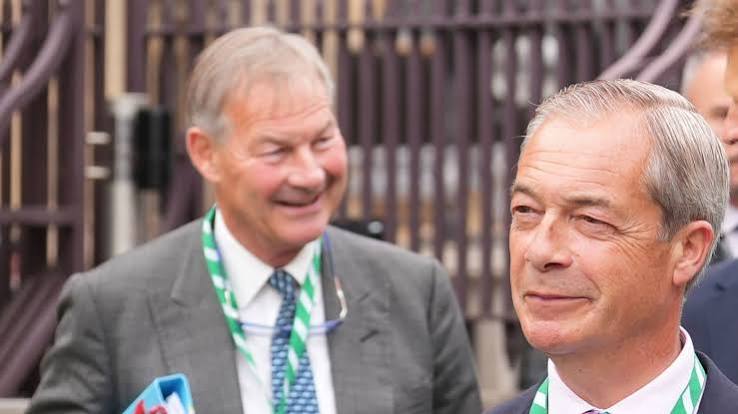
The corridors beneath the Palace of Westminster carry sound in strange ways. In the stone-flagged passageways where centuries of British political power have been negotiated, whispered conversations often precede public earthquakes. In recent weeks, the whispers have centered on an intriguing, volatile question: Could Nigel Farage and Rupert Lowe—two of the most polarizing, consequential figures on Britain’s insurgent right—actually join forces?
To the casual observer scanning digital headlines, the rumor sounds like a thunderclap: a sudden, dramatic alliance designed to reshape the British political landscape and mount an unprecedented siege on the political establishment. But to anyone who has spent decades dissecting the machinery of power, political reporting demands skepticism. Politics is replete with flirtations that never reach the altar, shared enemies that fail to produce shared platforms, and personal ambitions that collide long before ballots are printed.
Yet the sheer persistence of the speculation reveals a deeper seismic shift. The traditional duopoly of British politics—the century-old oscillation between the Conservative and Labour parties—is fracturing. On the right flank, millions of voters feel unmoored, angry, and convinced that the governing consensus has failed them. Whether a rapprochement between Farage and Lowe is a genuine tactical maneuver or a phantom conjured by Westminster insiders, the dynamic between these two men touches the rawest nerves of contemporary Britain: borders, identity, institutional decay, and the ruthless arithmetic of the ballot box.
1. The News Story: The Gathering Storm on Britain’s Right
For nearly a century, Britain’s first-past-the-post electoral system acted as an unyielding fortress protecting the two major parties. Minor parties could shout from the ramparts, but they rarely breached the gate. That fortress, however, was fundamentally cracked by the Brexit referendum of 2016. The departure from the European Union demonstrated that insurgent movements, operating outside orthodox party structures, could capture the national agenda and force Westminster to bend to their will.
At the center of that insurgency was Nigel Farage. Over three decades—first through the UK Independence Party (UKIP), then the Brexit Party, and subsequently Reform UK—Farage honed a brand of anti-establishment populism that combined media showmanship with intuitive communication. His message targeted voters who felt abandoned by globalization, neglected by Whitehall, and ignored by cosmopolitan elites. Even when his parties secured only a handful of parliamentary seats, Farage exercised an outsized, indirect veto over British governance, repeatedly pushing the Conservative Party rightward out of sheer electoral terror.
Parallel to this trajectory stood Rupert Lowe. Known initially to the British public as the combative chairman of Southampton Football Club, Lowe carved out his own political profile as an unapologetic, hardline critic of the political establishment. A former Member of the European Parliament for the Brexit Party, Lowe later entered the House of Commons representing Great Yarmouth. Like Farage, he cultivated an audience deeply alienated by the political status quo, building a loyal following that favored aggressive immigration curbs, radical cuts to state bureaucracy, and a confrontational, uncompromising challenge to institutional norms.
The Core Figures: Two Men, One Overlapping Electorate
The current wave of speculation is driven by the obvious demographic and ideological overlap between their respective bases. Both men appeal directly to an electorate defined by shared grievances:
-
Immigration: A conviction that successive governments, both Conservative and Labour, have presided over unsustainable levels of legal migration and proved incapable of halting unauthorized small-boat crossings in the English Channel.
-
National Sovereignty and Culture: A belief that British identity and traditions are being eroded by multiculturalism, progressive social policy, and international treaties.
-
The Administrative State: Deep hostility toward Whitehall civil servants, high tax burdens, regulatory expansion, and what they view as a self-serving, insulated political class.
Yet, despite this ideological proximity, the relationship between the two figures has been characterized by friction, institutional tension, and sharp strategic divergence. While Farage has sought to professionalize his movement and position Reform UK as a credible, broad-tent challenger capable of supplanting the Conservatives, Lowe has staked out an even more radical, uncompromising stance. Lowe’s subsequent departure from Reform UK and his founding of the rival political vehicle Restore Britain transformed an internal personality clash into an open, external rivalry on the hard right.
                     THE BATTLE FOR THE BRITISH RIGHT
┌─────────────────────────┬─────────────────────────┬─────────────────────────┐
│     CONSERVATIVES       │        REFORM UK        │     RESTORE BRITAIN     │
│   (Traditional Right)   │   (Populist Insurgent)  │    (Ethno-Nationalist)  │
├─────────────────────────┼─────────────────────────┼─────────────────────────┤
│ • Institutional base    │ • Led by Nigel Farage   │ • Led by Rupert Lowe    │
│ • Squeezed from center  │ • Seeks mainstream      │ • Hardline deportations │
│   and right flank       │   populist dominance    │ • Online & grassroots   │
│ • Vulnerable under FPTP │ • Professionalizing     │   insurgency            │
└─────────────────────────┴─────────────────────────┴─────────────────────────┘
The Trigger: Speculation of an Electoral Pact
The catalyst for recent reporting in Westminster has been talk of a possible political rapprochement—an understanding, or even a formal pact, between Farage’s Reform UK and Lowe’s Restore Britain. The logic advanced by advocates of such an alliance is purely mathematical: Britain’s first-past-the-post electoral system severely punishes a fractured vote.
Under the British system, candidates do not require a majority to win a seat in Parliament; they merely need a plurality—one vote more than their closest rival. If two insurgent candidates on the right split 35% of the vote evenly down the middle, a Labour or Liberal Democrat candidate can easily claim the seat with 30%. In dozens of constituencies across the post-industrial Midlands, the North, and coastal England, a divided populist right guarantees defeat, while a united front could yield parliamentary representation.
Talk of an alliance has suggested various forms of cooperation, ranging from non-aggression pacts—where one party stands down candidates in specific constituencies to give the other a clear run—to coordinated messaging on flagship issues like border security.
The Facts vs. The Fiction: What Has Actually Happened?
Behind the breathless speculation, the factual reality is far more sober:
-
No Formal Agreement Exists: Neither Reform UK nor Restore Britain has signed, ratified, or formally unveiled an electoral pact.
-
Public Overtures vs. Private Rebuffs: While Lowe has floated conditions and extended public overtures toward “uniting the right,” Farage and his senior leadership have responded with cool skepticism, with Farage openly distancing himself from the extreme, hard-right rhetoric emerging from Restore Britain’s orbit.
-
Cooperation vs. Shared Alignment: While both men consistently attack government migration figures and rail against institutional lethargy, sharing an enemy is not the same as sharing a manifesto. Public praise or concurrent appearances at political events do not constitute an electoral machine.
Westminster remains transfixed by the prospect because the stakes are undeniably high. If Farage and Lowe were to find common ground, it would consolidate an insurgent voting bloc capable of gutting the Conservative Party’s core base. If they remain bitter rivals, they risk canceling each other out, turning potential parliamentary breakthroughs into a cautionary tale of populist fratricide.
2. My Professional Perspective
To evaluate this story through the lens of political reporting is to look past the theatrical posturing and examine the cold, structural dynamics driving both men. When you have spent thirty years tracking political power across Washington, London, and Canberra, you recognize that headlines about “shock alliances” are almost always symptoms of a much deeper, unacknowledged reality.
Here is the hidden story behind the Farage-Lowe dynamic—the calculations, structural traps, and psychological factors that the daily news cycle consistently overlooks.
What People Have Overlooked: The Mechanics of Outflanking
The dominant narrative in Westminster treats Farage as the absolute terminus of the British right. For two decades, editorial pages and broadcast panels have portrayed him as the most radical force in mainstream British politics. But that assessment is outdated.
What observers have missed is that Nigel Farage is currently facing a dilemma that has haunted insurgent leaders throughout history: he is being outflanked from his own right.
                 THE POPULIST SPECTRUM SHIFT
       Moderate ◄────────────────────────► Radical
  [Tory Center-Right]   [Reform UK (Farage)]   [Restore Britain (Lowe)]
                             ▲
                    Caught in the Middle:
                    Must look "credible" to win,
                    but risks looking "soft" to the base
Rupert Lowe’s emergence as an independent force with Restore Britain is not merely a personal spat; it is an ideological assault on Farage’s flank. By demanding extreme policies—such as the immediate deportations of hundreds of thousands of individuals, explicit ethno-nationalist platform points, and radical rollbacks of human rights legislation—Lowe has constructed a political dynamic where Farage can suddenly be accused of “going soft”.
When Lowe’s camp insinuates that Reform UK is diluting its core principles to curry favor with the Westminster establishment, they are striking at the heart of Farage’s brand. For the first time in his career, Farage is not the angry outsider throwing stones at the cathedral; he is the established leader of an organized party, trying to maintain message discipline, attract corporate donors, and look like a government-in-waiting.
An alliance with Lowe would immediately complicate that project. For Farage, bringing Lowe into the fold would mean absorbing political rhetoric that alienates moderate suburban voters—the exact demographic Reform UK needs if it ever hopes to move beyond protest politics and win dozens of parliamentary seats.
The Deeper Meaning: The Algorithm vs. The Constituency
There is an overlooked structural reason why an alliance is extraordinarily difficult to pull off: Farage and Lowe represent two fundamentally different models of contemporary right-wing campaigning.
-
The Farage Model (Broadcast Populism): Farage is a master of mainstream media manipulation. He understands the rhythms of television news, the power of a pithy soundbite at a pub counter, and the necessity of maintaining just enough ambiguity to appeal to both disillusioned working-class Labour voters in the North and disaffected Tory retirees in the South. He relies on personal charisma, national tours, and high-visibility appearances.
-
The Lowe Model (Algorithmic Insurgency): Lowe’s political strength is forged in the digital ecosystem of social media, particularly on X (formerly Twitter), where unvarnished, inflammatory, and aggressive discourse generates engagement and crowdfunding. Amplified by international tech figures and online activists, this wing of the populist movement does not seek compromise or institutional acceptance. It thrives on ideological purity, anti-migrant escalation, and relentless hostility toward established institutions.
This divide creates an operational dilemma. A political party cannot easily run an election campaign that is simultaneously respectable enough to win BBC panel debates and radical enough to satisfy hyper-online activists demanding institutional demolition. When Westminster journalists speculate about a merger, they treat these two entities as compatible puzzle pieces. In reality, they are two divergent operating systems.
Why This Story Matters: The Death Agony of the Conservative Party
The real significance of the Farage-Lowe dynamic does not lie solely within their respective camps. It lies in what it means for the Conservative Party.
The Tories are trapped in a vice. Historically, the Conservative Party was the most ruthless electoral machine in Western democracy, built on an instinctive ability to absorb threats on its flank and maintain a broad coalition of center-right moderates and traditional nationalists. That machine is now broken.
                  THE CONSERVATIVE ELECTORAL SQUEEZE
           ┌──────────────────────────────────────────────┐
           │           MODERATE / SUBURBAN VOTERS         │
           │        (Lost to Lib Dems & Labour)           │
           └──────────────────────┬───────────────────────┘
                                  │
                                  ▼
                     [ THE CONSERVATIVE PARTY ]
                                  ▲
                                  │
           ┌──────────────────────┴───────────────────────┐
           │          DISILLUSIONED CORE BASE             │
           │       (Leaking to Reform / Restore)          │
           └──────────────────────────────────────────────┘
If Farage and Lowe maintain an uneasy truce or coordinate candidates, the Conservative Party faces electoral irrelevance across vast swaths of provincial England. Even without an alliance, the mere existence of two competing factions to their right paralyzes the Tories. If the Conservative leadership pivots further right to neutralize Lowe’s rhetoric, they alienate moderate suburban voters in the South to the Liberal Democrats and Labour. If they pivot toward the center, their remaining base defects en masse to Farage.
In 30 years of monitoring elections, I have rarely seen an established governing party so thoroughly stripped of strategic agency. The debate over whether Farage and Lowe can unite is, in reality, a post-mortem on the Conservative Party’s monopoly over the British right.
The Unanswered Questions
As this drama plays out behind closed doors, several critical questions remain unaddressed by commentators:
-
Who Holds the Ground Machine? A political party is not just a social media account and a recognizable face. It requires local associations, vetted candidates, campaign managers, leafleters, and legal compliance teams. Farage has spent years painfully assembling that infrastructure. Does Lowe possess a genuine ground operation, or is Restore Britain primarily a digital echo chamber backed by high-net-worth individual donors? An alliance based on digital clout without boots on the ground is an illusion.
-
The Finance Question: Modern political insurgency requires cash. Who is funding both operations? As major donors look at the fractured landscape, will they demand a merger as a condition of their checks, or will competing benefactors finance a destructive civil war between Reform and Restore?
-
The Psychology of Egos: In insurgent politics, leaders do not view themselves as party managers; they view themselves as men of destiny. Can Nigel Farage—who has commanded center stage on the populist right for a generation—share power, let alone veto authority, with a figure as stubborn, combative, and self-assured as Rupert Lowe? History suggests that movements built around dominant personalities splinter far more often than they merge.
What Audiences Must Understand Beyond the Headline
The public must understand that the ongoing dance between these two men is not about who gets a cabinet post or who sits in which committee room. It reflects an unprecedented crisis of faith in British governance.
For twenty years, the British public has been told by successive prime ministers that migration would be brought down to the tens of thousands, that the National Health Service would be restored to health, that regional inequality would be leveled up, and that national borders were secure. Every single one of those promises was broken.
The phenomenon of Farage and Lowe is not the cause of Britain’s political instability; it is the consequence of that prolonged governance failure. When citizens conclude that normal political processes no longer produce results, they inevitably turn to figures who promise to smash the apparatus.
Whether Farage and Lowe shake hands on a stage or tear each other apart in by-elections is secondary to the underlying reality: a substantial portion of the British electorate has mentally checked out of conventional politics. They are waiting for a vehicle that can translate their fury into power.
To truly understand what is at stake, you have to leave London.
You have to travel two hours east by train, out to the end of the line, to Great Yarmouth, where Rupert Lowe holds court. You have to walk along the bleak, wind-battered coastline past shuttered amusement arcades, boarded-up bed-and-breakfasts, and rusted piers jutting out into a cold North Sea. Or you have to travel south to Clacton-on-Sea, where Nigel Farage won his parliamentary mandate.
In these places, the rhetoric of Westminster feels distant, almost insulting. Here, people do not debate the finer points of party constitutional law or media spin. They see dental deserts where people pull their own teeth because NHS appointments are nonexistent. They watch their children leave for cities they cannot afford to live in. They watch boats arrive on southern beaches while local councils declare bankruptcy and public services buckle under strain.
For the residents of these forgotten coastal communities, Farage and Lowe are not abstract political actors on an evening broadcast. They represent a desperate, last-ditch gamble—a wager that backing an unapologetic insurgent might finally force an arrogant capital to pay attention.
The tragic irony of populist politics is that its leaders often become consumed by the very vanity and infighting they claim to despise in the establishment. As Nigel Farage and Rupert Lowe circle each other—weighing grudges, measuring leverage, and testing the political winds—the voters who placed their hopes in them remain suspended in uncertainty.
A formal alliance may come, or it may collapse under the weight of personal rancor, mutual suspicion, and ideological excess. But as the political right fragments and the traditional party system crumbles around it, one fundamental question remains for the future of Britain:
If the insurgent forces that promised to rescue Britain’s forgotten citizens end up devouring themselves in an ego-driven civil war, where will those millions of abandoned voters turn next?