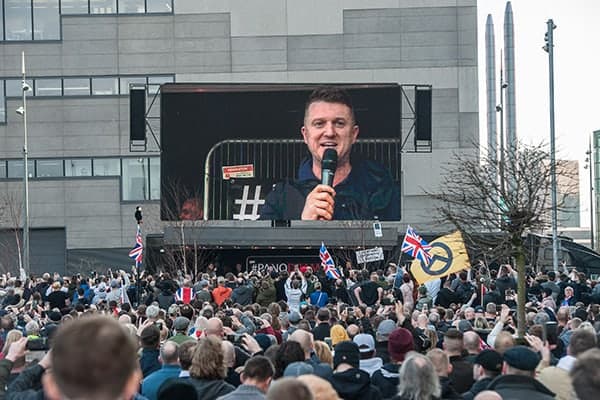

Anatomy of a Phantom Lawsuit: Tommy Robinson, the BBC, and the High Stakes of the £50 Million Viral Mirage
The digital ecosystem ignited in recent weeks over a claim that read like the script of a high-stakes courtroom thriller: Stephen Yaxley-Lennon—widely known by his pseudonym Tommy Robinson—had reportedly struck a massive blow against the British broadcasting establishment, launching an unprecedented £50 million ($65 million USD) defamation lawsuit against the British Broadcasting Corporation (BBC) and Question Time veteran anchor Fiona Bruce.
According to viral social media threads, blog posts, and online forums, Robinson had endured a calculated “on-air ambush” and deliberate “character execution” during a broadcast of the flagship political debate program. In response, the narrative asserted, Robinson’s legal team filed sweeping civil proceedings in the High Court of Justice in London, seeking record-breaking financial damages for irreparable reputational harm.

The claim possessed all the hallmarks of an explosive culture-war showdown. Yet, rigorous investigative reporting reveals a starkly different reality: the £50 million lawsuit does not exist in the annals of English law.
+------------------------------------------------------------------------------------+
|                               VIRAL CLAIM vs. VERIFIED RECORD                      |
+-----------------------------+------------------------------------------------------+
| Feature                     | Verified Evidence Status                             |
+-----------------------------+------------------------------------------------------+
| High Court Claim Number     | None filed / No documented docket entry              |
| Statement of Case / Claim   | No official pleadings served on BBC or Fiona Bruce   |
| Primary Narrative Source    | Online fiction / Speculative social media commentary |
| English Defamation Cap      | Statutory ceiling (~£300k–£350k); £50m is a fiction  |
| Real Broadcast Complaints   | Ofcom ruled on Makerfield by-election (unrelated)    |
| Documented Case History     | Jamal Hijazi libel loss (£100k) & Contempt rulings   |
+-----------------------------+------------------------------------------------------+
Comprehensive searches across the High Court’s King’s Bench Division registries, official court filing indices, media law reports, and broadcasting regulatory databases yield no confirmation that any claim form or particulars of claim have been issued by Robinson against the BBC or Fiona Bruce regarding a recent Question Time broadcast.
Instead, forensic tracing of the story’s digital footprint leads directly back to a speculative online post that explicitly described the fiery encounter as a “fictionalized media storm.” The author of that piece acknowledged that the £50 million lawsuit existed solely “according to the viral narrative.” Within days, secondary commentary hubs and engagement-driven aggregators stripped away the disclaimer, converting hypothetical fan-fiction into purported legal fact. By the time it circulated across global platforms, the story had transmogrified into an authoritative-sounding headline alleging that Robinson had “reportedly filed” proceedings, complete with colorful descriptions of an on-air confrontation that never actually occurred as described.
To understand why this fabrication gained immediate traction, one must examine the backdrop of British broadcast disputes and Robinson’s turbulent media history.
-
The Real Broadcast Context: The BBC’s flagship debate show, Question Time, has indeed navigated genuine political and regulatory friction in recent months. Ahead of the Makerfield by-election, the right-wing Restore Britain Party lodged a formal impartiality complaint with the Office of Communications (Ofcom) after its candidate was excluded from the broadcast panel. On June 12, Ofcom’s Election Committee officially dismissed the complaint, ruling that the BBC had exercised sound editorial discretion and maintained broad, proportionate political representation. That was a legitimate regulatory proceeding involving Question Time, but it had nothing to do with Robinson or a private libel claim.
-
The Protagonist’s Public Record: Robinson, the 43-year-old co-founder of the defunct English Defence League (EDL), has maintained a combative, decades-long relationship with mainstream journalism. In past interviews, Robinson has repeatedly revisited his historic television appearances, including a BBC free-speech broadcast where he alleged he was misled into appearing in the studio audience and subjected to unfair accusations of racism.
-
The Legal Precedent: While the viral lawsuit is fictional, Robinson’s encounters with defamation and the High Court are intensely real—though historically situated with Robinson in the defendant’s box. In 2021, the High Court ordered Robinson to pay £100,000 in libel damages to Jamal Hijazi, a Syrian refugee schoolboy whom Robinson had falsely accused of violent conduct in a series of viral online videos. That case triggered subsequent high-profile contempt of court proceedings by the Solicitor General after Robinson repeatedly breached judicial injunctions prohibiting the re-publication of those defamatory claims, leading to supplementary High Court orders mandating substantial payments toward tens of thousands of pounds in legal costs.
The viral claim conflated genuine animosity, unrelated regulatory disputes, and historic courtroom drama into an imagined £50 million blockbuster lawsuit. In English civil jurisprudence, however, rumors do not constitute service of process, and viral memes do not generate a High Court case number.
2. My Professional Perspective
A veteran investigative journalist’s look into the architecture of modern disinformation, legal theater, and the collapse of media trust.
Having spent three decades digging through court dockets, investigating institutional wrongdoing, and reporting from the murky intersection where political street theater collides with jurisprudence, I have watched the anatomy of news change drastically. In an earlier era of investigative reporting, stories were built from physical paper trails—stamped court pleadings, sworn affidavits, and authenticated audio transcripts. Today, an entire political movement can be mobilized by the ghost of a document that was never drafted.
The phantom £50 million lawsuit against the BBC is far more than a routine piece of social media misinformation. It is a masterclass in how modern political ecosystems engineer and consume weaponized myth. When we peel back the sensational headlines, several critical, overlooked dimensions emerge.
+------------------------------------------------------------------------------------------+
|                       THE DUAL REALITY: HOW MYTH OUTRUNS REALITY                         |
|                                                                                          |
|   [The Digital Spectacle]                                [The Legal Reality]             |
|   - £50M "Ambush" Claim                                  - Statutory Damages Caps        |
|   - Instant Online Martyrdom                             - Defamation Act 2013 Thresholds|
|   - Algorithmic Rage Engine                              - Documented Libel Losses       |
|                                                                                          |
|             \______________________________________________________/                     |
|                                         |                                                |
|                       Result: Media Friction Monetized                                   |
+------------------------------------------------------------------------------------------+
What Details Have Been Overlooked?
The most glaring detail bypassed by casual readers is the fundamental nature of British defamation jurisprudence compared to the American civil litigation system.
In the United States, plaintiffs regularly file astronomical, multi-million-dollar lawsuits—such as the landmark $787.5 million settlement secured by Dominion Voting Systems against Fox News—because American tort law permits massive punitive damages designed to punish reckless institutional behavior.
In England and Wales, the legal landscape operates under entirely different mechanics:
-
The Defamation Act 2013: English law strictly requires a claimant to clear the hurdle of Section 1(1)—proving that the publication caused, or is likely to cause, “serious harm” to their reputation.
-
Statutory Damages Caps: Compensatory damages in English libel cases are capped. Even in the most egregious, life-shattering cases of corporate or tabloid defamation, general damages rarely exceed £300,000 to £350,000.
-
Absence of American-Style Punitive Multipliers: To demand £50 million in a London court for an on-air television interview is legal fantasy. Any practicing media solicitor in London would know that drafting a £50 million claim form would invite immediate judicial scrutiny, strike-out risks, and catastrophic cost orders.
Furthermore, people overlooked the utter absence of a verbatim transcript. In any genuine defamation action, the lawsuit lives and dies on the exact words spoken. An investigative reporter does not ask, “Was he ambushed?” We ask: “What was the precise defamatory imputation of fact uttered at minute 24:12 of the broadcast, who uttered it, and does it fall under the statutory defenses of Truth (Section 2), Honest Opinion (Section 3), or Public Interest Publication (Section 4)?” The viral narrative offered dramatic adjectives—”vicious calculated defamation,” “character execution”—yet failed to quote a single actionable sentence.
What Deeper Meaning Lies Behind This Event?
This controversy exposes a dynamic I call “Litigation as Myth-Making.”
For controversial political figures and anti-establishment movements, the mere suggestion of a lawsuit serves the exact same narrative function as a real legal victory, but without the financial risk, legal exposure, or discovery process that a real courtroom demands. In contemporary digital politics, announcing an intent to sue—or allowing a viral rumor of a lawsuit to flourish unchecked—positions the activist as an uncompromising warrior fighting a corrupt establishment on behalf of the common people.
The phantom lawsuit functions as an ideological weapon:
-
It reassures loyal supporters that their worldview is vindicated and that the broadcaster has crossed a legal line.
-
It drives engagement, crowdfunding appeals, and digital subscriptions.
-
It casts the legacy broadcaster as a nervous corporate Goliath cowering before an insurgent David.
By the time fact-checkers and legal analysts pull the docket sheets to prove that no claim was ever filed, the political objective has already been achieved. The myth has settled into the collective consciousness of millions.
Why Does This Story Matter?
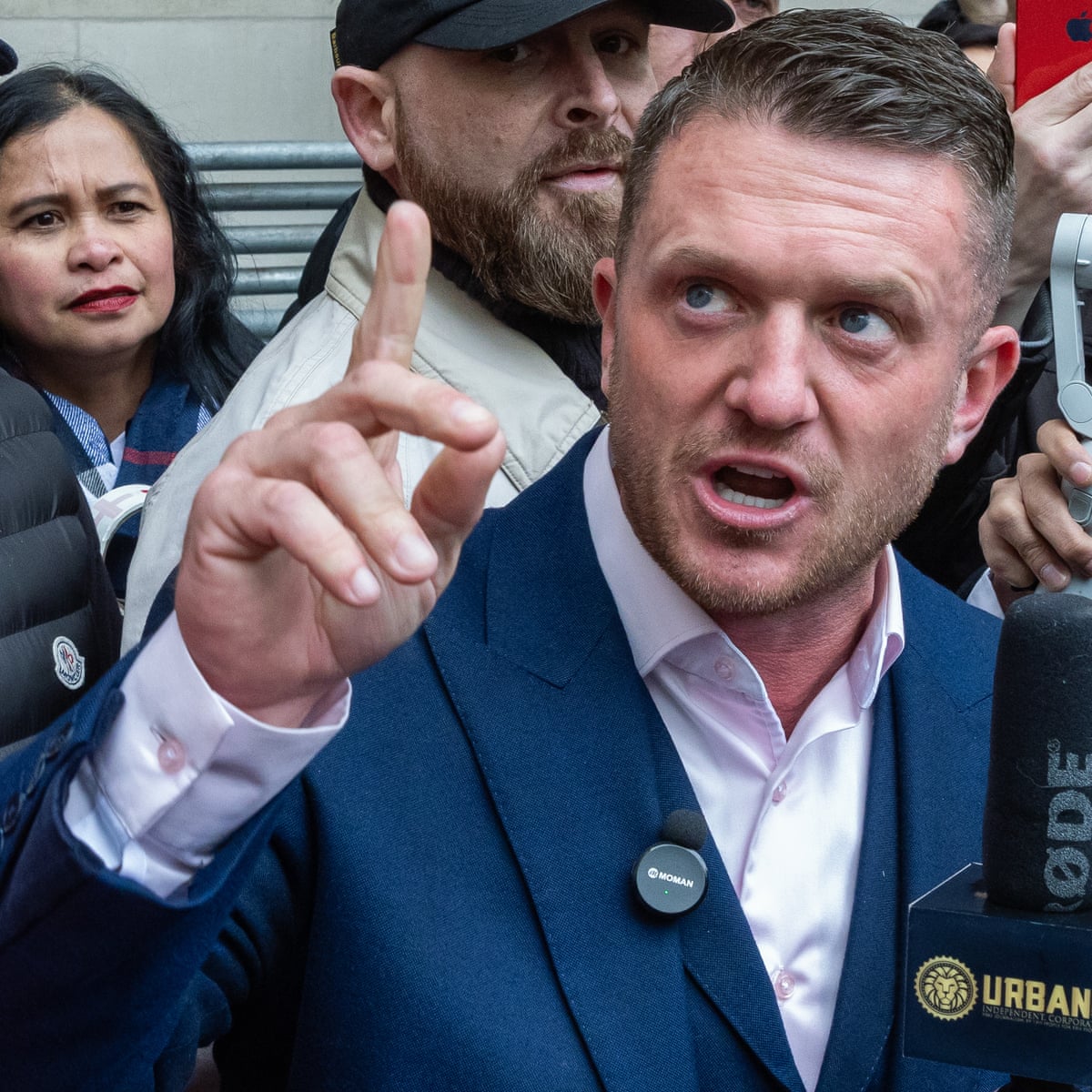
This story matters because it lays bare the asymmetric war currently being waged against traditional media institutions.
Public service broadcasters like the BBC and regulatory bodies like Ofcom are bound by legal frameworks, strict codes of practice, and editorial balance mandates. When targeted by an online campaign, they cannot respond with meme warfare; they must issue careful, measured statements or rely on formal regulatory judgments.
Conversely, the decentralized network of digital aggregators, hyper-partisan blogs, and algorithms operates with zero institutional accountability. They can invent an entire legal battle out of thin air, harvest millions of impressions, and quietly delete the post or reclassify it as “satire” once the clicks have been monetized. This asymmetry systematically erodes public faith in the judiciary, the press, and the very concept of objective fact.
What Questions Remain Unanswered?
As an investigative analyst, when a story like this evaporates under scrutiny, it leaves vital structural questions in its wake:
-
Who Benefited from the Disinformation Pipeline? Who initially stripped the “fictionalized” tag from the original online narrative, and which coordinated bot networks or influencer accounts weaponized it to drive traffic to monetized sites?
-
The Operational Limits of Public Broadcasters: How does a taxpayer-funded public broadcaster like the BBC balance its charter duty of representing diverse, challenging voices with the reality that platforming certain figures can lead to coordinated digital harassment campaigns against individual journalists like Fiona Bruce?
-
The Future of Legal Accountability: At what point does the systematic generation of fake legal actions cross the threshold into actionable fraud or malicious falsehood against the working journalists named in these viral campaigns?
What Should Audiences Understand Beyond the Headline?
Beyond the noise of social media feeds, audiences must recognize that journalism is not defined by who shouts the loudest on a livestream; it is defined by institutional verification.
When you read that someone is suing a major news organization for £50 million, stop asking whether you like the person suing or hate the organization being sued. Ask the foundational questions of professional tradecraft:
-
Where is the High Court claim number?
-
Who is the presiding judge?
-
Which law firm entered an appearance?
-
What is the specific legal pleading?
If those four elements do not exist, you are not reading news—you are consuming a calculated script designed to manipulate your emotions and exploit your political biases.
The viral saga of the non-existent £50 million Tommy Robinson lawsuit against the BBC is a cautionary tale for the digital era. It proves how easily the boundaries between cold fact, partisan grievance, and online fantasy can be dissolved when an audience is primed to believe a specific narrative.
We have arrived at a perilous crossroads in our cultural and political history. We live in an information landscape where an unverified digital whisper can drown out decades of established legal principle, and where a manufactured headline can ignite the passions of millions before a single fact can put on its boots. The British High Court remains a room constructed of oak, stone, meticulous precedent, and sworn evidence; the internet, increasingly, is a carnival mirror designed to reflect our deepest prejudices back at us.
As legacy media institutions fight to maintain their credibility and political figures continue to weaponize online grievance, every citizen must become their own investigative editor. If we surrender the discipline of demanding verifiable proof before accepting explosive claims, who is truly controlling the stories we tell ourselves about justice, truth, and power?