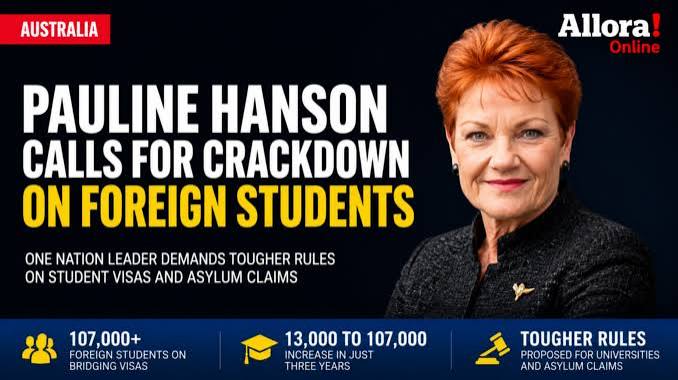
Australia’s Student Visa System Faces Fresh Scrutiny as Calls Grow for Tougher Controls. u1

The Migration Mirage: Inside Australia’s Fractured Student Visa System
For decades, the transaction at the heart of Australia’s international education sector was presented as a straightforward, mutually beneficial exchange. A young person from Mumbai, Manila, or Beijing would board a flight to Sydney or Melbourne, pay a premium for a world-class degree, inject vitality into the local economy, and either return home with a prestigious qualification or transition seamlessly into the ranks of the nation’s highly skilled workforce. It was the perfect export—a $40 billion industry that didn’t require putting anything on a cargo ship.
But behind the glossy university brochures and the soaring international rankings, a quieter, more complex reality has taken hold. Today, Australia’s student visa system (Subclass 500) sits at the epicenter of a fierce national debate, buckling under the weight of competing agendas. The core question tearing at the fabric of Australian immigration policy is as simple as it is explosive: Is the student visa still a genuine vehicle for international education, or has it devolved into a multibillion-dollar backdoor to permanent residency?
Critics across the political spectrum argue that the lines have not merely blurred; they have been deliberately erased. As Australia grapples with a severe housing crisis, overburdened infrastructure, and intense debates over population growth, the scrutiny on the international education sector has reached a boiling point.
1. The News Story: The Collapse of the Education Alibi
To understand the current crisis, one must trace the rapid expansion of the system and the subsequent government crackdowns that have defined the past three years of Australian immigration policy.
Thousands of international students arrive in Australia annually, legally feeding into universities, vocational education and training (VET) providers, and English-language colleges. For genuine students seeking a temporary period of study, the system works as intended. However, the controversy ignites when education is utilized primarily as a trojan horse for labor market entry and long-term migration.
The Nixon Review and the Migration Strategy
The turning point arrived with the commissioning of the Rapid Review into Exploitation of Australia’s Visa System, led by former Victorian Police Commissioner Christine Nixon. The Nixon Review exposed a system rife with vulnerabilities, revealing that the visa framework was routinely exploited by “non-genuine” students whose primary objective was full-time work rather than academic achievement.
In late 2023, the Australian government responded by releasing a comprehensive Migration Strategy. The strategy explicitly acknowledged that the student visa system was being utilized as a substitute migration pathway. It outlined draconian reforms, including higher English-language requirements and the introduction of strict enrollment caps on new international students starting in 2025 to drastically reduce net overseas migration.
The Death of the “Genuine Temporary Entrant”
Perhaps the most significant mechanical shift occurred in March 2024, when the Department of Home Affairs abolished the long-standing Genuine Temporary Entrant (GTE) requirement, replacing it with the Genuine Student (GS) test.
Under the old GTE system, applicants were required to write a 300-word statement attempting to prove they would leave Australia after their studies—a requirement that critics noted forced applicants to lie, as many openly hoped to transition to skilled migration. The new GS test forces applicants to answer four targeted 150-word questions. Instead of proving they will flee the country, applicants must now prove the academic and economic logic of their chosen course. Visa decision-makers now ruthlessly assess whether a 28-year-old with a Master’s degree applying for a basic VET diploma is actually seeking education, or simply buying time onshore.
The “Visa Hopping” Epidemic
The government’s data revealed a staggering trend: the rise of the “permanently temporary” underclass. In the 2022-2023 academic year, the number of international students applying for a second or third successive student visa spiked to over 150,000. This phenomenon of “visa hopping” illustrated how individuals were enrolling in cheap, low-quality vocational courses solely to maintain their legal status and work rights in Australia, with little to no prospect of ever achieving permanent residency.
The Family Loophole and Commercial Tensions
The debate extends beyond the students themselves. Critics point to the widespread use of student visas to facilitate family migration, where the student acts as the primary visa holder while spouses enter the Australian labor market.
Simultaneously, the role of Australia’s education providers has come under intense fire. Universities and private colleges have massive commercial incentives to maximize international enrollments. The government has countered this commercial greed by introducing Ministerial Directions 106 and 107, which deprioritize visa processing for “high-risk” institutions found to be facilitating visa abuse.
The proposed overarching reform is straightforward but culturally seismic: studying in Australia should not guarantee the right to live there. Graduates who wish to remain must meet the strict, separate requirements of the skilled migration program, proving they possess the specific skills the Australian economy genuinely needs.
2. My Professional Perspective
===============================================================================
                    INVESTIGATIVE DISPATCH: BEYOND THE HEADLINE
                     Observations from 30 Years on the Beat
===============================================================================
In my thirty years of covering global migration—from the fraught asylum corridors of the Mediterranean to the shifting sands of the US-Mexico border—I have rarely encountered an immigration apparatus as structurally conflicted, and as morally compromised, as Australia’s international student visa program.
When you strip away the bureaucratic euphemisms and look directly at the data, the narrative of the “student visa crisis” reveals a deeply uncomfortable truth: Australia did not accidentally lose control of its student visa system. It deliberately commercialized its border, outsourcing its immigration policy to university finance departments, and is now dealing with the inevitable blowback.
The Exploitation of Hope
What the headline narrative continually overlooks is the profound human cost borne by the students themselves. The current public discourse frames international students as cunning opportunists exploiting a generous nation. The reality, supported by hard data, is that the system exploits the students by selling them a statistical illusion.
For a decade, the Australian higher education sector implicitly marketed itself across the developing world as a golden ticket to Western permanent residency (PR). Educational agents in Punjab, Kathmandu, and Ho Chi Minh City didn’t sell degrees; they sold passports. Yet, historical data published by Jobs and Skills Australia reveals that only around 16% of international students eventually transition to permanent residence.
       ┌─────────────────────────────────────────────────────────────┐
       │         THE "PERMANENTLY TEMPORARY" LIMBO (2000-2021)       │
       └──────────────────────────────┬──────────────────────────────┘
                                      │
          ┌───────────────────────────┼───────────────────────────┐
          ▼                           ▼                           ▼
 ┌─────────────────┐         ┌─────────────────┐         ┌─────────────────┐
 │ Temporary Entry │         │ The Holding Pen │         │ The PR Reality  │
 ├─────────────────┤         ├─────────────────┤         ├─────────────────┤
 │• 1.3M migrants  │         │• 60% of student-│         │• Only a fraction│
 │  arrived on     │         │  to-skilled path│         │  actually secure│
 │  temporary visas│         │  hold 3+ temp   │         │  permanent      │
 │   │         │  visas          │         │  residency      │
 │                 │         │   │         │                 │
 └─────────────────┘         └─────────────────┘         └─────────────────┘
The Australian Bureau of Statistics paints an even grimmer picture of the psychological toll. Among those who actually survived the gauntlet and achieved the student-to-skilled permanent pathway between 2000 and 2021, a staggering 60% (over 273,000 people) were forced to hold three or more temporary visas before finally being granted PR.
This is the definition of “permanently temporary.” We are looking at a system that strings young people along for six, eight, or ten years. They pay extortionate international tuition fees, work night shifts in abattoirs and convenience stores, and bounce from one low-tier diploma to another—all chasing a PR carrot that the government is actively pulling further away.
The University Cartel and the Hypocrisy of the State
The deeper meaning behind this crisis lies in the funding model of Australian higher education. Over the past twenty years, successive federal governments systematically reduced proportional public funding to universities. To balance their books and fund billion-dollar campus vanity projects, vice-chancellors turned to the international market, charging overseas students three to four times the domestic rate.
The government knew exactly what was happening. They allowed universities to act as de facto border agents because it subsidized the education sector without requiring tax hikes. The anger we are seeing today is the resulting whiplash of a government trying to suddenly slam the brakes on an industry it deliberately addicted to migration-driven revenue.
When the government introduced Ministerial Direction 107—slowing visa processing for institutions deemed high-risk—it triggered panic across regional and lower-tier universities. The higher education sector is suddenly realizing that without the implicit promise of residency, their product is vastly overpriced. If Australia becomes significantly harder to access than Canada or the UK, the multi-billion-dollar academic house of cards risks total collapse.
The Uncomfortable Truth About the Labor Market
There is an astounding level of national hypocrisy in the current debate. Politicians and talk-back radio hosts loudly condemn the influx of student migrants for crushing the housing market and straining infrastructure. Yet, these exact same critics rely daily on the precarious labor these students provide.
Who delivers the Uber Eats in the pouring rain in Melbourne? Who cleans the high-rise office buildings in Sydney? Who picks the fruit in regional Victoria? It is the 150,000 “visa hoppers” trapped in the system. Australia’s service economy has become structurally addicted to the cheap, compliant labor of desperate temporary visa holders.
If the government genuinely succeeds in separating the student visa from the work and migration pathway, the shockwaves will not just hit university balance sheets—they will trigger a massive labor shortage in the lowest-paying, most physically demanding sectors of the Australian economy.
Unanswered Questions
As the parliament debates new student caps and tougher Genuine Student tests, several critical questions remain entirely unaddressed by policymakers:
-
The Funding Void: If international enrollments are slashed by tens of thousands to meet the new migration caps, how will the federal government plug the resulting billion-dollar black hole in university budgets?
-
The Phantom Workforce: How will the hospitality, agriculture, and gig economies survive the sudden evaporation of a workforce that was legally restricted to part-time hours but economically desperate enough to accept sub-minimum wage conditions in the shadows?
-
The Ethical Obligation: What does Australia owe the hundreds of thousands of students currently onshore, halfway through their “permanently temporary” journey, who invested their families’ life savings based on migration pathways that the government is now abruptly erasing?
The narrative that must be understood beyond the headline is this: The student visa crisis is not a story of foreign exploitation of Australian generosity. It is the story of a nation realizing that it can no longer sustain the contradictory desires of wanting the economic benefits of mass migration without accepting the social and infrastructural reality of the migrants themselves.

Australia stands at a critical juncture, forced to reconcile the glossy marketing of its international education sector with the hard, uncompromising limits of its national infrastructure. The pivot from the Genuine Temporary Entrant requirement to the Genuine Student test, alongside the introduction of strict enrollment caps, signals the end of an era. The days of using a hospitality diploma as an automatic back door to an Australian passport are effectively over.
Yet, looking at this strictly as a border control victory strips away the profound human element. Behind every rejected visa application and every revoked pathway is a young person who believed in the “Australian Dream”—a dream that the nation was all too happy to sell them at a premium. The system worked perfectly until the sheer volume of people pursuing that dream broke the domestic housing market and spooked the electorate.
As Australia moves forward with a tighter, less forgiving migration apparatus, it must confront the ghosts of the system it is leaving behind.
When a nation spends two decades using the implicit promise of permanent residency to balance its academic budgets and staff its gig economy, who is truly exploiting whom?