
Fortress Europe’s Eastern Front: Inside Poland’s High-Stakes Border Crackdown and the Battle for the Continent’s Soul
The current crisis along Poland’s 250-mile eastern border with Belarus is fundamentally different from traditional migration waves. In the summer of 2021, Belarusian autocrat Alexander Lukashenko—with explicit backing from the Kremlin—initiated a coordinated campaign to open a new irregular migration corridor into the European Union.
Trafficking networks, state-run travel agencies, and Belarusian authorities facilitated the movement of thousands of individuals from the Middle East, South Asia, and North Africa to Minsk. From there, Belarusian security forces escorted them to the Polish, Lithuanian, and Latvian borders, providing wire cutters, axes, and tactical assistance to force passage through European fences.
The primary objective was clear: destabilize the European Union, exploit internal political divisions over migration, and punish Warsaw for supporting Belarusian democratic opposition movements.

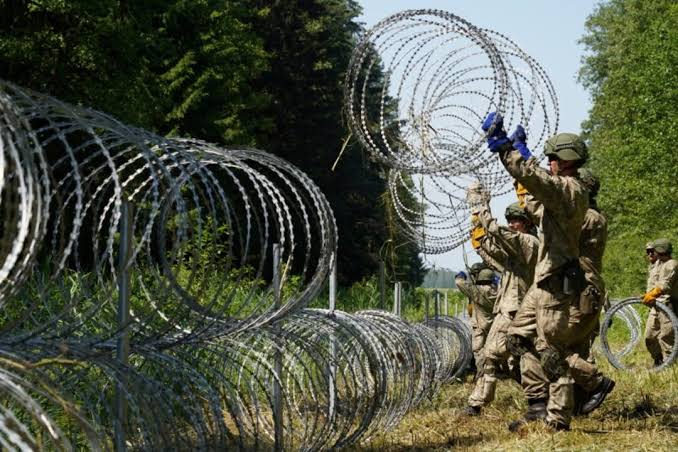
In response, Poland declared a state of emergency, deployed thousands of troops to the border, and constructed a 18-foot-high steel barrier equipped with thermal cameras, motion sensors, and electronic surveillance. Despite these physical barriers, tens of thousands of unauthorized crossing attempts have been recorded annually.
               ┌─────────────────────────────────────────────────────────┐
               │        THE BELARUS-POLAND HYBRID CORRIDOR               │
               └────────────────────────────┬────────────────────────────┘
                                            │
                                ┌───────────┴───────────┐
                                ▼                       ▼
                    ┌───────────────────────┐ ┌───────────────────┐
                    │  STATE-SPONSORED FLOW │ │ POLISH DEFENSE    │
                    ├───────────────────────┤ ├───────────────────┤
                    │ • Direct flights to   │ │ • 18-foot steel   │
                    │   Minsk from MENA     │ │   border barrier  │
                    │ • Escorts by          │ │ • "East Shield"   │
                    │   Belarusian guards   │ │   fortifications  │
                    │ • Tactical equipment  │ │ • Buffer zones &  │
                    │   for barrier cuts    │ │   military force  │
                    └───────────┬───────────┘ └─────────┬─────────┘
                                │                       │
                                └───────────┬───────────┘
                                            │
                                            ▼
                                ┌───────────────────────┐
                                │ HUMAN & LEGAL FRICTION │
                                ├───────────────────────┤
                                │ Suspended asylum      │
                                │ processing, pushbacks,│
                                │ & humanitarian risks  │
                                └───────────────────────┘
Main Events & Policy Shifts: The Pivot of Donald Tusk
When Donald Tusk—former President of the European Council—became Poland’s Prime Minister at the head of a pro-European, liberal coalition, many human rights advocates anticipated a softening of the hardline migration stance pursued by the previous national-conservative Law and Justice (PiS) administration.
Instead, Tusk accelerated and codified Poland’s national security doctrine:
-
The Asylum Suspension Announcement: In late 2024, Prime Minister Tusk declared that Poland would temporarily suspend the right to process asylum applications along the Belarusian border. Tusk explicitly stated that the right to asylum was being weaponized by hostile dictatorships and smuggling syndicates to undermine Polish sovereignty.
-
Legislative Measures and Exclusion Zones: The Polish parliament enacted legislation expanding the legal authority of border guards and military personnel to use firearms in self-defense and border protection scenarios. Furthermore, Warsaw maintained and extended a strict exclusion zone along the frontier, restricting entry for journalists, activists, and humanitarian organizations without specific government permits.
-
The “East Shield” (Tarcza Wschód): Poland launched a massive, multibillion-zloty military fortification effort along its borders with Belarus and the Russian enclave of Kaliningrad. This initiative integrates physical fortifications, anti-tank ditches, bunker networks, and advanced electronic warfare systems, turning the frontier into a defensive wall.
-
Rejection of EU Relocation Quotas: Tusk repeatedly confirmed that Poland will refuse to implement mandatory migrant relocation mechanisms or financial penalties envisioned under the EU Pact on Migration and Asylum, maintaining that a nation defending Europe’s primary land border cannot be forced to absorb additional burden-sharing quotas.
Key Figures Driving the Narrative
-
Donald Tusk (Prime Minister of Poland): The centrist leader who has reframed strict border control not as a populist campaign, but as a defense of European democracy against Eastern autocracies.
-
Alexander Lukashenko & Vladimir Putin: The political leaders accused by European institutions of manufacturing human pressure along NATO’s eastern flank to test Western resolve.
-
Ursula von der Leyen and European Commission Leadership: Navigating a delicate legal line between upholding EU human rights treaties and supporting a member state standing on the frontline of state-sponsored provocation.
-
Human Rights Advocates & Non-Governmental Organizations: Groups such as the Helsinki Foundation for Human Rights, Amnesty International, and local volunteer rescue collectives who argue that national security imperatives cannot invalidate basic human dignity and international refugee law.
┌────────────────────────────────────────────────────────────────────────┐
│                   POLAND’S BORDER STRATEGY AT A GLANCE                 │
├────────────────────────┬───────────────────────┬───────────────────────┤
│    SECURITY METRIC     │     POLICY ACTION     │     LEGAL / HUMAN IMPACT │
├────────────────────────┼───────────────────────┼───────────────────────┤
│ Border Barrier         │ 18ft steel fence +    │ Reduced successful    │
│                        │ electronic sensors    │ crossings             │
│ Operational Strategy   │ "East Shield" military│ Exclusion zones limit │
│                        │ infrastructure        │ NGO & media access    │
│ Legal Framework        │ Temporary suspension  │ Challenged under 1951 │
│                        │ of border asylum rights│ Refugee Convention    │
└────────────────────────┴───────────────────────┴───────────────────────┘
Key Facts and Numbers
-
Scale of Attempted Crossings: Polish authorities recorded roughly 30,000 illegal crossing attempts per year along the Belarusian border.
-
Human Casualty Count: At least 50 migrants have lost their lives since 2021 in the freezing swamps and dense forests along the border, suffering from hypothermia, exhaustion, or injuries sustained while attempting to scale barriers.
-
Military Casualties: In mid-2024, a 21-year-old Polish soldier, Mateusz Sitek, died after being fatally stabbed through the border fence by an irregular crosser, an event that deeply impacted Polish public opinion and solidified support for tough border laws.
-
Public Opinion: Opinion polls consistently show that over 80% of the Polish public supports strong border defenses and physical security measures along the eastern frontier, crossing traditional party lines.
To evaluate what is happening in Warsaw, you must look beyond standard political soundbites. For years, European migration coverage was defined by a simple political narrative: national-populists built walls and spoke of border defense, while pro-European centrists championed international treaties, human rights, and open societies.
Poland has dismantled that paradigm entirely.
When Donald Tusk—a politician who personifies the Brussels establishment—announces that his government will suspend international asylum law along the eastern border, it signals a fundamental transformation. It marks the moment that “Fortress Europe” ceased to be a partisan slogan and became mainstream European state policy.
Here is the deeper analysis of the structural forces driving this monumental shift.
┌────────────────────────────────────────────────────────────────────────┐
│                      THE STRATEGIC REALIGNMENT                         │
├────────────────────────┬───────────────────────┬───────────────────────┤
│  OLD PARADIGM (PRE-2021)│   TRANSITIONAL PHASE  │  NEW REALITY (2026+)   │
├────────────────────────┼───────────────────────┼───────────────────────┤
│ Migration viewed as a  │ Weaponization of      │ Border defense treated│
│ humanitarian and legal │ migration by hostile  │ as national security  │
│ protection challenge   │ foreign regimes       │ and territorial defense│
└────────────────────────┴───────────────────────┴───────────────────────┘
The Hybrid Warfare Reality: Beyond Traditional Asylum
The central error made by many Western analysts is treating the Polish-Belarusian border as if it were a standard migration corridor like those in the Central Mediterranean or the US-Mexico border.
It is not. It is a active gray-zone military operation.
When a state actor like Belarus issues visas, coordinates logistics, supplies specialized tools, and uses its military forces to herd human beings toward specific points along a foreign border, the traditional framework of the 1951 Refugee Convention breaks down. The convention was drafted in the aftermath of World War II to protect individuals fleeing state persecution—it never envisioned a scenario where hostile states would use asylum seekers as a human guidance system to force political concessions.
       ┌─────────────────────────────────────────────────────────┐
       │     THE EVOLUTION OF BORDER SENSITIVITY FRAMEWORKS      │
       └────────────────────────────┬────────────────────────────┘
                                    │
                        ┌───────────┴───────────┐
                        ▼                       ▼
            ┌───────────────────────┐ ┌───────────────────┐
            │ TRADITIONAL REFUGEE   │ │ STATE-WEAPONIZED  │
            │       FRAMEWORK       │ │    HYBRID FLOW    │
            ├───────────────────────┤ ├───────────────────┤
            │ • Spontaneous movement│ │ • Coordinated by  │
            │ • Fleeing state       │ │   hostile regimes │
            │   persecution         │ │ • Used to create  │
            │ • Individual protection│ │   domestic crises │
            │   claims              │ │ • Tactical pressure│
            └───────────┬───────────┘ └─────────┬─────────┘
                                                │
                                                ▼
                                    ┌───────────────────┐
                                    │ STATE RESPONSE    │
                                    ├───────────────────┤
                                    │ National defense  │
                                    │ posture, military │
                                    │ deployment, &     │
                                    │ suspended processing│
                                    └───────────────────┘
By framing the border crisis as an issue of national defense and territorial integrity rather than routine migration, Warsaw has altered the terms of the debate. In national security law, a sovereign state’s obligation to protect its territory from foreign destabilization takes precedence over administrative procedures. That distinction is why Tusk’s government has stood firm despite vocal opposition from international legal experts.
The Political Metamorphosis of Donald Tusk
Donald Tusk’s policy posture is a masterclass in political pragmatism. Upon returning to domestic politics, Tusk understood a political reality that many European centrists failed to grasp: if liberal, pro-European parties appear incapable of securing national borders, voters will inevitably turn to national-populists who promise to do so.
By adopting a hardline border security strategy, Tusk neutralized one of the opposition’s most potent campaign weapons. He demonstrated that a government can be fiercely pro-EU, pro-NATO, and committed to democratic institutions while simultaneously maintaining a militarized border defense.
This strategy—often described as “outpopulisting the populists”—has become a template for moderate leaders across Europe. From Denmark’s Social Democrats to Finland’s coalition government, mainstream parties are learning that maintaining public trust in democratic governance requires absolute control over sovereign territory.
The Legal Paradox: Geneva Convention vs. National Self-Preservation
The conflict along the Białowieża forest highlights an irreconcilable tension at the heart of modern international law:
-
The International Legal Imperative: The 1951 Geneva Convention and the European Convention on Human Rights (ECHR) explicitly prohibit “pushbacks” and mandate that any individual standing on a state’s border has the right to submit an application for international protection, which must be individually evaluated.
-
The National Security Imperative: A nation-state cannot allow its legal commitments to be exploited by foreign intelligence services as a tool for political coercion.
┌────────────────────────────────────────────────────────────────────────┐
│                        THE LEGAL TENSION MATRIX                        │
├────────────────────────┬───────────────────────┬───────────────────────┤
│    HUMAN RIGHTS LAW    │   THE STRATEGIC REALITY│   THE IMPASSE        │
├────────────────────────┼───────────────────────┼───────────────────────┤
│ • Universal right to   │ • Exploited by hostile│ • Legal treaties offer│
│   seek asylum          │   autocracies         │   no operational      │
│ • Absolute ban on      │ • Overwhelms border   │   exemption for hybrid│
│   summary pushbacks    │   processing systems  │   warfare scenarios   │
└────────────────────────┴───────────────────────┴───────────────────────┘
When international legal frameworks provide no functional mechanism to stop state-sponsored human trafficking, national governments will routinely choose territorial self-preservation over treaty compliance. Poland is not abandoning European values in a vacuum; it is exposing the fact that 20th-century international conventions are struggling to cope with 21st-century hybrid tactics.
The Human Toll in the Exclusion Zone
While the geopolitical arguments are clear in Warsaw and Brussels, the human reality inside the border exclusion zone remains deeply somber.
The primeval Białowieża forest is one of Europe’s last remaining wildernesses—a dense expanse of oak, pine, and peat bogs. In autumn and winter, temperatures drop far below freezing. For migrants trapped between Polish border guards refusing entry and Belarusian officers preventing retreat, the forest becomes a freezing snare.
       ┌─────────────────────────────────────────────────────────┐
       │             THE EXCLUSION ZONE HUMAN REALITY            │
       └────────────────────────────┬────────────────────────────┘
                                    │
                        ┌───────────┴───────────┐
                        ▼                       ▼
            ┌───────────────────────┐ ┌───────────────────┐
            │    POLISH GUARDS      │ │   STRANDED HUMAN  │
            │   & MILITARY LINE     │ │      SUBJECTS     │
            ├───────────────────────┤ ├───────────────────┤
            │ Facing physical       │ │ Trapped between   │
            │ confrontation & duty  │ │ border barriers   │
            │ to enforce national   │ │ in sub-zero wilderness│
            │ security protocols    │ │ conditions        │
            └───────────┬───────────┘ └─────────┬─────────┘
                                                │
                                                ▼
                                    ┌───────────────────┐
                                    │ HUMANITARIAN VETO │
                                    ├───────────────────┤
                                    │ Restrictive access│
                                    │ for independent   │
                                    │ aid organizations │
                                    └───────────────────┘
Volunteers and local residents operating on the periphery of the exclusion zone describe finding families suffering from severe hypothermia, trench foot, and dehydration. Yet under the current security posture, providing material assistance or transportation can place aid workers at risk of criminal investigation for facilitating illegal entry.
This is the hidden cost of border enforcement. When a nation militarizes a frontier, the line between defending the state and hardening human hearts becomes extraordinarily thin.
The Shift Across Europe: Why Warsaw Is No Longer an Outlier
When Poland first began constructing its border wall in 2021, officials in Brussels expressed skepticism, with several European leaders declaring that EU funds should not be used to build fences or razor wire.
Today, that skepticism has largely evaporated.
Finland closed its entire 830-mile border with Russia following similar state-sponsored migration pressure and enacted legislation allowing border guards to block asylum seekers. Baltic nations have reinforced their frontiers with physical infrastructure. Germany re-established border controls along all of its land frontiers, while the European Union approved the Pact on Migration and Asylum—a legislative package that accelerates border screening, expands detention facilities, and facilitates returns.
Poland’s once-controversial border strategy has become the silent consensus of European governance. European capitals have come to recognize that without secure external boundaries, the internal borderless freedom of the Schengen area cannot survive.
Poland’s border crackdown along the Belarusian frontier is far more than a localized defense measure. It is a dramatic preview of Europe’s geopolitical future.
The crisis has forced the European Union to confront an uncomfortable truth: the open, rules-based international order is being actively challenged by foreign adversaries who view democratic norms and humanitarian treaties as vulnerabilities to be exploited. In response, Warsaw has made its choice. It has prioritized territorial defense, national sovereignty, and physical security over international legal tradition.
┌────────────────────────────────────────────────────────────────────────┐
│                        THE TRIPLE TRILEMMA                             │
├────────────────────────┬───────────────────────┬───────────────────────┤
│    NATIONAL SECURITY   │     HUMANITARIAN      │  EUROPEAN INTEGRATION │
├────────────────────────┼───────────────────────┼───────────────────────┤
│ Defense of external    │ Adherence to 1951     │ Preservation of free  │
│ borders against hybrid │ Geneva Conventions &  │ internal movement in  │
│ aggression             │ human rights standards│ the Schengen zone     │
└────────────────────────┴───────────────────────┴───────────────────────┘
For the soldiers standing guard along the steel fences in the Białowieża forest, and for the families huddled in the cold shadows beyond them, the theoretical debate in Brussels is a stark, daily reality. Poland has demonstrated that a modern nation can build an iron wall along its frontier. But as that wall grows higher, it casts a long shadow over the future of European law, human rights, and political unity.
As other nations look toward Warsaw’s model, the core challenge facing the continent remains unanswered: Can Europe successfully defend its physical borders from external aggression without losing the democratic values and humanitarian principles that define its identity?
A Thought for Discussion:
If a democratic state suspends international human rights conventions to protect itself from weaponized hybrid warfare, does it successfully preserve its national security—or does it allow its adversaries to dictate the slow erosion of its core values?