
The Ritual of Absolution: The Cost of a Prime Minister’s Fatigue
The Broken Vow at Gulkula
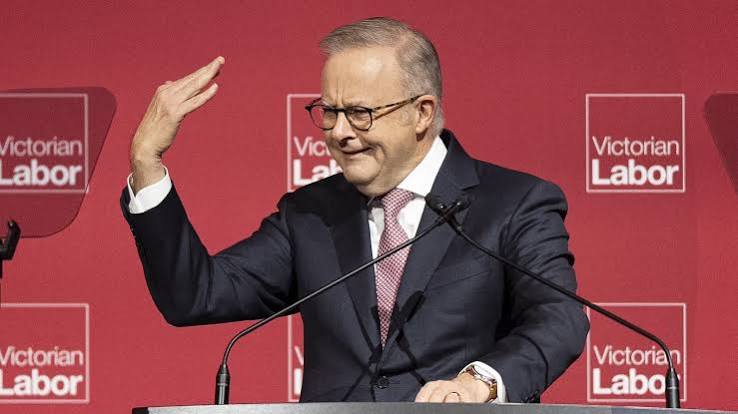
It was an ironclad, absolute commitment delivered under the canopy of a remote forest in northeast Arnhem Land. Speaking to a crowd of Indigenous leaders, elders, and policymakers at the annual Garma Festival, Prime Minister Anthony Albanese had staked his personal and political honor on a definitive promise: “I commit here that every single year that I have the great honour to be Australia’s prime minister, I will be here.”
That was the rhetoric of yesterday. The political reality of today arrived on a Thursday morning broadcast when the Prime Minister officially confirmed he would be skipping the upcoming four-day gathering.
[2022-2023: Garma as Political Crucible] ──> [Solemn Vow: "I Will Be Here Every Year"] ──> [2026: Vow Broken Citing Fatigue]
Defending the decision to break a personal pledge made to First Nations custodians, Albanese cited the compounding, exhausting toll of executive office. “I haven’t had a day off all year,” he told ABC radio listeners, explaining that he would instead be taking scheduled leave during the August event.
The Sacred Red Dirt of Arnhem Land
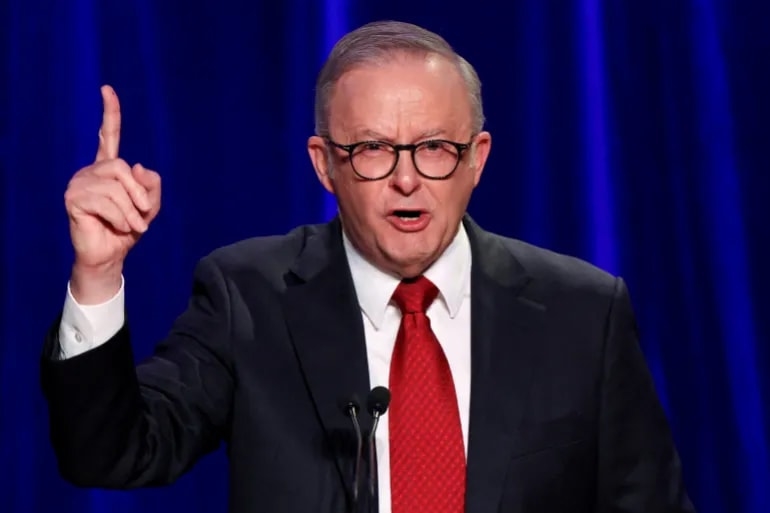
The Garma Festival is not merely another regional cultural showcase; it is widely regarded as Australia’s premier corporate, political, and Indigenous consultative assembly. Held every August at Gulkula—a deeply sacred ceremonial site nestled within a stringybark forest overlooking the Gulf of Carpentaria—the event is hosted by the Yothu Yindi Foundation and the local Yolŋu people.
For four days, it serves as an extraordinary convergence point where ancient First Nations traditions are celebrated through song, dance, and ceremony, while simultaneously acting as an open-air boardroom where Indigenous leaders voice their stark structural, legal, and economic concerns directly to the highest echelons of corporate and political power.
The Crucible of the Voice
Albanese’s political DNA has been irrevocably intertwined with the red dirt of Gulkula. He used his historic, triumphant first keynote address at the festival in 2022—shortly after his federal election victory—to formally launch the blueprint for the Indigenous Voice to Parliament referendum.
He returned to the Garma stage in 2023, utilizing the deeply emotional setting to aggressively campaign for the structural constitutional change.
            ┌──> 2022: Keynote speech launches the Voice campaign.
            │
GARMA CRUCIBLE ──> 2023: Aggressive campaigning ahead of the national vote.
            │
            └──> 2024-2025: Rhetorical pivot to managing the failed referendum's fallout.
Following the comprehensive, devastating defeat of the referendum at the ballot box in late 2023, the Prime Minister used his subsequent appearances at the festival to quietly pivot, attempting to recalibrate his administration’s focus onto pragmatic, everyday challenges facing remote communities, such as education, health, and economic development.
The Defense and the Alternate Destination
Faced with immediate, sharp accusations of abandoning a solemn moral covenant, Albanese heavily defended his track record, pointing out that he has shown an unprecedented level of personal commitment to the festival, having attended every single Garma gathering since he became federal Labor leader in 2019.
“Garma isn’t the only festival that’s taken place,” Albanese countered on air, revealing that while he had informed the Gumatj traditional owners well in advance that he would be absent due to annual leave, he would still be traveling to a separate, unspecified remote community festival in the Northern Territory in the coming days.
| Key Actor / Group | Public Stance & Rhetoric | Underlying Strategic Reality |
| PM Anthony Albanese | Cites extreme operational exhaustion; notes he has “not had a day off all year”. | Seeks to decouple his personal attendance from his government’s policy commitments. |
| Yothu Yindi Foundation | Minimizes conflict, publicly labeling the Prime Minister a “good friend of the festival”. | Seeks to maintain stable, non-partisan diplomatic lines with the federal treasury. |
| Northern Land Council | Condemns the absence as deeply disappointing during a period of acute regional crisis. | Reflects grassroots frustration with the perceived lack of Commonwealth accountability. |
The Vacuum Left Behind
The political fallout from the cancellation has exposed deep, fractured responses within the Indigenous policy ecosystem. Matthew Ryan, chair of the powerful Northern Land Council, expressed bitter disappointment over the Prime Minister’s decision, emphasizing that remote Aboriginal communities across the Northern Territory are currently facing a compounding array of severe socioeconomic crises that demand active, visible, and strong Commonwealth leadership.
In a calculated move to mitigate the damage, the government confirmed it would send an incredibly heavy ministerial delegation to Gulkula, led by Foreign Minister Penny Wong and newly appointed Minister for Indigenous Australians Malarndirri McCarthy.
Yet, as the Shadow Minister for Indigenous Australians, Julian Leeser, prepares his own delegation to travel north, the empty space at the center of the key forum remains a glaring symbol of a broader, unresolved national narrative.
My Professional Perspective
As an investigative journalist who has spent three decades tracking the calculated performance art of political leadership, I look at Anthony Albanese’s sudden cancellation of his Garma pilgrimage and see a moment of profound, quiet tragedy.
The mainstream press will cover this through the shallow lens of a “broken election promise” or debate whether a Prime Minister is entitled to a holiday. But that is a profound misreading of the room.
The true, hidden story behind this broken vow is the total, exhausted exhaustion of a political strategy that mistook symbolism for systemic reform—and is now retreating into the safety of the bunker.
1. The Commodity of the Royal Visit
To understand why this matters, we must deconstruct the unique, borderline-extractive relationship the Australian political class has developed with the Garma Festival. For years, Gulkula has been treated by prime ministers as a kind of moral washing machine.
A leader travels to the remote dirt of Arnhem Land, puts on a traditional multi-colored lei, stands alongside legendary Yolŋu elders, sheds tears during a smoking ceremony, and delivers a grand, soaring speech filled with poetic rhetoric about closing the gap.
The images are stunning. They broadcast beautifully to the progressive voter bases in Melbourne, Sydney, and Brisbane. It provides the politician with an instant, powerful injection of progressive moral authority.
But when you strip away the aesthetic purity of those images, what is the actual, tangible structural deliverable for the people living in the overcrowded, underfunded camps of Alice Springs, Tennant Creek, or Wadeye?
[Soaring Symbolic Rhetoric at Garma] ──> [Polished Media Assets for Urban Voters] ──> [Zero Structural Delivery in Remote Camps]
The Voice referendum was the absolute zenith of this symbolic extraction. Albanese bet his entire historical legacy on a constitutional mechanism launched from the Garma stage. He used the sacred nature of the site to shield his policy from rigorous, pragmatic critique.
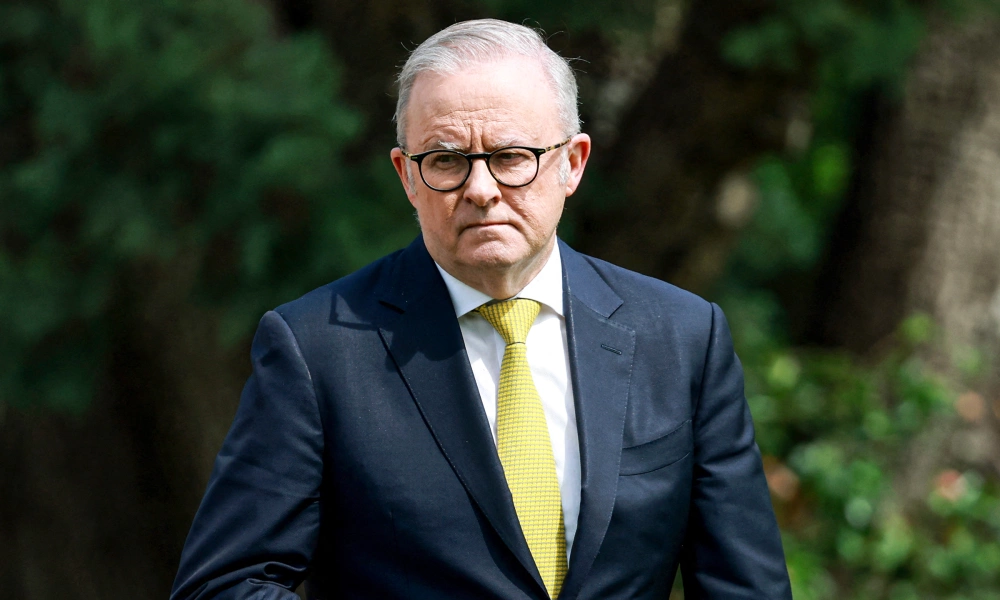
Now that the referendum has failed, the symbolic utility of Garma has evaporated for him. He can no longer use it as a platform for a grand national narrative. Instead, it has become a place of accountability—a place where elders will look him in the eye and ask why the real-world metrics of Indigenous health, incarceration, and child protection are actively worsening under his watch.
His excuse—that he “hasn’t had a day off”—is a remarkable freudian slip. It is an admission that the emotional weight of facing his own failed policy legacy is simply too heavy to bear on an empty tank.
2. The Architecture of the Post-Referendum Retreat
There is a chilling, calculated pattern of avoidance playing out across the current federal cabinet. Following the definitive “No” vote, the government did not double down on grassroots, pragmatic structural overhauls. Instead, they engaged in a quiet, bureaucratic retreat.
By sending Penny Wong—the Foreign Minister—to anchor the delegation at a domestic Indigenous festival, the government is executing a brilliant piece of optical distraction. Wong is an international operator, a master of diplomatic protocol who can glide through the social spaces of Garma without being tied directly to the frontline failures of the domestic portfolio.
The Power Dynamic: The elite use symbolic attendance to claim proximity to a cause when it is politically profitable, and then deploy the excuse of bureaucratic fatigue the moment that proximity demands real-world accountability.
The grassroots organizations, like the Northern Land Council, see this strategy with absolute clarity. They understand that when a leader says he is skipping the nation’s premier Indigenous policy summit to visit “another remote community,” he is practicing political fragmentation. It is far easier to visit an isolated, uncoordinated community where the media presence is minimal and the questioning is unscripted than to sit in the Key Forum at Garma under the glare of national broadcast cameras and analytical scrutiny.
3. The Broken Promise Fatigue
Let us analyze the compounding, dangerous erosion of Anthony Albanese’s rhetorical currency. In political communication, your words are a currency backed entirely by the public’s willingness to believe you.
When Albanese stood before the Gumatj people and explicitly stated, “Every single year that I have the great honour to be Australia’s prime minister, I will be here,” he wasn’t delivering a casual, off-the-cuff remark. He was attempting to draw a deliberate, moral contrast between himself and his conservative predecessors, whom Labor routinely accused of neglecting First Nations voices.
By walking away from that specific, unambiguous vow just twelve months later, he has reinforced a deeply cynical, toxic narrative that is calcifying across the Australian electorate: that his promises have a strict shelf-life dictated entirely by political convenience.
From the stage-three tax cut adjustments to the energy bill reduction commitments, the public is watching a leader who repeatedly prioritizes the short-term management of immediate political pressures over the long-term preservation of his own word. The excuse of being “tired” does not humanize him to a population that is itself utterly exhausted by a crushing cost-of-living crisis and economic stagnation; it merely makes him look fragile under the weight of his own office.
Unanswered Questions for the Prime Minister’s Office
As the ministerial jet prepares to fly north without its primary passenger, several critical investigative questions remain completely unanswered:
-
When was the leave truly booked? The Prime Minister claimed he informed the traditional owners “some time ago”. What was the exact date this leave was locked into his diary, and did that decision coincide with internal party polling regarding his standing in regional electorates?
-
What is the cost of the substitute delegation? What is the total, taxpayer-funded logistical cost of sending an expanded ministerial entourage and departmental staff to fill the optical vacuum left by the Prime Minister’s absence?
-
Where is the Post-Voice Blueprint? Two years after launching the referendum at Gulkula, what is the precise, quantified legislative status of the alternative closing the gap initiatives promised by this government?
The Echo in the Forest
What we are witnessing at Gulkula this year is the quiet, architectural deflation of a political era. For a brief, intoxicating moment between 2022 and 2023, the Garma Festival was the ideological epicenter of the nation—the birthplace of a sweeping national narrative that promised to redefine the identity of the Commonwealth.
Today, the red dirt of that sacred forest will play host to something far more muted. The songs will be sung, the fires will be lit, and the political speeches will be delivered by proxy.
But the absence of the man who looked those elders in the eye and promised his permanent, unchanging presence will hang over the camp like an unresolved chord. It is a stark reminder that in the cold, unforgiving arithmetic of national politics, symbolic currency depreciates rapidly once the promises hit the ground of real-world reality.
A Thought-Provoking Reality
When the Prime Minister takes his leave, turning off his phone to escape the grueling, unyielding pressures of the Canberra machine, the systemic crises facing remote Australia do not go on holiday. The generational trauma, the infrastructure failures, and the economic isolation remain entirely untouched by his absence.
We must look past the defensive rhetoric of the radio interview and confront the deeper truth about how our leaders interact with our most vulnerable populations.
If a prime minister can utilize the sacred ground of a long-suffering community to launch the most ambitious political campaign of his career, and then—the moment that campaign fails—declare that he is simply too tired to honor his personal promise to return, has he ever truly been engaged with their journey, or was that community merely the backdrop for an urban political fantasy that has run its course?