
The Nexus of Need: Dissecting the Fault Lines of Cultural Values, Economics, and the Climate Debate
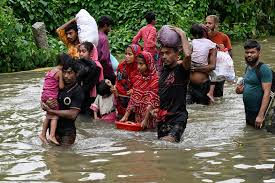
In the hyper-polarized landscape of contemporary media, few institutions draw fire as consistently as national broadcasters attempting to bridge the gap between global macro-trends and deeply entrenched social realities. A fierce ideological debate has erupted across Australia following a publication by the Australian Broadcasting Corporation (ABC). The article, titled “Climate change becoming a major driver of child marriage across Asia and the Pacific,” focused heavily on a report by the non-governmental organization Plan International. The piece argued that the material impacts of environmental disruption—specifically severe weather patterns, crop failures, and rising sea levels—act as direct catalysts for sharp spikes in the practice of child, early, and forced marriage (CEFM) in developing regions.
To construct its narrative, the ABC cited data from the International Rescue Committee (IRC) indicating that child marriages can surge by up to 39% in the wake of catastrophic natural disasters in countries like Bangladesh. It anchored these statistics in the consensus of meteorologists and climate scientists who observe that a warming global atmosphere increases the raw intensity of tropical storms, cyclones, and prolonged droughts. Representatives from Plan International expressed profound concern that a predicted severe El Niño weather cycle would further compound these vulnerabilities, prompting a direct call for increased Australian foreign aid and targeted humanitarian assistance to the Asia-Pacific region.
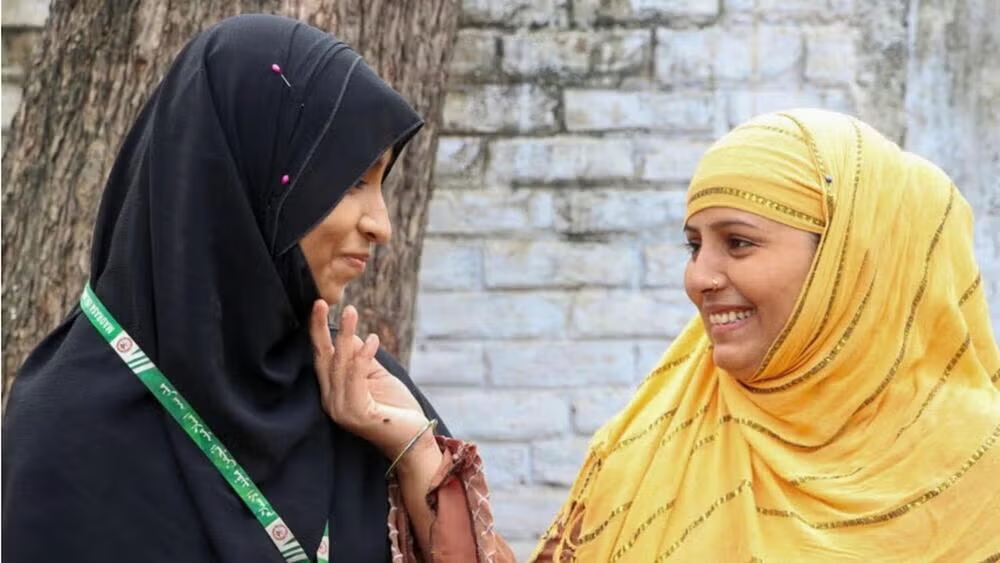
The response from the Australian public and political commentators was immediate and unsparing. On social media platforms, critics slammed the article as a textbook manifestation of Western left-wing obfuscation—an attempt to filter a deeply troubling cultural and systemic issue through the fashionable lens of climate change. Former Liberal MP Craig Kelly led the charge, forcefully stating on social media:
“When the ABC shamelessly hides behind the BS excuse of ‘climate change’ to defend children in hijabs being married off in Islamic countries, you know it’s long past time to DEFUND THE ABC! Our hard-earned taxes should NOT be wasted on this vile, taxpayer-funded propaganda. Why won’t the ABC tell the truth? Child brides are a barbaric, all-too-common practice in Islamic countries – and they have been for centuries!”
The backlash quickly widened, with former Liberal Democrats Senator David Leyonhjelm satirically remarking, “There were no child marriages before they discovered carbon dioxide.” Other critics pointed to a perceived lack of individual accountability in the narrative, arguing that by attributing human behavior strictly to atmospheric conditions, the reporting strips local communities of moral agency. “If a family in a third world country sells their daughter, it’s not their fault… It’s your fault, for having air conditioning,” noted another widely shared response. The incident has once again turned the public broadcaster into a battleground over a fundamental question: Is the media uncovering a complex socio-economic reality, or is it mapping a Western ideological framework onto ancient global crises?
My Professional Perspective
Having spent thirty years dissecting international crises, tracking humanitarian data, and observing how raw information is packaged for public consumption, I find this specific controversy incredibly telling. It exposes a profound disconnect between the sterile, high-level vocabulary of global NGOs and the visceral reality of how everyday citizens perceive morality, culture, and accountability. When you strip away the shouting matches on social media, you find a story that isn’t actually about air conditioning or carbon dioxide—it is about the weaponization of language and the complete collapse of nuanced communication in the modern town square.

Let’s look at what the reporting actually tried to articulate, and where it fundamentally tripped over its own feet. To an investigative journalist who has spent time on the ground in South Asia or Sub-Saharan Africa, the connection the ABC article attempted to draw is an established economic phenomenon known to field researchers as a negative coping mechanism. When an agrarian family loses their entire harvest to a historic flood or a three-year drought, they face literal, immediate starvation. In communities where traditional practices like dowries or bride-prices exist, or where a daughter is viewed through a purely economic lens as an extra mouth to feed, marrying her off early is not an ideological decision. It is an act of desperate, survival-driven desperation. The family transfers the economic responsibility of the child to another household to ensure the remaining siblings survive.
Where the ABC and the NGOs failed catastrophically—and where critics like Craig Kelly found a wide-open target—was in the framing. By utilizing headlines that label climate change as a “major driver” or a “cause” of child marriage, the coverage mistakenly implied a direct, linear relationship where none exists. Climate change does not create child marriage. Child marriage is an ancient, deeply entrenched structural practice rooted in patriarchal customs, deficient legal frameworks, lack of female education, and historical poverty. What environmental instability does is act as a vulnerability multiplier. It accelerates economic desperation, smashing through the fragile safety nets of societies that already tolerate the practice.
The anger from the Australian public stems from a legitimate, deeply felt aversion to what looks like ideological sleight of hand. When a media outlet frames an issue so clumsily, it sounds to the audience as though the reporter is absolving a society of its moral framework or its treatment of young girls, shifting the blame onto Western carbon emissions. It gives the impression of zero agency. The public feels, quite understandably, that using the suffering of vulnerable young girls to score points in the domestic climate debate is cynical.
The critical questions that remained entirely unasked in the heat of this media storm are the ones that actually matter for long-term policy:
-
If Australian foreign aid is directed toward these regions, should it be funneled into abstract “climate resilience” funds, or should it be strictly ring-fenced for grassroots female literacy, legal advocacy, and direct economic support for families at risk?
-
How can international bodies effectively intervene in structural human rights crises without ignoring the immediate economic realities that drive families to make these choices?
-
Where does the line sit between understanding the macroeconomic pressures on a developing community and holding its leadership accountable for failing to protect its youth?
True journalistic integrity demands that we resist the urge to compress every global tragedy into a pre-existing domestic political narrative. By treating complex geopolitical and human rights crises as mere footnotes to the climate debate, we don’t just alienate the domestic audience; we actively obscure the real, multifaceted solutions required to protect vulnerable populations on the ground.
Conclusion
The intense friction surrounding the ABC’s reporting highlights a deeper truth about how we consume information in an fractured age. We have become so conditioned to fighting domestic cultural battles that we instantly view far-off human suffering through our own political lenses. To some, the story was a vital warning about the systemic, human cost of global instability; to others, it was an egregious example of a taxpayer-funded institution reshaping an ancient moral crisis to fit a progressive agenda.
When we look past the headlines and the political point-scoring, the human core of the issue remains entirely unchanged. Young girls in developing nations are bearing the heaviest burden of systemic poverty and economic shocks, regardless of what forces trigger those crises. Addressing this reality requires a media that values precision over provocative framing, and a public discourse that can separate an analysis of economic pressures from a defense of harmful practices. As global instability grows, our capacity to understand these crises in all their messy, uncomfortable complexity will determine whether our responses are genuinely effective or merely performative.
This leaves us with a fundamental question to consider: When evaluating the deep-seated challenges facing the developing world, how do we balance an understanding of the massive economic and environmental pressures forcing a community’s hand with the absolute necessity of upholding universal human rights?
To explore the underlying data and field research regarding how extreme environmental conditions interact with economic vulnerabilities in developing regions, you can watch this comprehensive breakdown of extreme weather impacts on child marriages. This video provides crucial context on how agricultural shocks translate directly into household survival decisions in low-income communities.