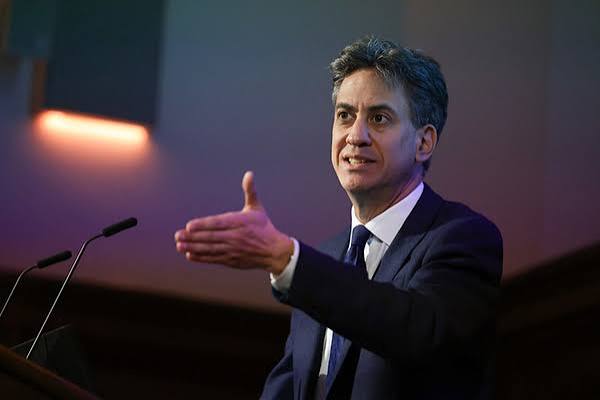

Should Ed Miliband Be the UK’s Next Chancellor?
For months, British politics has been gripped by one of the most significant questions facing the country: who will hold the most powerful economic office in the land, the Chancellor of the Exchequer, as the nation stands at a crossroads. The timeline is tight: Andy Burnham, widely expected to take over as Prime Minister later this month, has kept the identity of his preferred chancellor under wraps, sparking intense speculation across Westminster, business circles, and the media.
The stakes could scarcely be higher. The UK economy is still recovering from years of slow growth, high inflation, energy price volatility, and a persistent productivity gap that has left living standards stagnant for millions. At the same time, the country faces a historic transition — moving away from fossil fuels toward a low-carbon economy, while trying to revitalize regions left behind by decades of industrial decline.
Against this backdrop, three names have emerged as the leading contenders to replace outgoing Chancellor Rachel Reeves: Wes Streeting, the former health secretary; Shabana Mahmood, the current home secretary; and Ed Miliband, the energy secretary and a long-standing figure in the Labour Party. Now, one of Britain’s most respected economic minds has thrown his weight firmly behind Miliband — a move that has shifted the terms of the debate entirely.
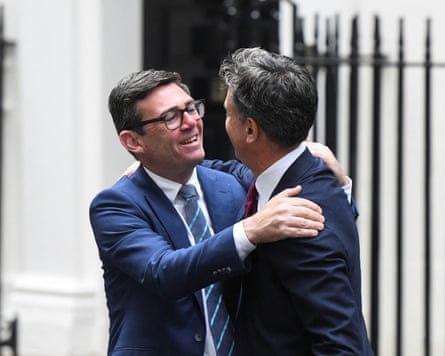
Main Events
Nicholas Stern, former Chief Economic Adviser to the UK Treasury, former Chief Economist of the World Bank, and author of the landmark 2006 Stern Review on the Economics of Climate Change, has publicly called on Andy Burnham to appoint Ed Miliband as Chancellor. Speaking in an exclusive discussion, Stern stated that Miliband possesses both the experience and the strategic vision required to steer the UK economy through its most challenging transformation in a generation.
Stern’s endorsement is not an isolated voice. In recent weeks, a growing coalition of senior economists, academics, and former government officials have joined the call. Labour’s deputy leader, Lucy Powell, said last month that Miliband would make “a good chancellor,” while leading academic Josh Ryan-Collins of University College London has argued that his approach offers the only sustainable path forward.
The core of Stern’s argument centers on investment and direction. The chancellor controls more than £1.4 trillion in annual public spending — decisions that shape taxes, borrowing, infrastructure, and industrial policy. Stern insists that Miliband’s vision is “bold,” but not in the negative, bureaucratic sense mocked in the classic British comedy Yes, Minister. Instead, he describes it as clear, purposeful, and future-focused: a plan to increase investment by 2 to 3% of national income to rebuild infrastructure, modernize energy systems, and support workers and communities.
A key pillar of this vision is Miliband’s existing policy: a moratorium on new oil and gas drilling licenses in the North Sea. Stern defends this measure, saying that pouring more money into declining fossil fuel industries would only delay the inevitable transition and waste resources better spent on the technologies and jobs of tomorrow. He points to regions such as Aberdeen, long dependent on North Sea energy, arguing that their prosperity lies not in extending the life of old industries, but in becoming global hubs for offshore wind, carbon capture, and green technology.
Stern also highlights Miliband’s credibility on the international stage. Having represented the UK at major climate summits for years, he commands respect among world leaders and investors. For a trading nation like Britain, that reputation matters — not just for diplomacy, but for attracting global capital and ensuring the UK remains a leader in the industries of the 21st century.
His support is rooted in personal history as well. Stern recalls working alongside Miliband in the Treasury in the early 2000s, when he was Second Permanent Secretary and head of the Government Economic Service, and Miliband served as Chair of the Council of Economic Advisers. Even then, he says, it was clear Miliband understood how the economy worked — and had the drive to change it.
Key Facts
- Decision timeline: Andy Burnham is expected to name his chancellor shortly after assuming office later this month.
- Contenders: Ed Miliband, Wes Streeting, and Shabana Mahmood are the front-runners.
- Endorsement: Nicholas Stern — a globally recognized economist — calls Miliband the only candidate with a comprehensive, forward-looking economic strategy.
- Policy focus: Increased investment in infrastructure, clean energy, transport, and human capital; ending new North Sea oil and gas exploration.
- Economic scale: The chancellor oversees annual public spending of roughly £1.4 trillion.
- Support base: Backing also comes from Labour’s deputy leader and leading academic economists, who push back against claims that green policies are inherently costly or damaging to growth.
My Professional Perspective
After 30 years covering politics, economics, and policy across three continents, I’ve learned that the most important stories are rarely about who gets which job. They are about what that choice reveals about the direction a country is taking — and the trade-offs it is willing to face.

On the surface, this story reads like a familiar Westminster drama: a leadership transition, speculation over cabinet roles, and a prominent figure receiving high-profile support. But look deeper, and it is actually one of the most significant economic debates Britain has had in decades.
What People Are Overlooking
Most headlines reduce this to a simple question: Is Miliband qualified to run the economy? But that misses two critical realities.
First, the role of chancellor has changed. For much of the past 40 years, the job was defined by a narrow set of priorities: keeping inflation low, balancing the books, and letting markets decide the winners and losers. Today, the challenges are far broader. We are living through a structural shift — from an economy built on cheap fossil fuels to one built on clean energy, digital infrastructure, and skilled labor. This requires a different kind of leadership: someone who understands both finance and long-term industrial change. Miliband’s background — not only in economic policy but in designing and delivering the UK’s climate strategy — gives him a skill set that his rivals do not.
Second, critics often frame his agenda as “anti-growth” or “too expensive.” But as Nicholas Stern reminds us, the true cost is inaction. The Stern Review itself demonstrated more than 20 years ago that delaying investment in sustainability is far more costly in the long run than acting early. Many people still see climate policy as an extra burden on the economy. In reality, it is now inseparable from economic policy. If Britain falls behind in this transition, it risks becoming less competitive, losing export markets, and facing higher costs for energy and infrastructure later on.
The Deeper Meaning Behind This Event
This debate is not just about Ed Miliband. It is about two competing visions for Britain’s future.
On one side is the traditional approach: keep spending low, protect existing industries even as they decline, and assume that growth will somehow return on its own. This is the familiar path, but it has left Britain with slow productivity, underfunded infrastructure, and widening gaps between wealthy and poorer regions.
On the other side is the vision Miliband represents: targeted, strategic investment; a managed transition away from carbon-intensive industries; and a belief that the state has a key role to play in creating markets, supporting workers, and leveling up neglected communities. It accepts that spending will rise in the short term, but argues that the returns — in jobs, efficiency, energy security, and reduced future costs — will more than repay it.
When Nicholas Stern uses the word “bold,” he is describing a shift in mindset. For years, the Treasury has operated on the principle that any increase in public spending is inherently risky. This approach suggests that not investing is the real risk. It is a recognition that economies evolve, and if policy does not evolve with them, nations fall behind.
Why This Story Matters
The choice of chancellor will affect every household, business, and region in the UK. It will determine whether the country uses its transition to become a stronger, more resilient economy — or gets left behind while others move forward.
If Miliband takes the role, the UK would be one of the first major economies to put climate and industrial transformation at the very center of its economic strategy, rather than treating it as an afterthought. This would send a powerful signal to global investors, to European and American partners, and to regions that have waited decades for meaningful investment.
It also matters politically. For years, voters in former industrial areas have felt abandoned — told that their old jobs are gone forever, but offered little hope of what comes next. Miliband’s plan directly addresses this by promising investment in the places that need it most. It seeks to rebuild trust not just in the economy, but in the idea that government can still deliver real change for ordinary people.
What Questions Remain Unanswered
Of course, no vision comes without uncertainties, and these are questions voters and analysts must ask:
- How exactly will the government fund this increased investment? Will it come from borrowing, taxation, or redirecting spending from other areas?
- How will the Treasury manage the risks of higher debt levels if growth does not pick up as expected?
- Can the government ensure that the benefits of this investment reach the communities that need them most — rather than concentrating wealth in already prosperous areas?
- Will Miliband be able to navigate internal party differences, as well as opposition from business groups or financial markets who prefer stability over change?
- How quickly can new industries scale up to replace the jobs and tax revenues lost from phasing out fossil fuels?
These are not reasons to reject the idea, but essential checks on its implementation.
Beyond the Headline
Most people see this story as political gossip. But the bigger picture is far more important: we are watching the birth of a new economic philosophy for Britain. It says that prosperity in the modern age depends not on holding onto the past, but on investing in the future. It says that security comes not just from low spending, but from building an economy that works for everyone, in a world that is changing fast.
Conclusion
The appointment of a chancellor is always one of the defining moments for any government. It sets the tone, the priorities, and the trajectory for years to come. In this case, it also marks a decision about what kind of nation Britain wants to be: one that tries to slow down change, or one that leads it.
Ed Miliband’s candidacy, backed by the weight of Nicholas Stern’s reputation and the support of leading thinkers, represents a shift from short-term accounting to long-term strategy. It recognizes that the greatest risks facing the economy today are not deficits or borrowing, but stagnation, inaction, and lost opportunity.
This is not just about figures on a spreadsheet. It is about energy bills, job prospects, infrastructure, and the quality of life for the next generation. It is about whether Britain can use its historic strengths — innovation, international influence, and industrial experience — to build a new kind of economy that is fair, competitive, and sustainable.
And so, as we wait for Andy Burnham’s decision, we are left with a question that goes far beyond Westminster: Is Britain finally ready to stop managing its decline and start building its future?