
Viral Clash or Manufactured Moment? The Story Behind the Hanson-Albanese “Confrontation”
In the age of social media, political stories can travel faster than fact-checkers can keep up — and few recent claims have spread as quickly as reports of a fiery exchange between One Nation leader Pauline Hanson and Prime Minister Anthony Albanese. What began as posts shared across Facebook, X, and other platforms soon became one of the most talked-about political moments in Australia, even as questions emerged about whether it actually happened at all.
The Claim
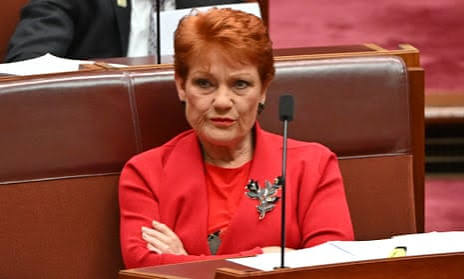
According to the widely circulated posts, the confrontation took place during a televised discussion focused on regional development. The narrative says Prime Minister Albanese made remarks suggesting that some regional communities were “living in the past” and that parts of regional Queensland needed to accept that “their era has changed.”
The posts allege that Hanson immediately cut in, raising her voice and declaring:
“Shut your dirty mouth. Don’t you dare talk about my homeland.”
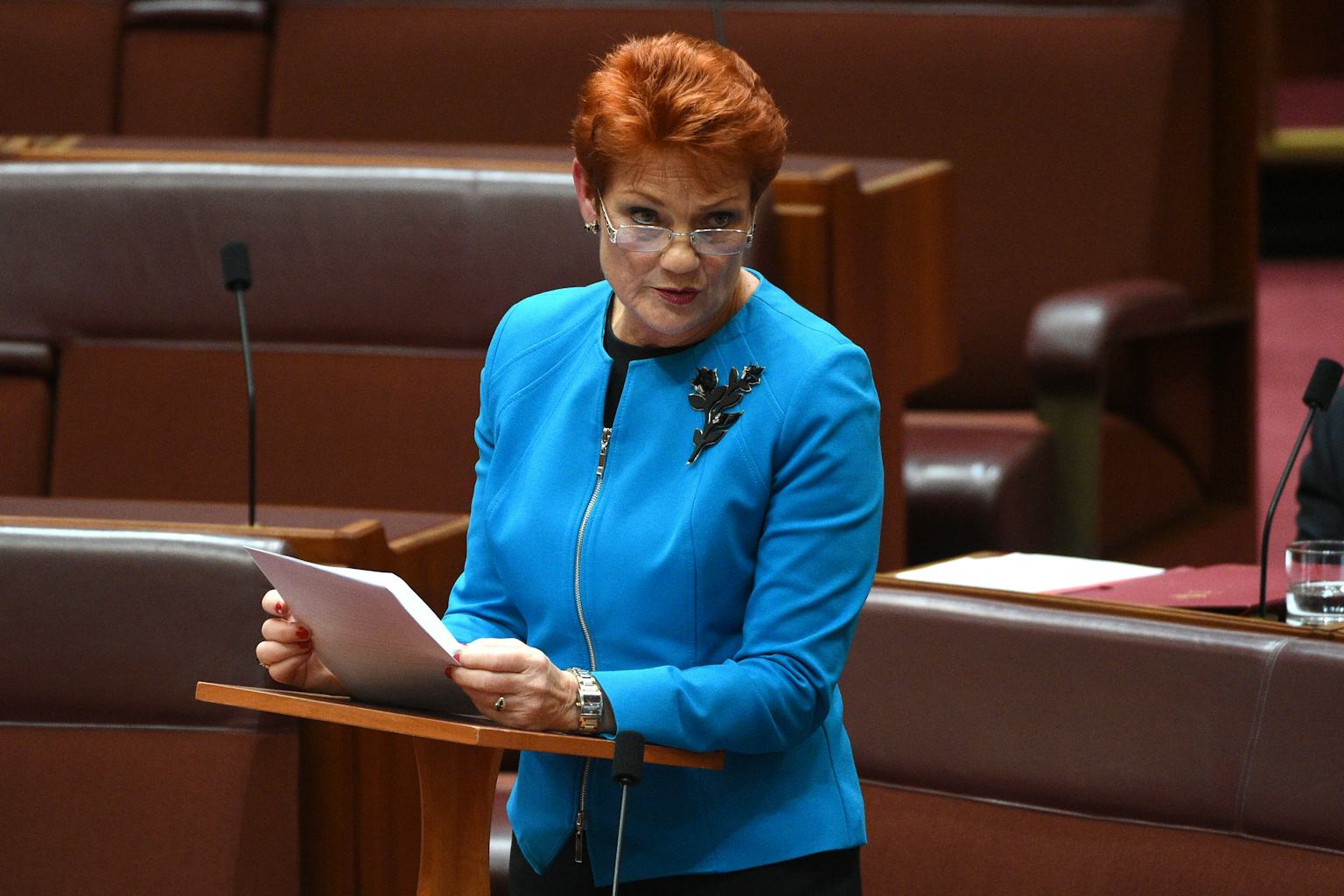
The story claimed the studio fell silent, and within hours, edited clips, screenshots, and summaries had been shared tens of thousands of times. Supporters praised Hanson for standing up for rural and regional Australians, while critics argued the exchange — if true — showed a new low in political discourse.
The Reality Check
But as news organizations and independent analysts began to look into the incident, a clear gap emerged: there is no verified evidence that this exchange took place as described. No full broadcast, official transcript, parliamentary record, or report from established media outlets has confirmed the exact words attributed to either leader. Even the short clips circulating online appear to be edited or taken out of context, lacking the full conversation needed to verify what was said — or if it was said at all.
The story has nevertheless struck a chord because it taps into a real and long-running divide in Australian politics: the growing sense that decision-makers in Canberra and the capital cities are out of touch with life outside the major urban centers.
The Divide It Reflects
For decades, regional and rural communities have voiced concerns that infrastructure funding, healthcare services, job opportunities, and government attention flow disproportionately to Sydney, Melbourne, Brisbane, and Perth. Residents in smaller towns often face longer travel times to hospitals, higher costs for fuel and goods, fewer educational options, and the steady decline of traditional industries like manufacturing and agriculture.
Pauline Hanson has built her political career on speaking directly to these frustrations. She repeatedly argues that regional Australia is the backbone of the nation, yet is treated as an afterthought by governments focused on the needs of metropolitan voters. Her message resonates with those who feel unheard, and it explains why even an unconfirmed story of her defending regional communities went viral.
On the other side, Prime Minister Albanese and the Labor government have publicly outlined policies intended to support regional growth — including investments in renewable energy zones, critical minerals extraction, road and rail upgrades, and expanded healthcare services. The remarks attributed to him in the posts directly contradict his administration’s stated priorities, which has led many observers to question their authenticity.
After thirty years covering politics, elections, and the media landscape, I can tell you this: sometimes the story itself matters less than why it spreads. Whether this confrontation actually happened or not is only part of the issue. Far more important is what the story reveals about Australia’s political fault lines, the power of social media, and the growing gap between perception and reality in public life.
What Most People Are Missing
The first critical detail is this: the story did not go viral because it was true — it went viral because it felt true. Even without proof, it matched the narrative millions of Australians already hold in their minds: that regional areas are neglected, that city leaders do not understand rural life, and that Pauline Hanson is the only figure willing to push back against the political establishment.
This is a common pattern in modern politics. When a claim aligns with what people already believe, they are far less likely to check its accuracy. The speed of sharing means that by the time corrections are issued, the impression has already been formed. This incident is a reminder that in the digital age, perception can become reality for many voters, regardless of the facts.
Second, we must distinguish between the message and the messenger. Many people who shared this story were not necessarily endorsing Hanson’s broader policies — they were expressing their own frustration. They saw a version of events where someone finally stood up for their region, and they embraced it as a symbol of what they want from their leaders. That is the real power behind the story: it is a reflection of public sentiment, not necessarily a report of what occurred.

Third, we see the double-edged sword of social media. It gives ordinary people a voice, but it also allows partial or misleading content to spread rapidly. Edited videos, out-of-context quotes, and anonymous posts can create the impression of a major political event where none exists. This makes it harder for voters to separate genuine debate from manufactured drama.
The Deeper Meaning: City vs. Country
Beneath this incident lies one of Australia’s oldest and most persistent political tensions: the divide between metropolitan and regional Australia.
This is not just about geography — it is about power and resources. Over the past 30 years, Australia’s economy has shifted toward services, technology, and finance, sectors concentrated in capital cities. Meanwhile, industries that sustain regional communities — farming, forestry, mining, and manufacturing — have faced rising costs, regulatory changes, and global competition. As the gap in employment opportunities, income levels, and access to services has widened, so too has the sense of alienation.
Hanson has successfully framed this divide as a battle between “ordinary Australians” and “elites in Canberra.” Whether her solutions are workable or not, she has correctly identified the problem: people in regional areas feel their priorities are not understood or represented.
The challenge for the major parties is that they have often failed to communicate clearly enough that they understand these concerns. Even when they announce policies aimed at regional development, those announcements can feel distant or disconnected from daily life. That leaves an opening for narratives like this one — even when unproven — to take hold.
Why This Matters
This story matters for three key reasons:
- It highlights the erosion of trust in information. When viral claims overtake verified reporting, it becomes harder for the public to make informed decisions. Democracy relies on shared facts; when those facts are replaced by emotion-driven narratives, the system becomes more polarized.
- It underscores the political importance of regional Australia. As we saw with David Farley’s historic win in Farrer, voters outside the cities are increasingly willing to look beyond traditional parties. Any government that ignores their concerns does so at its own risk.
- It shows how political figures gain influence. Hanson does not always win arguments or pass legislation, but she consistently wins attention. By giving voice to unmet frustrations, she remains a central figure in the national conversation, even when the stories about her are unconfirmed.
The Unanswered Questions
This incident leaves us with important questions that go beyond the truth of one exchange:
- If the story resonates this strongly, what does it tell us about how well the major parties are communicating their policies to regional voters?
- How can news organizations and social media platforms balance the need for speed with the responsibility to verify information before it spreads?
- Will the frustration driving this narrative translate into lasting political change, or will it remain a cycle of anger without clear solutions?
- Can Australia find a way to bridge the city-country divide without letting it become a source of permanent division?
Whether Pauline Hanson truly spoke those words to Anthony Albanese, or whether the entire confrontation was invented and amplified online, one thing is certain: the sentiment behind the story is real.
Regional Australians feel overlooked, under-resourced, and unheard. They want leaders who understand their struggles, value their contribution to the nation, and deliver tangible improvements to their lives. That is the truth that lies beneath the viral headlines, and it is the reason this story struck such a powerful chord.
For the political class, this incident serves as a clear warning: if you do not tell your story and address the concerns of voters, others will fill the vacuum — sometimes with facts, sometimes with fiction, but always with a message that feels familiar to those who feel left behind.
And so I leave you with this thought: The most important political story is not always the one that is true — it is the one that explains why so many people believe it. The challenge now is to turn that belief, and that frustration, into real policy and real progress for every part of Australia.