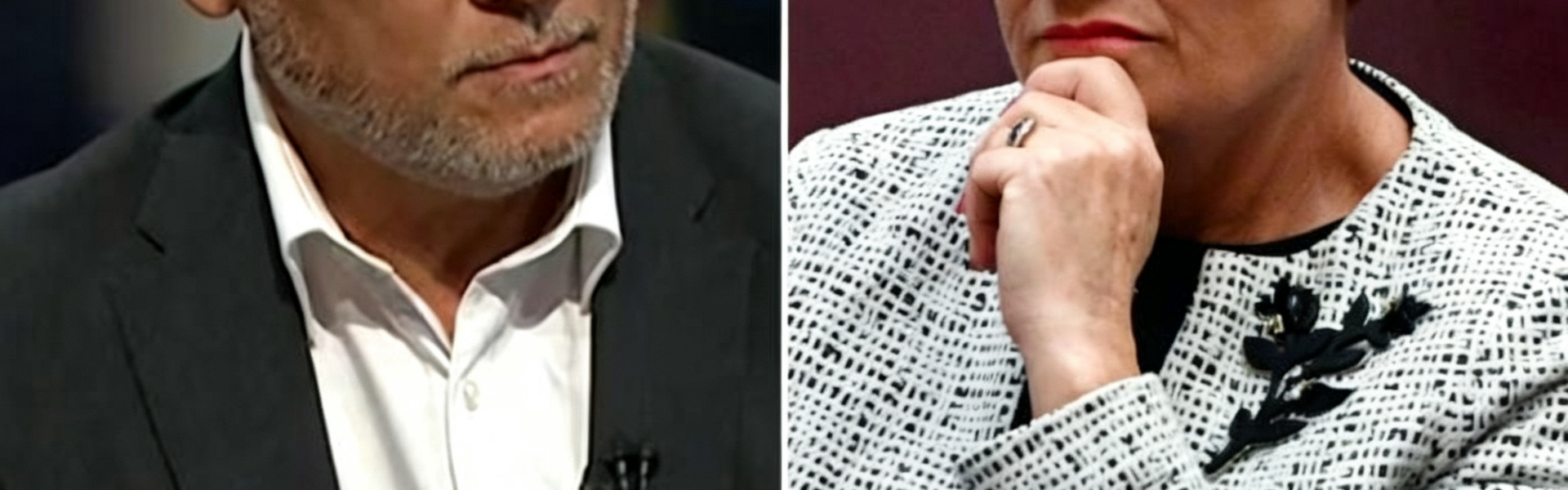
PAULINE HANSON LAUNCHES A MASSIVE LEGAL BATTLE! A$50 MILLION LAWSUIT ROCKS Q+A AFTER STAN GRANT SHOWDOWN. u1

Viral Claim That Pauline Hanson Sued Q+A for A$50 Million Falls Apart Under Scrutiny
A sensational online story claiming that Pauline Hanson filed a A$50 million defamation lawsuit against the Australian Broadcasting Corporation‘s former current affairs program Q+A and journalist Stan Grant has circulated widely across social media, attracting thousands of shares and comments.
The viral narrative alleges that Hanson launched legal proceedings after an explosive live television confrontation in which she was supposedly subjected to defamatory personal attacks. According to the posts, Hanson was seeking A$50 million in damages and intended to hold both the broadcaster and Grant accountable.
However, there is a fundamental problem with the story.
There is no credible evidence that such a lawsuit exists.
Independent fact-checkers have found no court filings, no announcement from Hanson or her legal representatives, and no reporting from established Australian news organisations confirming that legal proceedings have been commenced. (AAP News)
Even more significantly, the central premise is inconsistent with recent events.
Q+A was discontinued by the ABC in 2025, meaning claims about a recent confrontation on that program involving Stan Grant do not match the current status of the show. (AAP News)
How the Story Spread
The claim appeared across Facebook, YouTube and other social media platforms using highly emotional headlines such as:
“PAULINE HANSON FILES A$50 MILLION LAWSUIT…”
The accompanying articles follow a familiar pattern.
They include:
- dramatic quotations attributed to unnamed sources,
- descriptions of explosive television confrontations,
- large monetary damages,
- emotional language designed to encourage sharing,
- little or no verifiable evidence.
Despite their appearance, fact-checkers found no supporting documentation for the alleged lawsuit.
Neither Australian court records nor credible news organisations have reported the existence of such proceedings. (AAP News)
The Quotes Cannot Be Verified
One widely circulated quotation claimed Hanson said:
“They tried to discredit everything I’ve spent decades fighting for…”
There is no verified public record showing Hanson made that statement in relation to the alleged lawsuit.
Similarly, references to anonymous insiders, unnamed legal advisers and confidential sources appear without corroborating evidence.
Professional journalists generally require independent verification before treating such quotations as authentic.
A Familiar Formula
Investigations by AAP FactCheck and Lead Stories found that this Hanson story is not unique.
Instead, it forms part of a much broader series of fabricated articles using virtually identical wording.
The same template has been recycled with dozens of public figures.
Only the names change.
One version claims a celebrity sued an American television network.
Another claims a politician sued a broadcaster.
Another substitutes a different television presenter.
The overall narrative remains almost identical. (leadstories.com)
Researchers found many of these Facebook pages are administered from Vietnam and are designed primarily to generate clicks for advertising revenue rather than report genuine news. (leadstories.com)
Why the Story Appears Convincing
The story succeeds because it combines several real elements.
Pauline Hanson is undeniably one of Australia’s most controversial political figures.
Stan Grant has hosted major ABC current affairs programming and has frequently interviewed prominent politicians.
Australian defamation law is among the most active in the democratic world.
Large damages claims occasionally do occur.
By combining genuine public figures with fictional events, the story creates an appearance of credibility that encourages readers to accept it without verification.
The Legal Reality

If a politician filed litigation seeking A$50 million against Australia’s national broadcaster, several things would almost certainly happen.
Court documents would become publicly accessible.
Major Australian media organisations would report the filing.
The ABC would likely issue a public response.
Law firms representing both parties would normally acknowledge the proceedings.
None of those indicators exist in this case. (AAP News)
That absence is one of the strongest pieces of evidence suggesting the story is fabricated.
My Professional Perspective
The most revealing aspect of this story is not the alleged lawsuit.
It is the method used to construct it.
Modern Political Hoaxes No Longer Invent Everything
Years ago, fabricated political stories often contained obvious errors.
Today’s viral misinformation is considerably more sophisticated.
It frequently mixes genuine facts with fictional events.
Readers recognise Pauline Hanson.
They recognise Stan Grant.
They know Australia has strict defamation laws.
Those real ingredients make the fictional lawsuit appear plausible.
That is precisely why these stories spread so effectively.
Emotion Travels Faster Than Verification
The headline is designed to provoke an immediate emotional response.
Supporters of Hanson may feel vindicated.
Critics may react with disbelief.
Either reaction encourages sharing before anyone checks whether the underlying claim is true.
The objective is not necessarily persuasion.
It is engagement.
Every share increases advertising revenue for the websites publishing the story.
The Pattern Matters More Than This Individual Story
Perhaps the most important lesson is that this is not an isolated fabrication.
Fact-checkers have documented numerous nearly identical stories involving politicians, celebrities and television personalities.
The names change.
The alleged confrontation changes.
The broadcaster changes.
The claimed damages remain remarkably similar.
Once readers recognise the template, future versions become much easier to identify.
Genuine Defamation Cases Look Very Different
Real defamation litigation develops through identifiable legal processes.
There are court filings.
Lawyers make statements.
Media organisations respond.
Judges issue procedural directions.
Journalists can verify each stage.
None of those characteristics appear in this viral narrative.
Instead, readers are presented with anonymous sources, dramatic dialogue and extraordinary legal claims unsupported by documentary evidence.
That is the opposite of how significant litigation normally enters the public domain.
Conclusion
The viral claim that Pauline Hanson filed a A$50 million lawsuit against Q+A and Stan Grant is not supported by credible evidence. Independent fact-checks have found no court records, no verified statements from Hanson, no confirmation from the ABC, and no reporting from established Australian news outlets. The claim also conflicts with the fact that Q+A ceased production in 2025. (AAP News)
Rather than documenting an actual legal dispute, the story appears to follow a well-established pattern of engagement-driven misinformation that repurposes recognizable public figures into sensational but unsupported narratives.
The broader lesson extends beyond this single claim. In an era when fabricated stories increasingly borrow real names, real institutions and plausible legal language, the most important question is no longer whether a headline sounds believable—it is whether the evidence supporting it can withstand independent verification.