
Albanese Targets Angus Taylor as Political Tensions Rise: But Will Sharp Words Matter More Than Economic Reality?
Australia’s political battle has entered a more confrontational phase.
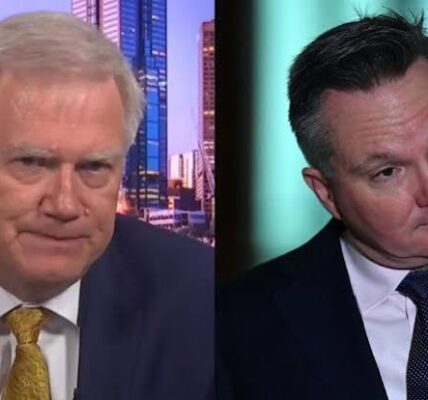
With cost-of-living pressures continuing to dominate household conversations and the next federal election gradually moving closer, Prime Minister Anthony Albanese has delivered one of his strongest public criticisms yet of Opposition Leader Angus Taylor, declaring that “the worse he goes, the more he chirps.”
The remark quickly became one of the most talked-about moments in Canberra, highlighting not only the increasingly personal nature of political exchanges but also the high stakes facing both major parties as they compete to convince Australians they have the best plan for navigating an uncertain economic future.
While the comment itself generated headlines, the larger story extends far beyond a single political jab.
It reflects a contest over leadership, economic credibility, and public confidence at a time when many Australians remain more concerned about their weekly household budgets than political theatre.
A Political Climate Growing Increasingly Combative
Canberra has rarely been short of political confrontation, but recent months have seen the tone between Labor and the Coalition become noticeably sharper.

Anthony Albanese’s criticism of Angus Taylor came during a period when both sides have intensified their attacks on each other’s economic record.
The Albanese Government continues defending its handling of inflation, employment, renewable energy investment, housing initiatives, and long-term infrastructure projects.
Meanwhile, the Coalition argues that many Australians remain under significant financial pressure despite repeated government assurances that economic conditions are improving.
Against that backdrop, Albanese’s remark was widely interpreted as an attempt to portray Taylor as becoming increasingly combative while suggesting the Opposition has struggled to build sustained political momentum.
Government ministers have repeatedly argued that the Coalition has focused heavily on criticizing Labor without presenting voters with a sufficiently detailed alternative program for government.
For Labor supporters, the Prime Minister’s comments demonstrated confidence.
For Coalition supporters, they represented another attempt to distract attention from the economic challenges facing Australian households.
The Economy Remains the Real Political Battleground
Although parliamentary exchanges often dominate news headlines, polling consistently shows that voters continue to rank economic issues above political rhetoric.
Across Australia, families remain concerned about:
- Rising grocery prices.
- Mortgage repayments.
- Rental affordability.
- Electricity and gas bills.
- Insurance premiums.
- Healthcare expenses.
- Long-term financial security.
These concerns continue to shape political attitudes far more than individual parliamentary exchanges.

The Coalition has sought to capitalize on this environment by arguing Labor’s economic management has failed to reduce financial pressure quickly enough.
Opposition figures have repeatedly questioned government spending, taxation policy, energy strategy, and broader fiscal management.
Labor, however, maintains that many economic pressures reflect global inflationary trends affecting advanced economies worldwide rather than problems created exclusively by Australian government policy.
Government ministers also point to relatively strong employment figures, ongoing investment in housing supply, and major infrastructure projects as evidence that Australia remains comparatively resilient despite international economic uncertainty.
Angus Taylor Faces Growing Expectations
The latest exchange also places renewed attention on Opposition Leader Angus Taylor.
Having assumed leadership of the Coalition, Taylor now faces the difficult challenge of presenting himself as a credible alternative prime minister while maintaining unity across the Liberal and National parties.
Political leadership requires more than criticizing the government.
Opposition leaders must persuade undecided voters that they possess both the competence and policy vision necessary to govern.
Taylor therefore faces pressure on multiple fronts.

Within conservative politics, he must reassure traditional Coalition supporters.
At the same time, he must appeal to moderate voters while responding to growing competition from minor parties and independents seeking support from Australians dissatisfied with the major political parties.
That balancing act has become increasingly difficult in Australia’s evolving political landscape.
Labor Defends Its Record
Supporters of the Albanese Government argue the Prime Minister has every reason to challenge the Opposition after months of sustained criticism.
Labor continues emphasizing several areas it believes demonstrate responsible economic management:
- Relatively low unemployment by historical standards.
- Investment in renewable energy.
- Housing construction initiatives.
- Infrastructure development.
- Measures designed to ease inflation over time.
Government figures argue these policies reflect long-term planning rather than short-term political messaging.
They also maintain that Australia’s economy continues performing comparatively well against many advanced economies facing similar global pressures.
Critics Say Families Want Results, Not Rhetoric
Critics of the government offer a very different assessment.
They argue that while macroeconomic indicators may show signs of resilience, many Australians judge economic performance according to their own weekly expenses.
For many households, grocery shopping costs substantially more than it did only a few years ago.
Mortgage holders continue adjusting to significantly higher interest rates.
Renters face historically tight housing markets.
Small businesses continue navigating increased operating costs.
From this perspective, critics argue political exchanges between leaders matter less than practical improvements in everyday affordability.
Many voters simply want to know which party can most effectively reduce financial pressure.
The Growing Influence of Minor Parties
Another important development shaping this political contest is the continuing rise of minor parties and independents.
Australian politics has become increasingly fragmented over the past decade.
Traditional two-party dominance has gradually weakened in many electorates.
As a result, Labor and the Coalition now compete not only against each other but also against a growing number of alternative political movements.
This trend places additional pressure on both Albanese and Taylor.
Each leader must retain support among loyal voters while simultaneously appealing to Australians who increasingly view themselves as politically independent.
Minor shifts in public opinion therefore carry greater electoral significance than they once did.
Why Leadership Perception Matters
Political analysts frequently note that election outcomes rarely hinge on a single memorable quote.

However, repeated exchanges between leaders can gradually shape broader public perceptions.
Leadership is often judged through characteristics such as:
- Competence.
- Confidence.
- Stability.
- Communication skills.
- Decision-making ability.
- Economic credibility.
Political rhetoric alone cannot secure electoral victory.

Nevertheless, it contributes to the broader narrative voters develop over many months of campaigning.
That helps explain why both Labor and the Coalition increasingly seek opportunities to define each other’s leadership before voters do so independently.
My Professional Perspective
From a political reporting perspective, the most revealing aspect of Albanese’s latest comments is not the phrase itself.
Political leaders have traded sharp personal attacks throughout Australia’s parliamentary history.
The more important question is why both parties increasingly rely on leadership narratives at this particular moment.
The answer lies in public uncertainty.
When voters become anxious about economic conditions, they often evaluate not only policies but also leadership qualities.
They ask themselves a fundamental question:
Who appears most capable of managing uncertainty?

That explains why both Labor and the Coalition devote significant attention to framing the character and competence of their opponents.
Another frequently overlooked point is that political communication has changed dramatically.
Short remarks delivered during press conferences or Question Time now spread almost instantly across television, online news platforms, podcasts, and social media.
A single sentence can dominate public discussion for days.
Yet history suggests these moments rarely determine elections on their own.
Australians have traditionally shown a pragmatic approach to politics.
They often tolerate aggressive political exchanges provided governments and oppositions continue presenting credible policy proposals.
Ultimately, voters tend to return to practical concerns.
Can they afford a home?
Will wages keep pace with living costs?

Are healthcare and education improving?
Will businesses continue creating secure employment opportunities?
Those questions generally outweigh political slogans by election day.
Perhaps the most significant development is the increasingly competitive nature of Australian politics.
Neither major party can assume long-standing voter loyalty.
Minor parties continue attracting support.
Independent candidates remain influential.
Public expectations have risen.

As a result, both Albanese and Taylor face greater pressure than many previous political leaders to demonstrate competence across multiple policy areas simultaneously.
This means personal attacks may energize existing supporters, but persuading undecided voters will almost certainly require something more substantial.
Detailed economic policy.
Clear housing strategies.
Credible taxation proposals.
Practical plans for improving productivity and living standards.
Those are the issues most likely to determine Australia’s next election.
Looking Ahead
As campaigning gradually intensifies, Australians can expect increasingly robust exchanges between the government and the opposition.
Both Anthony Albanese and Angus Taylor understand that leadership perceptions will influence public confidence.

However, they also recognize that voters ultimately judge political parties by their ability to improve everyday life.
Housing affordability remains a defining national challenge.
Cost-of-living pressures continue affecting millions of households.
Business confidence, productivity growth, taxation, energy policy, and infrastructure investment will remain central election issues.
Against that backdrop, political rhetoric will undoubtedly continue attracting headlines.
Whether those exchanges translate into lasting electoral advantage is another matter entirely.
The coming months are likely to test not only the communication skills of Australia’s political leaders but also the strength of their policy agendas.
As Australians weigh competing visions for the country’s future, one reality is becoming increasingly apparent.
The contest between Anthony Albanese and Angus Taylor is no longer simply about winning parliamentary debates.
It is about convincing voters who can deliver greater economic security, restore confidence in the nation’s future, and provide practical solutions to the challenges affecting households across Australia.
In the end, memorable political one-liners may shape the news cycle.
But it is the lived experience of Australian families—and the credibility of the policies designed to improve it—that will ultimately shape the ballot box.