
One Nation’s Polling Slide Raises New Questions: Is Pauline Hanson Facing a Temporary Setback or a Political Turning Point?
Only a few weeks ago, One Nation appeared to be enjoying one of its strongest political periods in years.
Fresh polling had suggested growing support for the party as Australians increasingly voiced concerns about the cost of living, housing affordability, immigration levels, and pressure on public infrastructure. Pauline Hanson, the party’s founder and leader, had successfully positioned herself as one of the country’s most recognizable advocates for tougher immigration policies and stronger national sovereignty.
Yet Australian politics is rarely predictable.
A debate that initially centered on economic pressures and migration policy has now shifted toward national identity, multiculturalism, and political messaging after Hanson’s comments about Australia becoming a “monocultural” nation triggered widespread controversy.

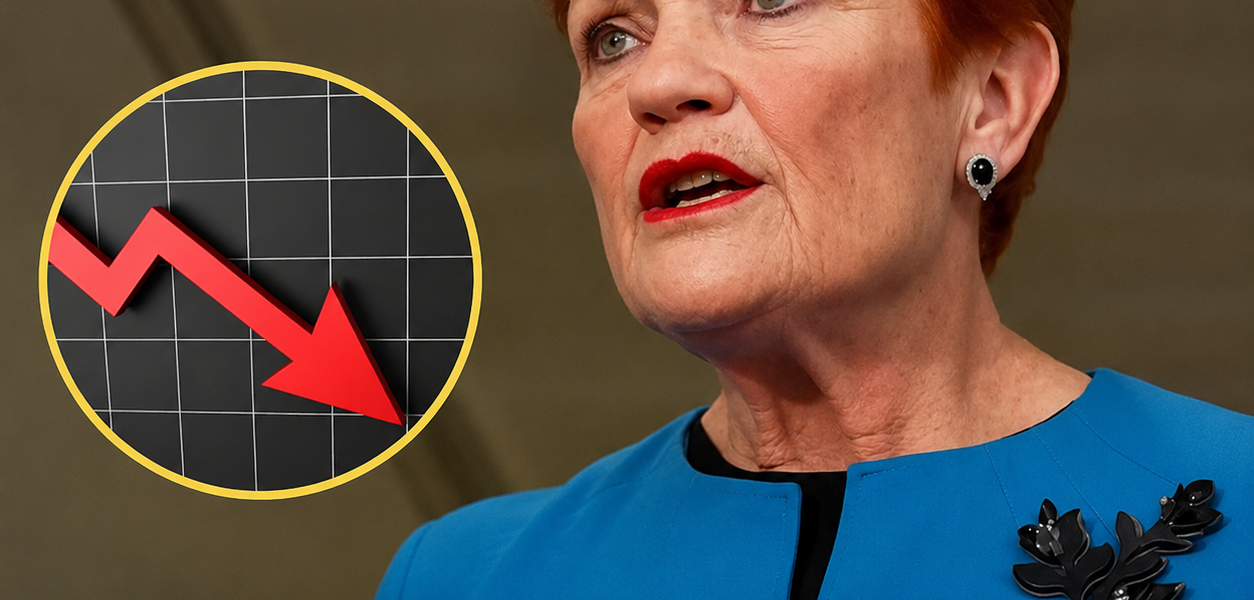
New polling has since suggested that One Nation’s momentum may have softened, prompting fresh debate over whether the party’s recent surge has stalled—or whether the latest numbers simply reflect the normal volatility of public opinion.
While no single poll determines the outcome of an election, the change has become an important talking point across Australia’s political landscape, raising broader questions about how far political messaging can influence voter support.
From Political Momentum to Public Controversy
Before the controversy emerged, One Nation had been benefiting from a political environment increasingly dominated by economic concerns.
Across Australia, many households continue to face significant financial pressures.
Mortgage repayments remain elevated for many borrowers.
Rental affordability continues to challenge younger Australians.

Housing supply struggles to keep pace with demand.
Inflation has affected household budgets, while concerns about population growth and infrastructure capacity remain prominent in public debate.

Against that backdrop, Hanson argued that Australia should strengthen its national identity by encouraging greater unity around Australian values, laws, and customs.
However, much of the public discussion quickly became focused on one particular word.
“Monocultural.”
The phrase generated immediate criticism from political opponents, community organizations, commentators, and many media outlets.
Rather than debating immigration policy itself, the national conversation increasingly revolved around whether Hanson’s language accurately reflected Australia’s identity or risked alienating Australians from diverse cultural backgrounds.
Hanson Clarifies Her Position
As criticism intensified, Hanson sought to clarify her comments.
She maintained that she was not calling for Australians to abandon their cultural heritage or ethnic traditions.
Instead, she argued that all Australians—regardless of where they were born—should share a common commitment to Australian laws, democratic institutions, customs, and civic values.
Supporters insisted her position had been misunderstood or selectively interpreted.
They argued that emphasizing integration and shared national identity is not incompatible with cultural diversity.
Critics remained unconvinced.
Many argued the language itself carried historical and political implications that made it unnecessarily divisive, regardless of Hanson’s subsequent explanations.
The disagreement soon extended far beyond Parliament.
Community leaders, academics, journalists, and political analysts all joined the discussion, transforming what had begun as a policy debate into a broader national conversation about Australia’s identity.
Did the Political Conversation Change?
One of the more interesting developments has been how rapidly the national conversation shifted.
For several weeks, much of the political focus centered on practical concerns:
- Immigration levels.
- Housing affordability.
- Population growth.
- Cost-of-living pressures.
- Infrastructure capacity.
Those issues consistently rank among the highest concerns identified by Australian voters.
After the controversy, however, attention increasingly turned toward political language and symbolism.
Many analysts believe that transition matters.
Minor parties often build support by concentrating public attention on issues they believe major parties have neglected.
When debate moves away from those policy issues and toward questions about wording or political controversy, maintaining momentum can become considerably more difficult.
Whether that dynamic contributed directly to One Nation’s polling decline remains uncertain.
Nevertheless, the timing has generated considerable discussion among political observers.
Polling Suggests Momentum Has Slowed
Recent polling indicates that One Nation’s earlier gains may have moderated following the controversy.
Polling experts, however, consistently caution against drawing broad conclusions from individual surveys.
Public opinion naturally fluctuates between polling periods.
Media attention can temporarily influence voter responses.
Campaigns evolve.
Economic conditions change.
Issues that dominate one news cycle may disappear from public attention only weeks later.
Australia’s preferential voting system also means primary vote polling provides only part of the electoral picture.
Election outcomes ultimately depend on voter preferences, local contests, candidate quality, and campaign performance.
For those reasons, experienced analysts typically evaluate polling trends over extended periods rather than relying on isolated results.
Labor and the Coalition Watch Closely
The developments have attracted close attention from both major parties.
Labor continues defending Australia’s multicultural framework while acknowledging growing public concern surrounding housing affordability, migration planning, and infrastructure investment.
The Coalition likewise supports maintaining strong border security but has generally avoided adopting Hanson’s specific language regarding national identity.
Instead, Opposition figures have emphasized balancing controlled migration with economic growth, housing supply, and improved infrastructure planning.
For both major parties, One Nation’s support remains politically significant.
Even relatively modest shifts in voter preferences can influence outcomes in closely contested electorates, particularly where preference flows become decisive.
Why Economic Issues Continue to Dominate
Despite the controversy, many analysts believe the underlying issues driving political dissatisfaction have not disappeared.
Australians continue to face several significant challenges:
- Rising housing costs.
- Higher mortgage repayments.
- Rental shortages.
- Healthcare pressures.
- Infrastructure demand.
- Concerns about long-term economic security.
These issues affect households across political lines.
Supporters of One Nation argue these concerns remain central to voters regardless of debates surrounding multiculturalism or political terminology.
Critics counter that successful political movements require not only identifying problems but also presenting practical, detailed, and achievable policy solutions.
Ultimately, voters will judge parties on both their message and their credibility.
My Professional Perspective
Having followed political campaigns for many years, I believe the most revealing aspect of this story is not whether One Nation gained or lost a few percentage points in a single opinion poll.
The more important question is what caused the national conversation to change.
Political momentum is often built by controlling the issues under discussion.
Before the controversy, One Nation successfully directed attention toward affordability, migration levels, and population growth—subjects that many opinion surveys consistently identify as major voter concerns.
Those issues placed pressure on both Labor and the Coalition.
Once the debate shifted toward language and symbolism, however, the political landscape changed.
Instead of asking whether immigration policy should be adjusted, many Australians found themselves debating whether Hanson’s description of Australia’s cultural identity was appropriate.
That distinction matters.
When political parties become identified primarily with controversy rather than policy, media coverage often changes as well.
Supporters may become more energized.
Undecided voters may become more cautious.
Political opponents gain opportunities to challenge not only the message but also the messenger.
Another important lesson involves the nature of modern media.
News cycles move rapidly.
A single phrase can dominate headlines for days, sometimes overshadowing months of policy discussion.
That does not necessarily determine long-term electoral outcomes, but it can temporarily reshape public perception.
It is also worth recognizing that polling reflects public attitudes at a particular moment rather than permanent political realities.
Australian politics has repeatedly demonstrated how quickly public opinion can shift.
Economic developments, government decisions, leadership changes, international events, and election campaigns all have the capacity to alter voter priorities.
For One Nation, the challenge moving forward is likely straightforward but significant.
If the party wishes to maintain or expand its support, it may seek to return public attention to the economic and migration issues that initially strengthened its position.
For Labor, maintaining confidence will depend largely on demonstrating progress in addressing affordability and housing pressures.
For the Coalition, the continuing rise of minor parties serves as another reminder that many conservative voters remain willing to explore alternatives if they believe their concerns are not being adequately addressed.
Ultimately, this story is less about one controversial phrase than about the broader competition to define Australia’s political agenda.
Who controls the conversation often gains a significant strategic advantage.
The coming months will reveal whether One Nation can regain control of that conversation—or whether Australia’s political debate has already moved in a different direction.
Looking Ahead
With the next federal election still approaching, Australia’s political landscape remains highly fluid.
Economic pressures continue to dominate everyday life for millions of Australians.
Housing affordability, inflation, migration, healthcare, and infrastructure are expected to remain among the defining issues of the campaign.
Whether One Nation’s recent polling decline proves temporary or signals a longer-term shift cannot yet be determined.
History shows that political fortunes frequently rise and fall between elections, particularly during periods of economic uncertainty.
What appears clear, however, is that Australians continue searching for practical answers to complex national challenges.
Parties that successfully combine clear communication with credible policy solutions are likely to be best positioned to earn public confidence.
For Pauline Hanson, the coming months may represent an important political test.
Can she redirect attention toward the issues that originally fueled One Nation’s momentum?
Or has the debate over national identity permanently altered public perceptions of the party?
The answer will shape not only One Nation’s electoral prospects but may also influence how Australia’s broader political debate develops in the lead-up to the country’s next federal election.