
London’s Closed Grooming Cases Face Fresh Review as Political Debate Intensifies. n1

London’s Historical Grooming Cases Face Fresh Review as Operation Beacon Reopens National Debate on Accountability
Thousands of previously closed child sexual exploitation cases in London are set to undergo fresh assessment as part of Operation Beacon, a nationwide review of historical investigations. The development has reignited one of Britain’s most contentious public debates: whether authorities responded adequately to allegations of organized child sexual exploitation, and whether difficult questions were confronted early enough.
According to the Metropolitan Police Service, approximately 4,000 historical cases have been identified that may fall within the criteria for review under Operation Beacon.
The review does not mean that all of these cases involve organized grooming gangs, nor does it indicate that criminal offences were overlooked in every instance. Rather, the purpose is to determine whether previously closed investigations require further examination in light of new evidence, investigative standards, intelligence or developments in national understanding of child sexual exploitation.
Nevertheless, the scale of the review has inevitably drawn renewed political attention.
Much of that attention has focused on Sadiq Khan, who also serves as London’s Police and Crime Commissioner, placing him under renewed scrutiny over previous comments concerning child exploitation in the capital.
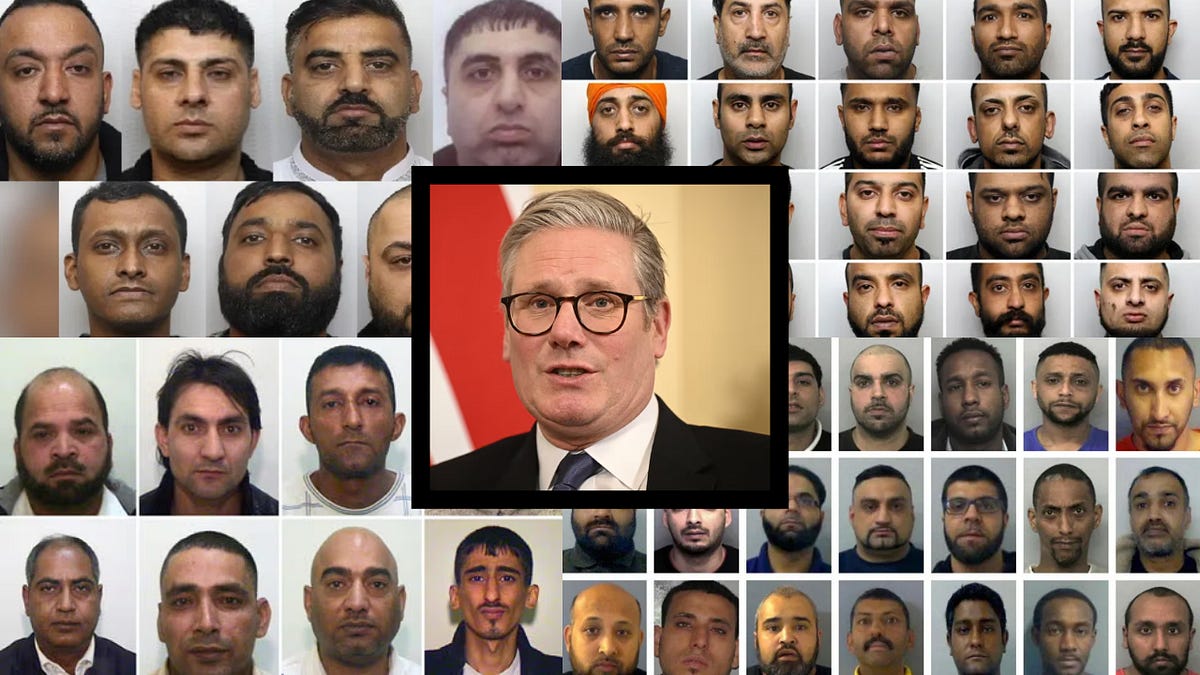
Previous Statements Return to the Spotlight
The current controversy has revived earlier public exchanges in which Khan was questioned about whether London faced organized grooming gang activity similar to scandals uncovered elsewhere in England.
During those exchanges, Khan acknowledged that London had serious problems involving child sexual exploitation but argued that the nature of offending in London differed from the organized grooming gang cases identified in places such as Rotherham and Rochdale.
As questioning continued, Khan suggested that he believed some criticism directed toward him carried implications relating to his faith or ethnic background.
Critics rejected that interpretation, arguing their concerns focused solely on his responsibilities as Police and Crime Commissioner rather than any aspect of his personal identity.
Those earlier exchanges have now resurfaced following confirmation that thousands of historical London cases will be reviewed.
For opponents, the announcement raises questions about whether the scale of child sexual exploitation in London was sufficiently acknowledged in previous years.
Supporters argue that revisiting historical cases does not, in itself, demonstrate that earlier statements were inaccurate or that information was deliberately concealed.
What Is Operation Beacon?
Operation Beacon is part of a broader national effort to reassess previously closed child sexual exploitation investigations across England and Wales.
Its purpose is not to reopen every historical case automatically.
Instead, investigators examine whether older investigations meet criteria suggesting they should be reassessed because of:
- New evidence.
- Updated investigative standards.
- Additional intelligence.
- Links to wider offending networks.
- Developments in understanding patterns of child sexual exploitation.
This approach reflects lessons learned from several major inquiries over the past two decades, which found that earlier investigations sometimes failed to recognise organised offending patterns or fully understand the methods used by perpetrators to groom and exploit vulnerable children.
The review aims to ensure that cases closed under earlier investigative frameworks receive appropriate reassessment where necessary.
Political Debate Intensifies
The announcement quickly became the subject of intense political discussion.
Some commentators argued that reopening thousands of historical files demonstrates that concerns raised years ago deserved greater attention.
They questioned whether political leaders had responded with sufficient urgency when warnings first emerged.
Others cautioned against treating the review itself as evidence of institutional wrongdoing.
They noted that modern policing routinely re-examines historical investigations as forensic techniques improve, intelligence develops and investigative standards evolve.
Supporters of Khan also emphasised that the Mayor has publicly welcomed the review and consistently stated that every allegation of child sexual exploitation should be investigated thoroughly.
The National Conversation About Grooming Gangs
The latest developments have inevitably revived wider discussion surrounding organized grooming gang cases that emerged in several English towns over recent decades.
Multiple independent inquiries—including those examining events in Rotherham and other areas—identified serious failures by public authorities to protect vulnerable children.
Some inquiries concluded that concerns about community relations, institutional reputation or fears of being perceived as discriminatory contributed, in certain circumstances, to reluctance in confronting particular offending patterns.
Those findings have remained politically controversial.

Critics argue that institutional hesitation allowed offenders to avoid scrutiny while victims were left unprotected.
Others stress that the conclusions reached in individual inquiries should not be applied indiscriminately to every investigation or every community.
They argue that criminal investigations must remain evidence-based and avoid broad generalisations regarding ethnicity, religion or cultural background.
This distinction continues to shape national debate.
Understanding patterns of offending may assist investigators.
At the same time, criminal responsibility always rests with individuals and organised criminal groups—not with entire communities.
Official Responses
Following renewed public attention, the Mayor’s Office strongly rejected suggestions that Khan had attempted to conceal child sexual exploitation in London.
A spokesperson stated that the Mayor welcomed the reassessment of historical cases and believed that “no stone should be left unturned” in pursuing justice for victims.
The statement further described anyone responsible for exploiting children as “utterly abhorrent” and reaffirmed that police should follow the evidence wherever it leads.
Meanwhile, the Metropolitan Police confirmed its commitment to cooperating fully with Operation Beacon.
Kevin Southworth stated that officers had identified historical investigations meeting the review criteria and that any cases requiring renewed investigation would be pursued.
He also encouraged victims and survivors of abuse to come forward, assuring them they would be listened to and supported throughout the investigative process.
Why the Review Matters
The reassessment represents one of the largest reviews of historical child sexual exploitation investigations undertaken by the Metropolitan Police in recent years.
Its significance extends beyond the number of cases involved.
For victims whose complaints may not have resulted in successful investigations years ago, the review offers the possibility that new evidence, improved investigative methods or greater institutional awareness could lead to renewed examination.
For policing institutions, it provides an opportunity to assess whether lessons identified through previous national inquiries have been fully incorporated into operational practice.
Whether many of the 4,000 cases ultimately result in criminal prosecutions remains unknown.
The review is intended first to determine which investigations, if any, require further action.
My Professional Perspective
The announcement surrounding Operation Beacon illustrates how historical investigations continue to shape public confidence in policing long after the original events occurred.
One of the most important points often overlooked is that reopening historical cases is not, by itself, evidence of institutional failure.
Modern policing regularly revisits older investigations when new intelligence, improved forensic capabilities or revised investigative standards justify doing so.
At the same time, it would be equally mistaken to dismiss the significance of the review.
The decision to reassess approximately 4,000 cases reflects an acknowledgment that understanding of child sexual exploitation has evolved considerably over the past two decades.
Patterns of grooming, coercion and organised offending that were once poorly recognised are now far better understood by investigators.
Another important issue concerns the distinction between political accountability and criminal investigation.
Political leaders are responsible for setting priorities, allocating resources and maintaining public confidence.
Police investigators are responsible for examining evidence and establishing criminal liability.
The public debate sometimes blurs these roles, expecting political statements to resolve questions that only detailed investigations can answer.
The controversy surrounding previous comments by Sadiq Khan illustrates that tension.
Critics believe earlier public responses underestimated the scale of the issue.
Supporters argue his statements reflected the information available at the time and acknowledged that London’s offending patterns differed from those identified in some other areas.
The current review alone does not conclusively resolve that disagreement.
Perhaps the most sensitive aspect of the national debate concerns ethnicity.
Several independent inquiries concluded that fears of inflaming racial tensions or attracting accusations of discrimination influenced decision-making in certain historical investigations.
Those findings deserve careful examination because institutional reluctance—where it occurred—can have profound consequences for victims.
However, recognising patterns identified in specific inquiries must never become justification for stereotyping entire ethnic or religious communities.
Effective policing requires both honesty and precision.
Investigators must follow evidence wherever it leads while avoiding assumptions unsupported by facts.
Finally, the greatest lesson emerging from Operation Beacon may be about institutional learning.
Every major public inquiry into child sexual exploitation has reached broadly similar conclusions: victims must be believed, warning signs must not be dismissed, agencies must cooperate effectively and difficult conversations must not be avoided for fear of political controversy.
Those lessons remain relevant regardless of where future investigations lead.
Conclusion
Operation Beacon marks one of the most significant reassessments of historical child sexual exploitation cases undertaken by the Metropolitan Police in recent years. While the review does not imply that every previously closed investigation involved organised grooming gangs or that criminal offences were overlooked, it reflects a determination to revisit historical cases using current investigative standards and knowledge.
The announcement has also reignited political debate over previous public statements, institutional transparency and whether lessons from earlier child exploitation scandals have been fully absorbed across policing and public authorities.
For victims and survivors, however, the central issue extends beyond politics. The review represents an opportunity to ensure that allegations receive careful consideration and that any evidence warranting further investigation is pursued thoroughly and impartially.
As Operation Beacon progresses, the ultimate measure of its success will not be the number of files reopened or headlines generated. It will be whether the process strengthens public confidence by demonstrating that every credible allegation is assessed on its evidence, every victim is treated with dignity, and every investigative decision is guided by one principle above all others: the protection of children and the pursuit of justice wherever the facts may lead.