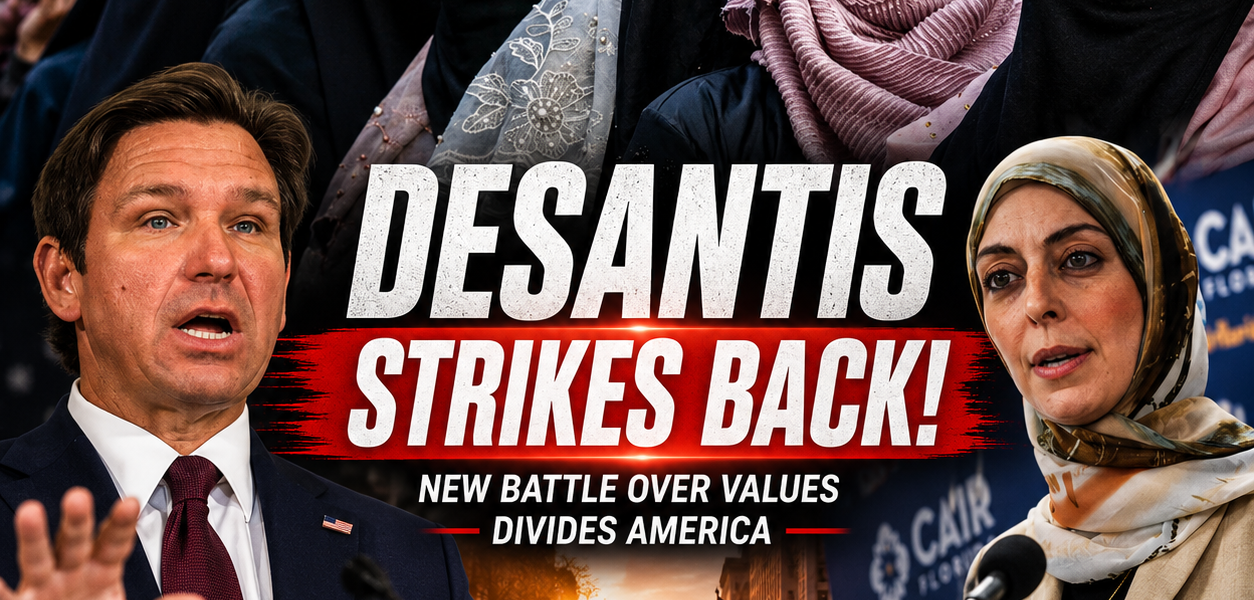
Florida Was Put to the Test — DeSantis Delivered a Response That Sparked Nationwide Debate. n1

Florida’s New Anti-Terror Law Ignites National Debate Over Security, Religious Freedom, and the Limits of State Power
A sweeping new Florida law signed by Governor Ron DeSantis has triggered one of the most intense political and legal debates in the United States, placing questions of national security, religious freedom, constitutional authority, and immigration squarely at the center of public discussion.
Supporters describe the legislation as a necessary defense against extremist influence and foreign legal systems. Critics argue it risks stigmatizing Muslim communities and expanding government powers in ways that could ultimately threaten constitutional protections.
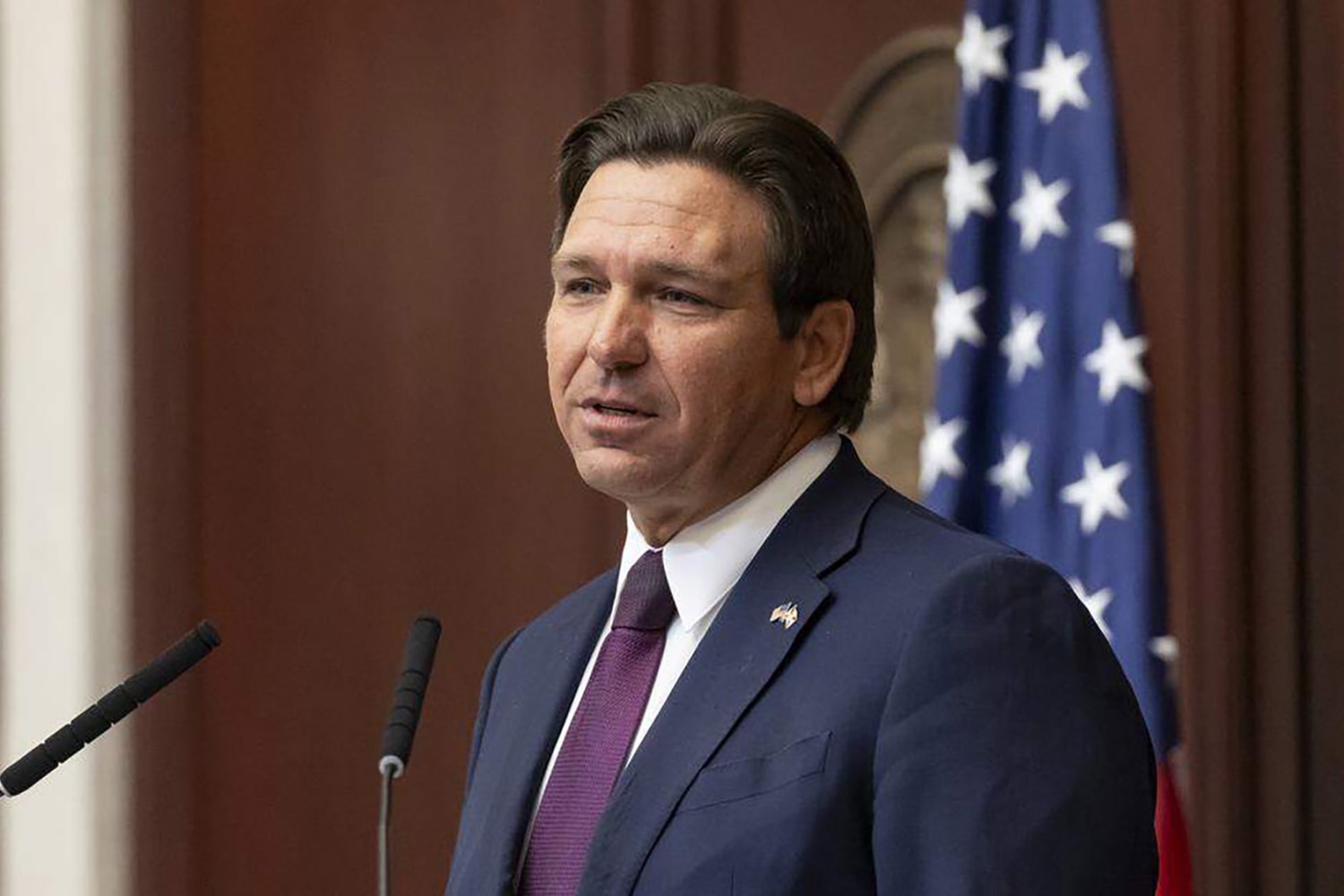
The controversy erupted after Governor DeSantis signed House Bill 1471 during a ceremony at the University of South Florida in Tampa on April 6, 2026. The legislation, officially titled “Systems of Law and Terrorist Organizations,” contains provisions restricting the use of foreign legal systems that conflict with constitutional rights and creates a state-level process for designating domestic and foreign terrorist organizations.
The bill immediately drew national attention because of its explicit references to concerns surrounding Sharia law and because it grants Florida officials new authority to designate organizations as terrorist entities under state law. Once designated, organizations can face significant legal and financial consequences, including restrictions on funding, support, and participation in certain public institutions.
Supporters of the legislation argue that Florida is taking proactive steps to ensure that constitutional principles remain supreme and that extremist organizations cannot establish influence within state institutions.
Governor DeSantis framed the measure as a defense of American constitutional values, arguing that Florida should maintain a single legal framework based on the U.S. Constitution and should strengthen its ability to confront organizations deemed threats to public safety.

The legislation arrives amid broader national debates over border security, terrorism prevention, immigration policy, and the role of religion in public life.
Advocates of the law point to several terrorism-related cases involving individuals prosecuted in Florida over the past two decades. They argue that state governments should remain vigilant against extremist ideologies regardless of where they originate.
However, opponents challenge many of the broader claims circulating around the legislation.
One of the most contentious aspects involves the Council on American-Islamic Relations (CAIR), a major Muslim civil rights organization that has become a central figure in the dispute.
DeSantis previously issued an executive order attempting to designate CAIR as a terrorist organization, a move that was subsequently blocked by a federal judge. The court ruled that the action likely violated constitutional protections and exceeded state authority in ways that raised significant First Amendment concerns.
Civil liberties organizations argue that the new law raises similar questions.
They contend that the authority to designate terrorist organizations has historically been a federal responsibility and warn that state-level designation systems could be vulnerable to political misuse. Critics further argue that broad definitions could potentially chill lawful speech, advocacy, or political activism.
The controversy has expanded far beyond legal circles.
At its heart lies a larger national conversation about security and identity.
Supporters view the law as a response to concerns that governments have been reluctant to confront radical ideologies.
Opponents view it as part of a growing trend in which entire communities risk becoming associated with the actions of a small number of extremists.
The debate has become especially heated because it intersects with broader anxieties surrounding immigration, cultural change, and political polarization.
Some commentators have drawn comparisons with European countries that have struggled with integration challenges in certain communities.
Others reject those comparisons, arguing that claims about widespread “no-go zones” governed by parallel legal systems are often exaggerated or unsupported by evidence.
The political significance of the legislation extends beyond Florida.
Several Republican-led states have explored similar measures, while supporters of former President Donald Trump have increasingly emphasized state-level action on issues involving immigration, terrorism, and national identity.
As legal challenges begin to emerge, Florida’s new law may become a major test case for how far states can go in addressing perceived security threats while remaining within constitutional boundaries.
My Professional Perspective
Having covered terrorism, national security, immigration, religious freedom, and political movements for more than three decades, I believe the most important aspect of this story is not the law itself.
It is what the law reveals about America in 2026.
The article circulating online presents the situation as a straightforward battle between defenders of Western civilization and advocates of radical Islam.
Reality is considerably more complex.
The first thing readers should understand is that there are actually two separate debates occurring simultaneously.
The first debate concerns security.
The second concerns constitutional power.
Those debates are often blended together, but they are not the same issue.
Most Americans—regardless of political affiliation—agree that governments have a responsibility to prevent terrorism and protect public safety.
There is little disagreement on that principle.
The disagreement emerges when discussing how those goals should be achieved and who decides where legitimate security concerns end and civil liberties begin.
This distinction is crucial.
History repeatedly shows that democracies face their greatest tests not during periods of stability but during moments of fear.
After major terrorist attacks, governments often seek expanded authority.
Sometimes those measures prove necessary.
Sometimes they later become controversial.
The challenge is determining where the proper balance lies.
Another overlooked aspect of this story involves demographics.
The original narrative emphasizes rapid Muslim population growth in Florida as evidence of a broader threat.
That framing deserves careful scrutiny.
Population growth alone does not demonstrate radicalization.
Nor does religious affiliation establish criminal intent.
Millions of Muslims live throughout the United States as citizens, professionals, business owners, military personnel, elected officials, and community leaders.
Any serious analysis must distinguish between mainstream religious communities and individuals involved in extremist activity.
Failing to make that distinction risks creating more heat than light.
At the same time, dismissing public concerns entirely would also be a mistake.
Many voters genuinely worry about national security, border control, and the influence of extremist ideologies.
Those concerns cannot simply be written off as prejudice.
The challenge for policymakers is responding to legitimate security concerns without treating entire communities as suspects.
That balancing act has troubled democratic societies since long before the current political moment.
Perhaps the most important question raised by HB 1471 concerns state power.
The legislation grants Florida significant authority to identify and penalize organizations deemed terrorist threats. Supporters see this as decisive leadership. Critics see it as a potential constitutional minefield.
The federal court’s decision blocking DeSantis’ earlier designation of CAIR illustrates the legal tensions likely to emerge again. Judges emphasized concerns involving free speech, due process, and constitutional protections.
Those issues are unlikely to disappear.
In fact, they may become the central battleground as lawsuits move forward.
Another deeper issue involves political symbolism.
Supporters often frame Florida’s actions as drawing a line in the sand.
Critics frame them as targeting a religious minority.
Both interpretations reveal something important about modern American politics.
Increasingly, legislation is judged not only by what it does but by what people believe it represents.
That is why this law has generated such passionate reactions.
For supporters, it symbolizes strength.
For opponents, it symbolizes exclusion.
The legal outcome may ultimately matter less politically than the symbolic battle already underway.
Conclusion
Florida’s HB 1471 has become one of the most controversial state laws of 2026, placing Governor Ron DeSantis at the center of a national debate over security, religious liberty, constitutional authority, and the future direction of American politics.
Supporters see the law as a necessary safeguard against extremist influence and foreign legal systems.
Critics view it as a potentially dangerous expansion of state power that could undermine civil liberties and unfairly target Muslim organizations.
What makes this story significant is not simply the legislation itself.
It is the larger question it raises:
How should a democratic society defend itself against genuine security threats while preserving the freedoms that define that democracy?
That question has no easy answer.
It has challenged every generation confronted by terrorism, political polarization, and cultural change.
Florida has chosen one path.
The courts will now determine whether that path remains consistent with constitutional principles.
And the nation will be watching closely.
Because the outcome will not only shape policy in Florida—it may help define how America balances security and liberty in the years ahead.