
Nigel Farage, the Gorton & Denton By-Election, and Britain’s Growing Crisis of Democratic Trust
In politics, some elections come and go with barely a ripple. Others become symbols of something much larger than the constituency in which they occur.
The recent Gorton & Denton by-election in Greater Manchester appears to belong firmly in the second category.
What should have been a local electoral contest has rapidly evolved into a national debate about citizenship, immigration, democratic participation, electoral integrity, and the future identity of Britain itself.
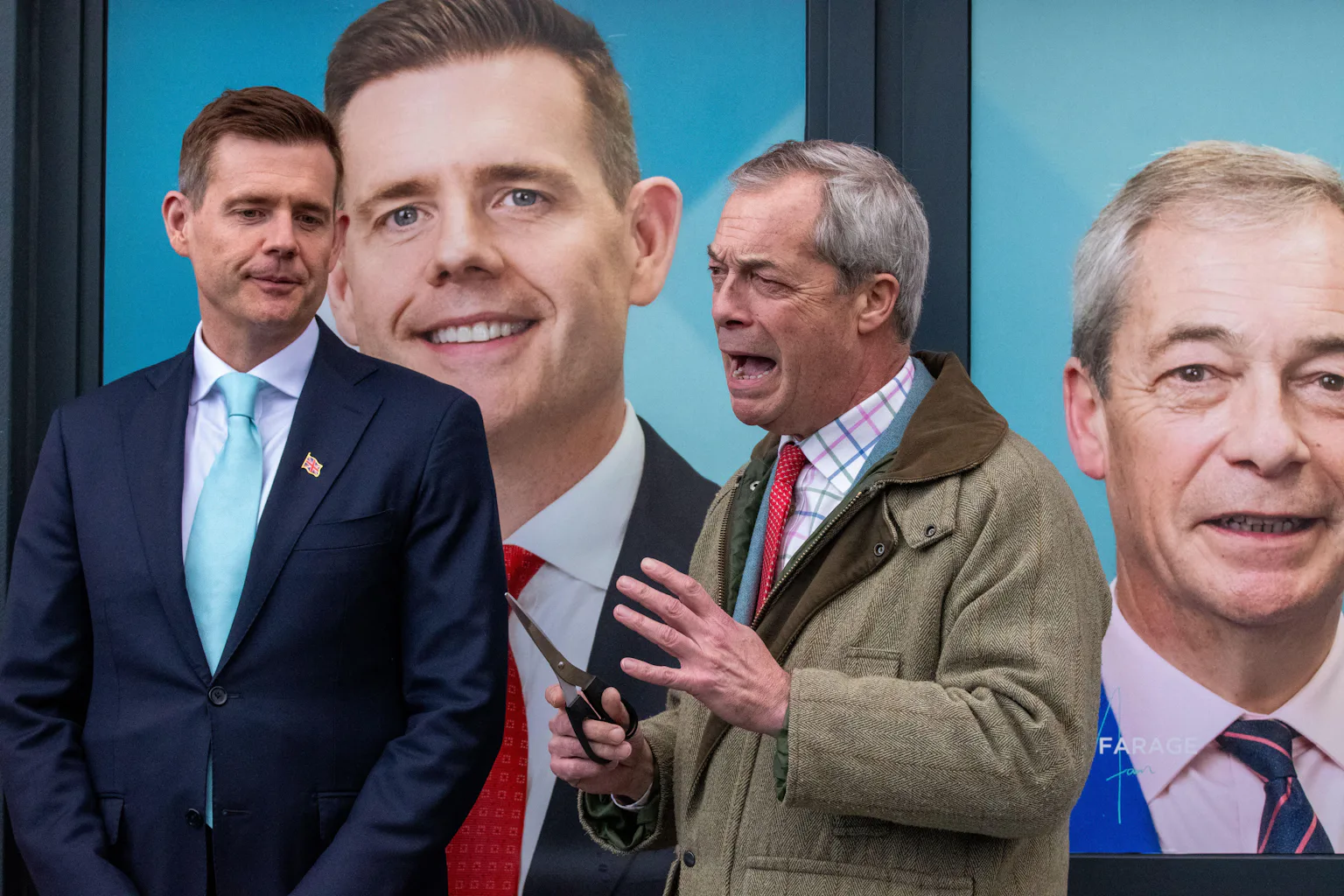
At the center of the controversy stands Reform UK leader Nigel Farage, one of the most influential and polarizing figures in modern British politics. Following a disappointing result for Reform UK in the constituency, Farage launched a renewed campaign for sweeping electoral reforms, arguing that Britain must fundamentally reconsider who should be allowed to vote in parliamentary elections and how votes should be cast.
His intervention has triggered fierce reactions across the political spectrum.
Supporters describe the proposals as long-overdue reforms designed to strengthen public confidence in democracy.
Critics view them as an attempt to narrow participation, politicize immigration, and undermine long-established democratic traditions.
What is clear is that the debate has moved far beyond Manchester.
It now touches some of the most sensitive and unresolved questions facing Britain in the twenty-first century.
The Election That Changed the Conversation
The Gorton & Denton by-election delivered one of the most surprising political results seen in Britain in recent years.
Representing the Green Party, Hannah Spencer secured a decisive victory, winning by a margin exceeding 4,000 votes.
The result shocked many political observers.
For decades, the area had largely been viewed as reliable Labour territory. At the same time, Reform UK had been generating considerable momentum nationally, leading many analysts to believe the party could perform strongly in the constituency.
Instead, voters delivered a different message.
Labour suffered a significant decline in support, Reform UK failed to secure the breakthrough many anticipated, and the Greens emerged as the unexpected winners.
Political commentators immediately began debating what the result actually meant.
Was it a local protest vote?
A warning to Labour?
Evidence of growing support for environmental politics?
Or a sign of broader demographic and cultural changes reshaping Britain’s political landscape?
Different political parties offered very different answers.
For Green Party supporters, the outcome demonstrated that voters were increasingly willing to reject traditional party loyalties and seek alternatives.
For Reform UK figures, however, the election raised deeper questions about electoral participation, community dynamics, and the changing composition of British constituencies.
Those competing interpretations soon transformed a local election result into a national political battleground.
Farage’s Call for Voting Reform
In the days following the by-election, Nigel Farage intensified the debate.
The Reform UK leader argued that Britain should move toward a system in which only British citizens are permitted to vote in parliamentary elections.
His argument was simple and direct.
Those who determine the political future of Britain, he contended, should be British citizens.
Farage maintains that citizenship should serve as the primary qualification for participation in national elections.
Currently, however, British electoral law allows certain non-British citizens to vote.
Under the Representation of the People Act 1983, qualifying Commonwealth citizens legally residing in the United Kingdom may participate in parliamentary elections if they meet immigration and residency requirements.
These provisions reflect Britain’s long historical relationship with the Commonwealth and have existed in various forms for generations.
Farage argues that those arrangements belong to a different era.
According to his position, modern Britain requires a clearer definition of political membership and democratic authority.
He has suggested that permitting non-citizens to vote risks weakening the connection between citizenship and national decision-making.
The proposal immediately generated support among voters who believe national elections should be reserved exclusively for citizens.
Others strongly disagreed.
Opponents argued that many lawful residents contribute economically, pay taxes, raise families, and participate fully in British society despite not holding British citizenship.
From that perspective, excluding them from elections would reduce representation rather than strengthen democracy.
A Debate About Immigration and Identity
Although the discussion is framed around voting laws, immigration quickly became part of the conversation.
Farage pointed to demographic changes in some communities as evidence that Britain should reconsider electoral eligibility rules.
His comments resonated with voters concerned about immigration levels and national identity.
Supporters argue that citizenship should carry unique democratic responsibilities and privileges.
Critics counter that such arguments risk stigmatizing lawful residents and inflaming tensions between communities.
The disagreement reflects a broader divide that has shaped British politics for years.
Questions surrounding immigration, integration, multiculturalism, and national identity have repeatedly influenced elections, referendums, and political debates.
The Brexit referendum exposed many of those divisions.
The current dispute demonstrates that they remain far from resolved.
Indeed, what makes the Gorton & Denton controversy particularly significant is that it sits at the intersection of several powerful political forces simultaneously:
- Immigration policy.
- National identity.
- Democratic legitimacy.
- Electoral reform.
- Public trust in institutions.
Each of those issues is contentious on its own.
Combined together, they create an unusually explosive political mixture.
The Postal Voting Controversy
The debate did not end with citizenship.
Farage also renewed his criticism of Britain’s postal voting system.
Under his proposed reforms, postal voting would be significantly restricted.
Access would primarily be limited to elderly voters, disabled individuals, military personnel, and citizens temporarily overseas.
Such a change would represent one of the most dramatic reforms to British election procedures in decades.
Postal voting has evolved considerably over time.
Initially designed to assist members of the armed forces and others unable to attend polling stations, the system expanded substantially in 2000 under Prime Minister Tony Blair’s government.
The introduction of postal voting on demand made ballots available to virtually any eligible voter who requested one.
Supporters argue that the change increased participation and improved accessibility.
Modern life often creates practical obstacles to voting in person, including work schedules, health conditions, caregiving responsibilities, and travel commitments.
Postal voting provides flexibility that many citizens rely upon.
Critics, however, point to different concerns.
They argue that voting outside controlled polling environments creates opportunities for coercion, intimidation, and fraud.
Farage has consistently emphasized those risks.
According to his view, public confidence in election outcomes depends not only on actual security but also on voters believing the process is secure.
That distinction has become increasingly important in modern democracies.
Allegations of Family Voting
The political tension surrounding the by-election intensified further when allegations emerged regarding family voting.
Family voting refers to situations in which one individual influences, directs, or effectively controls another person’s vote.
British electoral law prohibits such behavior because voting is intended to be private and independent.
Reports indicated that authorities were examining allegations connected to the by-election.
At the time of public discussion, no definitive findings had been announced.
Nevertheless, the allegations became politically significant.
Supporters of tighter electoral controls cited them as evidence that vulnerabilities may exist.
Others cautioned against drawing conclusions before investigations are completed.
Regardless of the outcome, the allegations added another layer of controversy to an already polarized political environment.
International Issues Enter a Local Election
Another unusual feature of the campaign involved the apparent use of international political themes.
Reports suggested that campaign materials and online content referenced prominent global figures, including Israeli Prime Minister Benjamin Netanyahu and Indian Prime Minister Narendra Modi.
The use of international political imagery sparked criticism from some quarters.
Opponents argued that such messaging risked importing overseas conflicts and divisions into local politics.
Supporters responded that global issues increasingly influence local communities and cannot be separated from contemporary political discussions.
This disagreement reflects a broader reality of modern Britain.
Many constituencies are diverse, multicultural, and internationally connected.
Events occurring thousands of miles away can influence political attitudes within British neighborhoods.
As a result, local elections increasingly intersect with global issues in ways that would have been far less common a generation ago.
My Professional Perspective
After three decades covering elections, constitutional disputes, political movements, and democratic transitions across Britain, Europe, Australia, and North America, I believe the most important aspect of this story is not actually about postal voting.
Nor is it fundamentally about Commonwealth voting rights.
The deeper story concerns something far more fragile and far more important.
Trust.
The Real Battle Is Over Legitimacy
One detail often overlooked in political reporting is that electoral systems survive not merely because they are fair.
They survive because citizens believe they are fair.
That distinction matters enormously.
History repeatedly demonstrates that public confidence can be more politically significant than technical electoral rules.
When trust is high, citizens accept outcomes they dislike.
When trust collapses, even legitimate outcomes become contested.
The Gorton & Denton controversy should therefore be viewed through a wider lens.
Farage’s proposals are symptoms of a broader trend visible across much of the Western world.
Citizens increasingly question whether institutions still represent them.
This phenomenon is not unique to Britain.
Similar debates have emerged in the United States, France, Germany, Italy, Australia, Canada, and elsewhere.
Different countries argue about different issues.
Yet the underlying concern is remarkably similar.
Many voters feel disconnected from political institutions.
The Hidden Symbolism of Voting Rights
Debates about voting eligibility are rarely only about voting.
They are symbolic arguments about belonging.
When supporters hear Farage say only British citizens should vote, many interpret the proposal as a reaffirmation of national sovereignty.
To them, citizenship represents a clear social contract.
Citizenship becomes the defining marker of political membership.
Critics hear something very different.
They hear a challenge to a long-standing democratic arrangement that reflects Britain’s historical ties to the Commonwealth.
They worry about exclusion rather than clarification.
Both interpretations contain political logic.
That is precisely why the issue generates such emotional reactions.
The dispute is not merely legal.
It is cultural.
It is psychological.
And it is deeply connected to competing visions of what Britain should become.
Why This Matters Beyond Reform UK
Many observers focus narrowly on Nigel Farage himself.
That may be a mistake.
Whether one supports or opposes him, Farage has often succeeded by identifying issues that larger parties are reluctant to discuss openly.
He did this during debates surrounding Britain’s relationship with the European Union.
He did it regarding immigration.
Now he appears to be doing it again with electoral reform.
The significance of this moment may therefore extend beyond Reform UK’s immediate political fortunes.
The larger question is whether concerns about electoral legitimacy are becoming mainstream.
If they are, Britain could be entering a prolonged period of debate over how democracy should function in an era of rapid social change.
Accessibility Versus Security
The postal voting debate illustrates one of democracy’s oldest dilemmas.
Every electoral system balances accessibility and security.
Increase accessibility and more citizens can participate.
But critics warn that vulnerabilities may increase.
Increase security and safeguards become stronger.
But participation may decline.
There is no perfect formula.
Every democracy chooses its own position along that spectrum.
What concerns me as a journalist is not that people disagree about where the balance should be.
Healthy democracies require disagreement.
The greater concern is whether citizens still trust the institutions responsible for maintaining that balance.
Once that trust erodes, technical reforms alone rarely solve the problem.
The Question Nobody Wants to Ask
There is another dimension to this story that receives surprisingly little attention.
What happens if demographic change, cultural diversity, and political fragmentation continue accelerating simultaneously?
Britain today is not the Britain of 1983.
Nor is it the Britain of 2000.
Communities are changing.
Political loyalties are changing.
Media consumption is changing.
Public expectations are changing.
In such an environment, debates over voting rights become proxies for larger anxieties.
People are not simply arguing about ballots.
They are arguing about identity.
About belonging.
About representation.
About whether the country they recognize today is the same country they believed they knew.
That emotional layer explains why these arguments often become so intense.
What Remains Unanswered
Several important questions remain unresolved.
Can Britain modernize electoral laws without deepening social divisions?
Would restricting voting rights strengthen confidence or increase polarization?
Can postal voting be made more secure without reducing accessibility?
How should long-term lawful residents be represented politically?
What responsibilities should accompany citizenship?
And perhaps most importantly:
How can democratic institutions rebuild trust among citizens who increasingly doubt them?
These questions extend far beyond a single by-election.
They may define British politics for years to come.
Conclusion
The Gorton & Denton by-election began as a local political contest.
It has become something much larger.
Nigel Farage’s call to restrict parliamentary voting to British citizens and reduce postal voting has ignited a national conversation about democracy, citizenship, immigration, identity, and electoral trust.
Supporters see necessary reform.
Critics see democratic exclusion.
Both sides claim to be defending democracy itself.
That reality reveals the true significance of the controversy.
This is not merely a dispute over electoral procedures.
It is a debate about who belongs, who decides, and how Britain defines itself in an era of profound political and demographic change.
The result of the by-election may eventually fade from public memory.
The questions it has raised almost certainly will not.
Because beneath every argument about voter rolls, ballots, and election laws lies a deeper challenge facing modern democracies everywhere:
How do societies preserve trust in democratic institutions when citizens increasingly disagree not only about policies—but about the very meaning of democracy itself?
The answer may shape Britain’s political future far more than any single election ever could.