THE MERZ DILEMMA: A CHANCELLOR TRAPPED BETWEEN PARTY DISCORD AND COALITION COLLAPSE. t1

THE MERZ DILEMMA: A CHANCELLOR TRAPPED BETWEEN PARTY DISCORD AND COALITION COLLAPSE.
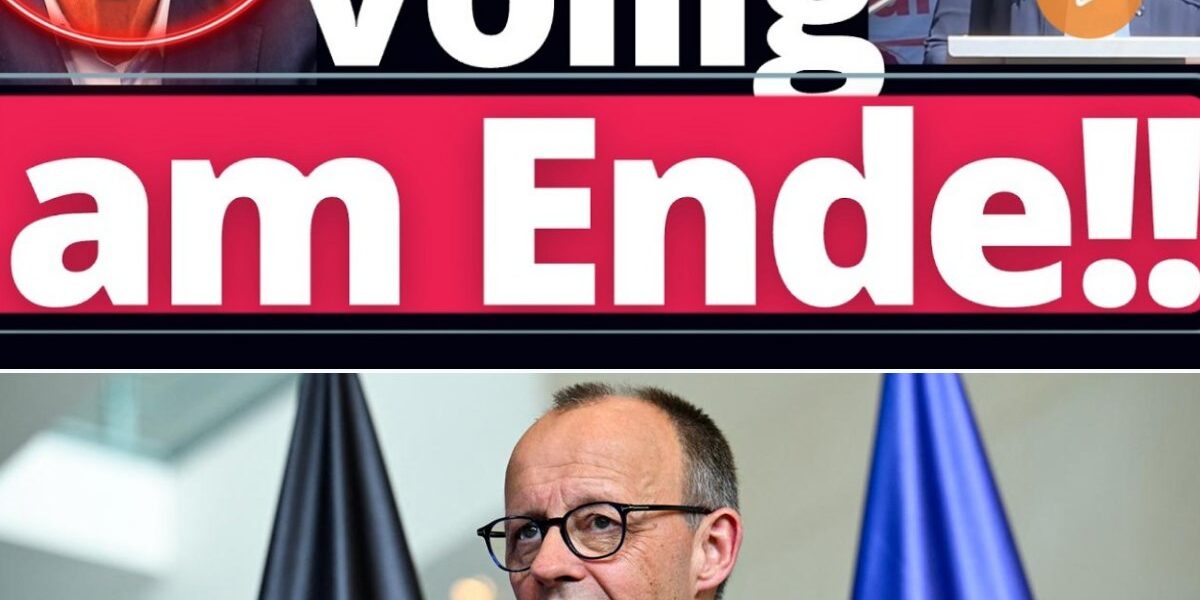
BERLIN — Chancellor Friedrich Merz finds himself at a precarious crossroads, navigating a political landscape defined by broken promises and internal fractures. His recent appearance on the talk show Karin Miosga was intended to project stability but instead exposed the deep vulnerabilities currently paralyzing Germany’s governing coalition.
The atmosphere in Berlin is increasingly claustrophobic for the Chancellor. While Merz attempted to defend his tax policy and quiet dissenters within his own ranks, SPD leader Bärbel Bas delivered a stinging rebuke during her May Day address. The rift between the two governing partners has never been wider.
Observers noted that Merz appeared uncharacteristically defensive during the interview. The Chancellor struggled to reconcile his previous categorical rejection of tax hikes with the reality of new levies currently under discussion. This perceived flip-flop has ignited a firestorm of criticism across the country’s diverse and restless political spectrum.
The tax debate has become a focal point of public frustration. Merz previously insisted the coalition agreement ruled out any tax increases. However, the introduction of a sugar tax, tobacco tax, and plastic tax has been interpreted by many citizens as a clear violation of that fundamental and solemn promise.
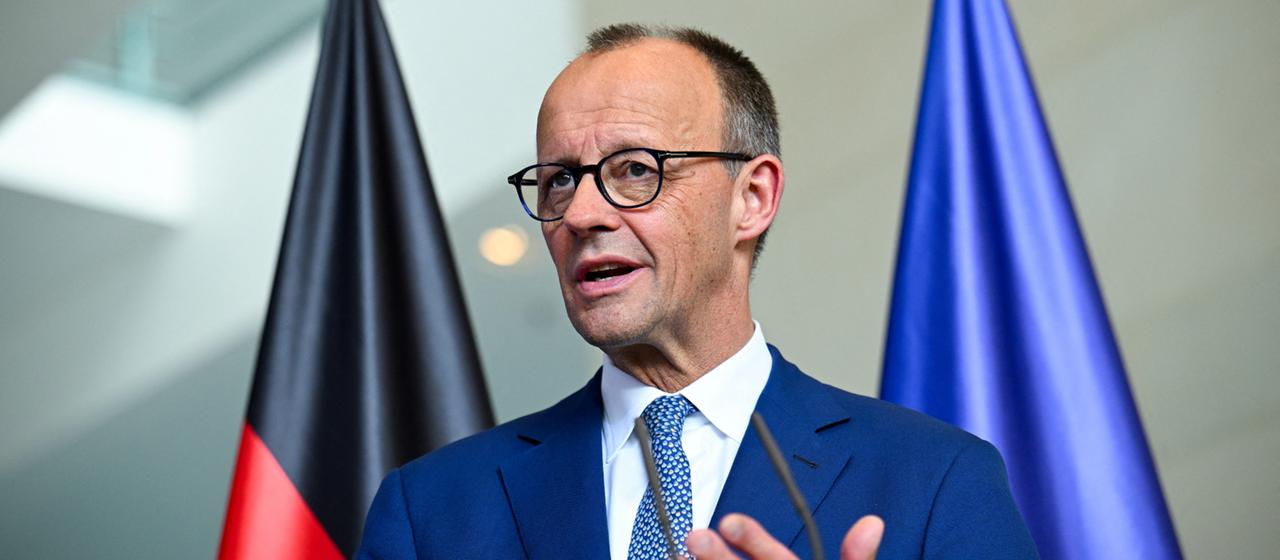
Merz attempted a linguistic pivot by arguing that his promises specifically applied to income and corporate taxes. He claimed that consumption-based levies do not constitute a general tax increase. However, this technical differentiation failed to convince a public already struggling with rising costs and a stagnant, sluggish economy.
Within the Union (CDU/CSU), unease is growing into a full-scale rebellion. While Merz insists he has a strong mandate following his re-election as party chairman, the rank and file are wary of the compromises being made. There is a palpable fear that the party’s identity is being eroded.
“I have no mandate to destroy the CDU,” Merz admitted during the broadcast, a statement that underscored his precarious position. He is trying to keep the Union visible within the coalition while being forced to accept SPD-led initiatives that contradict his party’s core conservative and fiscal principles.
The Chancellor’s insistence that he is “not looking for another majority” has further complicated matters. By ruling out alternative coalitions, Merz has effectively handcuffed himself to the SPD. Critics argue this strategic choice gives the SPD disproportionate leverage over the government’s agenda despite their poor polling numbers.
Bärbel Bas’s May Day performance served as a direct declaration of war against Merz’s proposed reform agenda. Walking alongside labor unions, Bas condemned any potential cuts to the welfare state. Her rhetoric, described as “defiant,” signaled that the SPD will not yield on its core social protections.
Bas characterized the depiction of the welfare state as a “burden” as both cynical and inhumane. This sharp language has effectively blocked any meaningful dialogue on the structural reforms Merz believes are essential for Germany’s recovery. The coalition is now locked in a state of ideological and policy paralysis.
The deadlock extends across several critical sectors, including pension reform and healthcare financing. While the CDU pushes for austerity and economic relief for businesses, the SPD has positioned itself as the last line of defense for social structures. These two visions are currently proving to be completely irreconcilable.
Political observers in the capital are now openly questioning the viability of the Merz administration. The impression of a government unable to act is hardening among the electorate. Without a common path forward, the grand projects intended to modernize the German state remain stalled in endless committee debates.
Interestingly, the SPD appears to have little fear of early elections. Analysts suggest that because the Union refuses to work with the AfD, the SPD remains a necessary kingmaker. Regardless of their own electoral performance, the Social Democrats believe they will remain indispensable in any future governing constellation.
This paradox leaves Merz in a strategic bind. He needs to win back conservative voters who have drifted toward the fringes, but he cannot govern without the very parties that alienate those voters. His leadership crisis is a reflection of the broader fragmentation of the German political center.
The Miosga interview also highlighted a significant loss of personal credibility for the Chancellor. When public broadcasters begin to point out contradictions in a leader’s statements, the political damage is often irreversible. Merz’s attempt to boundary-set through language was perceived as both evasive and deeply defensive.
Bürger voices featured during the program echoed this sentiment of betrayal. One citizen compared the government to a “sales contract” that was not being honored. This sense of a broken social contract is particularly dangerous for a Chancellor who campaigned on the promise of reliability and fiscal competence.

The perception that new burdens are imminent, despite campaign promises of relief, is a gift to protest parties. Merz’s struggle to maintain control over his own narrative is increasingly visible. Every attempt to appease the SPD seems to alienate his own base further, creating a cycle.
The fiscal reality of Germany’s aging infrastructure and defense needs is also putting immense pressure on the budget. Merz is caught between his “debt brake” commitments and the urgent need for investment. The SPD’s refusal to cut social spending makes this budgetary math almost impossible to solve.
Moreover, the Chancellor’s authority within his own cabinet is being challenged. Ministers from the SPD often seem to be running their own independent campaigns, ignoring the Chancellor’s office. This lack of cabinet discipline further contributes to the public perception of a government in a state of collapse.
Merz’s defensive posture has also emboldened his internal rivals. Potential successors within the CDU and CSU are watching the polling numbers closely. If Merz cannot show “a clear signature” in government policy soon, the calls for a change in leadership will likely become impossible to ignore.
The May Day clash between Bas and Merz is not just a policy dispute; it is a battle for the soul of the country. It highlights the fundamental tension between the old social democratic model and the market-oriented reforms that the Union believes are necessary for the twenty-first century.
As the legislative period continues, the question is no longer if the coalition will struggle, but if it can survive. The “firewall” against the right has created a static political environment where the same players are forced together, regardless of how much they dislike or distrust each other.
For the average German citizen, the political theater in Berlin feels increasingly disconnected from their daily struggles. Rising energy prices and a cooling labor market are the primary concerns for most families. The constant bickering in the Chancellery only serves to deepen their sense of profound alienation.
Merz’s performance at Miosga was a microcosm of his entire Chancellorship: an attempt to be everything to everyone while satisfying no one. His careful phrasing was an attempt to avoid a coalition break, but it may have ended up accelerating his own political decline and party’s irrelevance.
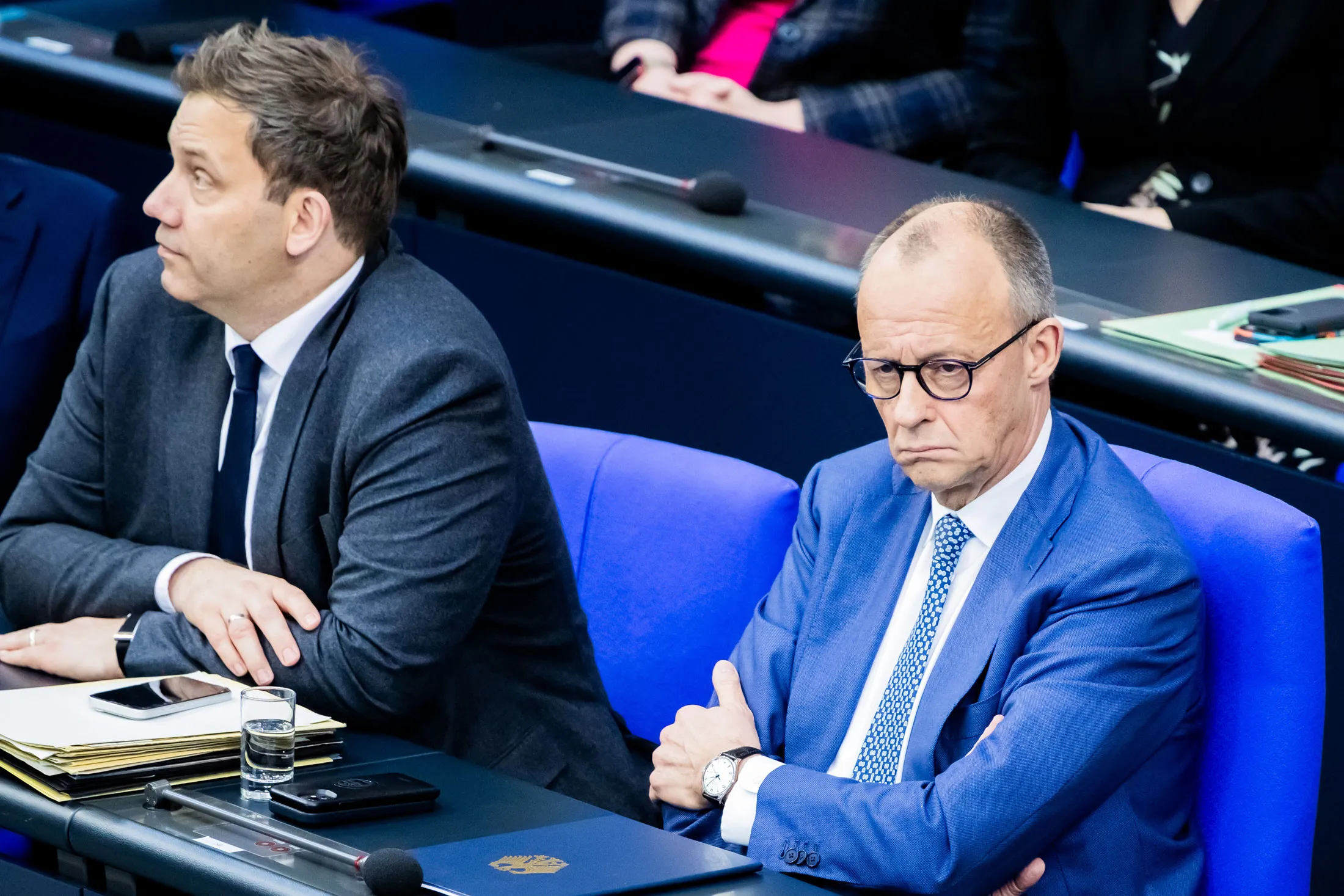
The threat of a “downward spiral” for the Merz government is now a serious topic of discussion among political scientists. A government that cannot pass its own budget or major reforms eventually loses the moral authority to lead. Berlin is waiting to see if Merz has another move.
The Chancellor’s tactical dependence on the SPD is his greatest weakness. By tethering his fate to a partner that actively opposes his reforms, Merz has limited his own room for maneuver. He is a Chancellor of a great nation who currently lacks the power to steer it.
If the Union cannot deliver visible results to its voters, the political cost will be high. The AfD continues to loom in the background, feeding on the frustration generated by the coalition’s paralysis. Merz’s failure to lead effectively could have long-term consequences for German democratic stability.
Ultimately, Friedrich Merz is a leader under siege from all sides. His TV appearance did little to quell the fires of discontent. Instead, it provided a platform for his contradictions to be examined under a microscope. The clock is ticking on his ability to turn the tide.
As the summer months approach, the pressure will only intensify. The budget negotiations will be the final test of the schwarz-rot alliance. If no compromise is found, the talk of early elections will move from the backrooms of Berlin to the front pages of every newspaper.
The Merz era was promised as a return to order and conservative values. Instead, it has become a study in the difficulties of governing a fractured nation. Whether Merz can survive the year remains the most compelling and consequential question in contemporary European and German politics today.