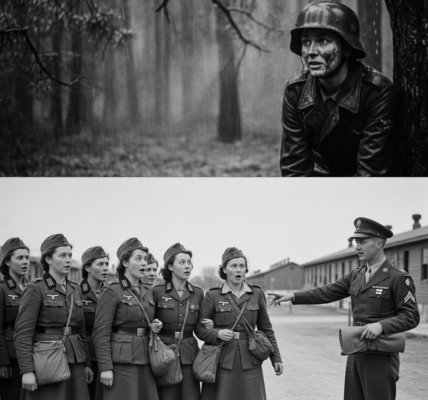
The Coral Ridge
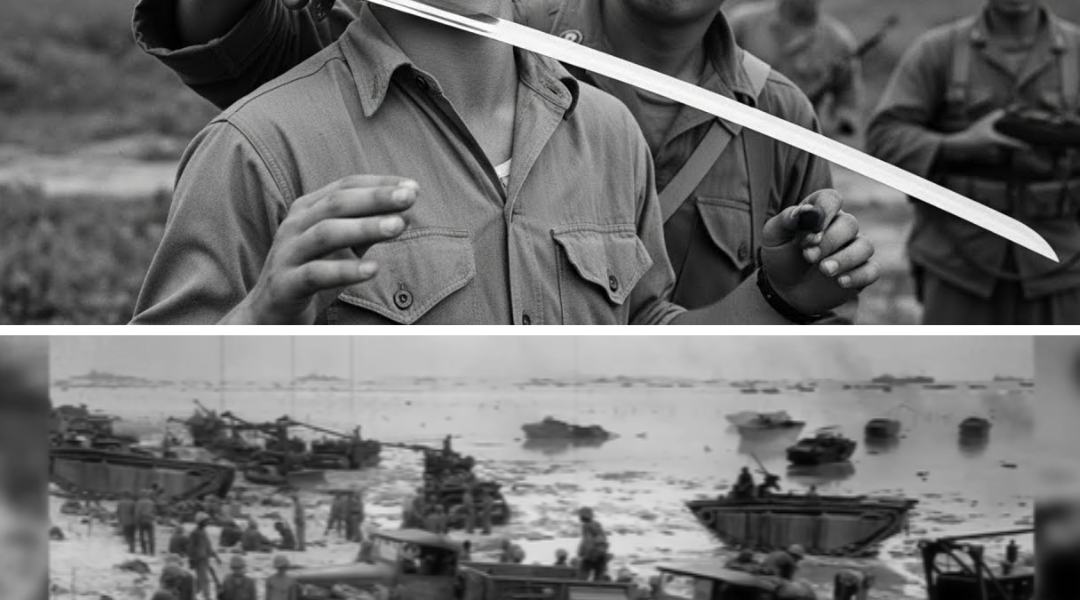
September 18, 1944. Peleliu Island.
The sun was already punishing by mid-morning, turning coral rock into white-hot stone. Private First Class Arthur Jackson pressed himself against a jagged outcrop, breathing dust and cordite while Japanese machine-gun fire cut down Marines only yards away.
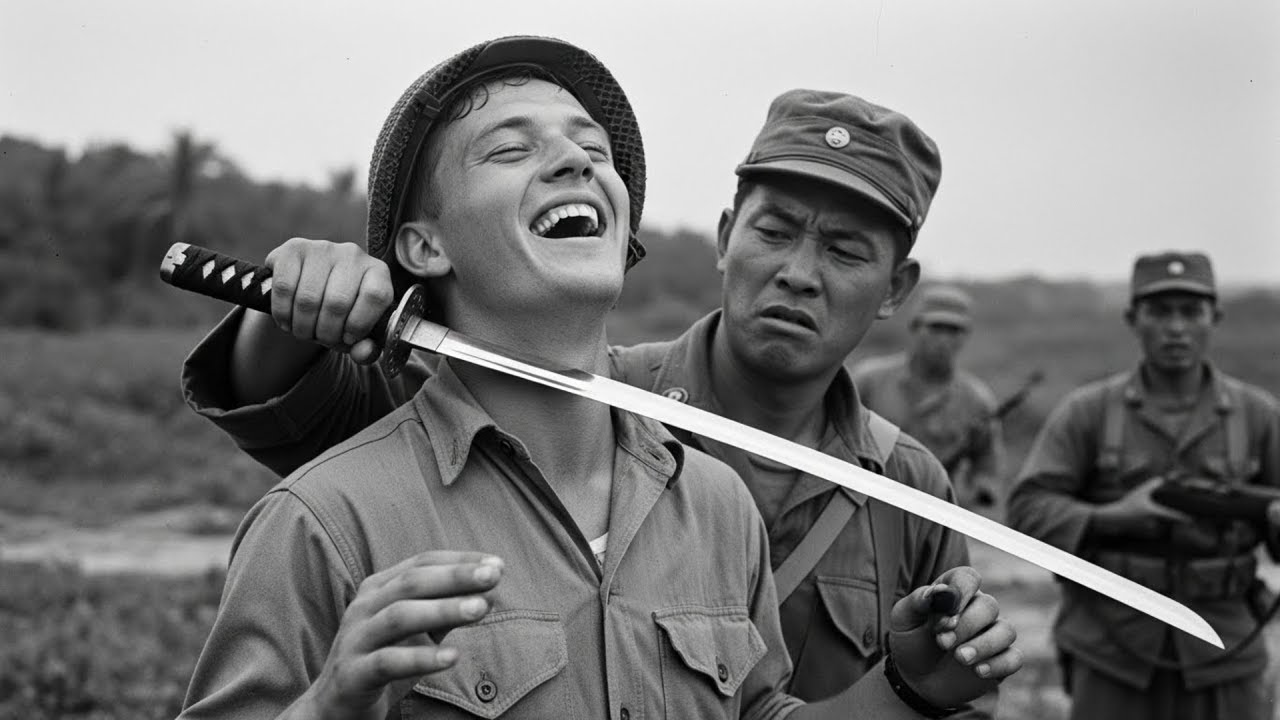
He was nineteen years old.
Three days earlier, commanders had predicted Peleliu would fall in four days.
They were wrong.
The Japanese defenders had abandoned reckless charges. Instead, they had built a fortress—concrete pillboxes connected by tunnels carved into coral ridges. Each bunker covered the next. Attack one, and two more opened fire.
Jackson’s platoon had advanced barely 200 yards before stalling. A large pillbox dominated the approach. Every Marine who tried to move was pinned down.
No tanks could reach them. Artillery would hit their own men.
Someone had to cross 150 yards of open ground under direct machine-gun fire.
Everyone understood the math.
Jackson stood up and ran.
Ten Seconds of Fire
The Browning Automatic Rifle weighed heavily in his hands. He fired from the hip as he sprinted, not for precision but suppression. Dust kicked up around him as Japanese rounds snapped past.
He did not slow.
He reached the blind spot beside the bunker—just outside the angle of the firing slit.
White phosphorus grenades went through first.
Then came plastic explosives shoved into the opening.
Jackson dove for cover.
The explosion shattered the pillbox, concrete lifting into the sky.
Thirty-five defenders were gone.
But Jackson did not stop.
He moved to the next bunker.
And the next.
And the next.
By the time the southern defensive arc collapsed, he had destroyed twelve pillboxes and killed approximately fifty enemy soldiers.
He was wounded. Exhausted. Nearly out of ammunition.
But the line had broken.
Marines surged forward through the gap he created.
For his actions that morning, Arthur Jackson would receive the Medal of Honor.
Yet when asked later about Peleliu, he rarely spoke of himself.
He spoke of the men who did not return.
The Sky Above the Pacific
While Marines fought through coral and heat, American pilots battled for the sky.
Lieutenant Robert Hanson—another young man barely in his twenties—flew his F4U Corsair over Rabaul, one of the most heavily defended Japanese strongholds in the Pacific.
Eighteen American bombers needed escort.
Dozens of Japanese fighters rose to intercept.
Hanson did not wait for orders.
He rolled inverted and dove into the formation, firing at point-blank range. One enemy fighter spiraled down. Then another.
He climbed, dove, and attacked again.
Speed and altitude were his allies. American doctrine taught pilots to avoid turning duels with Japanese Zeros. Use momentum. Strike fast. Escape high.
Hanson protected the bombers and limped home in a damaged aircraft.
Days later, he volunteered for another mission.
He never returned.
In the Pacific, courage was measured not only in victories but in willingness to rise again into a sky filled with danger.
The Bridge in France
Across the world in Normandy, Sergeant Michael O’Connor of the U.S. Army found himself facing a different challenge.
His unit had been ordered to secure a small stone bridge vital for Allied movement inland. German forces were retreating but had left a rearguard to destroy it.
Machine-gun fire pinned O’Connor’s squad behind hedgerows.
The bridge had to be taken intact.
O’Connor crawled through a drainage ditch under fire. Mud soaked his uniform. Bullets slapped into the earth inches from his head.
He reached the bridge supports and found demolition charges wired beneath the structure.
Working with trembling hands, he cut the detonation wires just as German soldiers closed in.
The bridge held.
American tanks crossed that same bridge hours later, pushing deeper into France.
O’Connor did not seek recognition.
But the advance would have stalled without that act of nerve and resolve.
The Destroyer in the Atlantic
War beneath the waves demanded its own brand of bravery.
In June 1944, American destroyer escorts hunted a German submarine in the Atlantic. Depth charges exploded in thunderous bursts, sending shockwaves through dark water.
At last, the submarine surfaced, damaged and circling helplessly.
Instead of sinking her immediately, a daring decision was made.
Board her.
Lieutenant Albert David led a small team across oil-slicked water and onto the deck of the enemy submarine. Inside, flooding and demolition charges threatened to send the vessel to the bottom at any moment.
In near darkness, American sailors disarmed explosives and shut valves.
They captured the submarine intact—an achievement unseen in more than a century.
The intelligence gained would help protect Allied convoys and shorten the war.
It was courage not of gunfire alone, but of quick thinking and steady hands.
The Medic in the Ardennes
Winter 1944. The Battle of the Bulge.
Snow fell relentlessly over American positions. German artillery battered frozen ground.
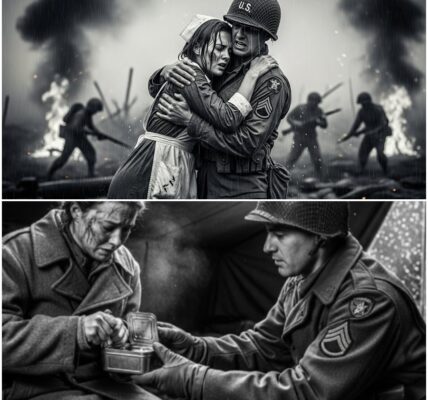
Corporal James Whitaker, a combat medic, heard cries for help from a shell crater beyond the tree line.
Machine-gun fire swept the clearing.
Whitaker ran anyway.
He slid into the crater and began treating two wounded infantrymen. Blood stained the snow black.
He dragged them back one at a time.
Then he went back again for a third.
He was hit in the arm during the final trip but did not drop his patient.
“Keep moving,” he whispered through clenched teeth.
All three men survived.
In war, heroism is often quiet. It is found in men who refuse to leave others behind.
The Cost of Peleliu
Back on Peleliu, the battle did not end with Jackson’s assault.
The island would take more than two months to secure. Casualties mounted.
General Rupertus’s prediction of a quick victory proved tragically optimistic.
But the Marines endured.
They adapted to tunnel warfare. They used flamethrowers, demolitions, and relentless pressure to dismantle Japanese defenses inch by inch.
Peleliu became one of the war’s harshest lessons in the cost of underestimating an enemy.
It also became proof that American Marines would fight through conditions that defied imagination.
Coming Home
When the war finally ended in 1945, many of these young men returned to lives that looked nothing like the battlefields they had left.
Arthur Jackson went back to Oregon. He worked quietly. Raised a family. Served in the reserves.
He did not boast about Peleliu.
Robert Hanson’s name was etched into memorial walls.
Albert David never lived to see his Medal of Honor ceremony; it was awarded to his widow.
Sergeant O’Connor rebuilt bridges in civilian life.
Corporal Whitaker became a small-town doctor.
They did not call themselves heroes.
They were Americans who answered when their nation called.
What Remains
World War II was vast and terrible.
It stretched from coral ridges in the Pacific to frozen forests in Europe, from Atlantic sea lanes to shattered French villages.
But within that enormity were individuals—farm boys, mechanics, students, engineers—who chose to act when fear would have been easier.
They charged pillboxes.
They dove into fighter formations.
They crawled under bridges and across shell-torn fields.
They boarded sinking submarines.
They ran toward the wounded.
Their courage was not loud.
It was steady.
And it changed the course of history.
The names of great battles fill textbooks.
But it is the actions of men like Arthur Jackson—and thousands like him—that remind us what resolve truly looks like.
Not glory.
Not fame.
Just the determination to move forward when everything says stop.
And because they did, the world that followed was freer than the one they inherited.