100+ SHOCKING Photos You Weren’t Supposed to See! Mystery in History | Historical Photos – Archaeological Ruins .P2

A photograph can preserve a moment that no historian could ever recreate. A father reaches for his child. Workers pause high above a city. Immigrants stand at the edge of a new country. Children imitate their parents. Soldiers return home. Families gather around a table. Somewhere in the background, an ordinary street continues its life, unaware that one instant of it is about to become history.
That is what makes old photographs so powerful.
They do not simply show us famous people, wars, buildings, or inventions. Sometimes they preserve something much smaller: the way people dressed, the way they stood beside one another, the objects they carried, the streets they walked, or the expressions they made when they believed nobody would remember them.
Some of the photographs in this collection are famous. Others are obscure. A few have accumulated legends that are difficult to verify today. But together they reveal something that written history often struggles to capture: what the past looked like when nobody knew it would become the past.
One of the most haunting images associated with the early twentieth century shows Jean Libbera, a man who became famous because of his extremely rare physical condition. He was born with a parasitic twin attached to his body, a phenomenon that made him a subject of intense public curiosity.
Photographs like this are difficult for modern viewers to interpret.
During the era of sideshows and human exhibitions, people with unusual physical conditions were frequently presented as curiosities. Their bodies were turned into attractions, their biographies simplified, and their identities sometimes replaced by sensational stage names.
Behind every such photograph, however, was a person who had to live an entire life beyond the moment captured by the camera.
The same tension between spectacle and humanity appears throughout historical photography.
Consider another image from 1907, reportedly showing a British sailor removing chains from a man who had been shackled for years. Photographs connected with colonial-era punishment and imprisonment can be especially difficult because the original captions are sometimes incomplete or disputed.
The image matters not only because of what it appears to show, but because it forces us to ask a larger question.
How many people who suffered under systems of imprisonment, colonial authority, forced labor, or war disappeared from history without leaving even a photograph behind?
Photography did not make the world fairer.
But it made certain moments impossible to completely erase.
By 1945, the world was emerging from the Second World War.

Across Europe and Asia, soldiers were returning from battlefields that had changed their lives. Families waited for them at railway stations, ports, and city streets.
One photograph from the period captures a soldier returning to his daughter.
There is no battlefield in the frame.
No tanks.
No explosions.
No generals.
Only a reunion.
And yet that small moment may communicate more about the human cost of war than an entire page of military statistics.
Millions of families experienced similar reunions.
Millions experienced something very different.
Some waited for soldiers who never came home.
Others welcomed home people whose bodies or minds had been permanently changed.
The photograph freezes one family at the instant when separation finally ends.
Another collection of photographs brings us much further back into everyday life.
In 1880, people gathered outside stores in Hot Springs, Arkansas. The scene is remarkably ordinary. People stand together in front of commercial buildings, apparently participating in the rhythm of a growing town.
But that is exactly what makes it valuable.
Historical photography often focuses on monumental events.
Yet most people did not live inside monuments.
They lived in stores, cabins, workshops, farms, boarding houses, and crowded streets.
They bought food.
They repaired clothing.
They raised children.
They worked.
They waited.
They argued.
They celebrated.
And occasionally, a photographer happened to be there.
During the Great Depression, that ordinary world became much harder.
A photograph of a migrant farming family from the 1930s captures one of the defining realities of the era.
Across the United States, families traveled in search of work as drought, economic collapse, agricultural crisis, and unemployment transformed rural life.
The famous images of the Depression are sometimes remembered only as pictures of poverty.
But they were also pictures of movement.
People packed what they could carry and traveled toward another town, another farm, another possibility.
The road itself became part of American life.
Inside the homes they left behind, family life continued in much simpler surroundings.
One photograph shows a family inside a cabin in West Virginia around 1900.
The building may appear modest compared with modern standards, but it represented something fundamental: shelter, family, and a place to belong.
Another photograph preserves four generations of a family together.
The faces are different ages.
The clothing belongs to another world.
But the basic structure is immediately recognizable.
Children stand beside parents.

Parents stand beside grandparents.
The camera captures a chain of generations that may have stretched back long before photography existed.
That is one of the quiet miracles of historical photographs.
Technology changes.
Buildings disappear.
Languages evolve.
Yet family relationships remain recognizable.
Children also appear repeatedly in this visual record.
A photograph from around 1900 shows three children dressed in the clothing of their period.
Another shows a four-year-old helping with the potato harvest in 1931.
The second image reminds us that childhood was not experienced in the same way across every society.
For many families, children participated in household and agricultural work from an early age.
A photograph can show this without needing to explain it.
The small hands.
The oversized clothes.
The field.
The adults working nearby.
Everything is contained inside the frame.
Another image from 1900 shows children in a rural one-room schoolhouse.
The school was more than a place for lessons.
In many communities, it was also one of the few institutions that brought children from scattered farms and households together.
The teacher had to serve multiple ages.
Older students could learn beside younger ones.
The entire educational system might occupy a single room.
Today, such a school can seem impossibly small.
At the time, it represented modern education reaching into rural communities.
In Norway, a wedding photograph from around the same period records another kind of gathering.
The group poses formally.
People look toward the camera.
Nobody smiles casually.
This was partly because of photographic technology and partly because of social convention.
Long exposure times meant that subjects had to remain still.
A serious expression was often considered more appropriate for a formal portrait.
The result is a photograph that can make ordinary people look almost ceremonial.
Photography itself was an event.
The camera was not something most people carried in their pockets.
A family might spend considerable time and money arranging a portrait.
That is why the faces in early photographs can feel unusually deliberate.
People understood that they were making a permanent image.
Among the most distinctive photographs of cultural identity are portraits of people whose clothing, tattoos, or hairstyles immediately identify a particular community.
One early twentieth-century photograph reportedly shows a Bedouin girl in Jordan with traditional facial tattoos.
Such markings could have cultural, social, aesthetic, or protective meanings depending on the community and period.
But old photographs should not be treated as universal evidence of an entire culture.
A single person cannot represent every member of a society.
The photograph is valuable precisely because it documents one individual within a particular cultural setting.
Another series brings us to the Harlem Renaissance.
James VanDerZee became one of the most important photographers of African American life in Harlem during the early twentieth century. His portraits documented families, couples, workers, and community members with a degree of elegance and intentionality that challenged many stereotypes of the period.
His photographs remind us that historical photography is not simply about recording hardship.
It can also record pride.
Style.
Success.
Ambition.
And self-definition.
The people standing before VanDerZee’s camera were not simply subjects.
They were choosing how they wanted to be remembered.
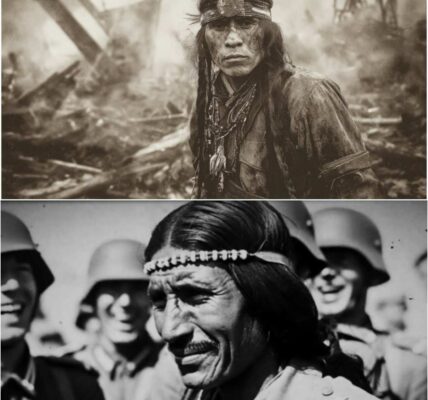
The same desire appears in photographs of Native American communities during a period of enormous change.
A Native American man dressed in traditional clothing, a camp on the Great Plains around 1890, and photographs of individuals associated with Navajo culture all preserve fragments of societies confronting profound political and economic pressure.
The camera could document traditions.
But it could not fully capture what was being lost.
Across the American West, Native communities faced forced relocation, reservation policies, military conflict, cultural pressure, and the transformation of traditional territories.
A photograph of a person in traditional clothing therefore carries more than aesthetic meaning.
It may also represent a culture attempting to preserve identity during a period of extraordinary disruption.
In another photograph, a man stands on the porch of his cabin in Eagle Creek, Idaho, in the late nineteenth century.
The setting is almost deliberately ordinary.
There is no dramatic event.
No famous historical figure.
Just a man, a cabin, and a landscape.
Yet photographs like this help us reconstruct the physical world in which millions of people lived.
The porch.
The timber.
The clothing.
The surrounding landscape.
Each detail contributes to a picture of everyday life that written documents often ignore.
Then the century begins to accelerate.
Cities expand.
Railroads grow.

Factories become larger.
Buildings climb higher.
Machines become increasingly important.
A photograph said to show thousands of workers gathered during the construction of a major New York building captures this transformation.
The scale is almost difficult to comprehend.
The modern city was no longer built by a handful of craftsmen.
It required armies of workers, engineers, architects, suppliers, transport systems, and enormous quantities of material.
The Empire State Building became one of the clearest symbols of this transformation.
Construction began in March 1930 and the building was completed on May 1, 1931—only one year and 45 days later.
Photographs of workers high above Manhattan therefore represent more than daring construction.
They show a society moving upward.
The city itself was becoming a machine.
Another famous image shows workers performing maintenance on the Eiffel Tower.
The tower had already become an international symbol by the twentieth century.
Yet photographs of workers climbing and maintaining it reveal a less glamorous reality.
Famous monuments do not maintain themselves.
Every landmark depends on people whose names are usually forgotten.
The same is true of ships.
The RMS Mauretania, photographed in dry dock at Liverpool in 1909, represents another world of industrial ambition.
Ocean liners connected continents, transported immigrants, carried wealthy travelers, and became symbols of national prestige.
A ship in dry dock looks very different from one crossing the Atlantic.
The romance disappears.
What remains is steel, machinery, maintenance, and labor.
The age of mass transportation was being built piece by piece.
Aircraft soon became another part of that transformation.
Photographs of newly manufactured F4U Corsair and F6F Hellcat fighters being prepared for shipment to the Pacific show the industrial side of the Second World War.
The war depended not only on soldiers.
It depended on factories.
Thousands of workers produced aircraft, engines, ammunition, ships, vehicles, communications equipment, and supplies.
The battlefield was connected directly to the factory floor.
Elsewhere, American sailors inspected protective hammock nets at Great Lakes Naval Station.
Such photographs reveal the mundane side of military life.
History often remembers combat.
It less often remembers inspection.
Training.
Maintenance.
Waiting.
Cleaning.
Eating.
Sleeping.
Those activities occupied enormous amounts of a serviceman’s time.
Photography occasionally captured them.
The same camera could then turn toward the world outside the military.
In 1935, photographer Margaret Bourke-White stood high above a city and created an image that reflected the daring photographic style for which she became famous.
Her career demonstrated how photography itself was changing.
The photographer was no longer merely a person recording an event.
Photographers were becoming explorers of modernity.
They climbed buildings.
Entered factories.
Traveled across continents.
Photographed political leaders, workers, disasters, machines, and ordinary people.
Their cameras became tools for interpreting the modern world.
Another photograph from the 1930s shows Berlin.
The city was experiencing a complicated period between the world wars.
Political tensions were rising.

Modern architecture and mass transportation were changing urban life.
Yet an ordinary street photograph may reveal none of that immediately.
This is another reason old photographs can be deceptive.
We know what happened next.
The people inside the photograph did not.
A person walking through Berlin in 1931 did not know what the following decade would bring.
A child playing in London did not know that war would soon transform the city.
A family posing for a photograph did not know that future historians would study the clothes they wore.
The future is invisible inside almost every historical photograph.
That may be the greatest source of its emotional power.
Consider the famous photograph known as “Wait for Me, Daddy.”
On October 1, 1940, Canadian photographer Claude P. Dettloff photographed soldiers of the British Columbia Regiment marching through New Westminster, British Columbia.
Suddenly, five-year-old Warren Bernard broke away and ran toward his father, Private Jack Bernard.
The resulting photograph captured the child reaching for his father while the column of soldiers continued moving forward. Library and Archives Canada identifies the image and its date as 1940.
Nothing about the moment appears staged.
That is why it became so powerful.
The photograph does not show a battle.
It shows what the war was taking away.
Time with a father.
A child’s sense of security.
An ordinary family moment.
The image became one of Canada’s most famous photographs of the Second World War.
But perhaps its deepest meaning is universal.
Every war eventually becomes a collection of departures and reunions.
The camera sometimes catches one of them.
Another extraordinary image captures the opposite: the return.
A soldier coming home after the war.
A daughter waiting.
Two people who have spent years separated by circumstances far beyond their control.
The photograph does not need an explanation.
The body language is enough.
Elsewhere, history appears through technology.
One remarkable photograph from 1899 is associated with Louis Boutan’s pioneering underwater photography.
Boutan worked with Romanian biologist and oceanographer Emil Racovitza at Banyuls-sur-Mer in southern France. The resulting image is widely regarded as one of the earliest successful underwater photographs made with both photographer and subject submerged.
The image looks primitive by modern standards.
But that is exactly what makes it extraordinary.
The photographer had to bring a camera and lighting system into an environment where photography was extremely difficult.
Today, people can photograph beneath the ocean with a phone inside a waterproof case.
In 1899, getting a photographic image beneath the sea was an engineering challenge.
Another image from the same era records a completely different technological revolution: the Ford Model T.
The automobile transformed mobility.
People were no longer limited by walking, horses, or railroads.
Cars changed where people could live, where they could work, how cities developed, and how families traveled.
The gas station later became an essential part of that new landscape.
A photograph of an American gas station in the 1920s captures the early stage of an industry that would eventually become almost invisible through familiarity.
The modern world was being assembled one convenience at a time.
Libraries changed too.
A mobile public library in the Bronx in the 1950s demonstrates how books could be transported directly into neighborhoods.
The idea was simple.
If people could not easily reach the library, the library could reach them.
It was another example of technology being used not only to build machines, but to extend public services.
Transportation also inspired more experimental ideas.
A strange vehicle with a bubble-shaped glass roof photographed in the late 1940s appears almost like something designed for a science-fiction film.
The twentieth century encouraged inventors to imagine the future in increasingly dramatic ways.
Some inventions became ordinary.
Others disappeared.
Historical photographs preserve both.
A particularly fascinating photograph shows a young British man named Binn Owen with a customized scooter equipped with dozens of mirrors and lights.
Whether such an image represents a broader trend or simply one teenager’s extraordinary project, it captures something universal about youth culture.
Young people have always modified technology to express individuality.
The objects change.
The impulse does not.
The same is true of fashion.
A photograph of London “Bunnies” from the 1960s captures a city becoming a global center of youth culture, fashion, nightlife, and music.
The decade transformed the way young people dressed and behaved.
Old photographs from this period can therefore look surprisingly modern.
That is one of the strange things about history.
Some photographs from 1900 seem impossibly distant.
Others from the 1960s feel almost contemporary.
The distance between us is not measured simply in years.

It is measured by technology, clothing, architecture, and social habits.
In Hollywood, the relationship between photography and entertainment became even more obvious.
One photograph shows Alfred Hitchcock on a film set in 1964.
By then, cinema had become one of the most influential forms of mass entertainment in the world.
Hitchcock had spent decades refining the language of suspense.
The audience might never see the camera itself.
But the camera controlled what the audience knew.
Another photograph from the early 1960s shows Sean Connery and Ursula Andress during the filming of Dr. No, the first James Bond film.
The production became part of a franchise that would eventually become one of cinema’s most recognizable.
Yet behind the finished movie were crews, extras, technicians, locations, props, costumes, and countless hours of work.
Photographs taken between scenes reveal that difference.
The finished movie looks seamless.
The set does not.
The same contrast appears in photographs from Cleopatra in 1963.
The production became famous for its enormous scale, elaborate costumes, sets, and extraordinary expense.
But photographs of extras relaxing between scenes show something much more ordinary.
People waiting.
Talking.
Sitting.
Resting.
The illusion of cinema depends on thousands of ordinary moments that never appear on screen.
Another photograph captures Joan Collins and Richard Burton during the filming of Sea Wife in Jamaica in the 1950s.
The tropical setting looks distant from the cold streets and industrial cities that dominate many historical photographs.
But this was also part of the expanding global entertainment industry.
Film crews increasingly traveled across countries and continents to create new worlds for audiences.
Photography followed them.
Elsewhere, the camera recorded celebrities before they became legends.
A young Freddie Mercury photographed in India as a child represents a period of his life long before the world knew him as the singer of Queen.
A young Vladimir Putin photographed in the Soviet period similarly belongs to a world that existed before his later political prominence.
Historical photographs of famous people can be especially deceptive because we know what happened afterward.
When we look at a childhood photograph of a future celebrity, we see the future person.
The people standing beside them saw only a child.
That is one of the great tricks of hindsight.
History makes ordinary people look inevitable.
They were not.
They were simply living.
The same principle applies to Walt Disney.
Photographs of Walt as a child with his sister Ruth belong to a time long before the entertainment empire associated with his name existed.
There was no Disney empire in the frame.
No theme parks.
No global film studio.
Just children.
That is why childhood photographs of famous people are so fascinating.
They return the famous to the ordinary.
A young person becomes a child again.
A future celebrity becomes anonymous.
A future businessman becomes a boy.
A future political leader becomes a teenager.
The photograph briefly removes the legend.
It gives us the person before history decided what he or she would become.
Other photographs capture famous people meeting one another.
In 1919, Charlie Chaplin met Helen Keller.
The Charlie Chaplin Archive preserves photographs from that meeting at Chaplin’s studio.
The image is remarkable because it brings together two people who had become internationally known for completely different reasons.
Chaplin had become one of cinema’s great performers.
Keller had become an internationally recognized author, lecturer, and advocate after overcoming deafblindness.
The photograph captures a meeting between two public figures, but it also preserves something intimate: Keller using touch to perceive Chaplin’s face.
The moment reminds us that photographs can document forms of communication that words cannot easily describe.
Across the Atlantic, another famous structure was undergoing transformation.
The Statue of Liberty was still under construction in the 1880s.
The National Park Service records that the statue arrived in New York Harbor on June 17, 1885, while the pedestal was still unfinished. The statue was reassembled and dedicated in October 1886.
Photographs of the pedestal under construction therefore capture a monument before it became a monument.
Workers were still solving engineering problems.
Materials were still being moved.
The final appearance did not yet exist.
That is a recurring theme throughout historical photography.
We usually encounter famous places after they have become famous.

Old photographs allow us to see them before that transformation.
The same thing happened in Los Angeles.
Before the Hollywood sign became one of the world’s most recognizable symbols of cinema, it read “Hollywoodland.”
The original sign was erected in 1923 as a giant advertisement for a real-estate development called Hollywoodland. It was not initially intended as a permanent symbol of the film industry.
That single detail changes the way we see the famous sign.
What now looks like an ancient symbol of Hollywood began as advertising.
The meaning came later.
History often works this way.
Objects acquire significance after their creation.
A building becomes historic.
A street becomes famous.
A photograph becomes iconic.
A person becomes legendary.
But none of them knew it was going to happen.
One of the most extraordinary aspects of this collection is therefore not the age of the photographs.
It is the uncertainty inside them.
A photograph taken in 1905 on a busy New York avenue shows a city already transforming rapidly.
Buildings rise.
Streets fill.
Transportation becomes increasingly complicated.
People move through the frame.
Yet nobody standing there knows that the city will eventually become one of the most photographed places on Earth.
In Athens, a photograph from the nineteenth century records a city whose ancient monuments were already surrounded by the life of a modernizing society.
In Venice, photographs from the twentieth century preserve streets and canals that had already existed for centuries.
One striking image from 1956 shows canals being drained and cleaned.
The photograph reveals an important truth about historic places.
Preservation is not passive.
Ancient infrastructure survives because generations of workers maintain it.
The same principle applies to monuments, bridges, ships, towers, roads, and buildings.
History is not simply what survives.
It is what people repeatedly choose to maintain.
Another photograph shows a massive log cabin in Portland, Oregon, constructed in the early twentieth century and later destroyed by fire.
The building existed for only a few decades, yet the photograph allowed it to survive in another form.
This is what photography does best.
It cannot preserve a building physically.
But it can preserve evidence that the building existed.
It can preserve its shape.
Its scale.
Its surroundings.
The people who stood beside it.
And sometimes, the moment before it disappeared.
The same principle applies to old transportation systems.
Children being transported in baskets on a pram during a London bus strike in 1937 may look amusing today.
But the photograph also reveals how communities adapted when normal infrastructure stopped functioning.
People improvised.
They found alternatives.
They continued.
The past was not a static world.
People were constantly solving practical problems.
That is perhaps the greatest misconception created by old photographs.
Because the images are frozen, the world they depict can appear frozen too.
It was not.
Every photograph captured a world in motion.
A woman standing beside her car in the 1920s was participating in a transportation revolution.
A worker maintaining the Eiffel Tower was preserving a symbol of industrial modernity.
An immigrant watching Manhattan from Ellis Island was standing at the threshold of a new life.
A child chasing a departing soldier was reacting to a war that had disrupted his family.
A young actor standing on a film set was participating in an industry that would later define popular culture.
A family posing for a formal portrait was creating a record that might outlive everyone in the room.
The most famous photographs in history often contain this same contradiction.
They show a moment that seems ordinary while we know it was anything but ordinary.
The immigrant family at Ellis Island did not know what the future would bring.
The workers on a skyscraper did not know their photograph would become an emblem of modern construction.
The people standing beneath the early Hollywoodland sign could not know the place would become synonymous with cinema.
The children in old schoolhouses could not imagine that future historians would study their clothing.
The soldiers marching through New Westminster did not know that one child would run into the line and create an image remembered around the world.
Photography turns uncertainty into evidence.
And sometimes it gives ordinary people something that history rarely grants them.
A second existence.
The people in these photographs may be gone.
Their houses may be gone.
Their clothes may be gone.
Their vehicles may be gone.
Their streets may have changed beyond recognition.
But for a fraction of a second, they remain.
A woman looks toward the camera.
A child stands beside a parent.
A worker pauses.
A soldier turns his head.
A couple poses together.
A group of friends laughs.
Someone waits for a customer.
Someone works on a machine.
Someone looks toward the sea.
Someone simply stands there.
And the camera remembers.
That is why the rarest historical photographs are not necessarily those showing the most famous events.
Sometimes the most valuable photograph is the one nobody thought was important.
A family in a cabin.
A child helping with potatoes.
A small shop in a quiet town.
A group of workers on a street.
A young woman beside her first automobile.
A couple enjoying a picnic.
A schoolroom.
A market.
A wedding.
A summer day beside the sea.
These images reveal how history was actually lived.
Great events occupy only a fraction of human experience.
Most of life happens between them.
People wake up.
Go to work.
Eat.
Travel.
Raise children.
Meet friends.
Fall in love.
Grow old.
And occasionally, they stand in front of a camera.
Decades later, that ordinary moment can become extraordinary.
Because we know what came after.
We know which buildings disappeared.
Which wars began.
Which people became famous.
Which technologies transformed the world.
Which cities grew.
Which traditions survived.
And which ones did not.
The people inside the photographs knew none of that.
They were simply living in their own present.
That is the secret hidden inside these old images.
They are not photographs of the past to the people who appear in them.
They were photographs of the present.
Their present.
And for a brief moment, through the camera, their present becomes ours.
Some content was generated using AI tools (including ChatGPT) and edited by the author for creativity, storytelling, and historical illustration purposes. Historical facts and key details should be verified against reliable historical sources. Any AI-generated or reconstructed visuals are intended for illustrative purposes and should not be interpreted as original historical photographs or archival evidence.