📸▶RARE SHOCKING Photos That Will Change How You See History – Lost in History – 400,000 Years .P2

A photograph can preserve a moment that lasted only a second, yet that moment may eventually become part of a much larger story. A classroom filled with students, a crowded street in Northern Ireland, soldiers waiting in a trench, or a family watching television can seem ordinary when the picture is taken. Years later, the same image may reveal how dramatically the world has changed. This collection moves through political violence, war, racial injustice, scientific discovery, cinema, aviation, and everyday life. Some photographs capture events that altered nations. Others preserve people whose names were never recorded. Together, they remind us that history is not only made by famous leaders and dramatic turning points. It is also made by ordinary people living through extraordinary times.
In 1957, students gathered for an art class while music played nearby. Record players and painting materials occupied the tables, and the young people concentrated on their work. The photograph captures a familiar scene: students learning, experimenting and sharing a room.
Yet it also belongs to a particular moment in cultural history. Recorded music was becoming an increasingly important part of everyday life, while schools and colleges were adapting to new ideas about creativity and education. The combination of music and art suggests a classroom where learning was not limited to textbooks.
The scene is peaceful. The next photograph is not.
On August 15, 1998, a car bomb exploded in Omagh, Northern Ireland, killing 29 people and injuring hundreds. The attack became one of the deadliest incidents of the Troubles. Photographs of Omagh taken before the explosion can be especially difficult to look at because they show an ordinary town going about its day.
People walk along the streets. Cars are parked. Shops and buildings stand as they always have. Nothing in a routine street scene can reveal what is about to happen.
That contrast is part of the tragedy. The people visible in a photograph may have been minutes away from an event that would change their lives, while the camera recorded only the ordinary world they knew.

Spain experienced a different kind of political shock on December 20, 1973, when Prime Minister Luis Carrero Blanco was assassinated in Madrid by members of the Basque separatist organization ETA. Carrero Blanco had been a central figure in Francisco Franco’s government and was widely viewed as an important figure in the regime’s political future.
His death created a major crisis for the Franco dictatorship. It did not immediately end the regime, but it altered the political calculations surrounding its future. The photograph associated with this episode belongs to a period when Spain was approaching the final years of Franco’s rule.
In the United States, a Ku Klux Klan march in downtown Mobile, Alabama, on September 24, 1977, captured a different kind of political tension. Marchers moved through a public space while residents and observers looked on.
The Ku Klux Klan had a long history of white supremacist violence, intimidation and organized opposition to racial equality. By the late 1970s, its public demonstrations took place in a society transformed by the civil rights movement, but racial discrimination and conflict had not disappeared.
A photograph of a march cannot reveal everything about the people watching it. Some may have been curious, others opposed, and still others simply passing through. What it can show is that the movement’s symbols remained visible in public life decades after the most prominent victories of the civil rights era.
After the assassination of Martin Luther King Jr. in April 1968, troops were deployed in Washington, D.C., during the unrest that followed. A soldier guarding the U.S. Capitol with an M60 machine gun represents an extraordinary image of the nation’s capital under military protection.
The Capitol is normally associated with debate, legislation and democratic government. Seeing a machine gun positioned on its steps reveals how quickly the atmosphere of a city can change after a national tragedy.
The photograph also captures the tension between public order and the anger generated by racial injustice. King’s assassination was not an isolated event in the history of the civil rights movement. It came after years of demonstrations, threats, violence and political struggle.

Another photograph takes us to the Manhattan Project, the secret wartime program that developed the first atomic bombs. Physicist Harold Agnew worked on the project and was present at the 1945 Trinity test. Images associated with the bomb’s plutonium components have sometimes been described imprecisely, so the identity of a particular object should be established from the original archival caption before being treated as certain.
The broader history, however, is unmistakable. The plutonium bomb known as Fat Man was dropped on Nagasaki on August 9, 1945. Its use, together with the bombing of Hiroshima three days earlier, helped bring the Pacific War to its conclusion, while initiating a new era in which nuclear weapons would shape international security.
At Iwo Jima, the scale of the Pacific campaign was visible from the water.
On February 19, 1945, U.S. Marines began landing on the island. Landing craft carried men toward beaches that would soon become the setting for one of the fiercest battles of the Pacific War. The operation was part of the American campaign to capture islands that could support air operations closer to Japan.
Photographs of the landing craft reveal the immense logistical effort behind amphibious warfare. Troops, vehicles, weapons and supplies had to be moved across the water and delivered under fire. The landing was only the beginning of a battle that would continue for more than a month.
A much less conventional transportation image comes from the 1940s, when a “skate-to-work” campaign encouraged New Yorkers to use skateboards as a way to conserve fuel. The idea seems unusual today, especially when people are shown wearing formal clothing while riding simple boards through city streets.
Such campaigns reflected the pressures of wartime shortages. Fuel, rubber and other materials were needed for military operations, and civilians were encouraged to adjust their habits. Whether a particular photograph shows a formal campaign or a staged demonstration, it captures the ingenuity and improvisation associated with wartime life.
In May 1938, England’s national football team performed the Nazi salute before a match against Germany at Berlin’s Olympic Stadium. The gesture took place in a period when British officials were pursuing diplomatic accommodation with Nazi Germany.

The image has remained controversial because it places a sporting event within the political climate of the late 1930s. The players were not simply participating in a football match. They were appearing before a crowd in a country whose government was using mass spectacle and international events to project its ideology and power.
The photograph is a reminder that sport has often been used as a stage for political symbolism, whether or not individual athletes controlled the decisions made around them.
On May 6, 1937, the German airship Hindenburg caught fire while attempting to land at Lakehurst, New Jersey. The disaster killed 36 people aboard and on the ground. Images of passengers and crew escaping the burning airship became some of the most recognizable photographs of the early twentieth century.
One frequently repeated caption describes a survivor calmly lighting a cigarette amid the chaos. Such details should be checked against the original photograph and contemporary reporting, but the larger scene remains extraordinary: people were escaping a burning aircraft that was collapsing around them.
The disaster profoundly damaged public confidence in passenger airships. Although lighter-than-air craft continued to have uses, the Hindenburg became a symbol of the end of the great passenger-airship era.
In New York in 1944, Christmas packages intended for soldiers reported missing or killed in action waited to be returned to their senders. The image is quiet, but its meaning is devastating.
Each package had been prepared by someone who wanted to reach a loved one far from home. A parcel might contain food, clothing, a letter or a small reminder of family life. The label “Return to sender” transformed that act of care into evidence of loss.
The photograph does not show the battlefield. It shows what the battlefield sent back.

In 1956, Ella Fitzgerald and Marilyn Monroe were photographed together. Their meeting is associated with Monroe’s support for Fitzgerald, including her role in helping the singer secure a booking at the Mocambo nightclub in Los Angeles in 1955.
Fitzgerald later recalled that Monroe’s intervention helped open a door at a venue where she had previously faced resistance. The story is often cited as an example of how celebrity influence could be used to challenge racial barriers in entertainment.
The photograph brings together two women whose careers followed very different paths but whose public lives intersected at a time when American popular culture was changing.
The early history of aerial warfare was far less sophisticated than the bombing campaigns that would come later. During the First World War, some airmen dropped bombs by hand from open aircraft. The weapons could be crude, and aiming depended heavily on the pilot’s position, the observer’s judgment and the conditions of flight.
These early missions helped establish the principles of aerial attack, but they also exposed the limitations of the aircraft and equipment available at the time. The image of an airman preparing to release a bomb from an open cockpit captures a stage when military aviation was still being invented in real time.
Medicine was also exploring powerful new technologies. In the 1920s, radium and other forms of radiation were used in some medical treatments, including treatments for certain cancers. The discovery of radiation’s biological effects had created enormous scientific interest, but the risks were not yet fully understood.
Radium had also been marketed in consumer products and associated with claims that later proved dangerous. The history of its use illustrates a recurring problem in medicine: a promising discovery can move into practice before the full balance of benefit and harm is known.
In Fort Worth, Texas, on October 9, 1956, protesters gathered outside a church during a demonstration against racial desegregation. The image belongs to the wider struggle over the integration of American schools and public institutions.
The Supreme Court’s 1954 decision in Brown v. Board of Education declared state-sponsored school segregation unconstitutional. But legal decisions did not automatically change local practices. Communities across the country continued to debate, resist and struggle over implementation.
A photograph of demonstrators outside a church shows how deeply these questions had entered public life. Places associated with worship and community could also become settings for political conflict.
A 1964 photograph of a person drinking from a water fountain marked “Whites Only” records the everyday operation of racial segregation. The sign made exclusion visible and ordinary. It turned a basic public service into a statement about who was considered entitled to use it.
Such images are important because segregation was not only a matter of major court cases or dramatic confrontations. It was also embedded in daily routines: where people could sit, eat, study, drink water or enter a building.
Italian soldiers wearing gas masks in 1916 reveal how the First World War changed the experience of combat. Chemical weapons forced armies to develop protective equipment and new procedures. Soldiers had to adapt to threats that could arrive through the air and affect people who could not see the danger approaching.
Gas masks became a symbol of industrialized warfare. They also demonstrate how quickly military technology could alter the physical experience of being a soldier.
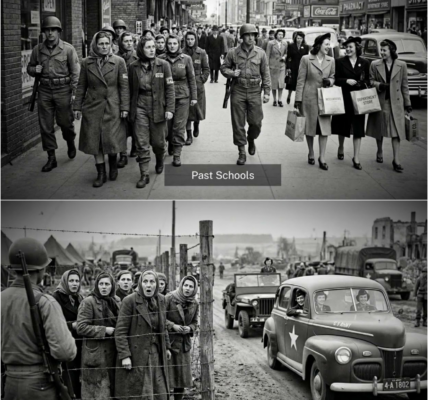
In Canada, Indigenous children were sent to residential schools operated by the government and religious organizations over many decades. These institutions were intended to assimilate Indigenous children into the dominant society. The consequences included separation from families, suppression of languages and cultural practices, and widespread physical, emotional and sexual abuse.

The system caused profound harm to Indigenous communities. Survivors and their descendants have described the loss of language, family connections and cultural continuity that followed.
Photographs of children at these schools must therefore be understood within that history. A classroom image may look orderly, but the wider institution was part of a policy that disrupted families and sought to weaken Indigenous identities.
On August 21, 1968, residents of Prague protested after Warsaw Pact forces entered Czechoslovakia, ending the period of political liberalization known as the Prague Spring. The invasion was led by the Soviet Union and supported by other Warsaw Pact states.
The demonstrations showed that the population had not simply accepted the intervention. People confronted tanks, challenged soldiers and used signs, speeches and public gatherings to express opposition.
The photograph records a moment when the streets became a place where national sovereignty and political freedom were openly contested.
In Marseille in 1940, civilians watched as French battle flags were removed following France’s defeat by Germany. The scene belongs to the collapse of the French military position in the early months of the Second World War.
For many people, the defeat was not only a military event. It was a national shock that changed the country’s government, institutions and relationship with Germany. The removal of flags carried a symbolic weight because military standards represented the units, traditions and identity of the defeated army.
In 1936, Ethiopia was under Italian occupation following the invasion ordered by Benito Mussolini. Photographs from this period sometimes show local people in scenes involving Italian propaganda, including images of people saluting or standing near portraits of the dictator.
Such images require careful interpretation. A photograph alone cannot establish whether a gesture was voluntary, coerced, staged or selected to serve a propaganda purpose. Under occupation, public images could be used to suggest acceptance and control even when the political reality was far more complicated.
The history of colonial rule is often preserved through photographs made by the authorities themselves. Reading those images critically is essential.
A photograph described as showing two youths in handcuffs on London’s Old Street raises similar questions about historical captions. Public punishment and harsh treatment of poor children were features of earlier justice systems, but the exact date and circumstances of a particular image should be confirmed before it is used to make a specific claim.

What is clear is that childhood, poverty and criminal justice have long been connected in difficult ways. Children accused of theft or other offenses could face institutions and punishments that reflected the priorities of the society around them rather than modern understandings of juvenile welfare.
In 1949, Viet Minh forces were fighting French colonial forces during the First Indochina War. Images of fighters celebrating the capture of a French position illustrate the struggle that followed the return of French rule after the Second World War.
The conflict would eventually culminate in the French defeat at Điện Biên Phủ in 1954. It also formed an important part of the longer history of Vietnam’s struggle against foreign domination and the conflicts that followed.
A British soldier sheltering beneath a German Tiger tank in 1944 offers a strange pause in the machinery of war. The tank, designed to project formidable battlefield power, becomes a makeshift roof against the rain.
The image reveals an uncomfortable truth about combat: soldiers often had to make use of whatever shelter was available, even when the object above them belonged to the enemy.
In Vietnam in 1967, a soldier holds a large centipede in the jungle. The image captures a part of military life that rarely appears in strategic accounts of the war. Tropical environments presented their own difficulties, from insects and disease to heat, rain and exhausting terrain.
The photograph does not need to turn the animal into a monster. It is enough to show that the jungle was not merely a backdrop to combat. It was an environment that shaped nearly every aspect of a soldier’s daily experience.
In 1936, members of the Hitler Youth stood guard beside the coffins of five students who died during a walk in the Black Forest. The organization used uniforms, ceremony and collective displays to shape young people’s identities and connect them to the Nazi state.
The solemnity of the photograph should not obscure the political context. The Hitler Youth was part of a broader system of indoctrination designed to bring German youth under Nazi control.
In Northern Ireland in 1971, photographer Don McCullin documented the Bogside area of Londonderry during a period of intense political conflict. The streets and walls of the neighborhood became part of the visual record of the Troubles.
The conflict involved competing national identities, disputes over constitutional status, discrimination, state power and political violence. Photographs of ordinary streets can reveal how these forces shaped daily life long before or after a particular confrontation.
In Florence in 1944, members of the Italian Resistance fought against German occupation and the Italian fascist forces that continued to support it. Resistance activity took many forms, including intelligence gathering, sabotage, armed action and support for people being pursued by the authorities.
The liberation of Italian cities was not simply a story of advancing Allied armies. It also involved local networks and people who took enormous risks to oppose occupation.
Albina Mali Hočevar, a Slovenian partisan, was wounded several times while fighting in the Yugoslav resistance during the Second World War. Her story represents the thousands of women and men who joined partisan forces across occupied Yugoslavia.

The resistance operated under difficult conditions, including reprisals, shortages and the constant danger of capture. Women served as fighters, couriers, nurses and organizers, often facing risks that were not fully recognized in postwar accounts.
One of Canada’s most famous wartime photographs is Wait for Me, Daddy, taken by Claude P. Dettloff on October 1, 1940, in New Westminster, British Columbia. The image shows five-year-old Warren “Whitey” Bernard breaking from his mother’s hand to reach toward his father, Private Jack Bernard, as soldiers march away.
The photograph became a powerful image of wartime separation. It captured the uncertainty experienced by families whose loved ones were leaving for military service.
Unlike a staged portrait, the photograph records an unplanned gesture. A child reaches for his father, and a camera preserves the instant.
The earliest-known photograph of Abraham Lincoln was made in 1846 or 1847, when he was a 37-year-old lawyer and congressman-elect from Illinois. The daguerreotype is attributed to Nicholas H. Shepherd.
Lincoln had not yet become president or the central figure of the American Civil War. In the photograph, he is simply a rising politician at the beginning of a public career that would transform the United States.
On April 12, 1945, Franklin D. Roosevelt was photographed at Warm Springs, Georgia, on the day he died. Roosevelt had led the country through the Great Depression and most of the Second World War.
The date gives the photograph unusual historical weight. It records the final day of a presidency that had shaped American domestic and international life for more than twelve years.
Theodore Roosevelt appears in a colorized image from 1904. As the 26th president of the United States, he became associated with conservation, trust-busting, an assertive foreign policy and a more active role for the federal government.
Colorization can make an old photograph feel immediate, but it is important to distinguish the original image from colors added later. The historical record lies in the original photograph; the colorized version is a modern interpretation.
In 1964, President Lyndon B. Johnson signed the Civil Rights Act. The law prohibited discrimination in important areas of public life, including employment and public accommodations, and became a landmark in the struggle against racial discrimination.
Martin Luther King Jr. and other civil rights leaders had helped build the movement that made such legislation possible. The signing ceremony was a major political event, but it represented only one stage in a much longer struggle over equality and enforcement.
The famous Hollywood sign began as a real-estate advertisement in 1923. It originally read “Hollywoodland,” promoting a housing development in the hills above Los Angeles. The final four letters were removed in 1949, leaving the sign that eventually became a symbol of the film industry.
The sign’s transformation from advertisement to cultural landmark is a reminder that symbols often acquire meanings far beyond their original purpose.
On July 16, 1969, Neil Armstrong’s family watched the launch of Apollo 11 from Kennedy Space Center. The Saturn V rose into the sky carrying Armstrong, Buzz Aldrin and Michael Collins toward the Moon.
For the astronauts, the launch began one of the most demanding journeys in human history. For their families, it was a moment of pride mixed with uncertainty. The rocket’s ascent was visible to the public, but the risks of the mission were carried most directly by the people aboard and those waiting for them.
The aircraft carrier USS Enterprise (CV-6) survived the Second World War and became one of the most decorated ships in U.S. Navy history. In 1958, it was towed away for scrapping after efforts to preserve it as a museum failed.
The ship had served in many of the major Pacific campaigns. Its final journey was therefore a striking end for a vessel that had survived battles in which many other ships were lost.
In June 1962, three inmates—Frank Morris and brothers John and Clarence Anglin—escaped from Alcatraz. They left dummy heads in their beds to mislead guards during the night count. The heads were made using materials including plaster-like compounds and human hair.
The escape became one of the most famous prison mysteries in American history. The FBI investigated, but the men were never conclusively found. Whether they survived remains unresolved.
The dummy heads are among the most tangible reminders of the planning behind the escape. They show how a simple deception, combined with careful preparation, could exploit the routines of a supposedly secure institution.
Poon Lim, a Chinese sailor, survived 133 days adrift in the Atlantic after his ship was sunk during the Second World War. He was eventually rescued off the coast of Brazil in 1943.
His survival depended on resourcefulness, endurance and the ability to find food and water while exposed to the ocean. The story became widely known as an extraordinary example of survival at sea.
A photograph of Lim is a reminder that survival stories often unfold far from witnesses. The sea can isolate a person from the world, leaving only the individual, a small vessel and the uncertain possibility of rescue.
One of the earliest known photographs of Elvis Presley shows him as a child with his parents, Gladys and Vernon Presley. Long before the stage costumes, television appearances and international fame, he was a boy growing up in the American South.

Family photographs can be especially powerful when they show someone before the world knew their name. They restore a sense of ordinary life to people whose later fame can make their childhood seem almost like a prelude written in advance.
A photograph of the Star Wars cast outside their costumes offers a similar contrast. Harrison Ford, Carrie Fisher, Mark Hamill, Peter Mayhew and David Prowse became associated with characters who would eventually be recognized around the world.
Yet behind the costumes were actors, performers and crew members working on a film production. The photograph reminds us that cultural icons are created through human work, collaboration and imagination.
Grace Kelly appears in a photograph from 1955, when she was one of Hollywood’s most celebrated actresses. Her screen career included films directed by Alfred Hitchcock, and her public image became associated with elegance and restraint.
The following year, she married Prince Rainier III of Monaco and left her acting career. Her life crossed two worlds: Hollywood cinema and European royalty.
Elton John emerged as a major figure in popular music during the 1970s. His combination of songwriting, piano performance, theatrical costumes and flamboyant stage presence made him one of the era’s most recognizable performers.
A promotional photograph of Julia Child from The French Chef captures another kind of television influence. Child helped introduce many American viewers to French cooking through demonstrations that emphasized technique, patience and a willingness to learn from mistakes.
Her television presence changed how cooking could be presented. Instead of treating the kitchen as a private space, the program made it a place for public instruction and entertainment.
A photograph of Ibn Saud with his young son Salman in 1938 belongs to the early history of modern Saudi Arabia. Ibn Saud founded the Kingdom of Saudi Arabia in 1932, consolidating territories on the Arabian Peninsula under a single monarchy. Salman would later become king in 2015.
The image therefore connects the founding generation of the modern state with a later generation of its leadership.
The Oldsmobile Incas concept car, developed in the 1980s, reveals how designers imagined the future of the automobile. Digital displays, illuminated controls and an enveloping cockpit gave the interior a futuristic appearance.
Concept cars are often less about immediate production than about exploring possibilities. They preserve ideas that may influence later vehicles even when the original design never reaches the road.
A young woman wearing a traditional kimono in Japan in 1914 represents a different kind of continuity. Clothing, patterns and ceremonial practices could preserve cultural traditions even as Japan rapidly modernized its cities, industries and institutions.
Photographs of New Year’s celebrations are especially valuable because they capture how people marked the passage of time through clothing, family gatherings and familiar customs.
Halloween photographs from the 1920s and earlier show handmade costumes and improvised masks. Before mass-produced costumes became widely available, people created disguises from paper, fabric, paint and household materials.
The results could be charming, unsettling or unintentionally comic. They also reveal the creativity of communities that made their own entertainment.
In Belgrade in 1988, zoo staff attempted to persuade a chimpanzee named Sammy to return after escaping from the zoo. The episode attracted public attention, and photographs show the unusual encounter between the animal and the people trying to bring him back.
The image is a reminder that animals in captivity can become part of urban life in unexpected ways. A zoo escape can turn a familiar public institution into the center of a citywide spectacle.
A Coca-Cola promotional vehicle from the 1930s demonstrates how companies used automobiles to bring products directly to customers. The vehicle’s branding and equipment transformed it into a moving advertisement.
Long before social media marketing, businesses understood the value of making a product visible in public spaces.
Carrie Fisher appears in a relaxed photograph with stormtroopers during the promotion of The Empire Strikes Back in 1980. The contrast between Fisher’s casual presence and the armored figures captures the playful side of a film franchise whose imagery had already become instantly recognizable.
A Swedish woman trained as a military pilot during the period when women’s roles in aviation were expanding. The exact identity and date of the photograph should be confirmed against its original caption, but the broader development is clear: women gradually entered fields that had long been restricted to men.
A photograph of Anne Frank outside the Opekta business associated with her father, Otto Frank, in Amsterdam in 1935 preserves a glimpse of her childhood before the Nazi occupation and the events that made her diary internationally known.
Anne was still a young girl. Her later fate gives the photograph a meaning that no one in the scene could have anticipated.
In 1935, workers posed inside a huge section of steel pipe associated with the construction of Hoover Dam. The dam, built on the Colorado River between Nevada and Arizona, required enormous quantities of concrete, steel and specialized equipment.
The photograph shows the scale of the infrastructure behind the project. Large dams were not simply walls across rivers. They required complex systems for controlling water, generating electricity and managing construction on a monumental scale.
A panoramic view of Washington, D.C., in 1863 reveals a capital still developing during the American Civil War. The city was the political center of a country fighting for its survival, yet its streets and buildings still had the appearance of a nineteenth-century town rather than the modern federal city that would emerge later.
A caption describing a Hamburg house as dating to 1504 points toward the long history of European urban architecture. Timber framing, masonry and narrow street-facing structures preserve evidence of building traditions that developed before modern construction methods.
Such dates should be checked against architectural records, since buildings may contain later additions or reconstructions. Even so, old houses can reveal how cities were built around materials, trades and local conditions that differ greatly from those of the present.
In 1871, barricades appeared across Paris during the Paris Commune. The Commune emerged after France’s defeat in the Franco-Prussian War and the collapse of the Second Empire. For a brief period, revolutionary authorities controlled the city before government forces retook it during the Bloody Week in May.
Photographs of the barricades preserve the physical traces of a political struggle fought in the streets. They show how ordinary urban materials—paving stones, timber and debris—could be transformed into defensive structures.
The barricade was both a military obstacle and a political symbol. It represented resistance, but it also marked the destruction and division of a city.
Hank Aaron’s baseball career became one of the defining stories in American sports. In 1974, he surpassed Babe Ruth’s career home-run record, completing a milestone after years of consistent performance under intense public scrutiny.
Aaron also endured racist abuse and threats as he approached the record. His achievement therefore belongs not only to baseball history but also to the wider history of race and public life in the United States.
An Inuit man photographed in Alaska around the turn of the twentieth century wears a parka made from seal intestine and holds a string of fish. The garment illustrates the use of local materials and specialized knowledge in Arctic environments.
Traditional clothing was often designed around practical needs: keeping out wind, resisting moisture and preserving body heat. Materials that might seem unusual elsewhere could be highly effective when shaped by generations of experience.
In India in 1908, men crossed the Sutlej River using boats made from inflated animal hides. Such craft were used in parts of the region to transport people and goods across rivers.
The method required knowledge of materials, balance and water conditions. It also demonstrates that transportation technology is not always a matter of engines and metal. Sometimes it is the result of adapting available resources to a difficult landscape.

At diamond mines in Kimberley, South Africa, workers underwent X-ray examinations as they left the workplace. The practice was intended to detect diamonds concealed inside the body and prevent theft.
The procedure reveals the extraordinary control imposed by the mining industry over workers and the valuable stones they handled. It also raises questions about privacy, bodily autonomy and the unequal power relationship between employers and laborers.
Across this collection, the same pattern appears again and again. A photograph may begin as a record of a routine event, but history changes what it means.
A student painting while music plays becomes evidence of a generation’s everyday culture. A street in Omagh becomes inseparable from a bombing. A photograph of soldiers becomes a record of the cost of war. A classroom becomes part of the history of forced assimilation. A sign on a water fountain becomes evidence of institutional racism. A portrait of a child becomes a reminder of a life cut short by genocide.
Other photographs preserve moments of invention and possibility: the first steps of commercial jet travel, the development of nuclear technology, the Moon landing, the rise of television and the transformation of popular entertainment.
The past is not a single story. It is a collection of experiences that often contradict one another.
The same century that produced extraordinary scientific achievements also produced mass violence. The same technologies that connected people across continents could be used to wage war. The same public spaces that hosted celebrations could become scenes of protest, exclusion or tragedy.
That is why historical photographs deserve more than a quick glance.
They allow us to see the details that broad narratives often leave behind: the faces in a crowd, the objects on a table, the clothes people wore, the tools they used, and the expressions they carried in moments they could not know would become historic.
The people in these photographs were not living in the past. They were living in their present.
Only time turned their ordinary moments into history.
Some content was generated using AI tools (including ChatGPT) and edited by the author for creativity, storytelling, and historical illustration purposes. Historical facts and key details should be verified against reliable historical sources. Any AI-generated or reconstructed visuals are intended for illustrative purposes and should not be interpreted as original historical photographs or archival evidence.