👁️ 100 Forgotten Photos That Reveal What History Tried to HIDE! – Ethereal Relics. VD

History rarely announces itself to the people living through it. A woman plugs in her electric car, a dog rides beside its owner, a traveling knife sharpener pauses at a customer’s doorway, and a musician entertains passengers aboard an airplane. None of these moments appears destined to become a window into the past. Yet decades later, a photograph can make an ordinary scene feel astonishing. The clothes are unfamiliar, the technology looks strange, and the people seem to belong to a world that has disappeared. Look more closely, however, and something recognizable emerges: the desire for comfort, the pleasure of companionship, the search for opportunity, and the determination to make life a little easier.
A collection of historical photographs can resemble a journey through a hundred different worlds. In one frame, an early automobile represents the promise of freedom. In another, a crowded wartime shelter reveals the price of survival. A young woman poses in traditional clothing; a mechanic works beneath a car; a celebrated actor stands beside a luxurious vehicle; a child smiles for a camera without knowing that future generations will study the image. Each photograph captures a fraction of a second, but that fraction belongs to a much larger story. Together, these images remind us that the past was not simply a sequence of famous battles and political decisions. It was a living world filled with people whose daily experiences were every bit as complex as our own.

Consider the early years of the twentieth century, when automobiles were transforming the way people imagined distance and independence. A photograph of a woman connecting an electric car to its charging equipment in 1912 challenges the assumption that electric vehicles are entirely modern inventions. Electric cars existed long before contemporary charging networks and lithium-ion batteries. During the late nineteenth and early twentieth centuries, electric, steam-powered, and gasoline-powered vehicles competed for a place on the road. Electric models offered quiet operation and straightforward controls, although their limited range and the expanding availability of gasoline infrastructure eventually contributed to the decline of early electric motoring.
The woman beside her vehicle therefore represents more than an unusual technological curiosity. She belongs to an era when the future remained unsettled. Engineers and manufacturers were experimenting with competing solutions, and consumers were deciding which inventions deserved a place in everyday life. The familiar objects of our own age were once uncertain possibilities, while technologies that seem obsolete today could once inspire genuine excitement.

A few decades later, the automobile had become a symbol of personal identity as well as transportation. Images of luxury cars, touring vehicles, and small mobile homes reveal how people used machines to express prosperity, independence, and imagination. A compact house on wheels might look rudimentary beside a modern recreational vehicle, but its underlying promise was remarkably familiar: a person could carry a small portion of home into the wider world.
These photographs also capture the improvisational spirit of an age when convenience often required ingenuity. Traveling tradespeople carried their skills from street to street, offering services that modern consumers might obtain through a shop, an online booking platform, or a delivery service. A knife sharpener working for a customer illustrates an economy built around personal contact and practical expertise. The work required specialized knowledge, but it also depended on trust. A customer had to believe that the person standing at the door could restore a useful tool rather than damage it.

The traveling sharpener belonged to a world where many objects were repaired repeatedly instead of discarded. Knives, shoes, household equipment, and clothing could remain in use for years because replacement was expensive or inconvenient. The photograph quietly records an economic relationship that was both practical and social. The customer needed a service; the tradesperson needed work; and their brief encounter connected two lives that might otherwise never have crossed.
Technology was also changing the experience of travel. Imagine an airplane in 1959 where a musical organist entertains first-class passengers. To contemporary eyes, the scene may seem almost theatrical. Air travel had become a powerful symbol of modern sophistication, and airlines competed to make the journey itself part of the luxury experience. The destination mattered, but so did the promise of reaching it in comfort.
Such images reveal how quickly expectations can change. Today, passengers often associate flying with security procedures, crowded terminals, electronic boarding passes, and tightly scheduled journeys. Earlier luxury travel could be presented as an extension of a grand hotel, complete with carefully arranged meals and unusual forms of entertainment. The organist’s presence suggests a period when flying could be marketed as an event rather than merely a way to cover distance.

Yet these photographs should not be mistaken for a picture of how everyone traveled. First-class passengers represented a privileged section of society. The comfort visible in a luxury cabin existed alongside the much more ordinary experiences of people who could not afford air travel at all. Historical images often preserve the extraordinary precisely because it was unusual. Their apparent normality can hide the economic conditions that made such experiences possible for some and inaccessible to others.
The same contrast appears in images of fashion, entertainment, and celebrity. A photograph of Al Jolson beside a Cadillac touring car in San Francisco in 1927 evokes an entertainment industry undergoing a major transformation. That year, The Jazz Singer, starring Jolson, helped popularize feature-length motion pictures incorporating synchronized spoken dialogue and singing. The transition from silent cinema to sound changed acting, filmmaking, and the careers of performers almost overnight. A car and a celebrity might seem like a simple publicity image, but the surrounding historical moment was one of technological upheaval.

Hollywood’s stars became familiar faces to audiences who would never meet them. Their clothes, vehicles, homes, and relationships were reproduced in magazines and newspapers, allowing celebrity culture to flourish well before social media. Photographs of Myrna Loy, Frank Sinatra, Ella Fitzgerald, Marilyn Monroe, and other performers show different stages of that evolving public world. Their images invite admiration, but they also remind us that fame is only one part of a human life.
A photograph of a young Frank Sinatra taking a self-portrait in a bathroom, if correctly dated to 1938, offers an especially familiar connection across time. The word selfie may be modern, but the impulse to control how one appears to others is not. Before smartphones, people experimented with mirrors, timers, and cameras to preserve their own likenesses. What has changed most dramatically is not the desire to make a personal image, but the speed and scale with which those images can now be created and shared.

Other photographs reveal that ordinary life was shaped by social expectations that have since changed. A portable beach changing enclosure, for example, illustrates how people once attempted to balance modesty, recreation, and public respectability. An unfamiliar household device or an unusual item of clothing can make the past appear quaint, but such objects were designed to solve real problems for the people who used them. Their ingenuity becomes more apparent when we ask not whether they look modern, but what needs they were intended to meet.
Even a photograph of a dog riding in a car can carry a small history of changing relationships between humans and animals. The vehicle might be old-fashioned, the upholstery unfamiliar, and the dog’s position unusual by current safety standards. Yet the central scene is instantly recognizable: an animal accompanies a person on a journey. Across generations, photographs of pets have preserved moments of affection that rarely appear in official histories. They record the personal attachments that persist even as buildings, machines, and social customs disappear.

The photographs become more difficult to look at when the setting shifts from everyday life to war. A soldier carrying tea in London in 1939 belongs to a society preparing for a conflict that would soon reach deeply into civilian life. Britain declared war on Germany in September of that year, after the German invasion of Poland. At first, the full scale of the devastation to come was not yet visible. People continued to work, travel, shop, and prepare meals while uncertainty gathered around them.
By 1940, the German bombing campaign known as the Blitz had brought the war directly into British cities. Beginning in September, London endured repeated air raids, and thousands of civilians sought refuge in underground stations, public shelters, basements, and other protected spaces. The London Museum’s historical records document the use of Tube stations and makeshift shelters during this period, while the National Archives preserves images of people sleeping on escalators and platforms. These scenes are not merely symbols of national resilience; they are records of the practical measures people took to survive.
Imagine descending below the street as warning sirens sound above. The familiar city would become distant, reduced to vibrations, muffled explosions, and reports of damage. Families carried blankets, food, and whatever possessions they could manage. Strangers found themselves sharing confined spaces, sometimes sleeping beside people whose names they did not know. Privacy became scarce, and ordinary routines were rearranged around the possibility of another raid.
Photographs of shelter life can make the experience appear orderly because a camera freezes one moment. The image may show people resting quietly, children lying beside adults, or passengers sitting close together. It cannot reveal the entire night: the noise, the anxiety, the interrupted sleep, or the uncertainty about whether a home would still be standing in the morning. The photographs are powerful not because they show everything, but because they allow us to recognize how much remains beyond the frame.
The war’s consequences were far more devastating in occupied Poland. In August 1944, the Polish Home Army launched the Warsaw Uprising in an attempt to liberate the capital from German occupation and restore Polish independence. The resistance fought for 63 days before the uprising was suppressed on October 2. German forces subsequently expelled civilians and destroyed much of the city. The United States Holocaust Memorial Museum records the immense human cost, including mass killings, deportations, and the systematic devastation of Warsaw. citeturn101047search3
The destruction of Warsaw was not simply the incidental damage of a battle. German forces deliberately devastated the city after the uprising, turning streets and historic buildings into ruins. Behind every ruined façade lay the possibility of a lost home, a destroyed workplace, a damaged family archive, or a place that had once anchored a community. Buildings can be reconstructed, although often imperfectly. The lives and memories associated with them cannot be restored in the same way.
A photograph of a German soldier setting fire to a building in Warsaw therefore demands particular care. The image alone may not establish the identity of the soldier or the exact circumstances of the scene, but it belongs to a documented history of deliberate destruction during and after the uprising. The wider record prevents the photograph from being reduced to an anonymous act of vandalism. It situates the scene within a campaign of repression directed against a population that had resisted occupation.
The difference between an image and the historical record matters. A caption can supply a date, a place, and a dramatic explanation, but not every caption is equally reliable. Some circulate for years without clear archival provenance. Names may be misspelled, dates may be misremembered, and a photograph may be assigned a story that the original record does not support. Responsible historical storytelling requires us to preserve the human significance of a picture without pretending to know more than the evidence allows.
The image of a young Anne Frank in May 1939 carries a different kind of weight. She was a child in Amsterdam before the German occupation of the Netherlands transformed her family’s future. After the Nazi authorities imposed increasingly severe restrictions on Jews, Anne and her family went into hiding in 1942. She recorded her experiences and thoughts in a diary while living in concealed rooms with other people seeking to escape persecution. The family was eventually discovered, and Anne died in Bergen-Belsen in 1945.
The diary became internationally known after the war, first appearing in Dutch in 1947. It offered readers a record of confinement, fear, disagreement, hope, and adolescence under extraordinary circumstances. Anne’s photographs from before hiding can be difficult to view because they show a life that had not yet been defined by the events that followed. She was not born as a historical symbol. She was a young person with friendships, interests, ambitions, and an ordinary future that persecution took away.
That distinction is essential. Remembering victims only as victims risks erasing the lives they possessed before violence reached them. A child in a photograph is not merely evidence of a later tragedy. The child had a personality, a family, a sense of humor, and a world that extended far beyond the catastrophe that ultimately became part of their biography.
Another wartime photograph might show women working as welders in 1943. Across the Allied nations, the demands of wartime production drew many women into industrial jobs that had previously been dominated by men. Shipyards, factories, and aircraft plants required labor on a scale that challenged established assumptions about who could perform particular tasks. Women trained for technical work, operated machinery, and helped manufacture the equipment needed for the war effort.
The significance of such a photograph lies not in a simplistic claim that the war immediately created equality. Women often encountered lower wages, discrimination, difficult working conditions, and pressure to leave industrial jobs when servicemen returned. Their contributions were essential, but recognition did not automatically translate into equal opportunity. Nevertheless, the image of a woman welding steel reveals the distance between social expectations and practical necessity. When circumstances demanded new skills, women demonstrated that the boundaries imposed on them had never been as natural or permanent as some people claimed.
The history of work also extends beyond factories and battlefields. Images of rural librarians using pack animals in Kentucky during the 1930s and early 1940s point toward the effort to bring books and information to isolated communities. The precise dates and details attached to an individual photograph should be checked against its archival record, but the broader tradition of mobile library services is well documented. During the Great Depression, programs associated with the Pack Horse Library Project in Kentucky helped deliver reading material to people living in remote mountain areas.
The idea was simple, but its consequences could be meaningful. A book might bring practical information, a story for a child, or a connection to a wider world beyond the hills. In places where roads and transport were limited, the person carrying the books became a bridge between communities and resources otherwise difficult to reach. The photograph reminds us that historical progress is not always represented by spectacular inventions. Sometimes it is represented by someone making a long journey so another person can read.
The twentieth century was also marked by battles over racial inequality and civil rights. A photograph of an African American military policeman standing outside a segregated entrance in Columbus, Georgia, in 1942 evokes a contradiction at the heart of American life during World War II. Black Americans served in the armed forces and contributed to the national war effort while facing discrimination at home and within military institutions. The image of a uniformed policeman outside a separately designated entrance makes that contradiction visible.
Uniforms can symbolize authority, service, and national belonging. Yet the sign or doorway behind a person may reveal that those ideals were not distributed equally. A person could be trusted with responsibilities essential to public safety and still be denied the same treatment afforded to others. The photograph cannot tell us everything about the individual standing before the camera, but it directs attention toward a system that shaped his opportunities and daily experiences.
The struggle for civil rights continued long after the war. In March 1966, Martin Luther King Jr. met President Lyndon B. Johnson at the White House, a moment situated within a period of major political debate over civil rights legislation, voting rights, and the federal government’s role in confronting racial discrimination. The photograph belongs to a history in which social movements and political leadership interacted, sometimes cooperatively and sometimes in tension. Progress came through activism, organizing, public pressure, legal challenges, and decisions made within government.
No single photograph can summarize that struggle. A meeting between two prominent figures records only one moment within a much larger process involving countless people whose names never became famous. Marchers, organizers, local leaders, students, church communities, and ordinary citizens all helped shape the conditions in which national political decisions became possible. The camera tends to preserve the recognizable faces at the center of events, but history also depends on the people standing outside the frame.
The photographs of later decades broaden the story further. Images of astronauts, experimental vehicles, and early views of Earth from space capture humanity’s expanding technological ambitions. The first photographs of Earth taken from lunar orbit in 1966 offered a new perspective on the planet, although the precise description of any particular image should be matched to the relevant mission record. Space exploration transformed the scale at which people could imagine their world. The planet became something that could be photographed from beyond its immediate surroundings, a single body suspended in darkness.
The importance of such images was both scientific and symbolic. They documented a technical achievement, but they also changed how people could visualize the place they inhabited. The same world that contained crowded cities, remote villages, battlefields, and quiet farms could now be seen from a distance. Borders and national divisions remained politically powerful, yet the planet itself had no visible lines separating one country from another.
The history of invention is filled with such shifts in perspective. A wristwatch that combined computing and timekeeping in the 1970s might once have looked futuristic, while an early automobile charging system from 1912 might appear surprisingly familiar today. A mobile house from the 1930s might seem primitive compared with modern recreational vehicles, yet it expressed the same desire for mobility that continues to influence contemporary design. Every generation inherits technologies that earlier generations could barely imagine, then gradually treats them as ordinary.
The same process occurs in culture. An unfamiliar hairstyle, a bold patterned sweater, or an unusual form of entertainment may become a symbol of an entire era. Yet fashion is more than decoration. It reflects materials, manufacturing, economic conditions, celebrity influence, and changing ideas about identity. Clothing photographs preserve not just what people wore, but how they wished to be seen. A confident pose in a Paris street in 1950, for example, can invite us to consider the individual behind the style without inventing a personal history that the image cannot establish.
Not every photograph contains a grand historical lesson. Some are funny, peculiar, or simply charming. A circus performer posing beside crocodiles, a rodeo clown riding with a trained mule, a child dressed as a pirate, or a dog accompanying its owner may have been photographed because the scene was unusual. These images matter partly because they resist the temptation to turn the past into a procession of solemn events. People laughed, experimented, played, and pursued eccentric interests even in periods that later became associated with hardship or conflict.
Humor can also reveal how people understood their own time. A staged publicity photograph might exaggerate an absurd situation to attract attention. A family snapshot might preserve a joke whose original meaning has been lost. A photograph of a person attempting an unfamiliar sport or posing beside an oversized object may seem strange now, but its strangeness is precisely what allows it to cross generations. It reminds us that people in the past were not merely preparing the world for us. They were living their own lives, often with the same appetite for novelty and amusement that we recognize today.
There are, however, images that resist easy interpretation. A photograph of a Ku Klux Klan rally in the United States in the 1950s belongs to a history of organized white supremacist intimidation. The setting and the date must be verified for the individual image, but the broader context is clear: the Klan used public gatherings, uniforms, symbols, and threats to promote racial hierarchy and terrorize Black communities and others it targeted. A photograph of such a gathering should not be treated as a harmless curiosity from a distant era. It records the public performance of an ideology that inflicted real harm.
Similarly, a photograph of Jewish men being rounded up for forced labor under Nazi occupation should be approached as evidence of persecution rather than merely as a dramatic scene. The precise identities and circumstances of the individuals require reliable documentation. But the wider historical context includes the systematic deprivation of Jewish rights, forced labor, deportation, and mass murder across Nazi-occupied Europe. The camera may capture only a few men and one soldier; the history extends to an entire machinery of oppression.
The same caution applies to images of political prisoners, colonial conflicts, and military captivity. A person standing in front of a camera may be unable to choose how the photograph will be used or how future viewers will interpret it. The image may have been taken by an official, a journalist, a participant, or someone whose purpose is now unknown. Historical interpretation must therefore consider not only what is visible, but who made the image, why it was created, and what evidence survives about the event.
A photograph of a captured military officer in Vietnam, for example, belongs to a conflict whose human consequences extended far beyond the battlefield. Images of prisoners can become instruments of propaganda, evidence of captivity, or records of an individual moment in a much larger war. The dignity of the person shown should not depend on which side they served. A historical account can acknowledge military and political responsibility while still recognizing the humanity of those caught in the conflict.
Photographs taken after wars can be just as revealing as those made during them. The return of American prisoners of war during Operation Homecoming in 1973 marked a major moment in the withdrawal from the Vietnam War and the return of American servicemen held captive in North Vietnam. For the returning prisoners and their families, the event was not simply a diplomatic milestone. It was a reunion after years of separation and uncertainty. The historical record of such returns reminds us that the end of combat does not immediately end the personal consequences of war.
For families waiting at airports, the return of a loved one could transform an abstract political event into something intensely personal. A person who had been absent for years might come home physically changed by captivity and experience. Children might meet a parent they barely remembered. Spouses might face the difficult work of rebuilding routines after a long separation. Photographs of homecoming capture the visible moment of reunion, but they cannot fully show the adjustment that follows.
This is one of the most important limitations of historical photography: the frame has edges. It includes certain people and objects while excluding everything beyond them. The photograph of a soldier with a cup of tea does not record the entire day. The portrait of a young woman does not reveal all her hopes or fears. The picture of a celebrated actor beside a car does not explain the private costs of fame. A ruined city cannot show every life that was disrupted, and a homecoming photograph cannot contain the years of absence that came before it.
Yet those limitations are also what make photographs so valuable. They provide a starting point for questions. Who was the person standing at the edge of the scene? What happened just before the shutter clicked? What changed afterward? Why was this moment considered worth preserving? The answers may be found in archives, newspapers, personal diaries, official records, or the memories of people who knew the individuals involved. Sometimes the answers remain uncertain, and acknowledging that uncertainty is part of telling the story honestly.
Looking across these photographs, a pattern begins to emerge. The twentieth century was not a simple march from old technology to new, from oppression to freedom, or from war to peace. It was a complicated mixture of invention, loss, adaptation, injustice, and achievement. The same decades that produced extraordinary advances in transportation and communication also witnessed industrialized warfare and systematic persecution. The same societies that celebrated freedom sometimes denied basic rights to their own citizens. The same cameras that recorded celebrities and technological wonders also preserved evidence of suffering.
This is why the most meaningful historical photographs are often not the ones that appear most spectacular at first glance. A simple image of a woman beside an electric car can reveal a forgotten branch of technological history. A rural librarian carrying books can represent the effort to overcome isolation. A family sheltering underground can make the experience of wartime civilians more immediate than a list of dates. A child’s portrait can restore individuality to a life later remembered through tragedy.
The past becomes more understandable when we stop treating its people as strangers who existed only to become historical subjects. They were individuals who made decisions with incomplete information, adapted to circumstances they did not control, and imagined futures that might never arrive. They did not know which inventions would succeed, which political struggles would transform their societies, or which ordinary days would eventually be remembered by people they would never meet.
A century later, we look at their photographs with the advantage of hindsight. We know which cars became obsolete, which wars ended, which entertainers became legends, and which political decisions left lasting consequences. But the people in the photographs did not possess that knowledge. They lived in the uncertainty of their own present, just as we live in ours.
Perhaps that is the quiet power of historical photography. It collapses the distance between generations without pretending that their worlds were identical. We may not recognize every object, custom, or social convention, but we recognize the human need to belong, to create, to protect loved ones, to work, to laugh, and to hope for something better. The details change; the underlying human questions remain.
A photograph can preserve a face, but it cannot preserve an entire life. It can document a building, but it cannot fully contain the community that once gathered inside it. It can record a victory, but not every sacrifice that made the victory possible. The task of historical storytelling is to look carefully, question what is uncertain, and reconnect these fragments with the larger world from which they came.
The next time you encounter an old photograph, pause before scrolling past it. Look at the hands, the clothing, the tools, the expressions, and the objects in the background. Ask what the camera captured—and what it left outside the frame. The answer may reveal something unexpected about a vanished era, or something surprisingly familiar about the present.
Which of these historical photographs would you most want to step into for one day—and what would you hope to discover about the people who lived that moment?
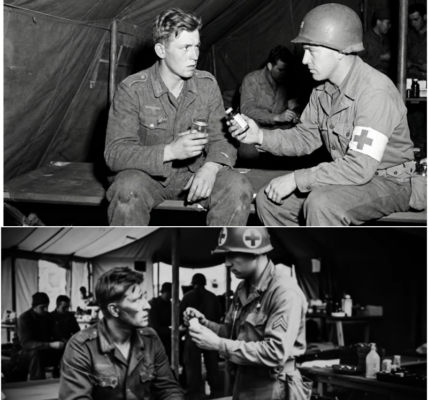
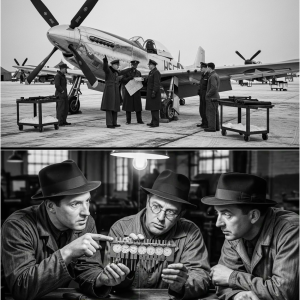
Some content was generated using AI tools (including ChatGPT) and edited by the author for creativity, storytelling, and historical illustration purposes. Historical facts and key details should be verified against reliable historical sources. Any AI-generated or reconstructed visuals are intended for illustrative purposes and should not be interpreted as original historical photographs or archival evidence.