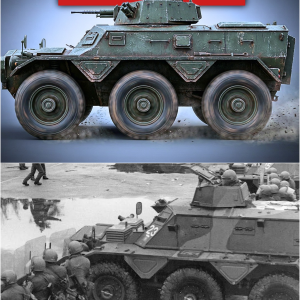
Why This ‘Ancient’ British Armoured Car Refused To Die And Kept Fighting Into The 1990s. nu

Why This ‘Ancient’ British Armoured Car Refused To Die And Kept Fighting Into The 1990s
1952 Coventry, England. Engineers at the Alvis factory are rushing to complete a vehicle that was never supposed to come first. The British Army has an armored car program underway, the FV 601 Saladin, a sleek six- wheeled fighting machine destined to replace aging wartime designs. But the Saladin is not what rolls off the production line in December of that year.
Instead, it is the Saladin’s unglamorous sibling, a boxy troop carrier with the designation FV603. The top brass have jumped the queue. They need this vehicle now, not in 6 years when the original program was scheduled to deliver it. Communist insurgents are ambushing convoys in the jungles of Malaya, and British soldiers are dying in unarmored trucks.
The vehicle that emerges to meet this crisis will still be in British service four decades later, patrolling the streets of Belfast and Hong Kong, long after its supposed replacement has come and gone. This is the story of the Alvis Sar, the ancient armored car that refused to die. The problem facing British planners in 1948 was deceptively simple.
They needed to move infantry under armor. The Second World War had proven that unprotected soldiers were vulnerable to ambush, artillery fragments, and small arms fire. But Britain had ended the war without a purpose-built armored personnel carrier. American halftracks had filled the gap, but these were designed for a different kind of warfare, one fought across open European terrain against a conventional enemy.
The conflict erupting in Malaya was something else entirely. The Malayan emergency began in June 1948 after communist guerillas murdered three European rubber planters. The insurgents operated from deep jungle bases, emerging to ambush plantation workers, assassinate local officials, and attack military convoys before melting back into terrain that swallowed pursuit.
Lieutenant General Harold Briggs developed a counterinsurgency strategy that required something the British army did not possess. He needed armored vehicles that could carry infantry sections through ambushprone roads, deliver them to the edge of the jungle, and provide fire support while they dismounted.
The vehicles had to be narrow enough to navigate plantation tracks between rows of rubber trees. They had to be reliable enough to operate far from workshops. The fighting vehicles research and development establishment at Churchy had begun work on a new family of six wheeled armored vehicles in 1946. The program envisioned shared components across an armored car, a troop carrier, command vehicles, and an ambulance, all built on a common chassis.
The armored car, the Saladin, was the priority. It would mount a 76 mm gun, and provide reconnaissance firepower. The troop carrier was secondary. A support vehicle expected to follow in the Saladin’s development wake. Malaya changed everything. Development of the troop carrier, now designated the FV 603 Sariss, was immediately accelerated.
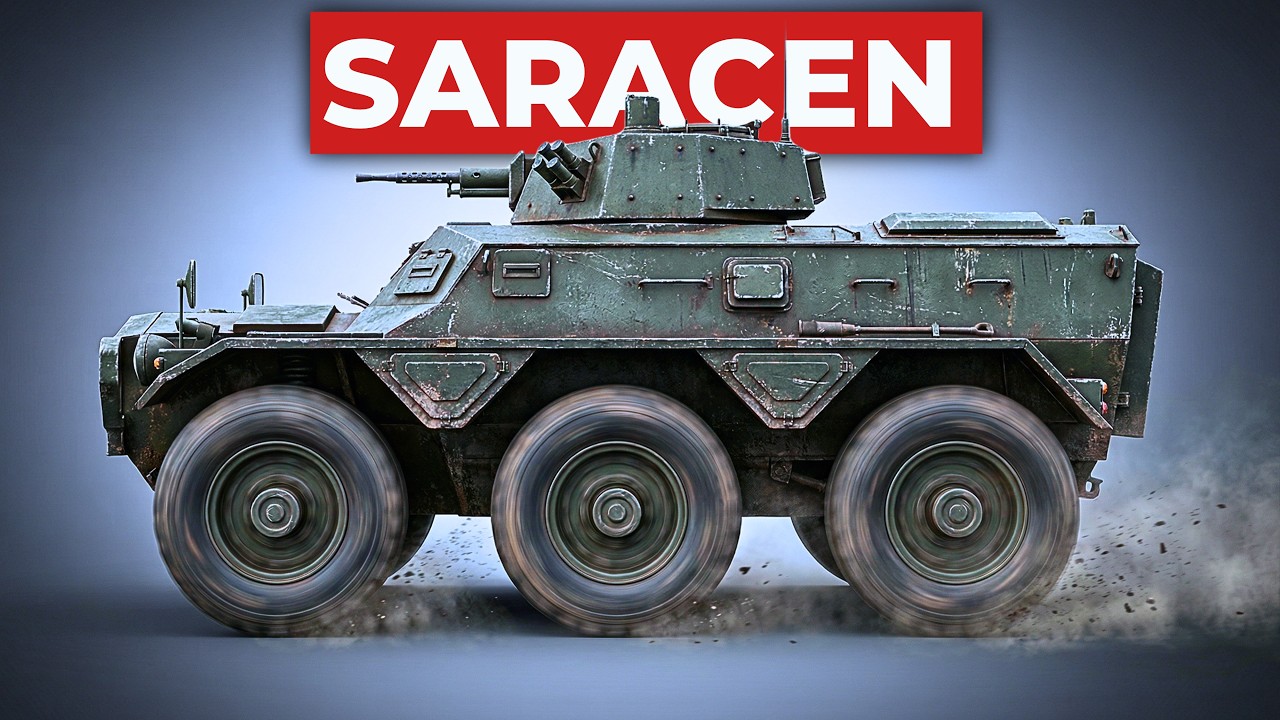
the Saladin would have to wait. Alvis Limited of Coventry won the contract. The company had deep roots in British engineering. Founded in 1919 and led through the postwar years by chief engineer Willie Dunn, who had succeeded the legendary GT Smith Clark in 1950, Alvis had operated 21 Shadow factories during the war and understood military production.
Two Sariss prototypes were shipped directly to Malaya for field trials in June of 1951. By December 1952, the first production vehicles were rolling out of Coventry. The Saladin, originally the flagship of the program, would not enter production until 1958, 6 years behind its supposedly secondary sibling. Now, before we get into how this vehicle was built and how it performed in combat.
If you’re finding this deep dive into British Cold War engineering interesting, consider subscribing. It costs nothing, takes a second, and helps the channel continue this work. The SAR that emerged was built for reliability rather than sophistication. Its heart was the Rolls-Royce B80 Mark 6A engine, an inline 8 cylinder petrol unit displacing 5,675 cm.
This naturally aspirated power plant produced around 160 to 170 brake horsepower depending on the source and variant with peak output at 3750 revolutions per minute. The engine’s design prioritized field maintainability over raw performance. Its inlet over exhaust valve arrangement and low 6.4:1 compression ratio meant it could run on 80 octane pool petrol, the lowest grade military fuel available.
Approximately 4,700 B8 engines were manufactured in total, serving across SARS, Saladins, and Ferret scout cars. This commonality was deliberate. A mechanic who could service one vehicle could service all three. Power reached the six wheels through what engineers called an H drive layout. A fluid coupling fed a 5-speed Wilson type pre-selector gearbox.
Then a transfer box that drove the center wheels directly through universally jointed shafts. Front and rear wheels received power via longitudinal transmission shafts and bevel boxes with epicyclic gear reduction at each of the six wheel hubs. Locking differentials were fitted to all axles. The front four wheels steered through positive mechanical linkage with hydraulic power assistance.
All six wheels had independent double wishbone suspension with torsion bars. Each station fitted with telescopic hydraulic shock absorbers. This independent springing was not merely a comfort feature. It meant a sariss could continue driving even with wheels blown off provided the damage was distributed across different sides of the vehicle.
A tracked vehicle that threw a track was immobilized. A SAR that lost a wheel could limp home. The hull was constructed from all welded rolled homogeneous steel armor. Maximum thickness was 16 mm at the front and turret with an estimated 8 mm protecting the sides, rear, and floor. This was enough to defeat 7.
62 mm smallarms fire and artillery shell splinters. Adequate protection for the counterinsurgency role, but nothing heavier. The one-man turret, similar to that fitted on the Ferret M2, mounted a 7.62 62 mm Browning L 304 machine gun with 360° manual traverse and elevation from minus12 to + 45°.
66 66 mm smoke grenade discharges were mounted on the front mudguards. Eight firing ports, three per side and one per rear door, allowed embarked troops to engage targets from inside the vehicle. Overall dimensions reflected the original Malayan requirement. The SAR measured 5.233 233 m long, 2.539 m wide, and 2.463 m tall to the turret top.
That width, kept deliberately under 8 ft, allowed the vehicle to pass between rows of rubber trees on plantation roads. Combat weight hovered around 10,170 kg, rising toward 11 tons when fully loaded with troops and stores. The driver sat at the front behind the engine compartment with three periscopes providing forward vision. Behind the driver sat a section commander and radio operator.
The rear compartment accommodated 8 to 10 infantry troops on individual seats, four per side facing each other. Two large rear doors provided the primary entry and exit. Performance specifications showed what British engineers had achieved with a relatively modest power plant. Maximum road speed was 72 kmh, dropping to 32 kmh across country.
Operational range on roads was 400 km from the 302 L fuel tank. The Sariss could climb a 60% gradient. ford water to a depth of 1.07 m without preparation, cross a vertical obstacle of 460 mm, and bridge a trench of 1.52 m. These were solid numbers for a wheeled vehicle of its era, though the petrol engine’s thirst and fire vulnerability would draw criticism throughout its service life.
Production continued at Coventry from 1952 until 1972 with 1,838 vehicles built across seven marks and multiple specialist variants. The Mark 1 was the initial Malayan emergency production model with a three-door turret. The Mark 2, the most widely produced variant, introduced a refined two-door turret whose rear door folded down as the commander seat.
The Mark III featured reverse flow cooling for desert operations, drawing air through raised rear louvers and expelling it through front radiators. Beyond the basic APC, the FV600 family spawned the FV604 armored command vehicle fitted with mapboards, extra radios, and a crew of six staff officers. The FV610 armored command post served the Royal Artillery with a wider, higher hull and plotting instruments.
The FV606 and FV611 armored ambulances could carry 10-seated patients or various stretcher combinations. This family approach meant that logistics officers could support multiple roles with common parts and training. The Sariss’s Baptism of Fire came in the conflict that had demanded its creation. Mark1 vehicles deployed with infantry units and armored car regiments, including the fourth Royal Tank Regiment, providing protected mobility on Malayan plantation roads and jungle tracks.
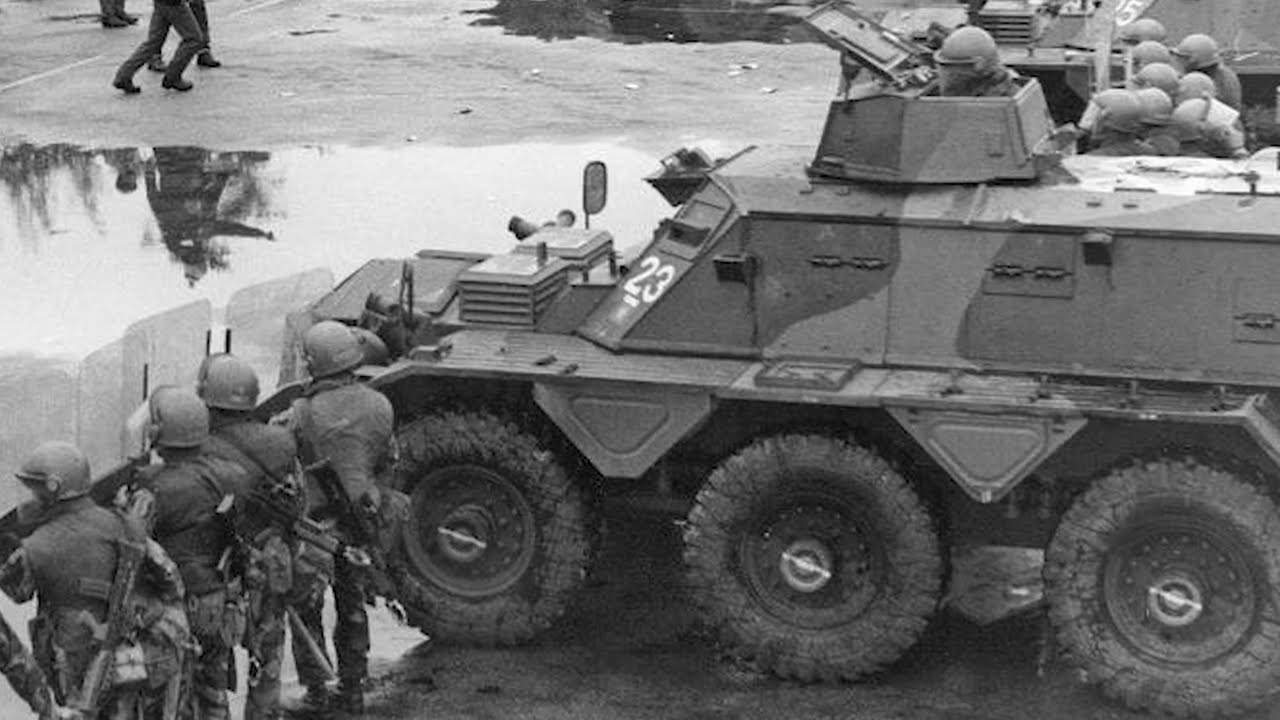
The narrow hull threaded between rubberry rows exactly as designed. Crews quickly learned the vehicle’s characteristics. The distinctive transmission wine that announced their approach. The need to balance speed against the risk of ambush. The confidence that came from knowing 16 mm of steel stood between them and guerilla bullets.
By the mid 1950s, the Malayan emergency had stabilized enough that originally envisioned production numbers were scaled back and focus shifted to completing the Saladin armored car. Aiden proved a different test. British forces deployed to the Aden Protectorate faced urban insurgency and desert operations from 1963 to 1967.
Sar served alongside Saladins and Ferrets against nationalist insurgent groups, taking hits from grenades, mines, and anti-tank rockets in districts like Al-Manssura and Shake Oman. The Mark III variant with its reverse flow cooling system proved essential in the brutal Arabian heat. But Northern Ireland became the Sariss’s defining theater.
Operation Banner, the British military deployment that began in August 1969 and would last until 2007, made the SAR silhouette synonymous with the Troubles in a way no other vehicle achieved. The deployment began as emergency reinforcement with troops initially welcomed by Catholic communities as protection against loyalist violence.
Within months, that relationship had soured. The vehicles that had shipped to support peacekeeping became instruments of a security operation that would kill and injure thousands on all sides. A batch of Mark III Sarissens, originally destined for export to Libya, arrived in Northern Ireland, still wearing their desert camouflage paint, pressed into service before anyone could repaint them.
Soldiers nicknamed the Sariss the Sixer, distinguishing it from the pig. The nickname belonging to the Humber FI 1611 armored truck that served alongside it. The Sariss’s distinctive profile, its six wheels and angular turret, became an icon of the conflict, appearing in news footage, propaganda photographs, and eventually rebel songs.
The Irish ballad, My Little Armalite, mentions the Sariss by name. Merilion’s 1983 track, Forgotten Sons, describes the experience of watching the troubles unfold with the lyric about crawling behind a Sar’s hull from the safety of a living room chair. The troubles demanded modifications that Malayan jungle warfare had never required.
Anti- RPG screens appeared under Operation Kremlin. Anti-wire posts prevented decapitation of exposed crewmen. Loudspeakers were fitted for reading the riot act to crowds. CS gas canister discharges provided non-lethal crowd dispersal. Anti-shatter grills protected headlights. Water cannon variants provided another crowd control option.
The Mark 5 and Mark 6 designations covered vehicles up armored with applique plates, internal padding, seat belts, and crew harnesses. These modifications proved their worth in ways that saved lives. According to accounts from First Royal Tank Regiment, one of their retrofitted Mark 5 Sariss at a Marg in County Tyrone survived a culvert bomb.
A buried explosive device triggered as the vehicle passed overhead. The commander and driver suffered only minor cuts. Soldiers in the rear compartment strapped into their harnesses were completely unharmed. The added armor weight did cause some engine failures, pushing the B80 beyond its design limits, but crews accepted the trade-off.
An overheated engine could be repaired. A vehicle shredded by shrapnel could not protect its occupants. The Sariss was present throughout the troubles, from the early curfews and searches of 1970 through to the later years of the conflict. The vehicle that had been designed to protect British soldiers from Malayan gerillas found itself at the center of events that would shape Irish history for generations.
But how did the SARS compare to the armored personnel carriers fielded by other nations? The American M13, entering service in 1960, became the Western world’s dominant APC with over 80,000 produced and more than 50 export customers. Dwarfing the SARS’s 1,838, the M113 offered tracked cross-country mobility, amphibious capability, NBC protection, air transportability in C130 aircraft, and a heavier 50 caliber machine gun.
Its aluminium construction was lighter and enabled over 150 variants. For NATO’s central European theater, where APCs needed to swim rivers, survive nuclear, biological, and chemical environments, and keep pace with tanks, the M113 was better suited. The SARS countered with advantages specific to its operational niche. Higher road speed, 72 versus 64 km per hour.
Lower operating and maintenance costs that mattered enormously for nations without large military budgets. Better crew endurance on extended road patrols because wheeled vehicles produce less vibration and noise than tracked ones. Reduced road damage in areas with limited infrastructure. And superior mine resilience because a wheeled vehicle could often continue moving after damage that would immobilize a tracked one.
Against Soviet contemporaries, the picture was more favorable. The near contemporary BTR152 entering service in 1950 was essentially an armored truck, a ZIS-151 chassis with bolt-on armor plates, leaf spring suspension, and initially an open top. The SAR was better suited to the APC role with its purpose-built hull, enclosed turret, thicker armor at 16 mm versus 6 to 13, and independent torsion bar suspension.
The open topped BTR152s proved fatally vulnerable to Molotov cocktails during the 1956 Budapest uprising. A weakness the enclosed Sariss did not share. The later BTR60 entering Soviet service in 1960 was more competitive. This 8×8 design offered 80 km/h road speed, amphibious capability via water jets, NBC protection, and a devastating 14.
5 mm KPVT heavy machine gun. But its rear engine layout forced troops to exit through exposed roof hatches rather than rear doors. A significant tactical disadvantage the SARS avoided. Its twin engine configuration was complex and maintenance intensive, negating the reliability advantage that Soviet equipment supposedly enjoyed.
Britain itself replaced the Sariss in its primary conventional APC role with the FV432 tracked carrier from 1963. Recognizing that tracked mobility and NBC protection were essential for the central European battlefield against Warsaw packed forces. The FV432’s 240 horsepower roles, Royce K60 multiffuel engine gave it substantially more power.
But the SARS persisted in overseas theaters and internal security roles where its wheeled advantages remained relevant. It served in Northern Ireland for nearly three decades after its nominal replacement entered service elsewhere. Export customers kept the Sariss operational across four continents.
South Africa was the largest buyer, acquiring 280 vehicles between 1953 and 1956, plus eight for the South African police. These served during the Sharpville massacre in 1960, the Suito uprising in 1976, and the early phases of the South African border war before being supplemented by the indigenous Rattel infantry fighting vehicle.
South Africa retired its Sariss in 1991 after 38 years of service. Kuwait received 135 vehicles. Jordan acquired 120, deploying them during Black September in 1970 and the Yomkip war in 1973. Jordan reportedly still had 60 operational examples into the early 2000s. Lebanon operated 100 through its devastating civil war.
Sri Lanka fielded 67 during its civil war, some of which were captured by the liberation tigers of Tamil Elum. Indonesia operated 55 using them during the 1965 coup and as late as the 2003 to 2004 AC offensive, likely making this one of the last combat deployments of the type. Why did so many nations keep this 1950s design operational for so long? The answers reveal what British engineers got right.
Mechanical simplicity meant maintenance was feasible. Without advanced infrastructure or specialist training, wheeled vehicles had dramatically lower operating costs than tracked alternatives. Shared components with Saladins and ferrets reduced logistics burdens for nations operating multiple types.
The basic platform adapted readily to internal security, command, ambulance, and riot control roles without fundamental redesign. And for many nations, arms embargos or limited budgets precluded replacement. When you could not buy anything new, you kept what you had running. A 1991 diesel repower program by AFBudge Limited, offered one modernization pathway, replacing the thirsty B80 petrol engine with a Perkins Phaser 180 MTI diesel, developing 180 horsepower.
This conversion improved fuel efficiency, extended range, and reduced fire risk. Indonesia purchased diesel converted SARS under a $10 million contract in 1994, extending their service into the 2000s. The vehicle’s cultural imprint extended beyond military circles. The Sariss appeared in the 1964 film 633 Squadron, playing itself in scenes depicting RAF ground operations.
It featured in the 1992 film The Crying Game, set during the Troubles, and in the 1995 science fiction film Judge Dread, where production designers realized that a vehicle designed in the 1940s looked futuristic enough to serve as a 22nd century transport with minimal modification. That says something about the Sariss’s design, that it appeared simultaneously ancient and timeless depending on context.
Surviving Sariss can be found in military collections worldwide. The Bovington Tank Museum holds a police water dispenser variant. The Norfolk Tank Museum and the Muckleberg Military Collection have examples in the United Kingdom. The Adlasheran Museum in Israel displays a captured ex Jordanian vehicle. The South African Armor Museum preserves examples from that nation’s three decade service history.
Private collectors operate running examples with vehicles selling for as little as $11,000 on the European market. Driving experiences are commercially available at venues like Turbo Venture in Northland, where civilians can experience the vehicle’s distinctive handling characteristics. The Alvis Archive Trust, registered charity number 1179868, established by the Alvis Owner Club in 2002, preserves photographs, cataloges, drawings, and correspondents from the company’s history.
Researchers pursuing documentary material can also access the UK National Archives at Q, which hold the file SARS 6×6 armored personnel carrier FV603B armor proving and anti-tank mine trial along with broader FV600 records in the WO 341 and WO351 series. The definitive published reference remains Bill Monroe’s Alvis Sariss family published by the Crowwood Press in 2002.
The last British Army Sariss served with the SARS Troop of 28 Squadron, Queen’s Own Girka Transport Regiment in Hong Kong. The unit disbanded in early 1993, ending 41 years of continuous Sariss service with British forces. The Empire and the vehicle faded together, Hong Kong returning to Chinese sovereignty 4 years later.
Several misconceptions surround the Sariss that deserve correction. The vehicle was not amphibious despite claims in some sources. Multiple authoritative references confirm it had no amphibious capability, only a deep forwarding kit for 1.07 meters. The claim that it left British service in 1983 appears to refer to frontline Northern Ireland units.
The verified final retirement was 1993 in Hong Kong. The Sariss was not directly replaced by the Saxon in the army’s primary APC role. The tracked FV432 was its conventional successor from 1963. Though Saxons did replace Sariss in specific internal security roles, soldiers who served with the Sar generally viewed it as a reliable workhorse.
They valued its robustness, its ability to survive damage that would immobilize other vehicles, and the intimidation factor of its imposing frontal profile. According to veteran accounts, many troublemakers would turn and run before the Sar’s weapons could even be brought to bear. They criticized its distinctive transmission wine that announced their approach, the petrol engine’s fire risk, the high silhouette dictated by the complex drivetrain beneath the floor, and the lack of vision devices for the firing ports. December 1952,
Coventry, England. The first production Sariss rolls out of the Alvis factory, destined for the jungles of Malaya, where soldiers are dying in unarmored trucks. No one standing on that factory floor knows this vehicle will still be in British service when they retire. No one imagines it will outlast the Empire it was built to defend.
The Sariss was never the most advanced armored personnel carrier in the world. It lacked the amphibious capability of the M113. It lacked the firepower of the BTR60. It lacked the NBC protection that Cold War planners demanded. What it had was the ability to keep running, to absorb punishment, to be fixed by mechanics without specialist training, to adapt to roles its designers never imagined.
41 years of British service, combat deployments from Malayan jungles to Belfast streets, export service across 20 nations. Some operators kept it for longer than the British did. That is not the record of a sophisticated weapon system. That is the record of a tool that worked. The Sariss was British engineering at its most pragmatic, built not to impress, but to survive.
and survive. It did.